Wize University Managerial Accounting Textbook > Incremental Analysis
Allocating Limited Resources
Popular Courses
COMM 305
Concordia University
Managerial Accounting
University Study Guides
Managerial Accounting
University Study Guides
ACC 406
Toronto Metropolitan University
ACCTG 322
University of Alberta
ACCT*2230
University of Guelph
ADM 2341
University of Ottawa
COMMERCE 2AB3
McMaster University
SB/ACTG 2020 3.00
York University
COMM 1102
Dalhousie University
ACC 312
The University of Texas at Austin
ACC 242
Arizona State University - Tempe
ACC 202
Michigan State University
ACIS 2116
Virginia Tech
ACG 2071
University of Central Florida
BUS1 21
San José State University
BUS-A 306
Indiana University - Bloomington
ACCT 2102
Temple University
ACCTG-202
San Diego State University
ACC 241
Arizona State University - Tempe

0:00 / 0:00
Allocating Limiting Resources
When a resource needed in production is limited or constrained, management must decide where to allocate the limited resource in order to maximize the firm's profits. The most common limited resource is time.
Contribution Margin per Limited Resource
When determining where to allocate the limited resource, you must prioritize the products that bring in the highest contribution margin per limited resource, not per unit.
For Example
Orange Inc. produces 2 products: the ePhone and the ePad. The ePhone has a contribution margin per unit of $400 and takes 2 hours to be made, and the ePad has a contribution margin per unit of $900 and takes 10 hours to be made.
ePhone CM/hour = $400 / 2 = $200/hour - MORE PROFITABLE
ePad CM/hour = $900/10 = $90/hour - LESS PROFITABLE
Maximizing Demand
If demand is limited for the products being produced, you should always try to maximize sales of the most profitable product, and only if demand has been fully satisfied will you start to produce your next most profitable unit.
0:00 / 0:00
Example: Allocating Limited Resources
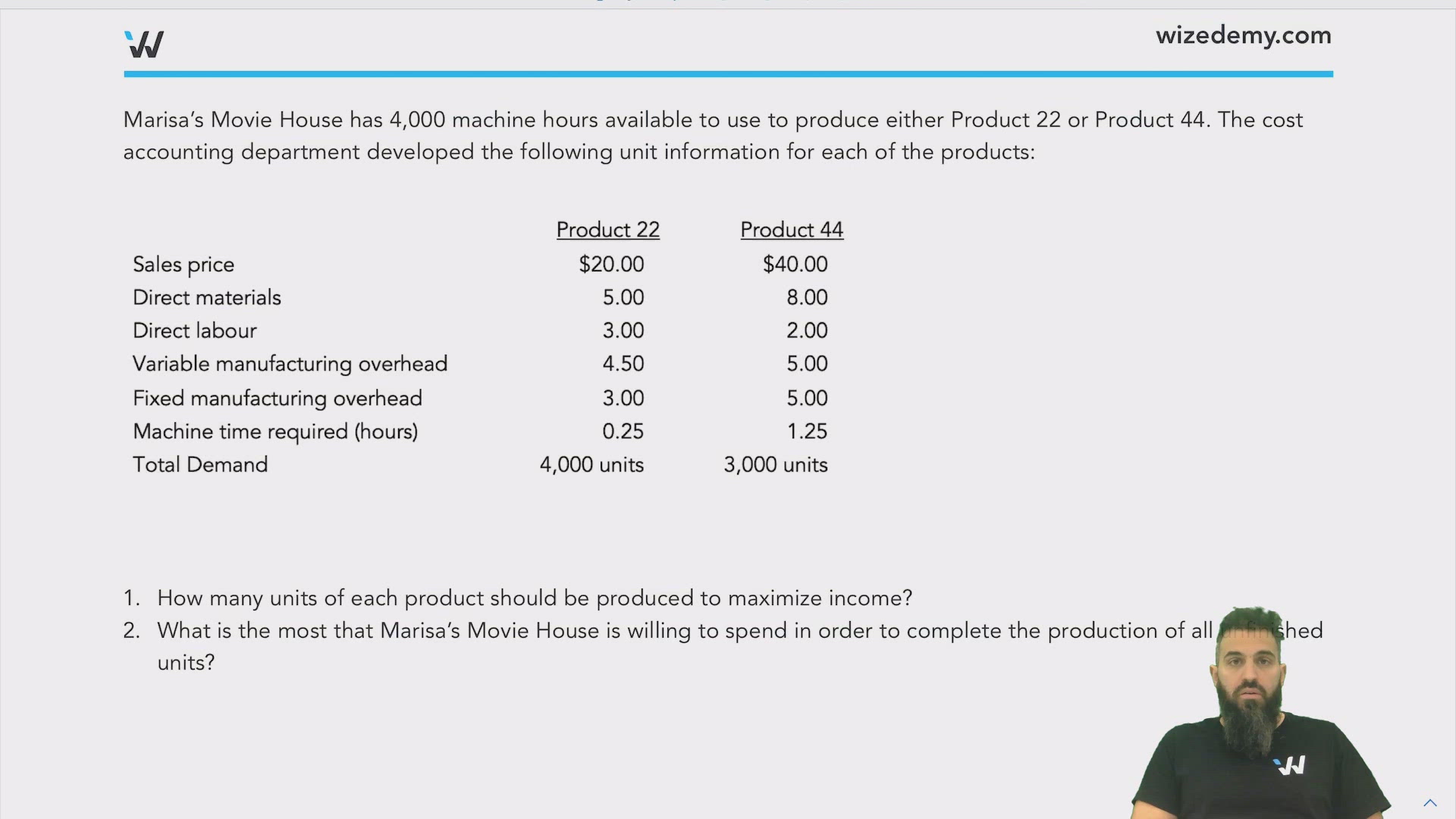
Marisa’s Movie House has 4,000 machine hours available to use to produce either Product 22 or Product 44. The cost accounting department developed the following unit information for each of the products:
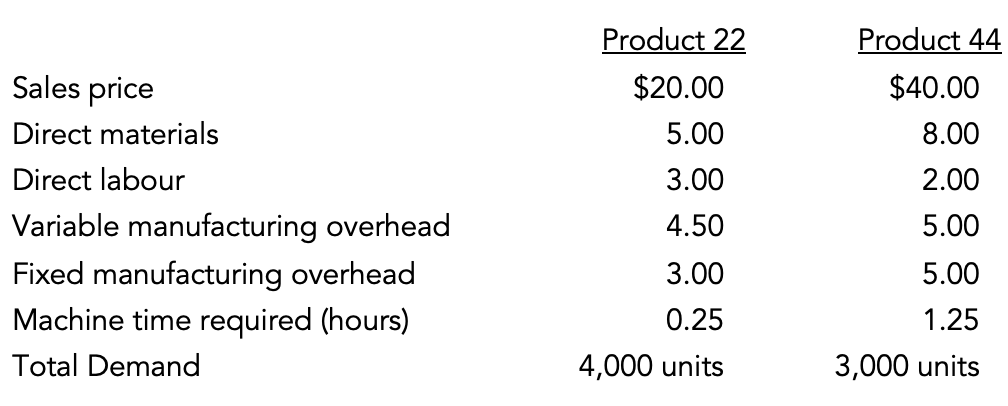
- How many units of each product should be produced to maximize income?
- What is the most that Marisa’s Movie House is willing to spend in order to complete the production of all unfinished units?
Practice: Allocating Limited Resources
Toronto Ltd produces 3 different bicycles which are the A, the B, and the C.
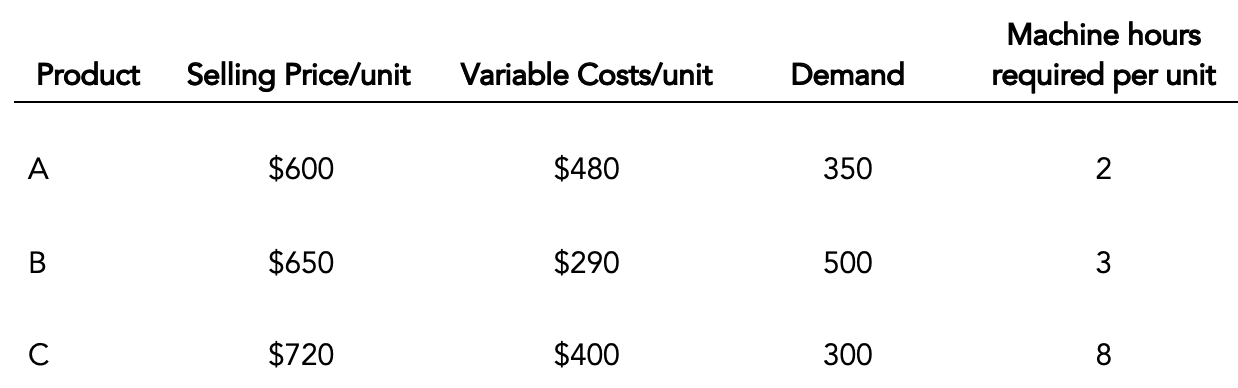
The fixed costs incurred for the production of the three bike models amount to $120,000. The total machine hours available amount to 3,800 hours.
How many units of each product should Toronto Ltd. produce?