Wize University Managerial Accounting Textbook > Alternative Costing Methods
Normal-Absorption Costing
Popular Courses
COMM 305
Concordia University
Managerial Accounting
University Study Guides
Managerial Accounting
University Study Guides
ACC 406
Toronto Metropolitan University
ACCT*2230
University of Guelph
ADM 2341
University of Ottawa
RSM222H1
University of Toronto
SB/ACTG 2020 3.00
York University
ACC 312
The University of Texas at Austin
ACC 202
Michigan State University
ACIS 2116
Virginia Tech
ACG 2071
University of Central Florida
BUS1 21
San José State University
BUS-A 306
Indiana University - Bloomington
ACCT 2102
Temple University
ACCTG-202
San Diego State University
MGMT 20100
Purdue University
ACG 2071
University of Florida
ACCT 210
University of Arizona
BCOR 2303
University of Colorado Boulder

0:00 / 0:00
Normal-Absorption Costing
Also called Normal costing, this costing method follows the same rules as absorption costing, with the only difference being that under normal-costing, applied fixed manufacturing overhead is used instead of actual.

Volume Variance
Since the number of budgeted units in a period and the actual number of units produced can defer, cost of goods sold must be adjusted at the end of the period, the adjustment is called the volume variance.

- If Units Produced > Budgeted Units: The volume variance is favourable, which means costs were overestimated. The volume variance is negative and is subtracted from COGS.
- If Units Produced < Budgeted Units: The volume variance is unfavourable, which means costs were underestimated. The volume variance is positive and is added to COGS.
Normal Costing Income Statement

0:00 / 0:00
Example: Normal-Absorption Costing
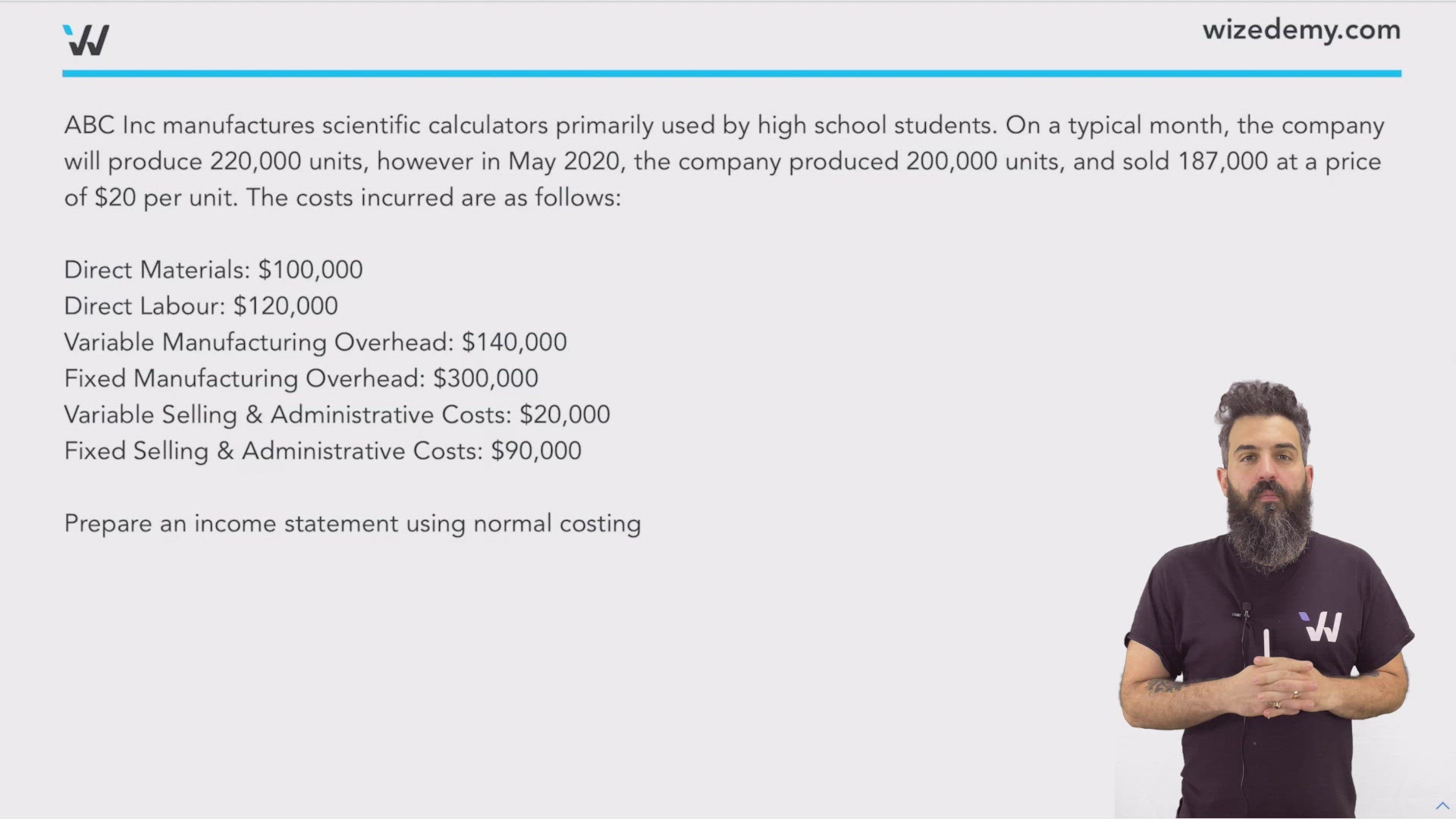
ABC Inc manufactures scientific calculators primarily used by high school students. On a typical month, the company will produce 220,000 units, however in May 2020, the company produced 200,000 units, and sold 187,000 at a price of $20 per unit. The costs incurred are as follows:
Direct Materials: $100,000
Direct Labour: $120,000
Variable Manufacturing Overhead: $140,000
Fixed Manufacturing Overhead: $300,000
Variable Selling & Administrative Costs: $20,000
Fixed Selling & Administrative Costs: $90,000
Prepare an income statement using normal costing
Practice: Normal-Absorption Costing
Washburn Coolers manufactures and sells one product. The following information pertains to each of the company's first three years of operations.
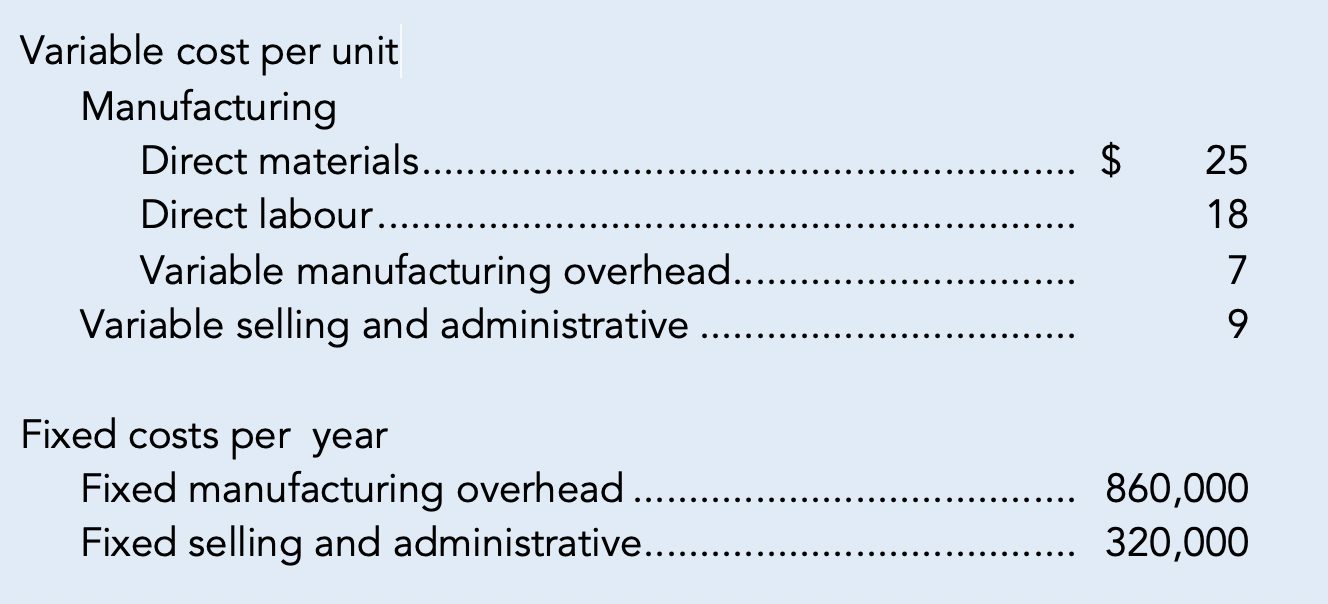
This year, Washburn Coolers produced 40,000 units and sold 28,000. Budgeted volume for the year was 50,000. The company sells its product for $100 per unit.
What is the company's net income in 2020 using normal costing?