Wize University Managerial Accounting Textbook > Budgeting
Purchasing Budget for Merchandising Company
Popular Courses
COMM 305
Concordia University
Managerial Accounting
University Study Guides
Managerial Accounting
University Study Guides
ACC 406
Toronto Metropolitan University
ACCTG 322
University of Alberta
ACCT*2230
University of Guelph
ADM 2341
University of Ottawa
RSM222H1
University of Toronto
COMMERCE 2AB3
McMaster University
SB/ACTG 2020 3.00
York University
COMM 1102
Dalhousie University
ACC 312
The University of Texas at Austin
ACC 242
Arizona State University - Tempe
ACC 202
Michigan State University
ACIS 2116
Virginia Tech
ACG 2071
University of Central Florida
BUS-A 306
Indiana University - Bloomington
BUS1 21
San José State University
ACCT 2102
Temple University
ACCTG-202
San Diego State University
0:00 / 0:00
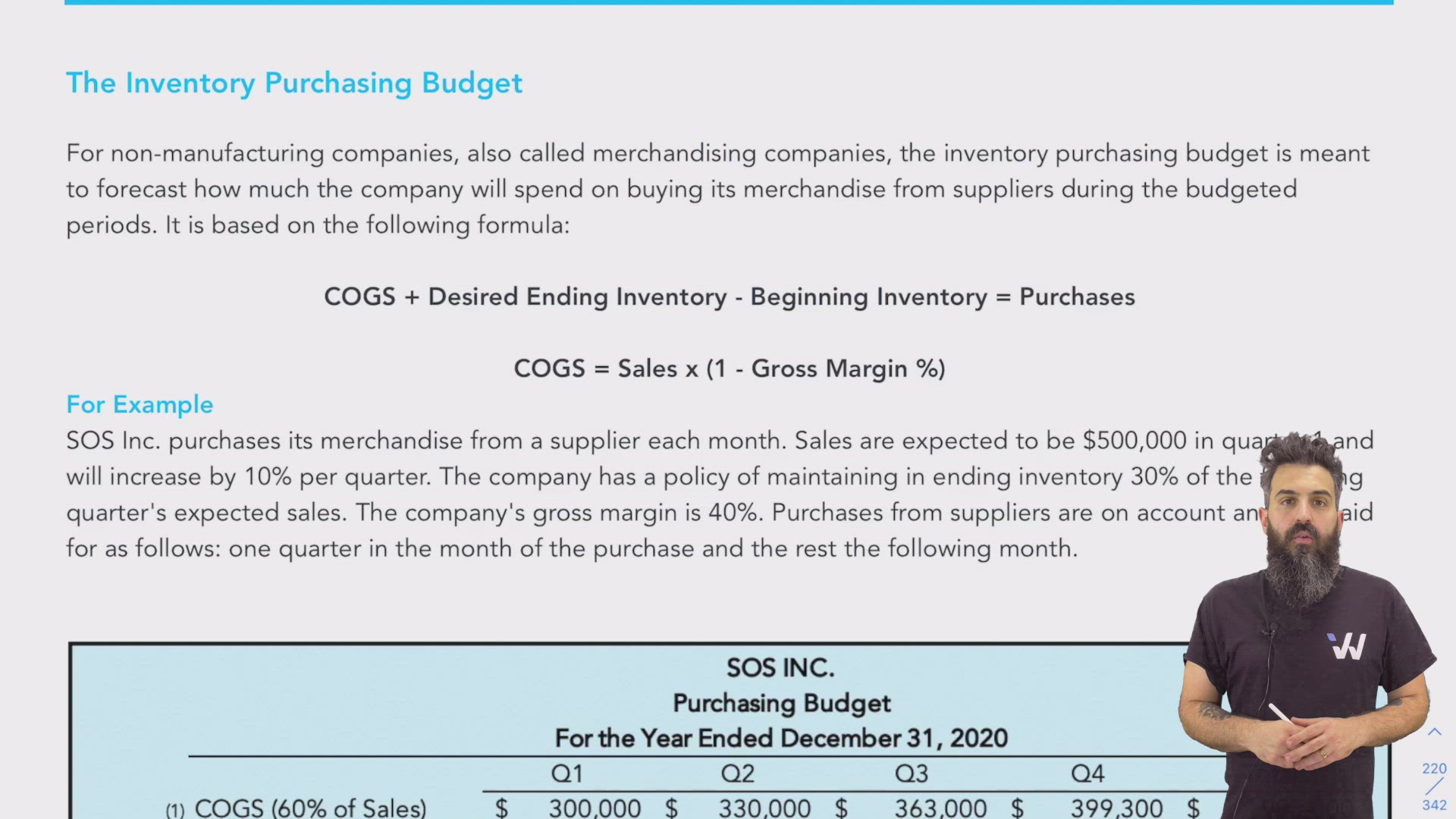
The Inventory Purchasing Budget
For non-manufacturing companies, also called merchandising companies, the inventory purchasing budget is meant to forecast how much the company will spend on buying its merchandise from suppliers during the budgeted periods. It is based on the following formula:
COGS + Desired Ending Inventory - Beginning Inventory = Purchases
COGS = Sales x (1 - Gross Margin %)
For Example
SOS Inc. purchases its merchandise from a supplier each month. Sales are expected to be $500,000 in quarter 1 and will increase by 10% per quarter. The company has a policy of maintaining in ending inventory 30% of the following quarter's expected sales. The company's gross margin is 40%. Purchases from suppliers are on account and are paid for as follows: one quarter in the month of the purchase and the rest the following month.


0:00 / 0:00
Example: Inventory Purchasing Budget and Payment Schedule
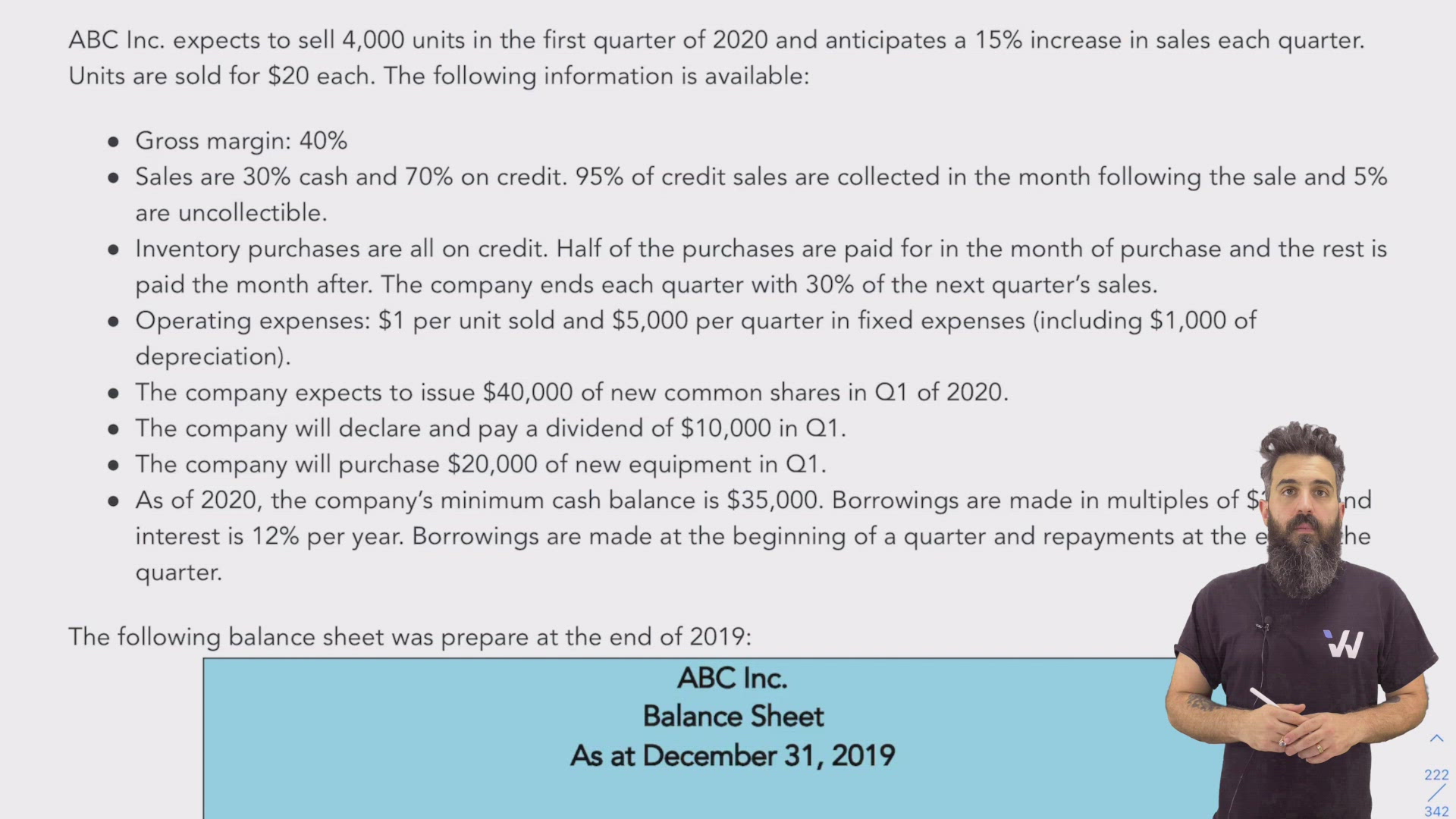
ABC Inc. expects to sell 4,000 units in the first quarter of 2020 and anticipates a 15% increase in sales each quarter. Units are sold for $20 each. The following information is available:
- Gross margin: 40%
- Sales are 30% cash and 70% on credit. 95% of credit sales are collected in the month following the sale and 5% are uncollectible.
- Inventory purchases are all on credit. Half of the purchases are paid for in the month of purchase and the rest is paid the month after. The company ends each quarter with 30% of the next quarter’s sales.
- Operating expenses: $1 per unit sold and $5,000 per quarter in fixed expenses (including $1,000 of depreciation).
- The company expects to issue $40,000 of new common shares in Q1 of 2020.
- The company will declare and pay a dividend of $10,000 in Q1.
- The company will purchase $20,000 of new equipment in Q1.
- As of 2020, the company’s minimum cash balance is $35,000. Borrowings are made in multiples of $2,000 and interest is 12% per year. Borrowings are made at the beginning of a quarter and repayments at the end of the quarter.
The following balance sheet was prepare at the end of 2019:

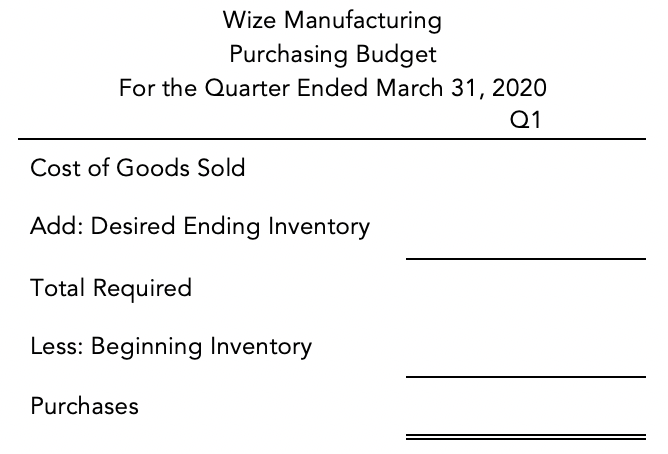
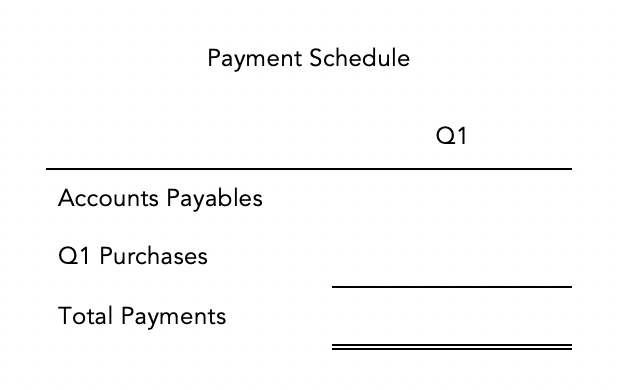
Prepare a purchasing budget and payment schedule for Q1 of 2020

Mark Yourself Question
- Grab a piece of paper and try this problem yourself.
- When you're done, check the "I have answered this question" box below.
- View the solution and report whether you got it right or wrong.
Practice: Inventory Purchasing Budget
RayHa Corporation began operating in 2026 and sells iPhone cases that it purchases online from a supplier. The company has the following actual and expected sales its first year of operations:
- Quarter 1 (Actual): $500,000
- Quarter 2 (Expected): $650,000
- Quarter 3 (Expected): $800,000
- Quarter 4 (Expected): $1,240,000
The company's gross margin is 70% and it sells 80% of its merchandise for cash in its boutique. The remaining 20% is sold on account to other online platforms and collections for these sales are made the quarter following the sale. In order to maintain constant operations, the company always carries 50% of next quarter's sales in inventory at the end of any quarter.
Prepare the inventory purchasing budget for the second and third quarter of 2026.