Popular Courses
Grade 12 Chemistry
Ontario High School
Grade 12 Chemistry
Canada High School
General Chemistry
University Study Guides
CHEM 121
University of British Columbia
High School Chemistry
US High School
Chemistry 30
Alberta High School
Chemistry
General Course
CHEM 1AA3
McMaster University
General Chemistry
University Study Guides
APSC 132
Queen's University
CHEM 112B
Queen's University
CHEM 130
University of British Columbia
CHEM 1100
University of Manitoba
CHEM 1481
Texas A & M University
CHMA10H3
University of Toronto
SC/CHEM 1100 4.00
York University
CHM 2045
University of Florida
CHEM 1001
Carleton University
CHEM 111
University of British Columbia
CHEM 112
University of Saskatchewan
0:00 / 0:00
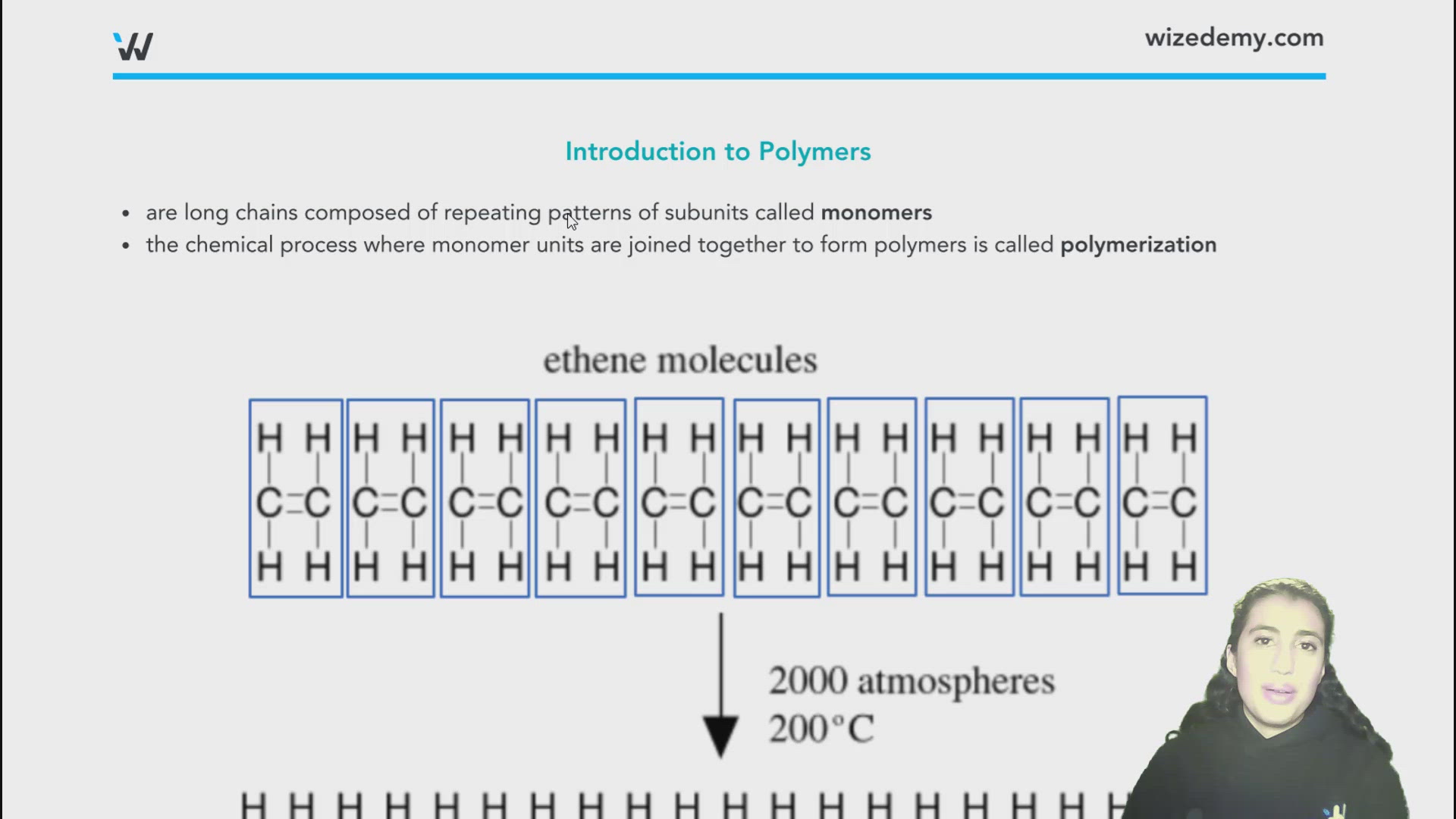
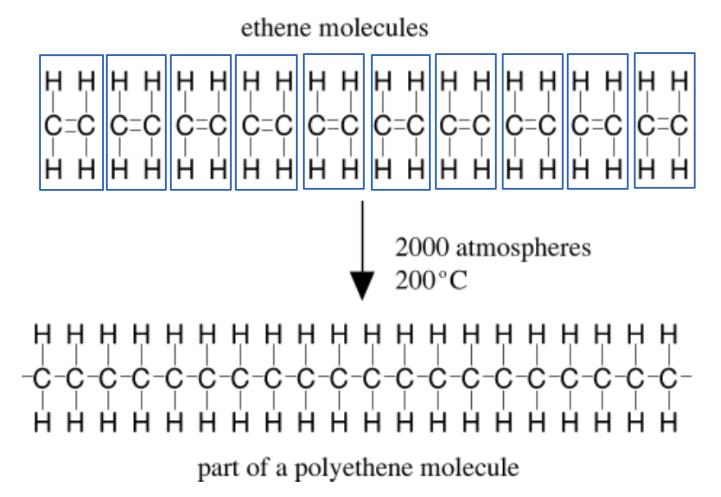
Introduction to Polymers
- Polymers are long chains composed of repeating patterns of subunits called monomers
- The chemical process where monomer units are joined together to form polymers is called polymerization
0:00 / 0:00
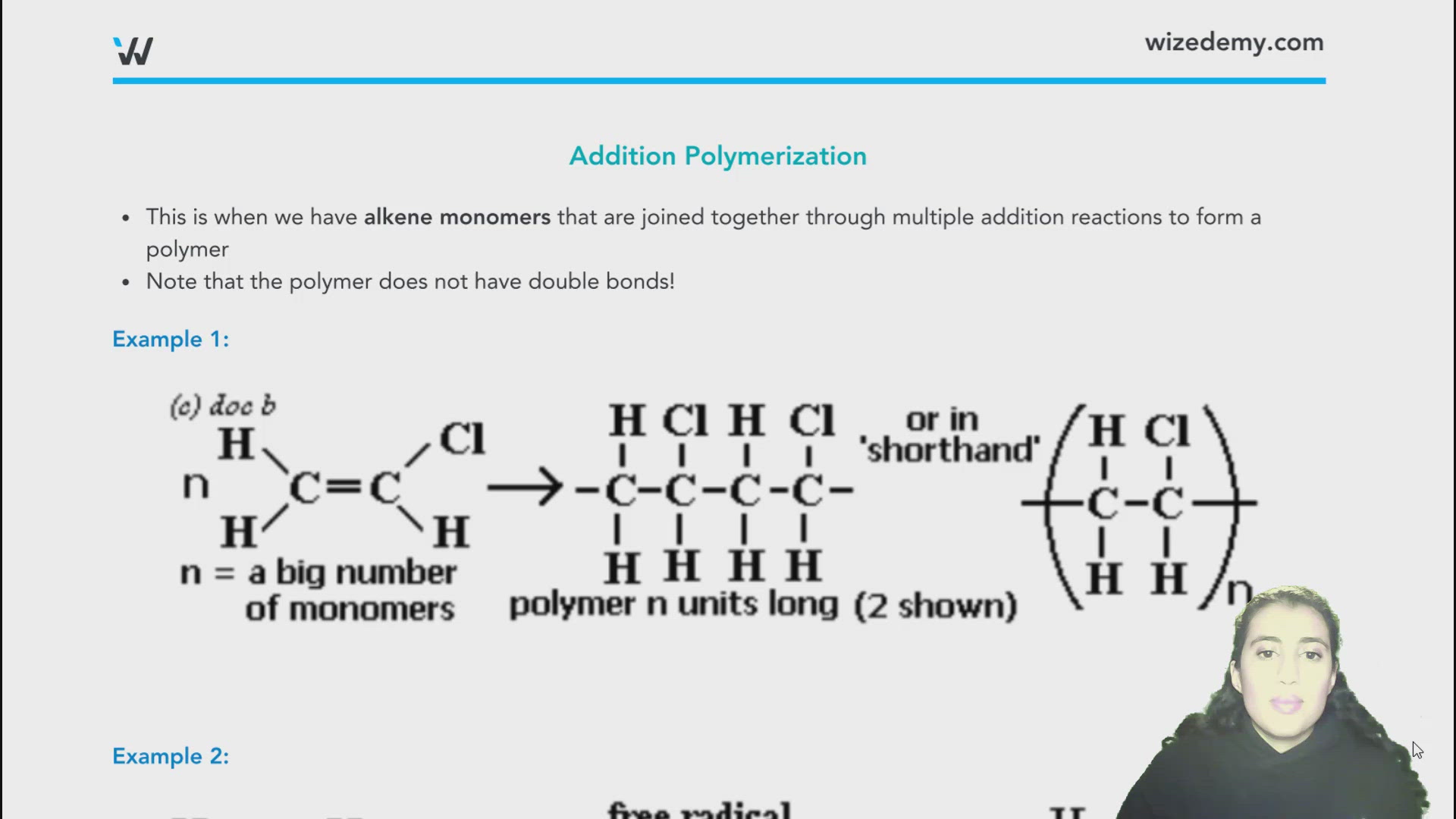
Addition Polymerization
- This is when we have alkene monomers that are joined together through multiple addition reactions to form a polymer
- Note that the polymer does not have double bonds!
Example 1:
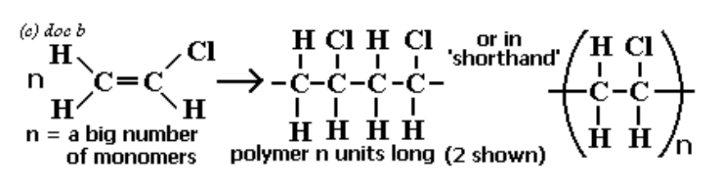
Example 2:

0:00 / 0:00
Condensation Polymerization
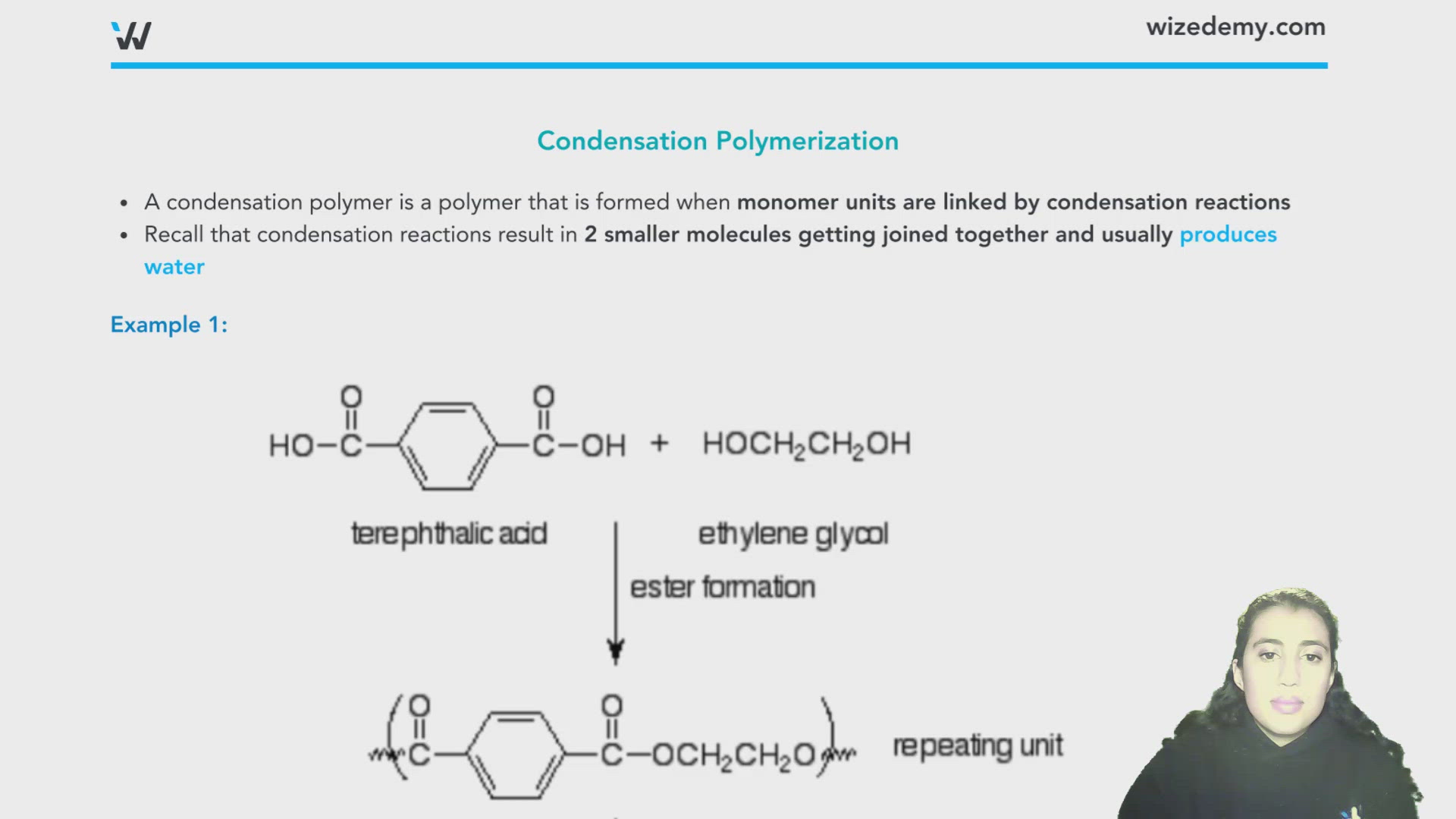
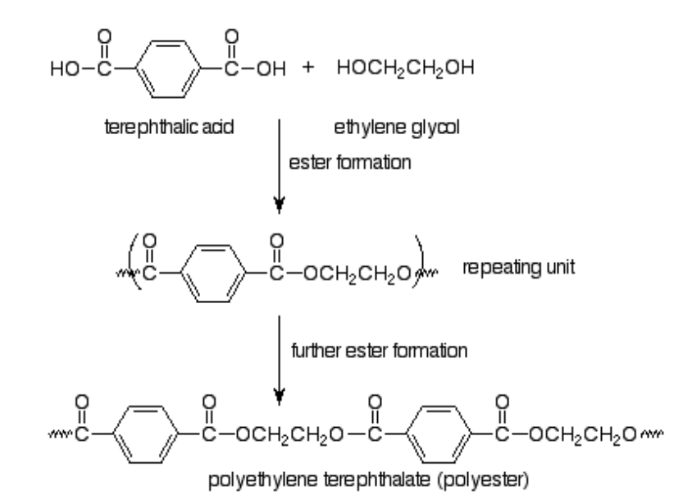
- A condensation polymer is a polymer that is formed when monomer units are linked by condensation reactions
- Recall that condensation reactions result in 2 smaller molecules getting joined together and usually produces water
Example 1:
Wize Tip
Notice that the monomer units each need to have 2 functional groups (one on each end) so that they can form a polymer and add more monomer units to each end!
In the example above, when both monomers reacted together, which functional group did we get?
ester
For this reason we call this polymer a
polyester
Example 2:
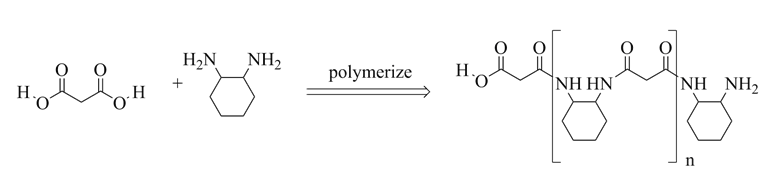
In the example above, when both monomers reacted together, which functional group did we get?
amide
- For this reason, we call this polymer apolyamide
Practice: Polymerization
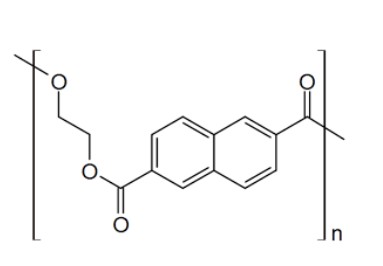
Was the following polymer likely formed by addition or condensation polymerization? Draw the monomer unit(s) and any eliminated small molecule if applicable.