Wize University Microeconomics Textbook > Economic Concepts
Positive and Normative Economics
Popular Courses
ECON 201
Concordia University
ECONOMIC 1021A/B
Western University
Microeconomics
University Study Guides
ECON 201
University of Calgary
ECON 101
University of British Columbia
ECON 1B03
McMaster University
ECON*1050
University of Guelph
ECON 101
University of Alberta
Microeconomics
General Course
ECO101H1
University of Toronto
Microeconomics
University Study Guides
ECON 208
McGill University
ECON 101
University of Waterloo
ECON 110A
Queen's University
ECN 104
Toronto Metropolitan University
ECO 1104
University of Ottawa
EC120
Wilfrid Laurier University
AP/ECON 1000 3.00
York University
ECON 103
University of Victoria
ECON 1101
Dalhousie University
0:00 / 0:00
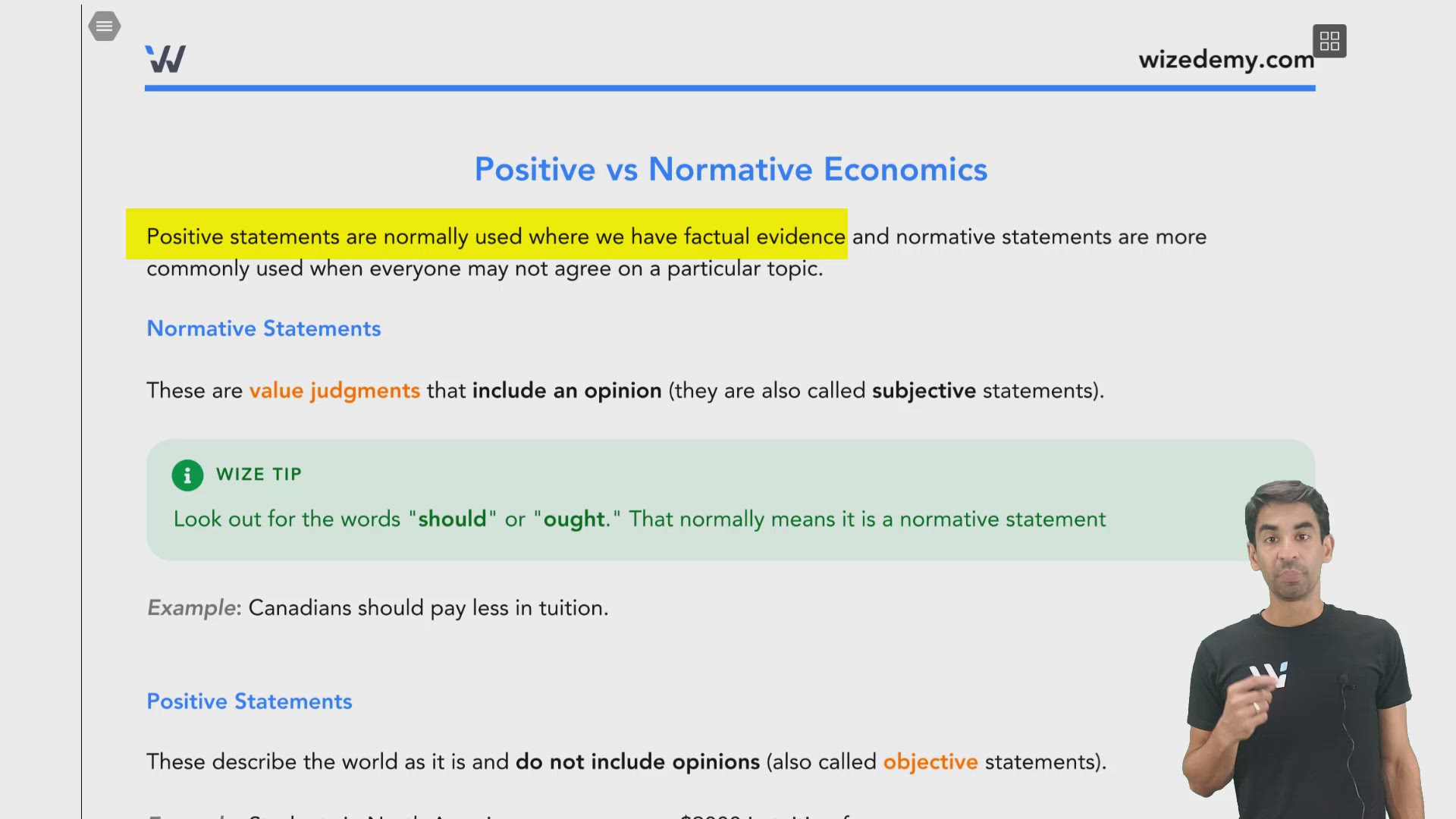
Positive vs Normative Economics
Positive statements are normally used where we have factual evidence and normative statements are more commonly used when everyone may not agree on a particular topic.
Normative Statements
These are value judgments that include an opinion (they are also called subjective statements).
Wize Tip
Look out for the words "should" or "ought." That normally means it is a normative statement
Example: Canadians should pay less in tuition.
Positive Statements
These describe the world as it is and do not include opinions (also called objective statements).
Example: Students in North America on average pay $9000 in tuition fees.
Practice: Positive and Normative Statements
- The government should lower the tax rate. This is a statement
- The government doesn't provide enough help for people on welfare. This is a statement
- It was too hot yesterday. This is a statement
- Historically, North American cities that have higher government spending on educational programs generally have lower poverty rates. This is a statement