Wize University Microeconomics Textbook > Elasticity
Income Elasticity
Popular Courses
ECON 201
Concordia University
ECONOMIC 1021A/B
Western University
Microeconomics
University Study Guides
ECON 201
University of Calgary
ECON 101
University of British Columbia
ECON 1B03
McMaster University
ECON*1050
University of Guelph
ECON 101
University of Alberta
Microeconomics
General Course
ECO101H1
University of Toronto
Microeconomics
University Study Guides
ECON 208
McGill University
ECON 101
University of Waterloo
ECN 104
Toronto Metropolitan University
ECON 110A
Queen's University
ECO 1104
University of Ottawa
EC120
Wilfrid Laurier University
AP/ECON 1000 3.00
York University
ECON 103
University of Victoria
ECON 1101
Dalhousie University

0:00 / 0:00
Income Elasticity
The income elasticity of demand tells us whether a good is normal or inferior.
Normal Goods
The income elasticity of normal goods is
positive (>0)
. As your income increases you will buy more
normal goods (positive relationship).There are two types of normal goods:
- Normal and Necessity Goods - Income elasticity is positive and less than 1 Example If your income doubles, you might spend a little bit more on necessity goods (like water or bottled water), but not double.
- Normal and Luxury Goods - Income elasticity is positive and greater than 1 Example If your income doubles, you will spend more than double on luxury goods (like nice clothes and eating out at nice restaurants).
Inferior Goods
The income elasticity of inferior goods is
negative (<0)
. As your income increases, you will buy less
inferior goods (negative relationship).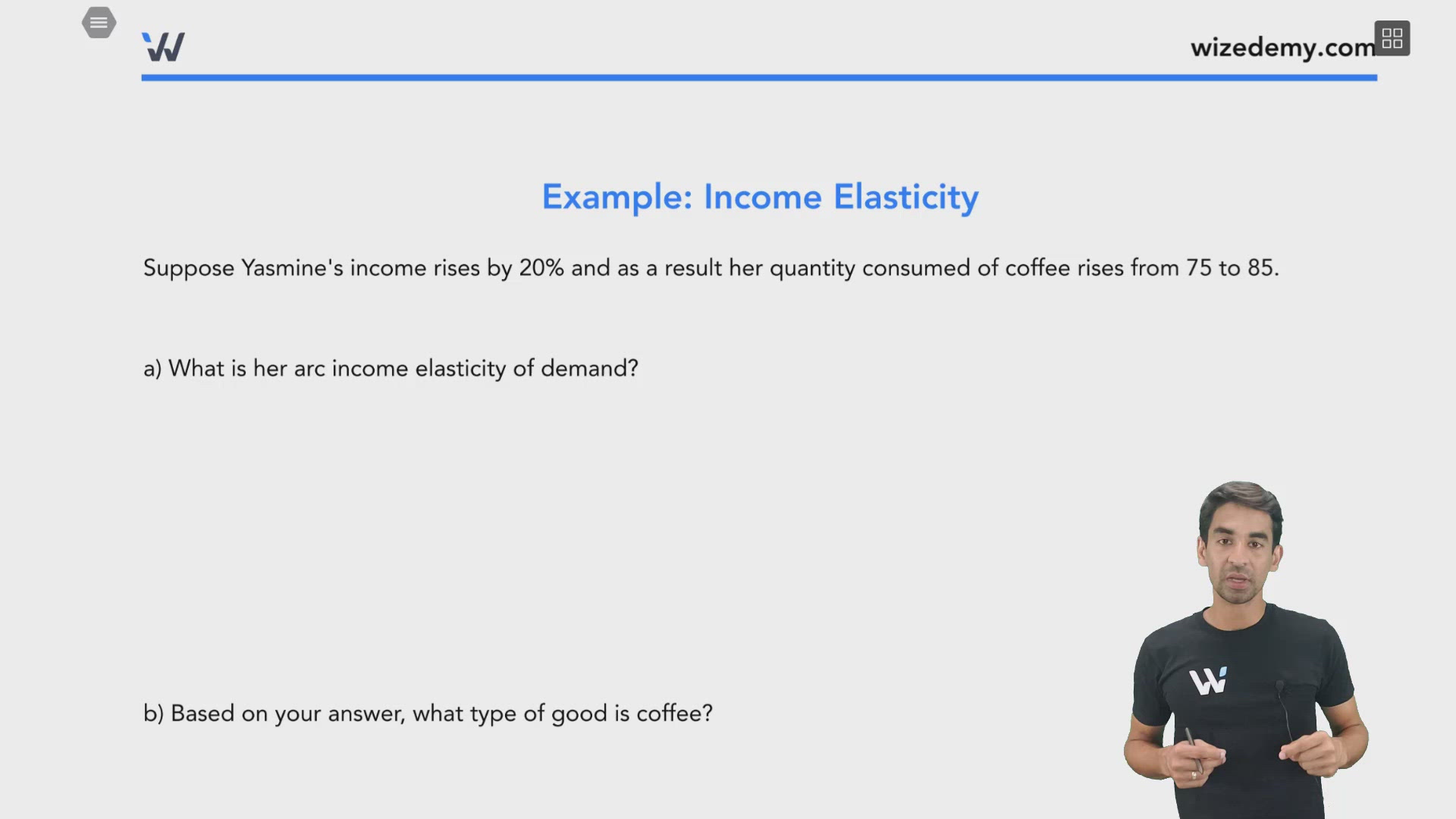
0:00 / 0:00
Example: Income Elasticity
Suppose Yasmine's income rises by 20% and as a result her quantity consumed of coffee rises from 75 to 85.
a) What is her arc income elasticity of demand?
b) Based on your answer, what type of good is coffee?
This is a normal and necessity good since income elasticity is positive and less than 1.
Practice: Income Elasticity
It is safe to assume that the income elasticity of demand for gourmet meals would be ________ the income elasticity of demand for meals from a junk-food restaurant.