Wize University Microeconomics Textbook > Economic Efficiency and Government Intervention
Government Intervention
Popular Courses
Microeconomics
University Study Guides
ECON 101
University of British Columbia
ECON 101
University of Alberta
Microeconomics
General Course
Microeconomics
University Study Guides
ECON 208
McGill University
ECON 101
University of Waterloo
ECON 110A
Queen's University
AP/ECON 1000 3.00
York University
ECON 1101
Dalhousie University
ECON 111
Queen's University
ECON 103
Simon Fraser University
COMM 171
Queen's University
ECON-1100
University of Windsor
MET EC 101
Boston University
ECON-B 251
Indiana University - Bloomington
ECN 101
Toronto Metropolitan University
EC 201
Michigan State University
ECON 1010
University of Manitoba
ECON 102
University of Illinois at Urbana - Champaign
0:00 / 0:00
Government Intervention with Natural Monopolies
The government can try to correct a natural monopoly in 3 ways.
Natural Monopoly Regulation
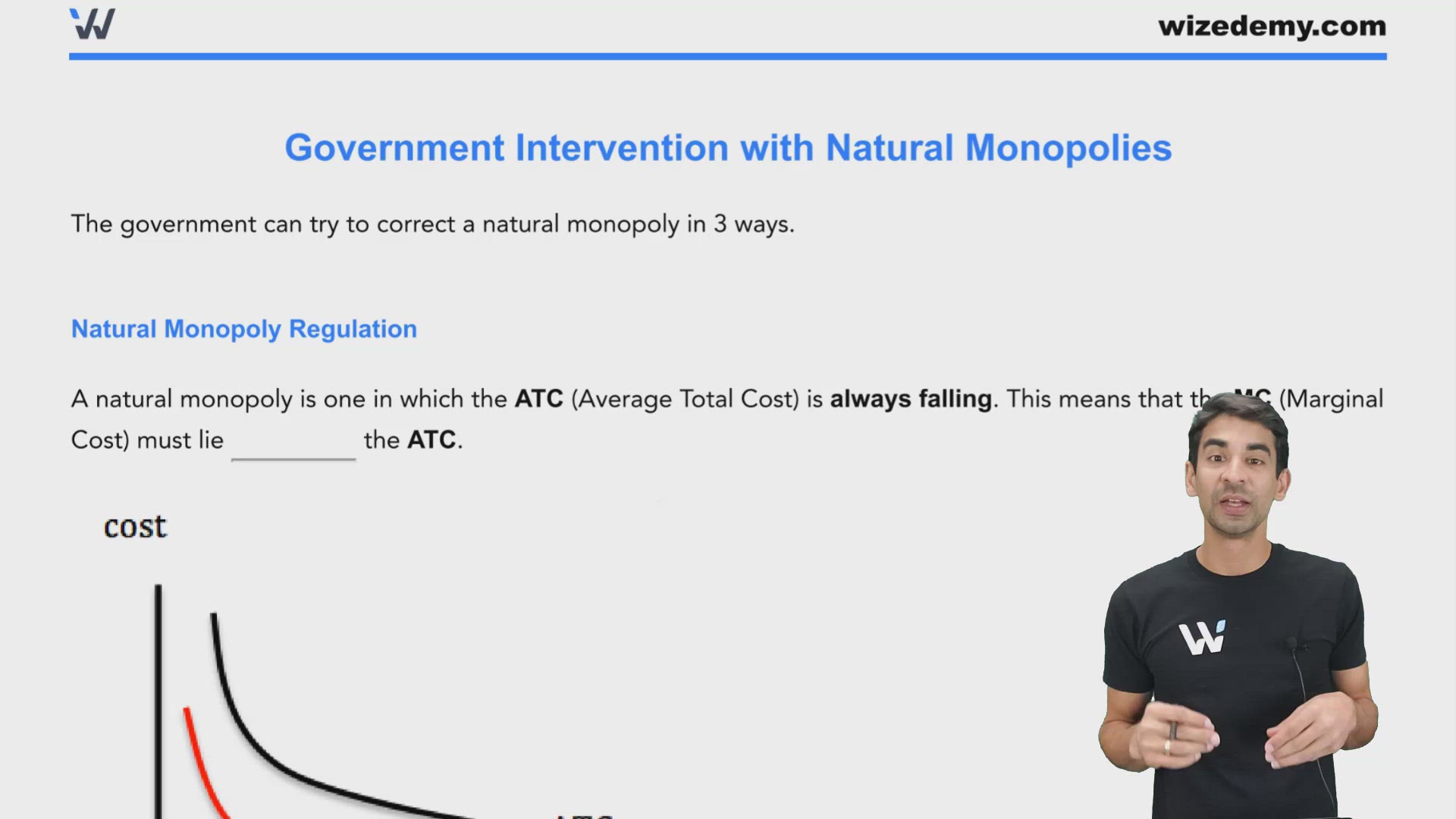
A natural monopoly is one in which the ATC (Average Total Cost) is always falling. This means that the MC (Marginal Cost) must lie
below
the ATC.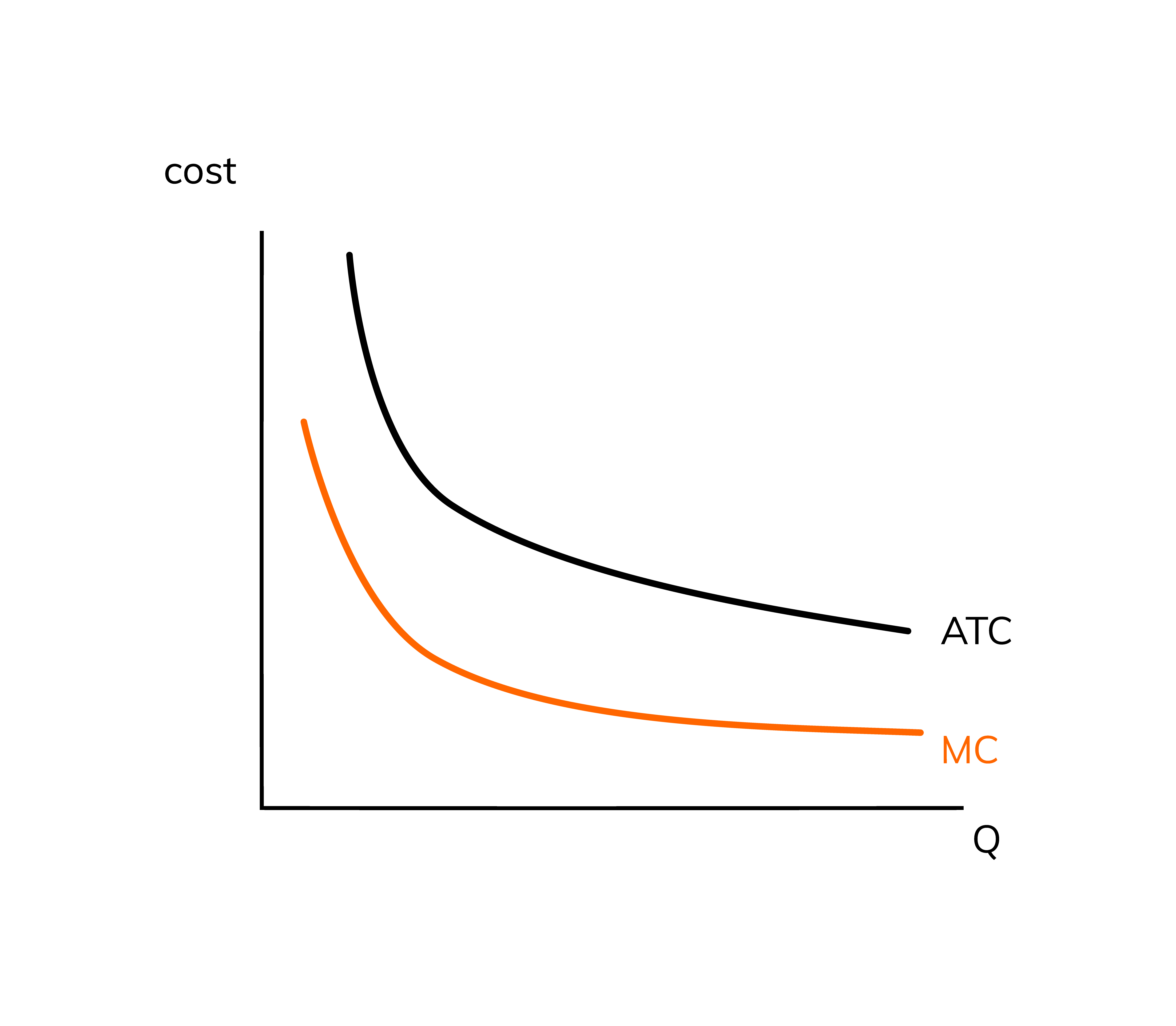
1. Marginal Cost Pricing

- Marginal cost pricing is when the business produces at the output where Price = MC (Marginal Cost)
- In the diagram above this would be at an output of90units and a price of$10.
- However, at this output level, the ATC is$12which means the profit is(10 - 12) * 90 = -$180(which is a loss).
2. Two Part Tariff
- In a two part tariff the business will produce where Price = MC
- If each good sells at marginal cost then Total Revenue (TR) = Total Variable Cost (TVC). This means the losses are the fixed costs.
- Producer surplus = TR - TVC so in this case producer surplus =0
- The business can charge a one time fee that covers the total fixed costs and then the firm will break even. Example: Sandra owns a gym with a marginal cost of $10 per month per client (water and electricity) and fixed costs of $50,000 per year (rent). If she is expecting 1,000 clients per year, she would charge a monthly fee of$10and a yearly membership fee of50,000 / 1,000 = $50.
3. Average Cost Pricing

- In average cost pricing the Price = ATC
- In the diagram above, this would be at an output of70units and a price of$15.
- However, at this output since Price isnot equalto MC it is not allocatively efficient.
0:00 / 0:00
Example: Government Intervention with Natural Monopolies
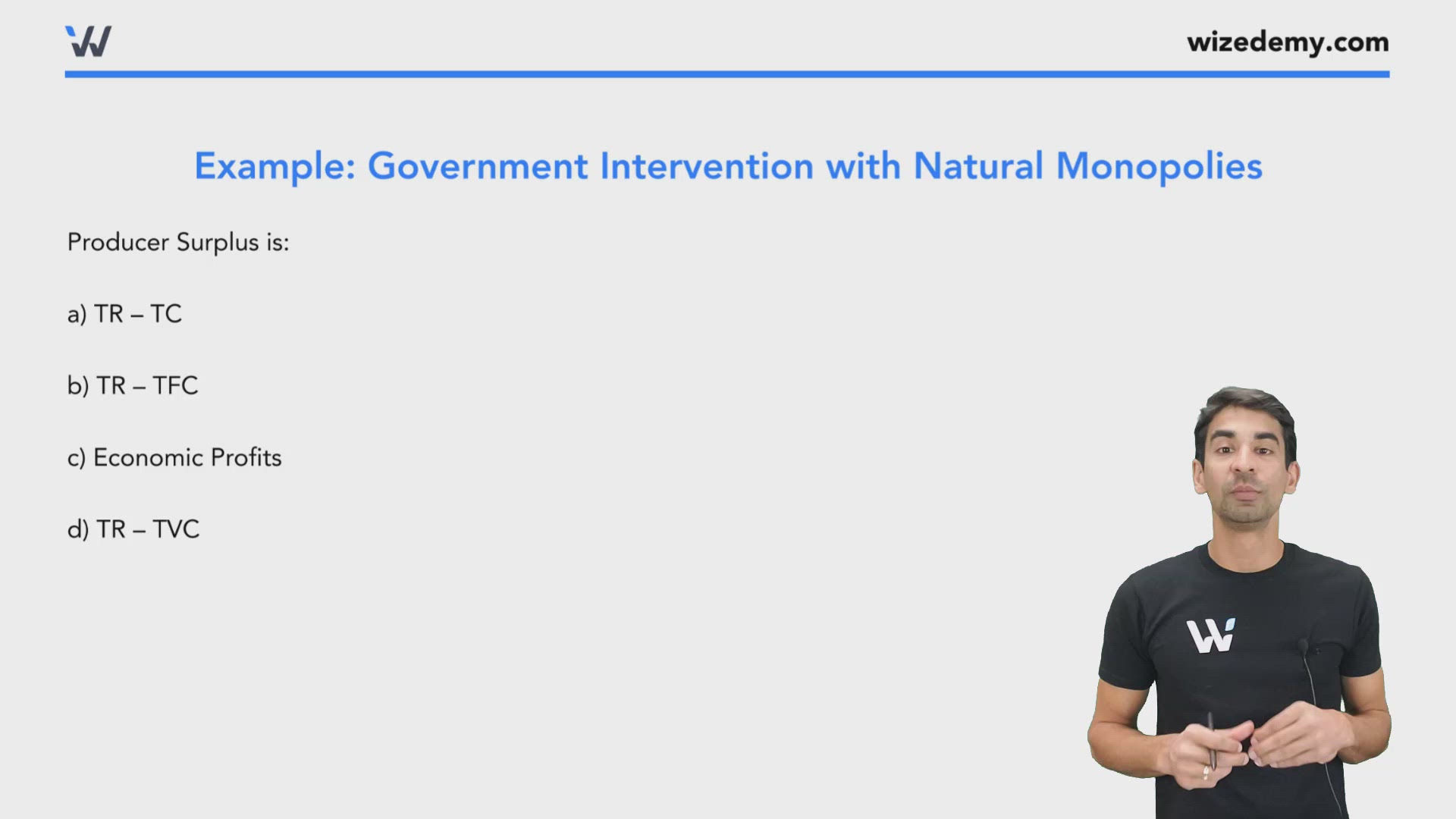
Producer Surplus is:
a) TR – TC
b) TR – TFC
c) Economic Profits
d) TR – TVC
D.
Producer surplus is total revenue (TR) minus total variable cost (TVC). This tells us how much the business is making on top of their day to day costs.