Wize University Introduction to Finance Textbook > Bond Valuation
Realized Rate of Return
Popular Courses
Intro to Finance
University Study Guides
Intro to Finance
University Study Guides
MGCR 341
McGill University
FIN 301
University of Alberta
FIN 300
Toronto Metropolitan University
COMM 121
Queen's University
FIN*2000
University of Guelph
FINC 341
Texas A&M University
COMMERCE 2FA3
McMaster University
COMM 2202
Dalhousie University
BU283
Wilfrid Laurier University
FIN 300
Arizona State University - Tempe
BUSFIN 3220
Ohio State University
FIN 301
Pennsylvania State University
BUS-F 255
Indiana University - Bloomington
FIN 3403
University of Central Florida
FIN 3403
University of Florida
FIN 320
California State University - Fullerton
FINC-UB 7
New York University
BUS1 170
San José State University

0:00 / 0:00
Realized Rate of Return
Realized Rate of Return (ROR): Annual rate of return an investor actually earned during the holding period (ie. when the investor actually owned the instrument).
Holding Period Return (Total Return)
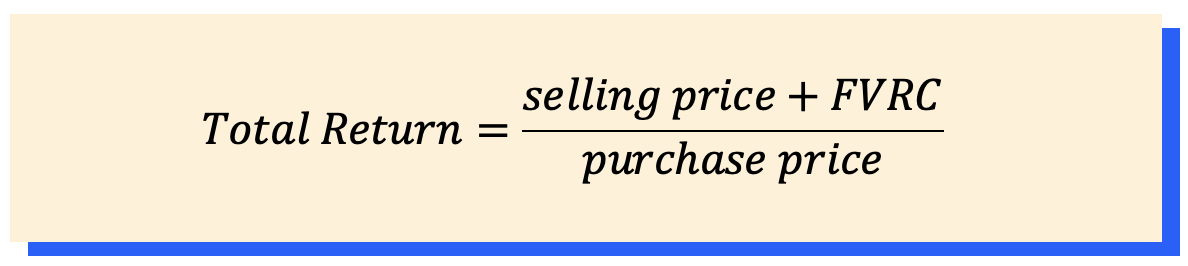
Annual Realized Rate of Return

Where:
FVCR = Future Value of reinvested coupons
n = number of years investor held the bond
Real Rate
- Return or interest rate adjusted for inflation.
- The approximate difference between nominal returns and real returns is the inflation rate.
- Exact real rate can be found using the Fisher equation.

0:00 / 0:00
Example: Realized Rate of Return
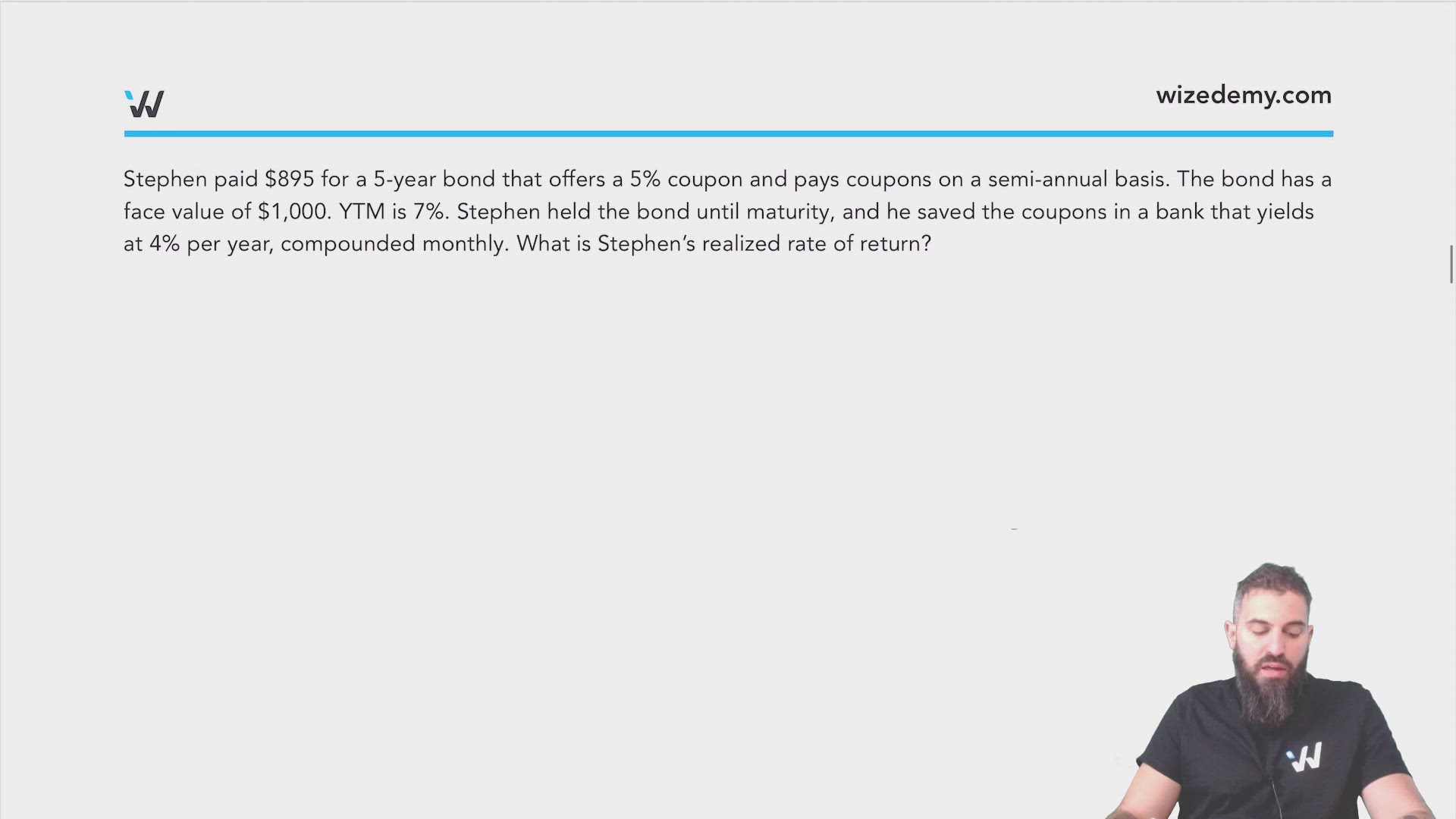
Stephen paid $895 for a 5-year bond that offers a 5% coupon and pays coupons on a semi-annual basis. The bond has a face value of $1,000. YTM is 7%. Stephen held the bond until maturity, and he saved the coupons in a bank that yields at 4% per year, compounded monthly. What is Stephen’s realized rate of return?
Practice: Realized Rate of Return
What is the realized rate of return if an investor purchased a $1,000 face value 10-year bond at par 3 years ago and sells it today. The bond has a coupon rate of 6% and the coupons are paid semi-annually and the current YTM on bonds is 7%. Assume all the coupons were reinvested into his portfolio which earns an 5% per year, compounded semi-annually.
%
Enter your final answer in percentage and round to 2 decimal places.