Wize University Introduction to Finance Textbook > Cash Flow Estimation
Annual Cash Cash Flows
Popular Courses
COMM 308
Concordia University
Intro to Finance
University Study Guides
Intro to Finance
University Study Guides
FINA 230
Concordia University
MGCR 341
McGill University
FIN 301
University of Alberta
FIN 300
Toronto Metropolitan University
COMM 121
Queen's University
FIN*2000
University of Guelph
FINC 341
Texas A&M University
COMMERCE 2FA3
McMaster University
COMM 2202
Dalhousie University
FIN 300
Arizona State University - Tempe
BUSFIN 3220
Ohio State University
SB/FINE 2000 3.00
York University
FIN 301
Pennsylvania State University
BUS-F 255
Indiana University - Bloomington
FIN 3403
University of Central Florida
FIN 3403
University of Florida
FIN 320
California State University - Fullerton
0:00 / 0:00
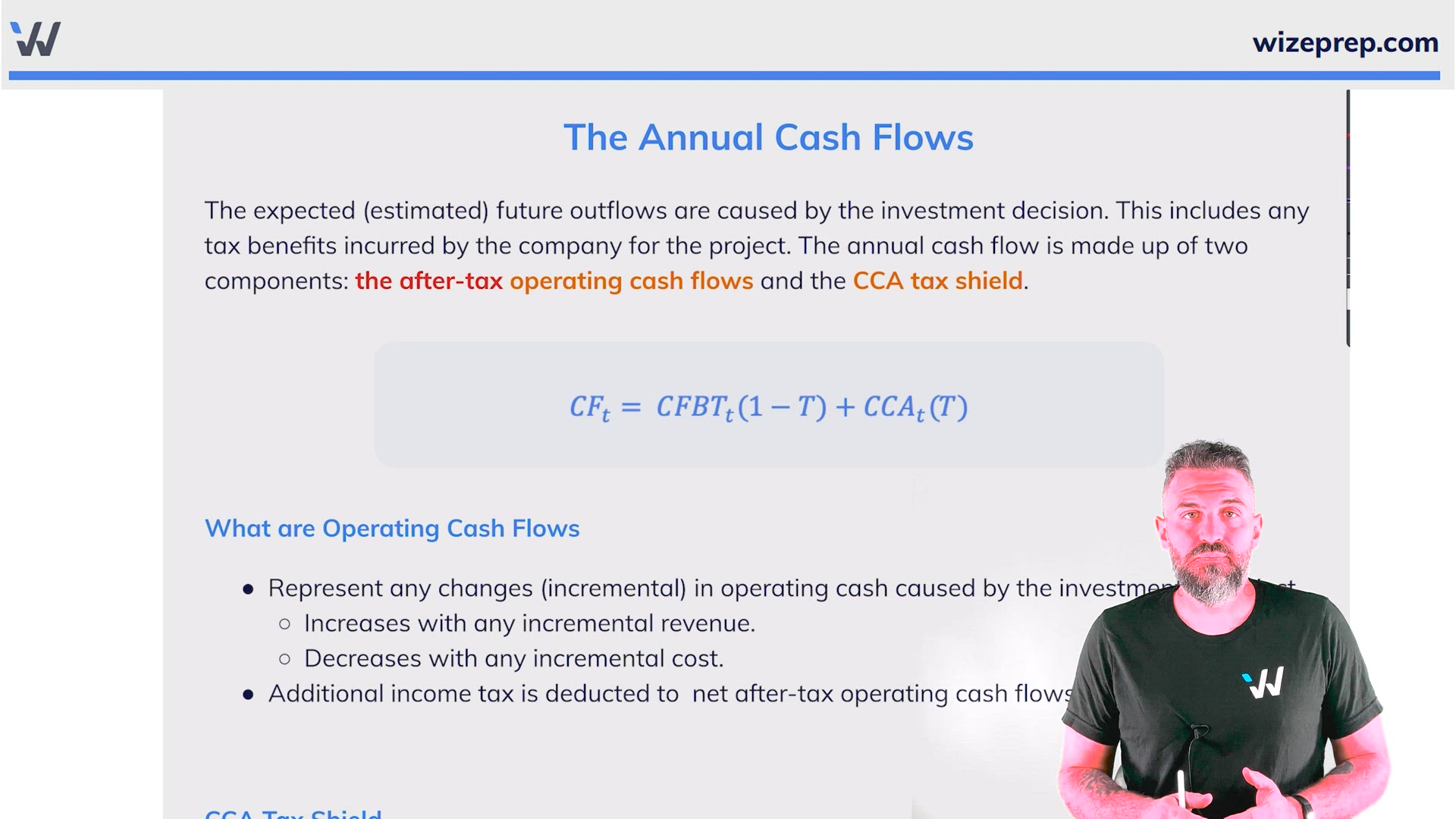
The Annual Cash Flows
The expected (estimated) future outflows are caused by the investment decision. This includes any tax benefits incurred by the company for the project. The annual cash flow is made up of two components: the after-tax operating cash flows and the CCA tax shield.

What are Operating Cash Flows
- Represent any changes (incremental) in operating cash caused by the investment or project.
- Increases with any incremental revenue.
- Decreases with any incremental cost.
- Additional income tax is deducted to net after-tax operating cash flows
CCA Tax Shield
- The tax shield is the amount of income tax that the company saves as a result of the depreciation expense on the asset it is considering purchasing.
- Is treated as a cash inflow for capital budgeting pursposes
0:00 / 0:00
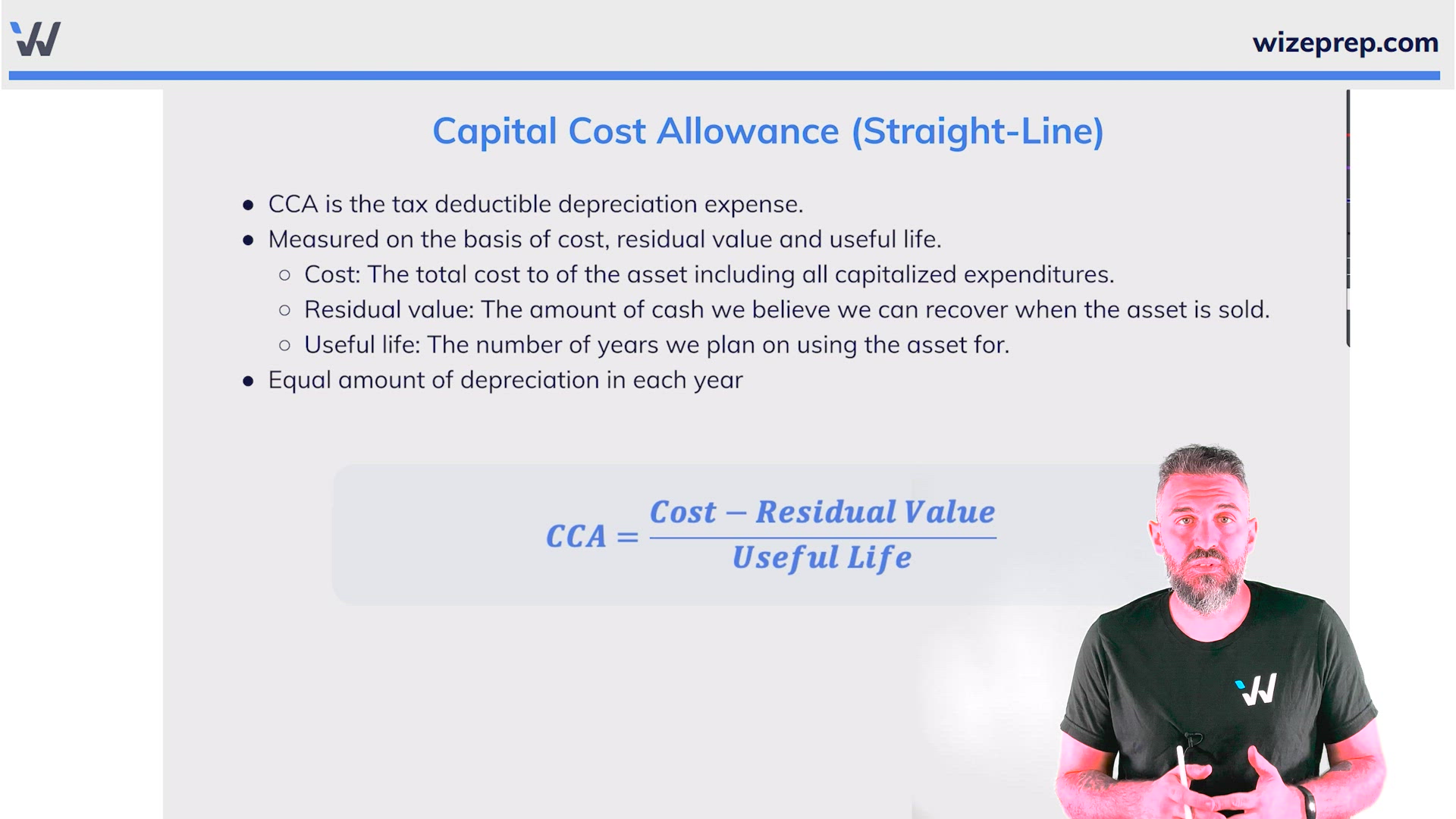
Capital Cost Allowance (Straight-Line)
- CCA is the tax deductible depreciation expense.
- Measured on the basis of cost, residual value and useful life.
- Cost: The total cost to of the asset including all capitalized expenditures.
- Residual value: The amount of cash we believe we can recover when the asset is sold.
- Useful life: The number of years we plan on using the asset for.
- Equal amount of depreciation in each year

0:00 / 0:00
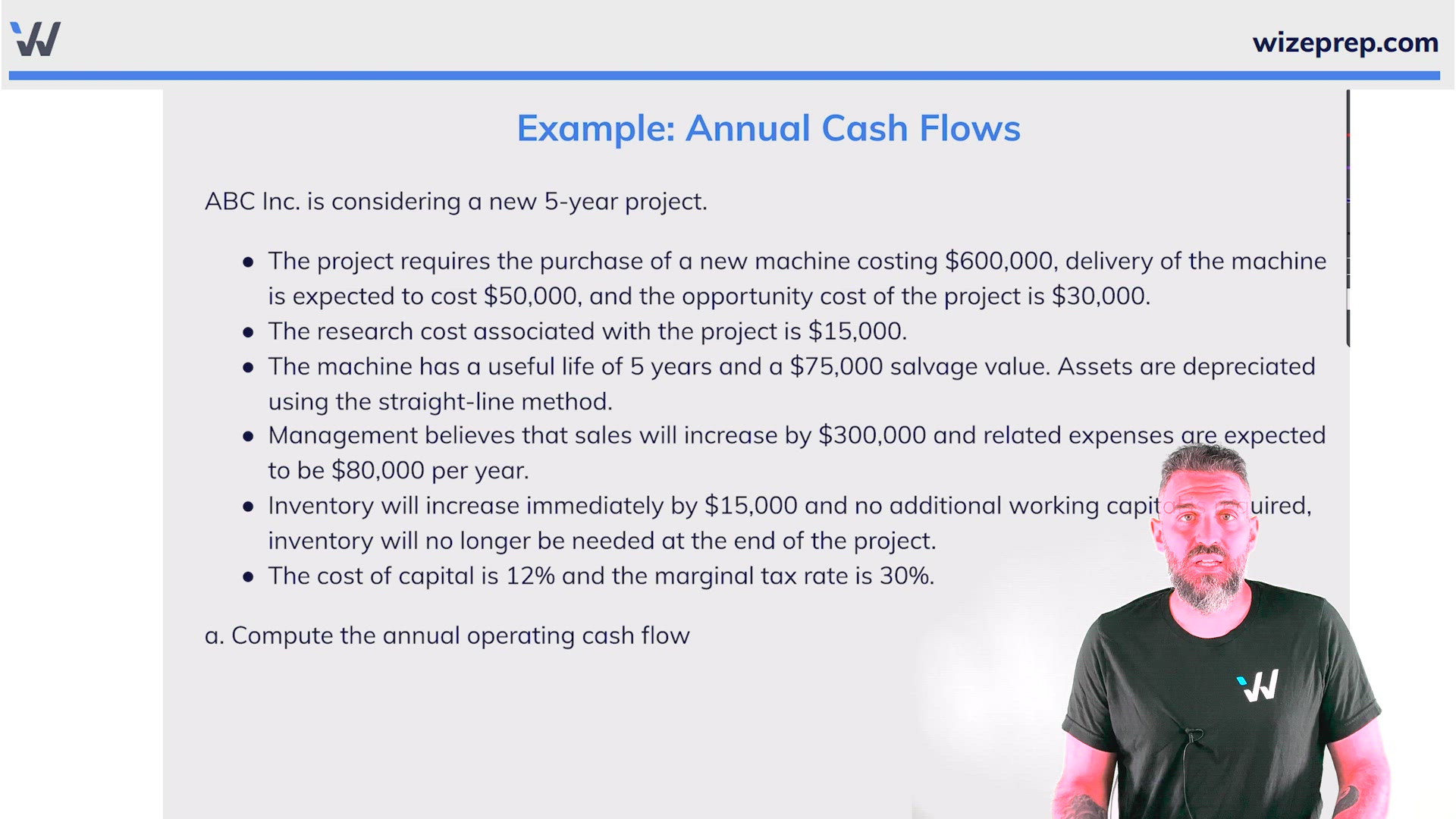
Example: Annual Cash Flows
ABC Inc. is considering a new 5-year project.
- The project requires the purchase of a new machine costing $600,000, delivery of the machine is expected to cost $50,000, and the opportunity cost of the project is $30,000.
- The research cost associated with the project is $15,000.
- The machine has a useful life of 5 years and a $75,000 salvage value. Assets are depreciated using the straight-line method.
- Management believes that sales will increase by $300,000 and related expenses are expected to be $80,000 per year.
- Inventory will increase immediately by $15,000 and no additional working capital is required, inventory will no longer be needed at the end of the project.
- The cost of capital is 12% and the marginal tax rate is 30%.
a. Compute the annual operating cash flow
b. Compute the present value of operating cash flows
Practice: Annual Cash Flows
Trans Canada Pipelines is considering a new 4-year project.
- The project requires the purchase of a new machine costing $550,000, installation costs are $100,000.
- The new facility is to be built on a piece of land that the company bought for $200,000 five years ago.
- The current market value of the land is $120,000.
- The research cost associated with the project is $10,000.
- The machine has a useful life of 4 years and a $120,000 salvage value.
- Assets are depreciated using the straight-line method.
- Management believes that sales will increase by $400,000 per year while related costs will increase by $40,000 per year.
- The cost of capital is calculated in 10% and the marginal tax rate is 40%.
What is the annual cash flow per year and the present value of annual cash flows?
Round your final answer to the nearest dollar.
| The annual cash flow per year is | $ | |
| The present value of annual cash flows is | $ |
0:00 / 0:00
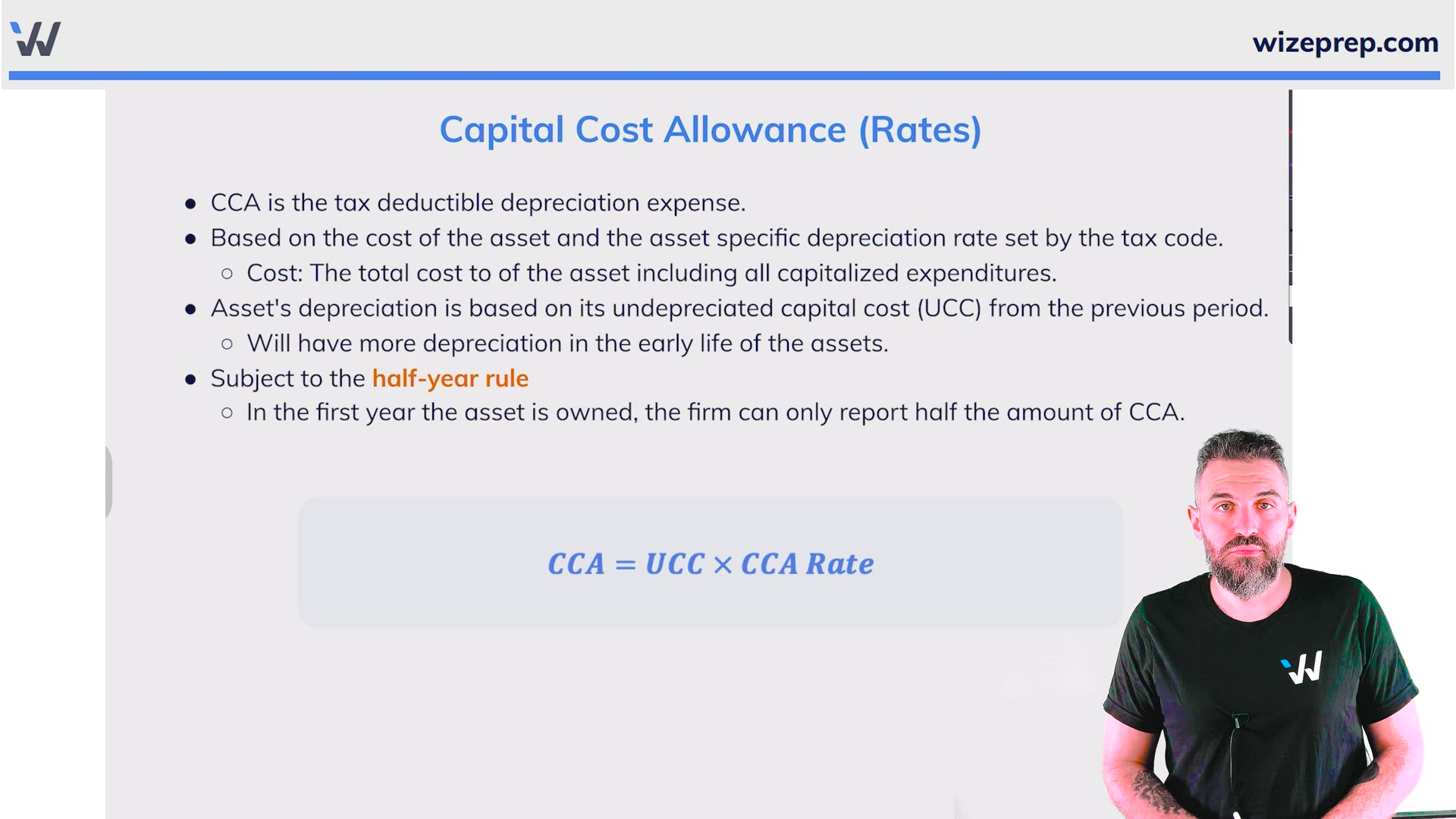
Capital Cost Allowance (Rates)
- CCA is the tax deductible depreciation expense.
- Based on the cost of the asset and the asset specific depreciation rate set by the tax code.
- Cost: The total cost to of the asset including all capitalized expenditures.
- Asset's depreciation is based on its undepreciated capital cost (UCC) from the previous period.
- Will have more depreciation in the early life of the assets.
- Subject to the half-year rule
- In the first year the asset is owned, the firm can only report half the amount of CCA.

Example: Operating Cash Flows
ABC Inc. is considering a new 5-year project.
- The project requires the purchase of a new machine costing $600,000, delivery of the machine is expected to cost $50,000, and the opportunity cost of the project is $30,000.
- The research cost associated with the project is $15,000.
- The machine has a useful life of 5 years and a $75,000 salvage value. The machinery is depreciated using a CCA rate of 30% and the half year rule applies.
- Management believes that sales will increase by $300,000 and related expenses are expected to be $80,000 per year.
- Inventory will increase immediately by $15,000 and no additional working capital is required, inventory will no longer be needed at the end of the project.
- The cost of capital is 12% and the marginal tax rate is 30%.
a. Compute the operating cash flow for each year
b. Compute the present value of operating cash flows
Practice: Operating Cash Flows
Trans Canada Pipelines is considering a new 4-year project.
- The project requires the purchase of a new machine costing $550,000, installation costs are $100,000.
- The new facility is to be built on a piece of land that the company bought for $200,000 five years ago.
- The current market value of the land is $120,000.
- The research cost associated with the project is $10,000.
- The machine has a useful life of 4 years and a $120,000 salvage value.
- The machine is depreciated using a 30% CCA rate, half-year rules apply.
- Management believes that sales will increase by $400,000 in the first year and then grow by 10% each year after that. Related expenses are estimated at 25% of sales.
- The cost of capital is calculated in 10% and the marginal tax rate is 40%.
What is the present value of the annual cash flows?
| The present value of annual cash flows is | $ |