Wize University Introduction to Finance Textbook > Cash Flow Estimation
Break-Even Analysis
Popular Courses
Intro to Finance
University Study Guides
Intro to Finance
University Study Guides
FINA 230
Concordia University
MGCR 341
McGill University
FIN 301
University of Alberta
FIN 300
Toronto Metropolitan University
COMM 121
Queen's University
FIN*2000
University of Guelph
FINC 341
Texas A&M University
COMMERCE 2FA3
McMaster University
COMM 2202
Dalhousie University
FIN 300
Arizona State University - Tempe
BUSFIN 3220
Ohio State University
SB/FINE 2000 3.00
York University
FIN 301
Pennsylvania State University
BUS-F 255
Indiana University - Bloomington
FIN 3403
University of Central Florida
FIN 3403
University of Florida
FIN 320
California State University - Fullerton
FINC-UB 7
New York University
0:00 / 0:00
Types of Analyses
Sensitivity Analysis
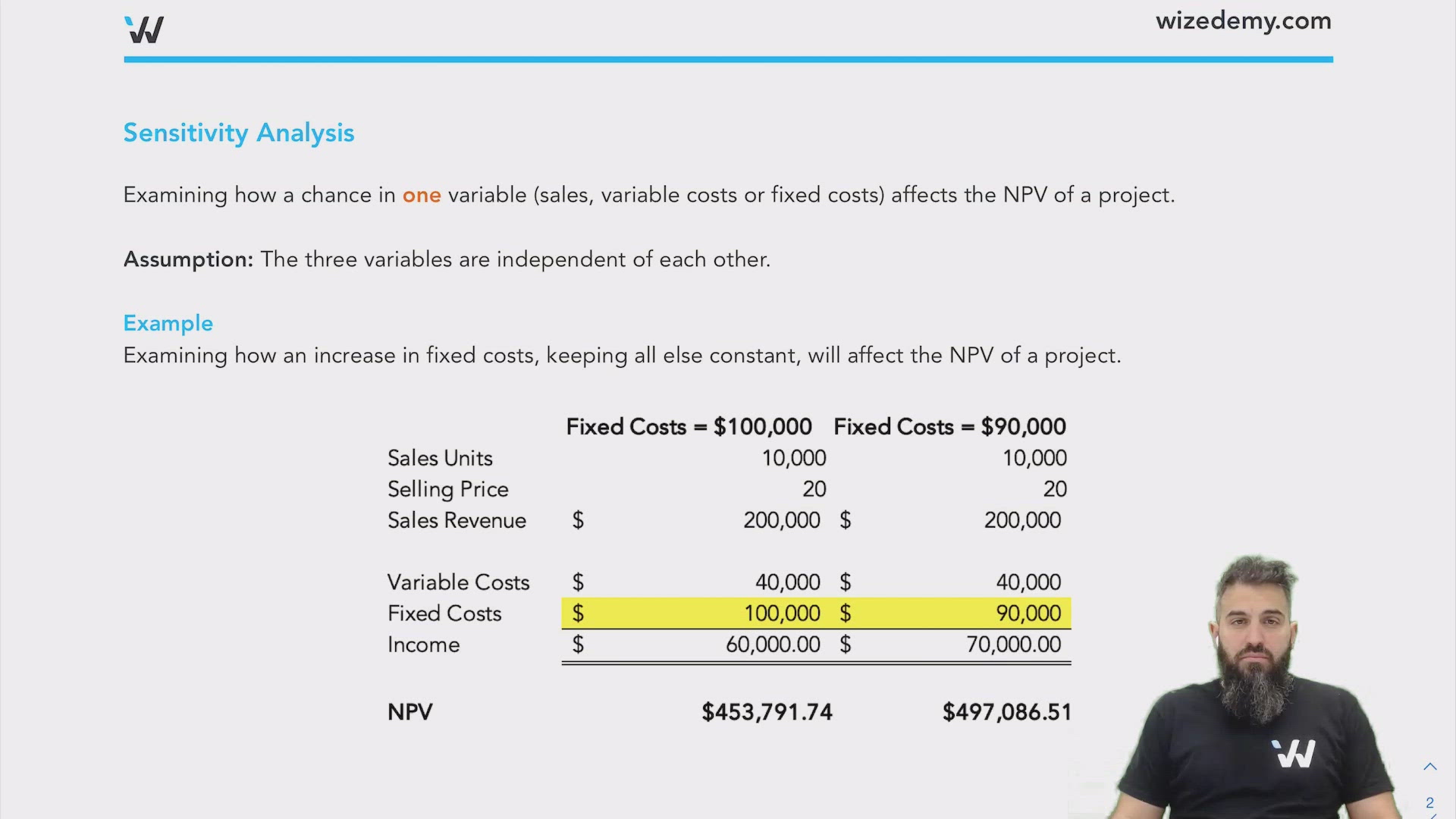
Examining how a change in one variable (sales, variable costs, or fixed costs) affects the NPV of a project.
Assumption: The three variables are independent of each other.
Example:
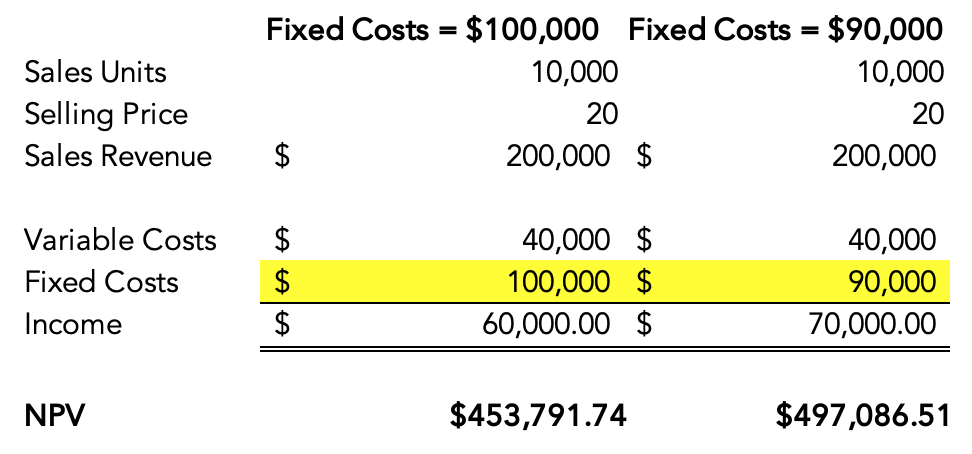
Examining how an increase in fixed costs, keeping all else constant, will affect the NPV of a project.
Scenario Analysis
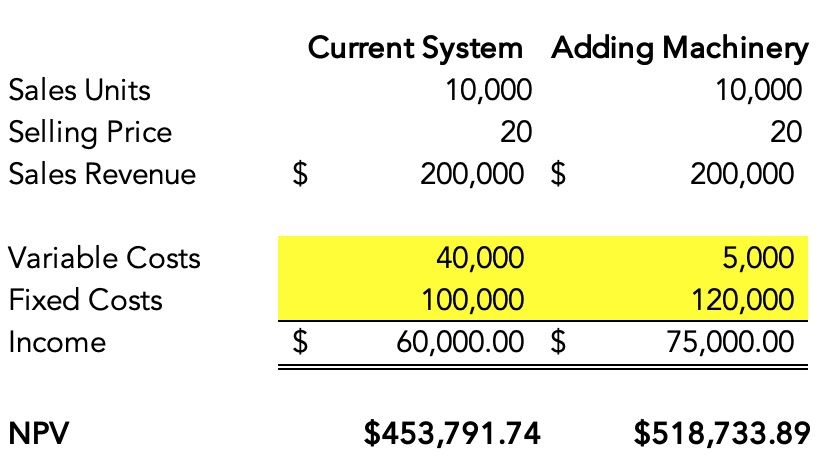
Examining the NPV of a project under different scenarios where multiple variables are affected.
Example:
Considering if a company should keep its existing machinery or purchase more. Purchasing more machinery will increase the company's fixed costs but decrease variable costs.
Break-Even Analysis
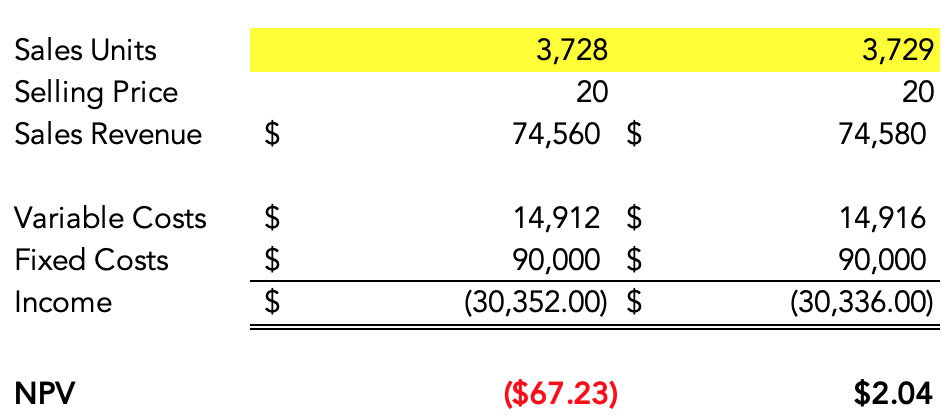
Determine what value of a specific variable will generate an NPV of zero. Typically the variable in question is sales volume (units).
Example:
How many units must be sold in order for the project to break even (have an NPV = 0)? In this example, 3,728 units per year are not enough to break even but 3,729 is enough. So that is the break-even point in sales units.
0:00 / 0:00
Example: Break-Even Analysis
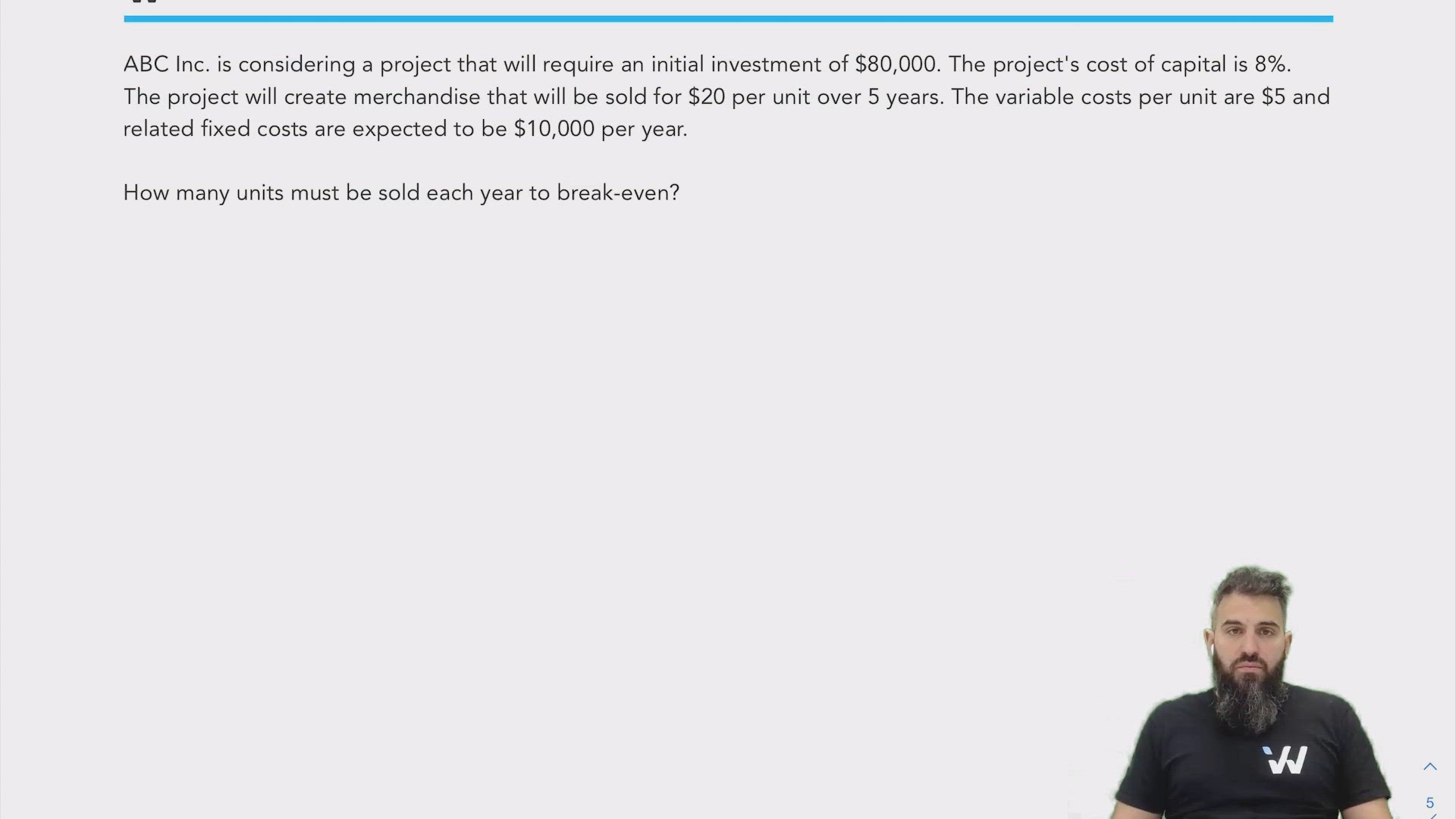
ABC Inc. is considering a project that will require an initial investment of $80,000. The project's cost of capital is 8%. The project will create merchandise that will be sold for $20 per unit over 5 years. The variable costs per unit are $5 and related fixed costs are expected to be $10,000 per year.
How many units must be sold each year to break-even?
0:00 / 0:00
Example: Break-Even Analysis
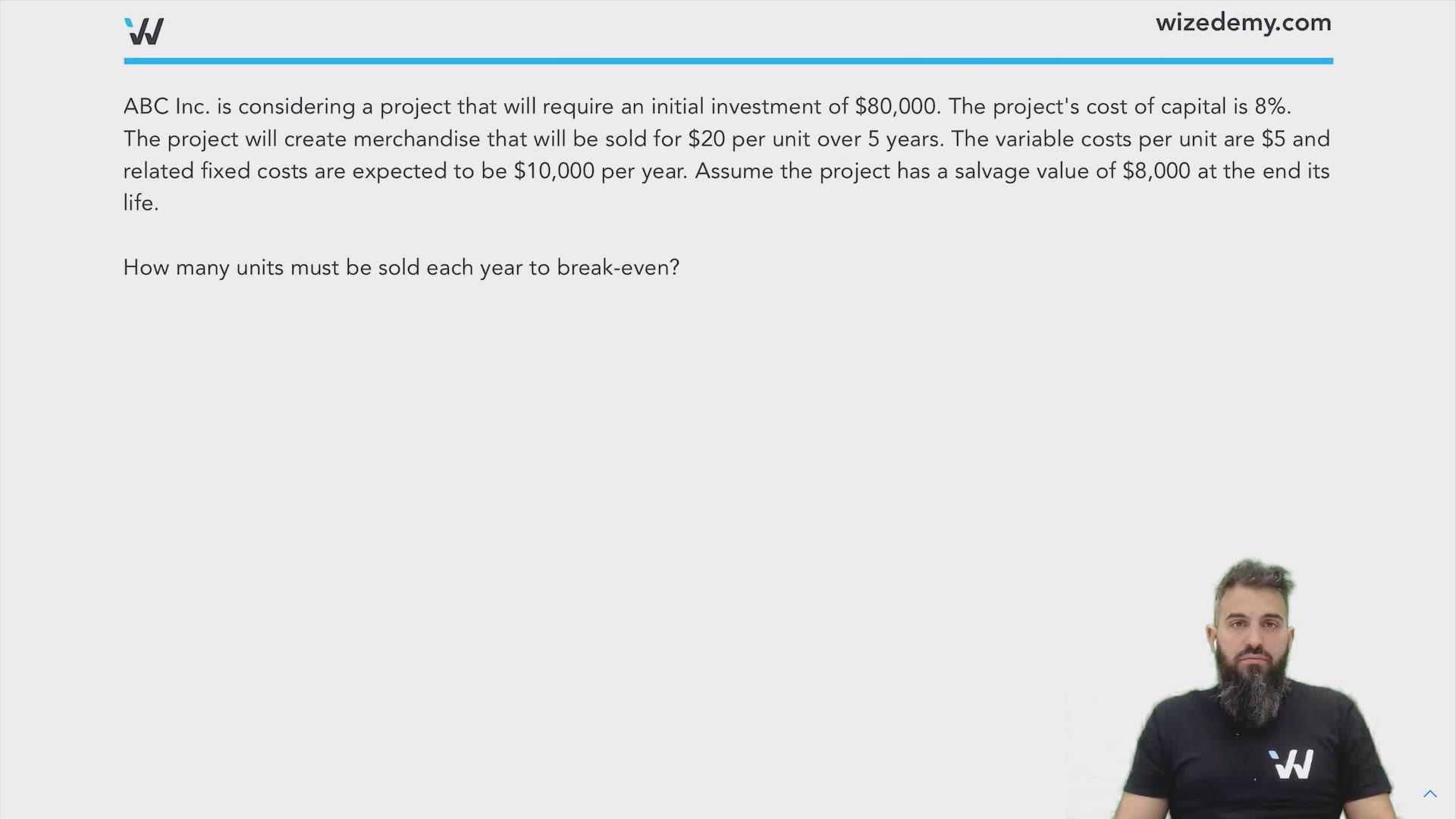
ABC Inc. is considering a project that will require an initial investment of $80,000. The project's cost of capital is 8%. The project will create merchandise that will be sold for $20 per unit over 5 years. The variable costs per unit are $5 and related fixed costs are expected to be $10,000 per year. Assume the project has a salvage value of $8,000 at the end its life.
How many units must be sold each year to break-even?
Practice: Break-Even Analysis
Orange Inc. has invested $1,000,000 to develop a new smart speaker for consumer use. The speaker is now ready for mass production and the company expects to sell 15,000 units per year for four years. The variable cost to produce one speaker is $15 per unit and it will sell for $50 per unit. The total fixed costs related to this product is $200,000 of new direct fixed costs and $50,000 of fixed cost already existing in the business that will be reallocated to the product line.
To produce the speaker, the company will need to construct a production facility that is estimated to cost $1,200,000, the equipment in the facility is expected to have a salvage value of $300,000 in four years and the company's cost of capital is 9%.
By how much would the selling price have to decrease before the company should not longer produce the product? (Round your final answer to 2 decimal places)