Popular Courses
COMM 308
Concordia University
Intro to Finance
University Study Guides
FIN 301
University of Alberta
FINC 341
Texas A&M University
COMM 2202
Dalhousie University
BU283
Wilfrid Laurier University
FIN 300
Arizona State University - Tempe
BUSFIN 3220
Ohio State University
FIN 301
Pennsylvania State University
BUS-F 255
Indiana University - Bloomington
FIN 3403
University of Central Florida
FIN 3403
University of Florida
FIN 320
California State University - Fullerton
BMGT340
University of Maryland - College Park
FINC-UB 7
New York University
FINC-UB 2
New York University
BUS1 170
San José State University
BUSM 2021
University of Colorado Boulder
33:390:203
Rutgers University - New Brunswick (Busch)
0:00 / 0:00
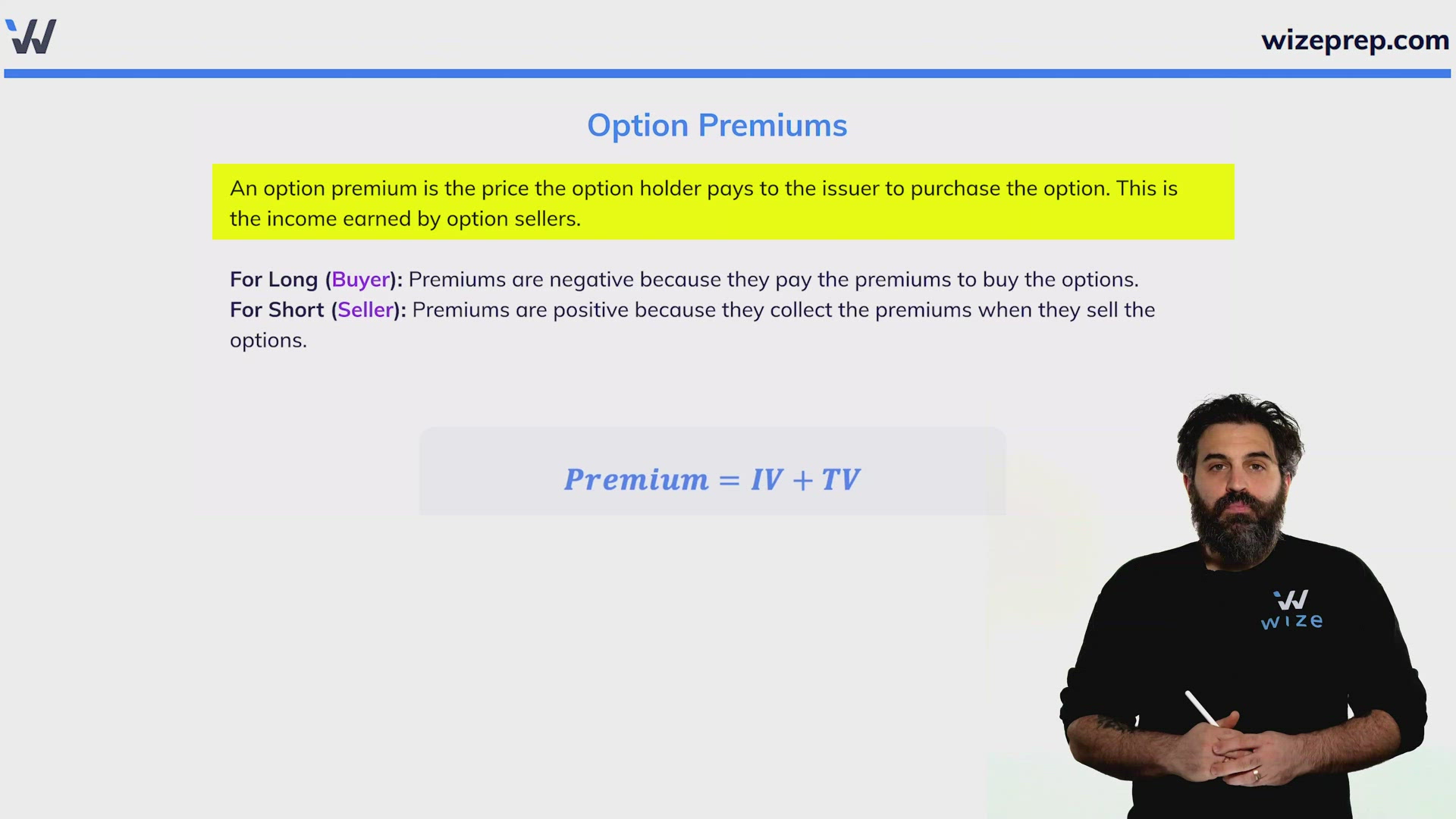
Option Premiums
An option premium is the price the option holder pays to the issuer to purchase the option. This is the income earned by option sellers.
For Long (Buyer): Premiums are negative because they pay the premiums to buy the options.
For Short (Seller): Premiums are positive because they collect the premiums when they sell the options.

Time Value (TV)
- Value placed on the remaining til before the option expires.
- Time value is highest when there is more time remaining to use it (longer expiration).
- Time value, and therefore the option premium, decreases as time until expiration decreases, this is called time decay.
Watch Out!
Time value can never be negative.
Contracts
Options are purchased in lots called contracts, which are bundles of 100 options.
0:00 / 0:00
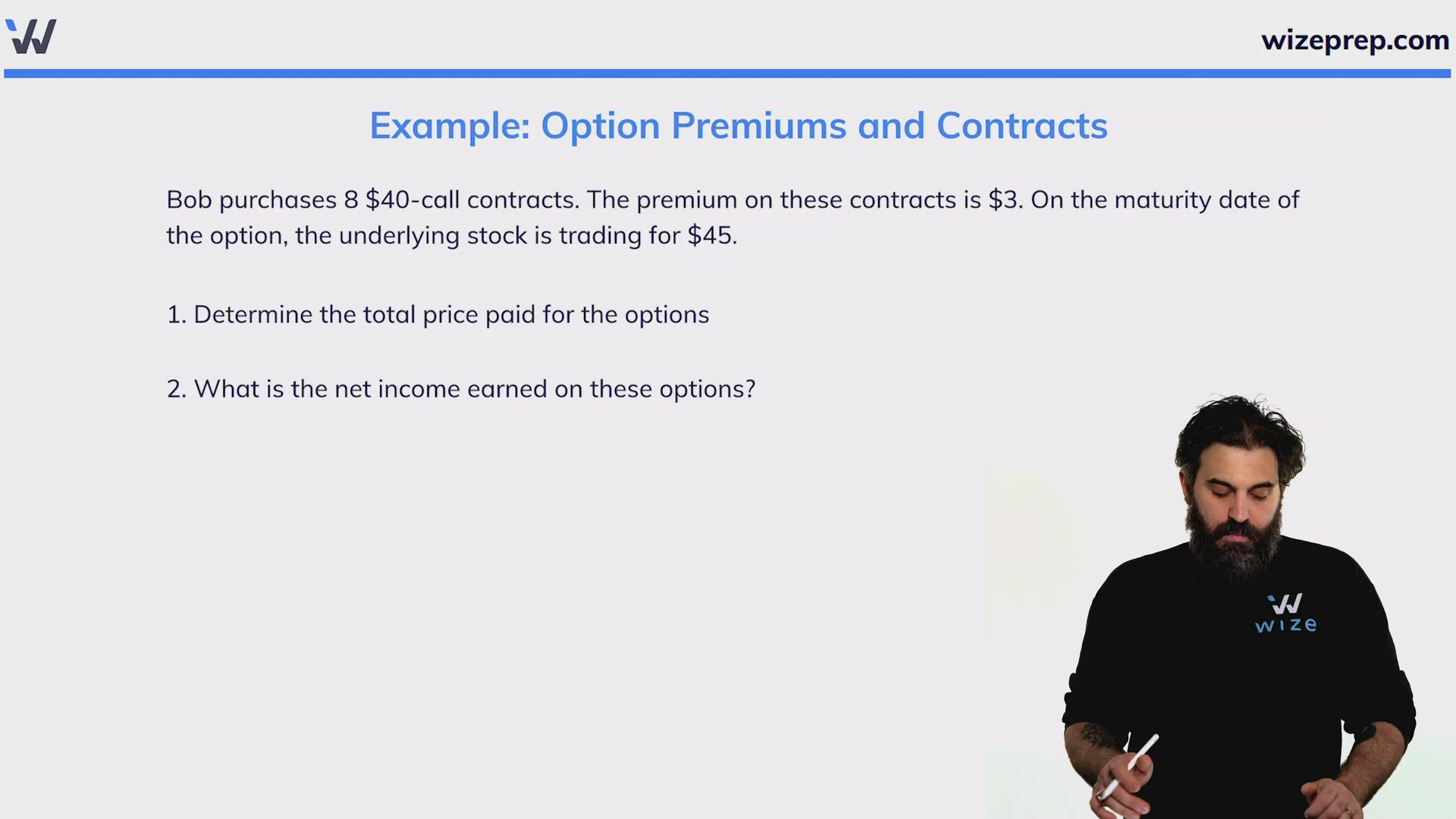
Example: Option Premiums and Contracts
Bob purchases 8 $40-call contracts. The premium on these contracts is $3. On the maturity date of the option, the underlying stock is trading for $45.
1. Determine the total price paid for the options
2. What is the net income earned on these options?
Practice: Option Premiums and Contracts
You construct the following portfolio:
long 4 $50-put contracts with a premium of $2
short 5 $40-call contracts with a premium of $3
On the expiry date of these options the underlying stock is trading for $55. What is the net income on these options?
0:00 / 0:00
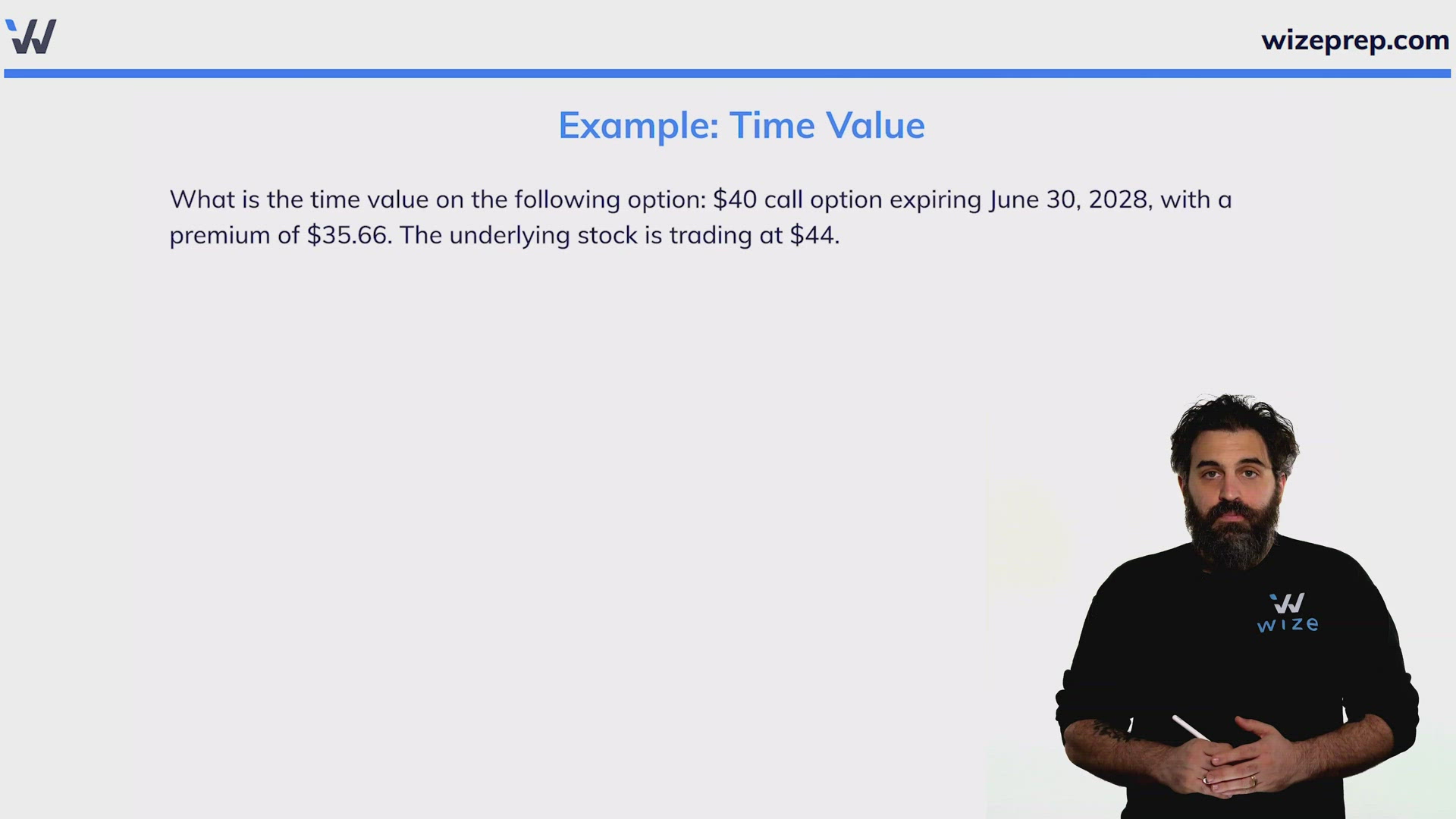
Example: Time Value
What is the time value on the following option: $40 call option expiring June 30, 2028, with a premium of $35.66. The underlying stock is trading at $44.
Practice: Time Value
What is the time value on the following option under the different scenarios below.
$50 put option with a premium of $14.50.
| Stock price = $60 | $ | |
| Stock price = $40 | $ |