Wize University Calculus 3 Textbook > Partial Derivatives
Gradient and Directional Derivatives
Popular Courses
MATH 121
Queen's University
MATH 200
University of British Columbia
MATH 253
University of British Columbia
MATH 222
McGill University
MATH 209
University of Alberta
SC/MATH 2015 3.00
York University
MAST 218
Concordia University
MAT 2322
University of Ottawa
MATH 237
University of Waterloo
MAT235Y1
University of Toronto
MAT 2384
University of Ottawa
MATH 200
University of Victoria
MATH 251
Simon Fraser University
MATH 20C
University of California - San Diego
MAT237Y1
University of Toronto
MAT 2122
University of Ottawa
MATH 2214
Virginia Tech
MATH 10C
University of California - San Diego
SC/MATH 2310 3.00
York University
MATH 20E
University of California - San Diego
0:00 / 0:00
Directional Derivative & Gradient Vector
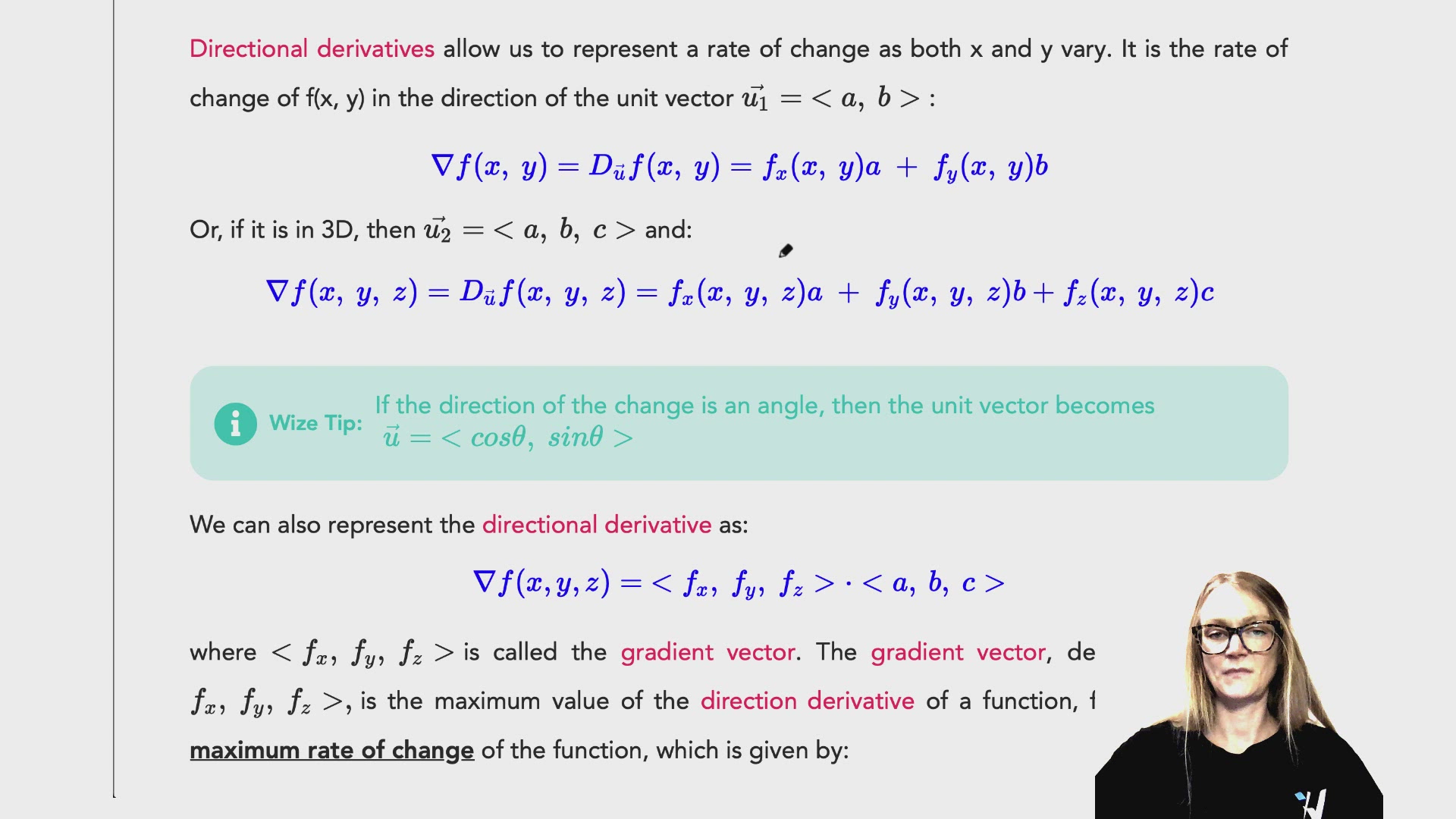
Directional derivatives allow us to represent a rate of change as both x and y vary. It is the rate of change of f(x, y) in the direction of the unit vector :
Or, if it is in 3D, then and:
Wize Tip
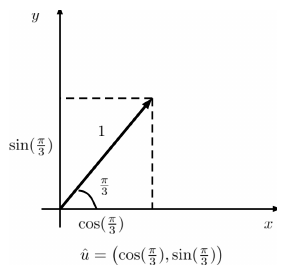
If the direction of the change is an angle, then the unit vector becomes
We can also represent the directional derivative as:
where is called the gradient vector. The gradient vector, denoted is the maximum value of the direction derivative of a function, f, and hence, the maximum rate of change of the function, which is given by:
and it occurs when the unit vector is in the direction of the gradient vector. This is because:
Since the maximum value of is 1, the maximum value of the directional derivative is .Also, when , then the vector has the same direction as
Wize Concept
is orthogonal to the level curve at some point
0:00 / 0:00
Example
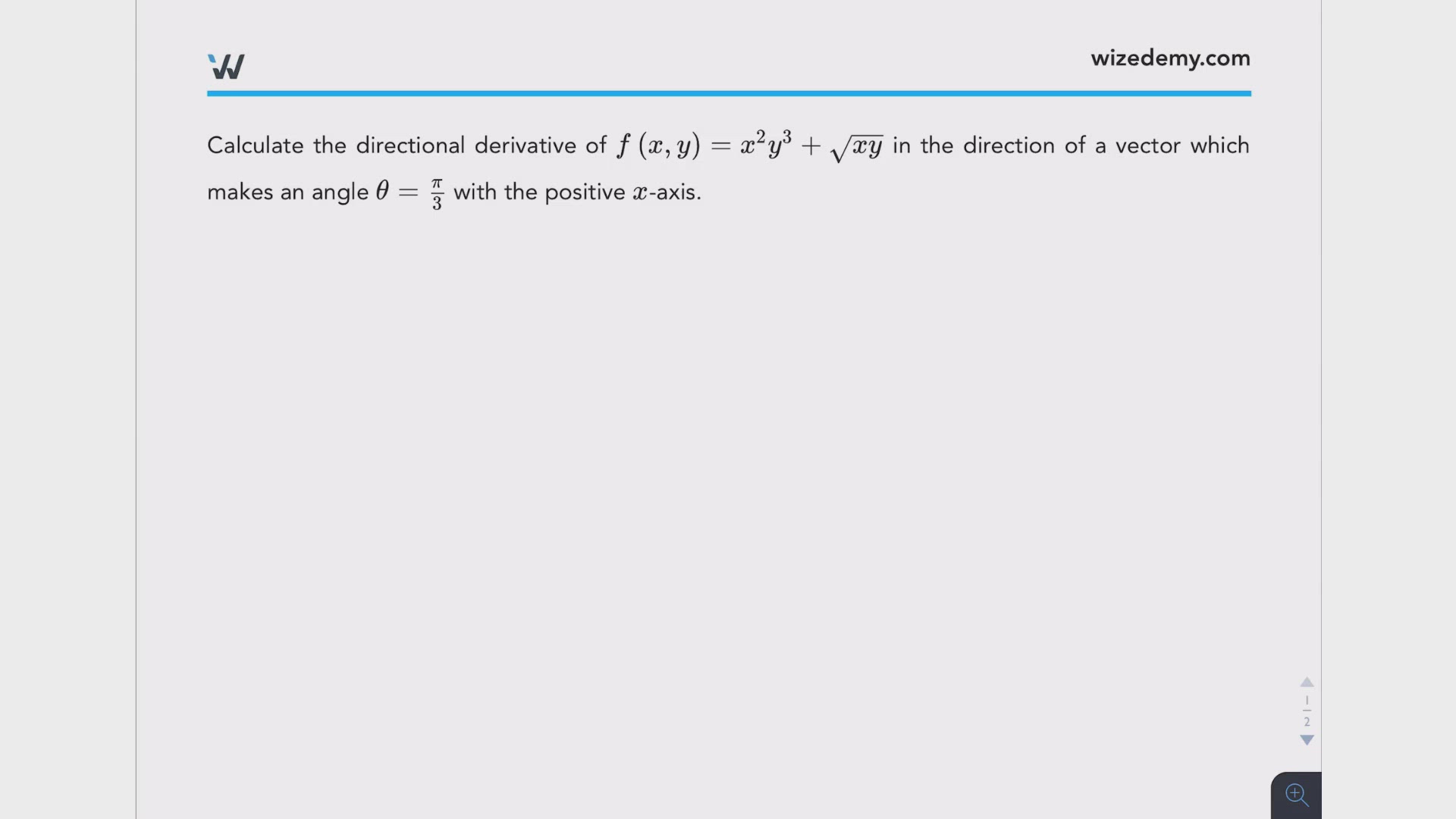
Calculate the directional derivative of in the direction of a vector which makes an angle with the positive -axis.
0:00 / 0:00
Example
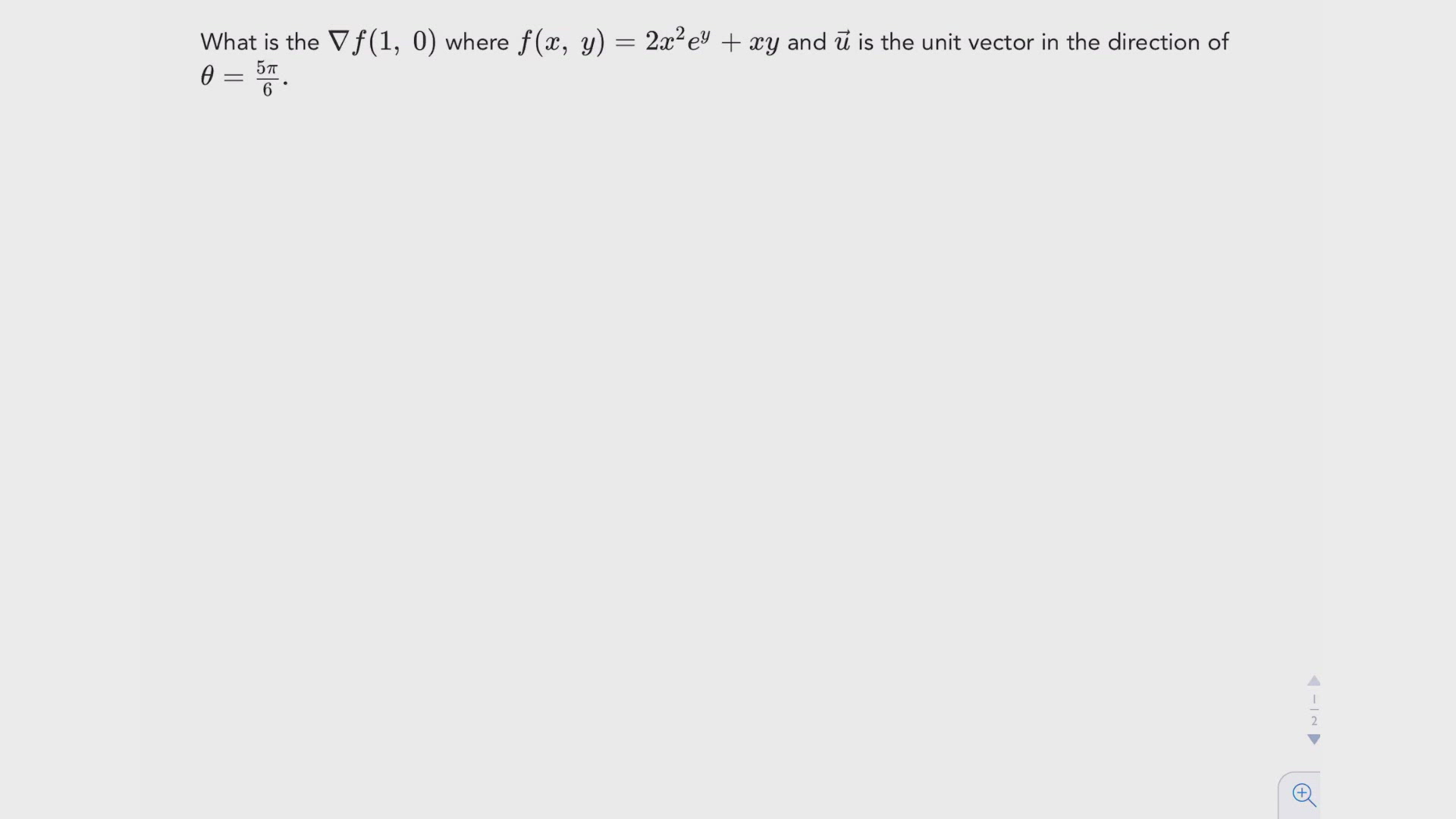
What is the where and is the unit vector in the direction of
First, let's find the unit vector:
Second, we need to find
Then, we can substitute our values into:
Practice
Let and and let be a differentiable function of (x, y).
Suppose at a point the directional derivative is in the direction of is and the directional derivative of is
What is and at
Practice
Calculate where in the direction of