Wize University Calculus 2 Textbook > Differential Equations
Basics of Differential Equations
Popular Courses
AP Calculus (AB) Exam Prep Course
AP Exam Prep
Calculus 2
University Study Guides
MATH 100A
University of British Columbia
MATH 100C
University of British Columbia
MATH 1LS3
McMaster University
MATH 121
Queen's University
MATH 101
University of British Columbia
MATH 100B
University of British Columbia
Calculus 2
General Course
CALCULUS 1301A/B
Western University
Calculus 2
University Study Guides
MAT 1322
University of Ottawa
MAT186H1
University of Toronto
SC/MATH 1506 3.00
York University
MATH 101
University of Alberta
MAT136H1
University of Toronto
MAT136H1
University of Toronto
APSC 171
Queen's University
MATH 180
University of British Columbia
SC/MATH 1014 3.00
York University

0:00 / 0:00
Differential Equations
Definitions
A Differential Equations (DE) is an equation that relates a function to some of its derivatives and other functions in .
Examples
-- first order
-- third order
- The Order of a DE is the highest order derivative that appears in that DE
- If the DE of the form (the independent variable doesn't affect the equation), then it is called autonomous
Some Applicatoins
- Population growth:
- Logistic growth:
- Motions of spring:
- Newton's law of heating and cooling:
Solutions to a DE
A General Solution to a DE is a solution that involves a constant C (this represents a whole family of solutions)
Example
Show that is the general solution for the differential equation,
Left hand side of the equation:
This equals the right hand side of the equation.
Therefore, it is a solution for the differential equation.
In fact, it is a general solution because the constants A and B can take on any values (it is not specified).
An Initial Value Problem (IVP) is a DE problem where a side/initial condition is given. In this case, the solution we get is a particular/specific solution
Example
Verify that is the particular solution to the DE with
Left hand side of the equation:
This equals the right hand side of the equation.
Also, , so it satisfies the initial condition
An Equilibrium Solution is a solution to a DE such that
0:00 / 0:00
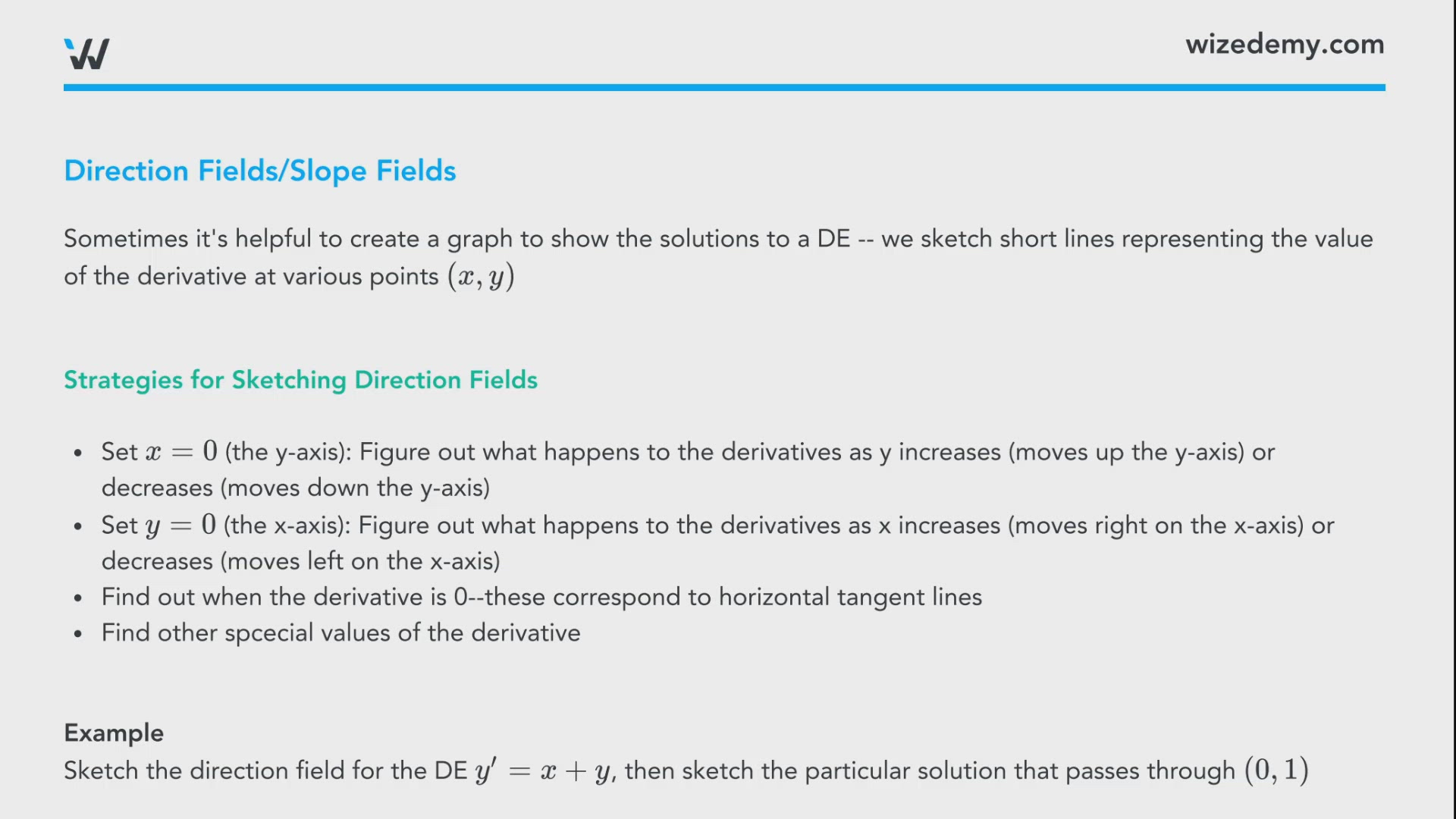
Direction Fields/Slope Fields
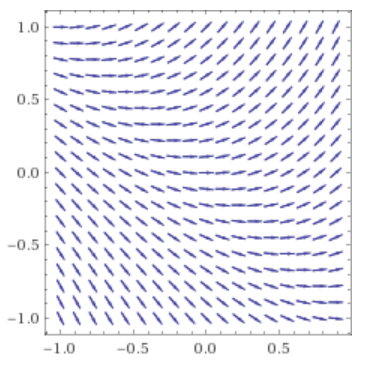
Sometimes it's helpful to create a graph to show the solutions to a DE -- we sketch short lines representing the value of the derivative at various points
Strategies for Sketching Direction Fields
- Set (the y-axis): Figure out what happens to the derivatives as y increases (moves up the y-axis) or decreases (moves down the y-axis)
- Set (the x-axis): Figure out what happens to the derivatives as x increases (moves right on the x-axis) or decreases (moves left on the x-axis)
- Find out when the derivative is 0--these correspond to horizontal tangent lines
- Find other spcecial values of the derivative
Example
Sketch the direction field for the DE , then sketch the particular solution that passes through
Practice Question
Match the differential equations with the solution graphs below
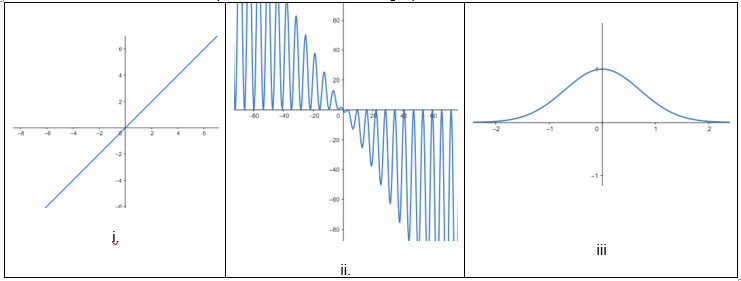
A.
B.
C.
i
ii
iii
0:00 / 0:00
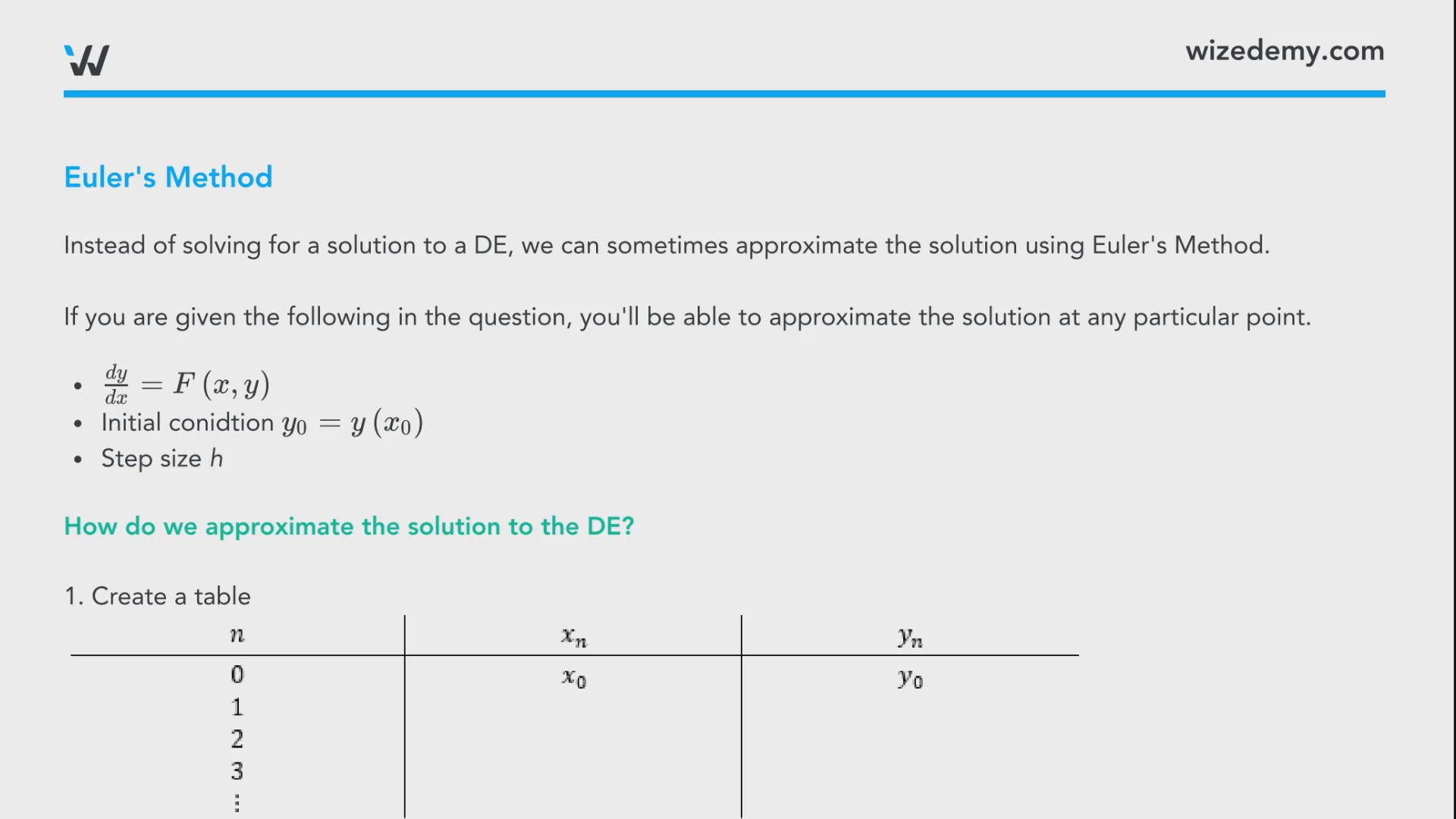
Euler's Method
Instead of solving for a solution to a DE, we can sometimes approximate the solution using Euler's Method.
If you are given the following in the question, you'll be able to approximate the solution at any particular point.
- Initial conidtion
- Step size h
How do we approximate the solution to the DE?
1. Create a table
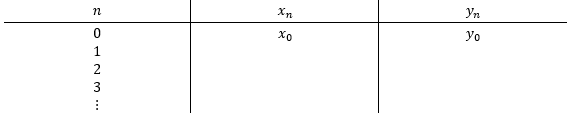
2. Fill out the column ()
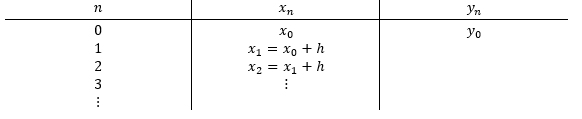
3. Fill out the column ()
Example
Given that and , using a step size of 0.1, estimate .

Therefore, .
Practice: Euler's Method
Use Euler's method with step size 0.5 to approximate the value of , where is the solution of the initial-value problem ,