
Basic of Polynomials
A polynomial is an expression consisting of one or more algebraic terms with coefficients, constants, & variables raised to whole-number exponents.
The degree of a polynomial is determined by the value of the greatest exponent.
The following are examples of polynomials and their degree:
Types of Polynomials
- A monomial is a polynomial consisting of one term
- Example:
- A binomial is a polynomial consisting of two terms
- Example:
- A trinomial is a polynomial consisting of three terms
- Example:
First Degree Polynomials
- Linear Monomial
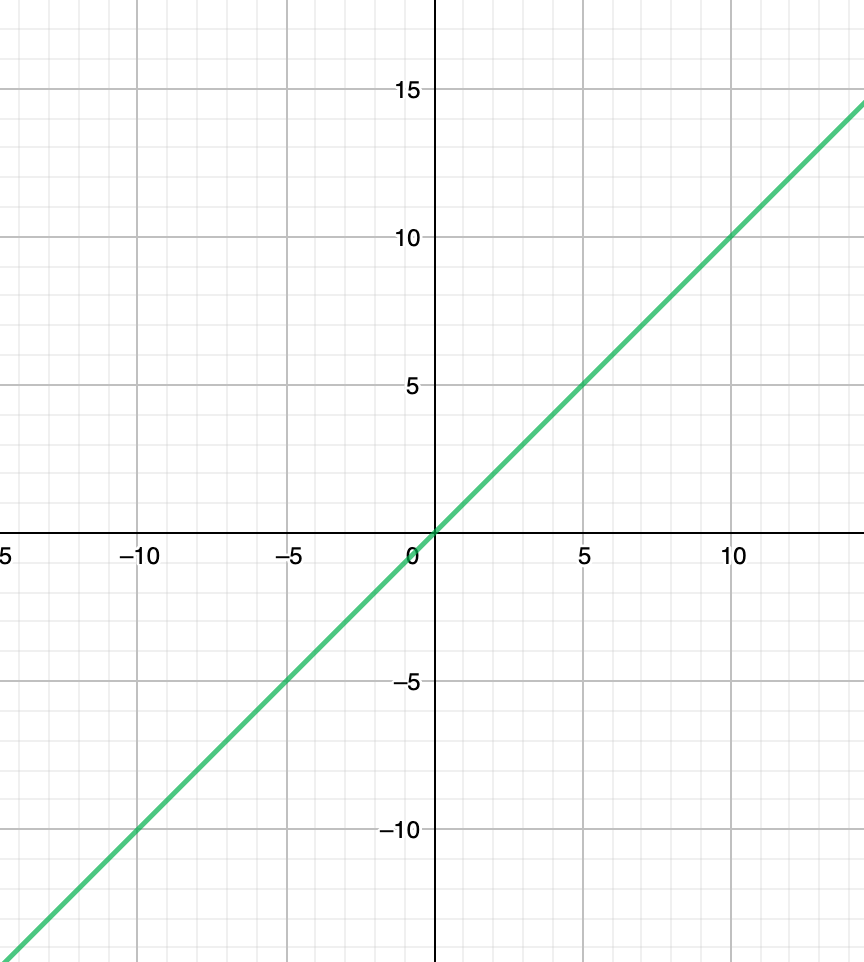
Second Degree Polynomials
- Quadratic Monomial

Third Degree Polynomials
- Cubic Monomial
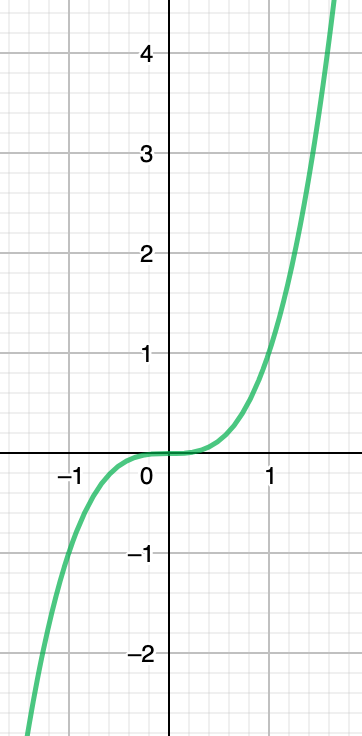
Fourth Degree Polynomials
- Quartic Monomial
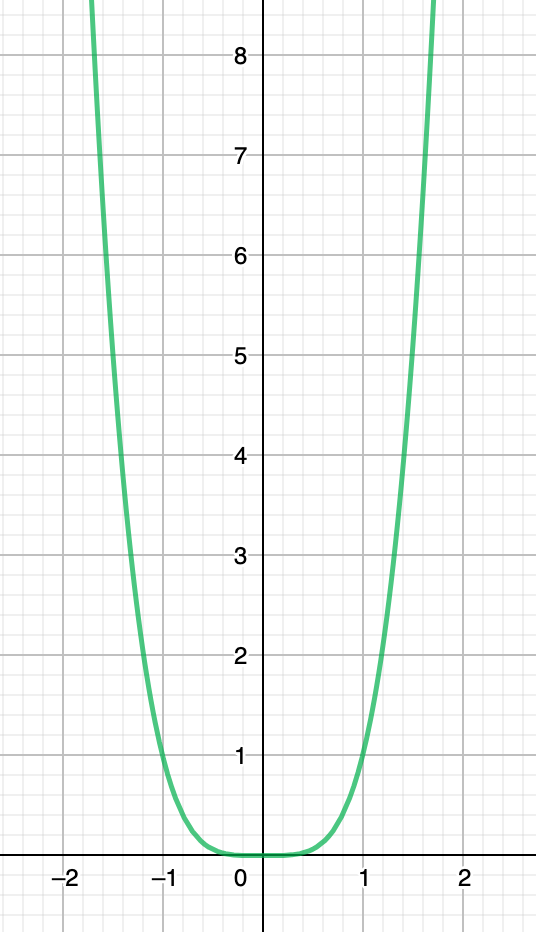
Fifth Degree Polynomial
- Quintic Monomial
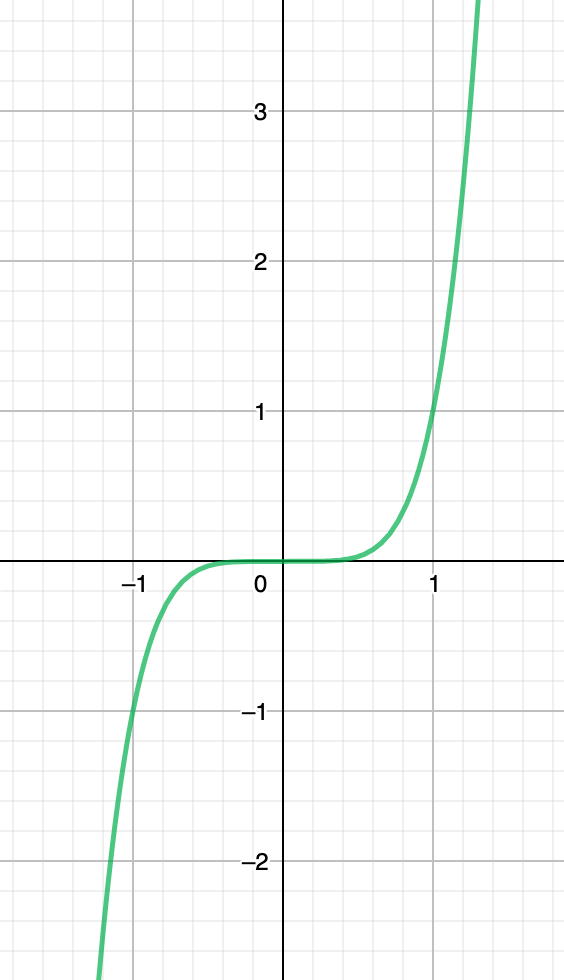
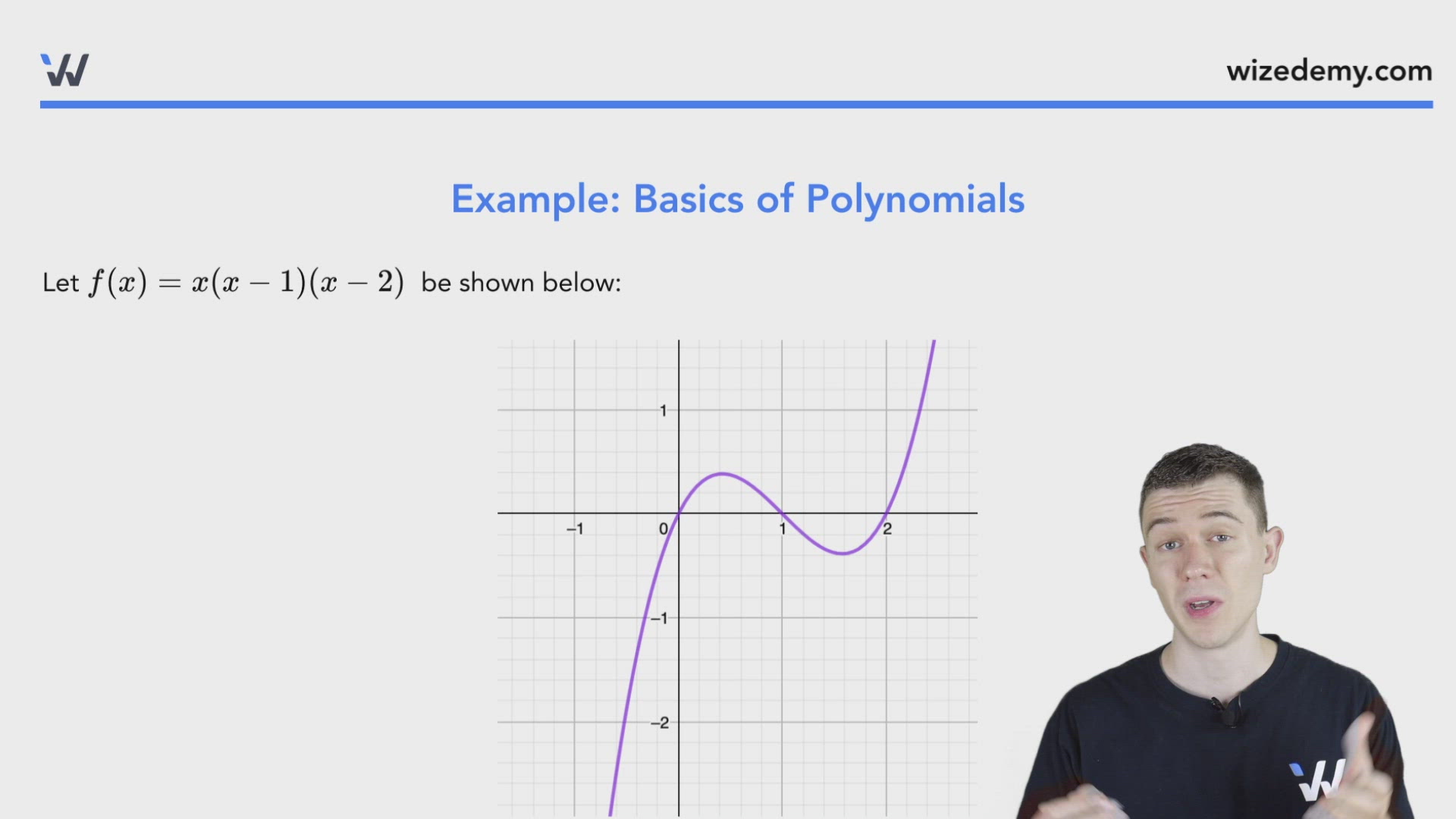
Example: Basics of Polynomials
Let be shown below:
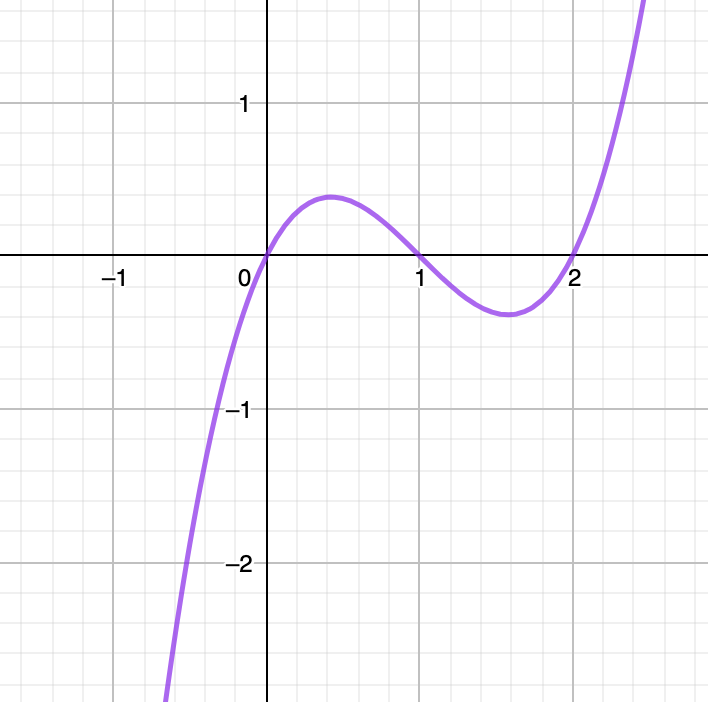
Identify the following:
- Degree
- End Behaviour
- X-Intercepts
- Domain & Range
Degree: 3
End Behaviour:
-Intercepts: x = 0, 1, 2
Domain:
Range:
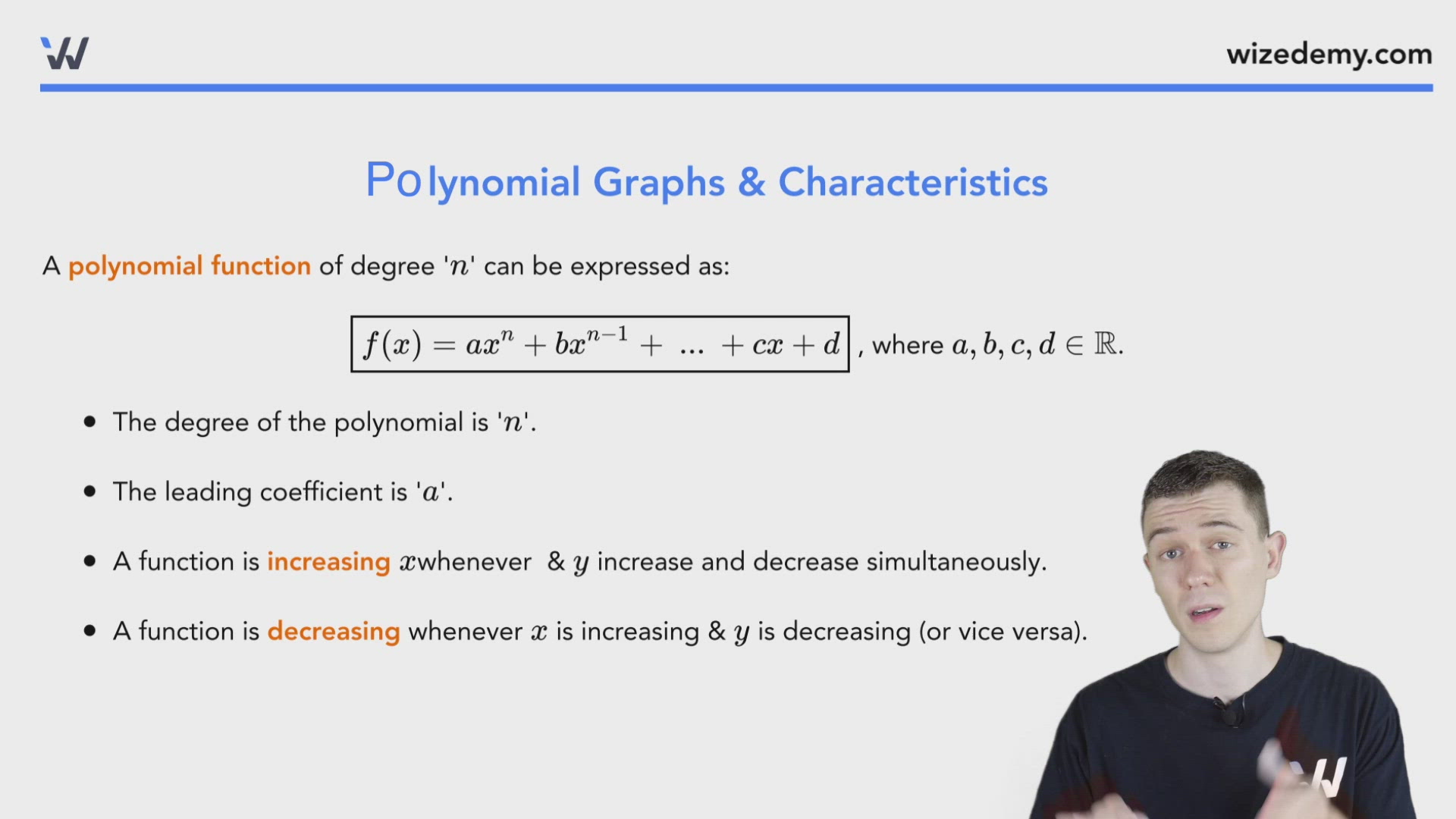
Polynomial Graphs & Characteristics
A polynomial function of degree '' can be expressed as:
, where .
- The degree of the polynomial is ''.
- The leading coefficient is ''.
- A function is increasing whenever & increase and decrease simultaneously.
- A function is decreasing whenever is increasing & is decreasing (or vice versa).
Positive, Odd Polynomials
When :
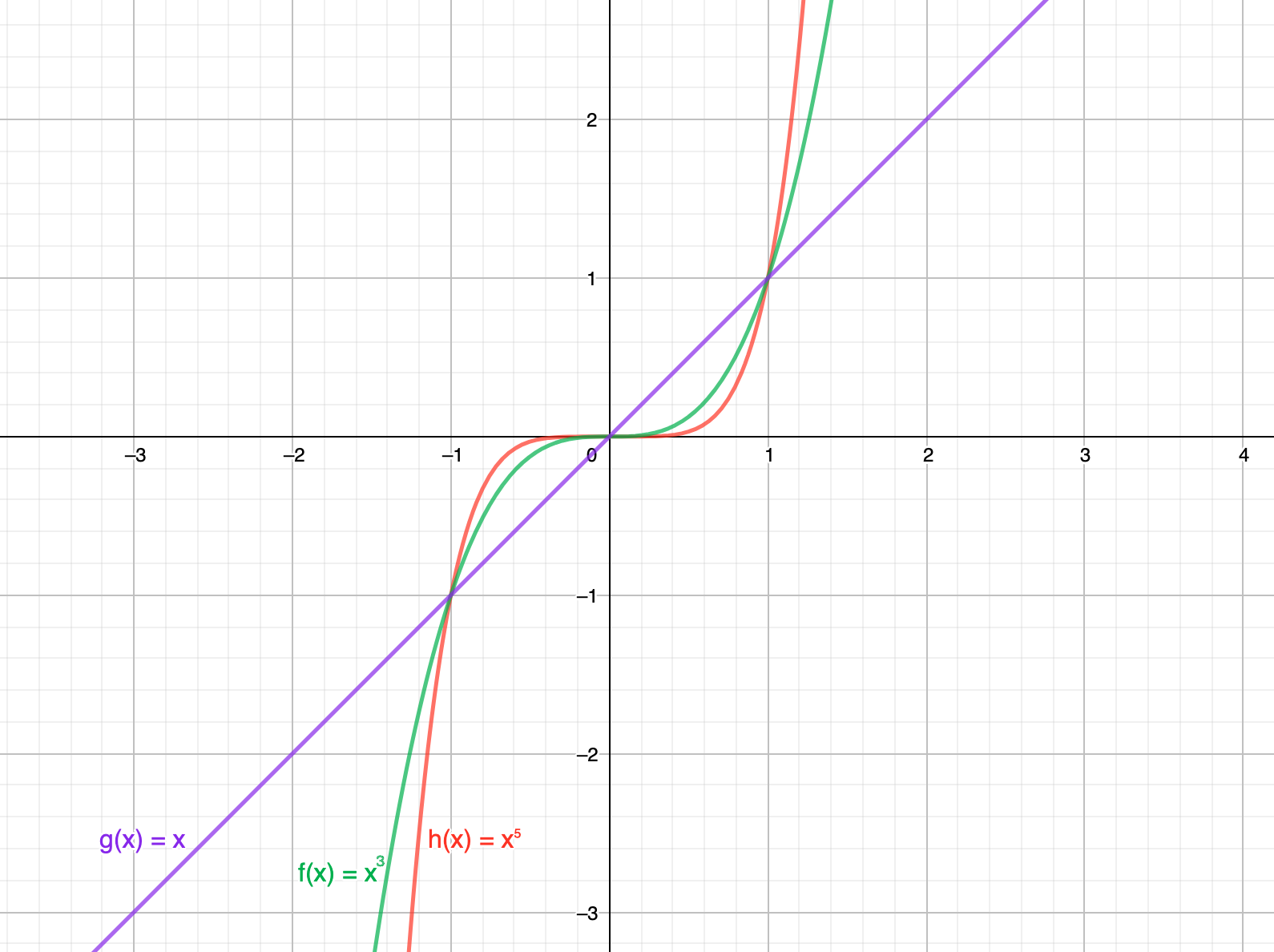
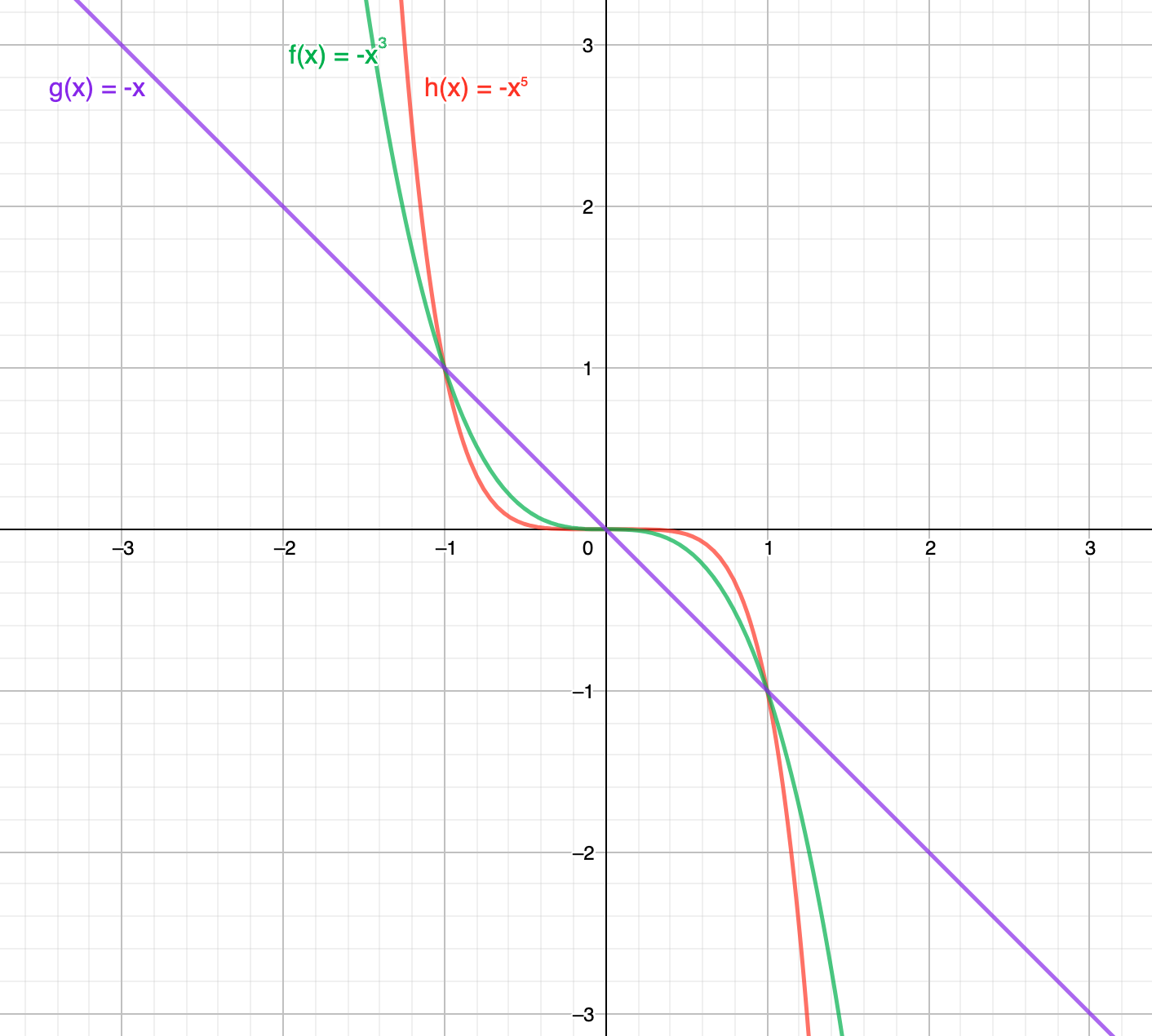
Negative, Odd Polynomials
When :
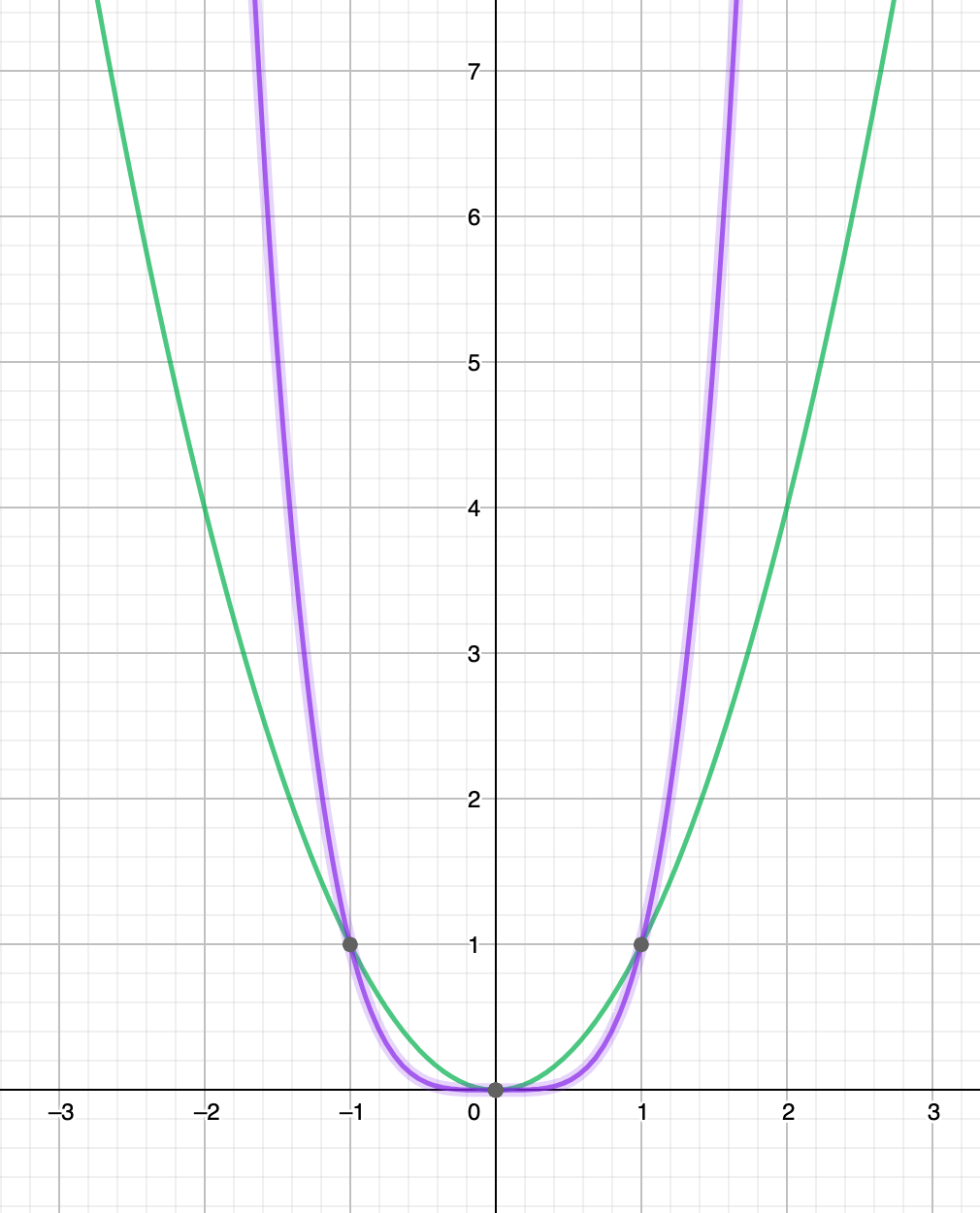
Positive, Even Polynomials
When :
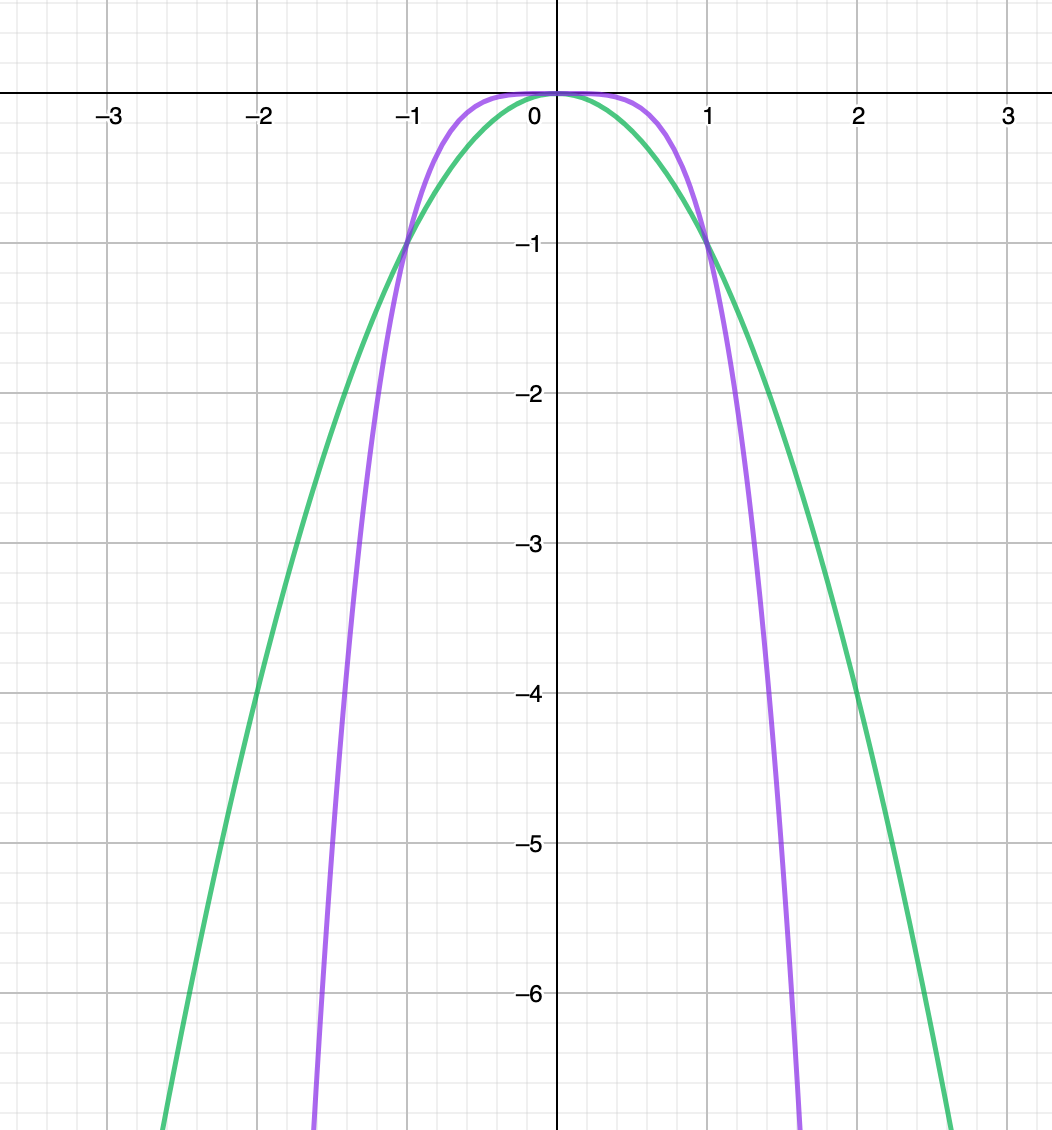
Negative, Even Polynomials
When :
Example: Polynomial Graphs & Characteristics
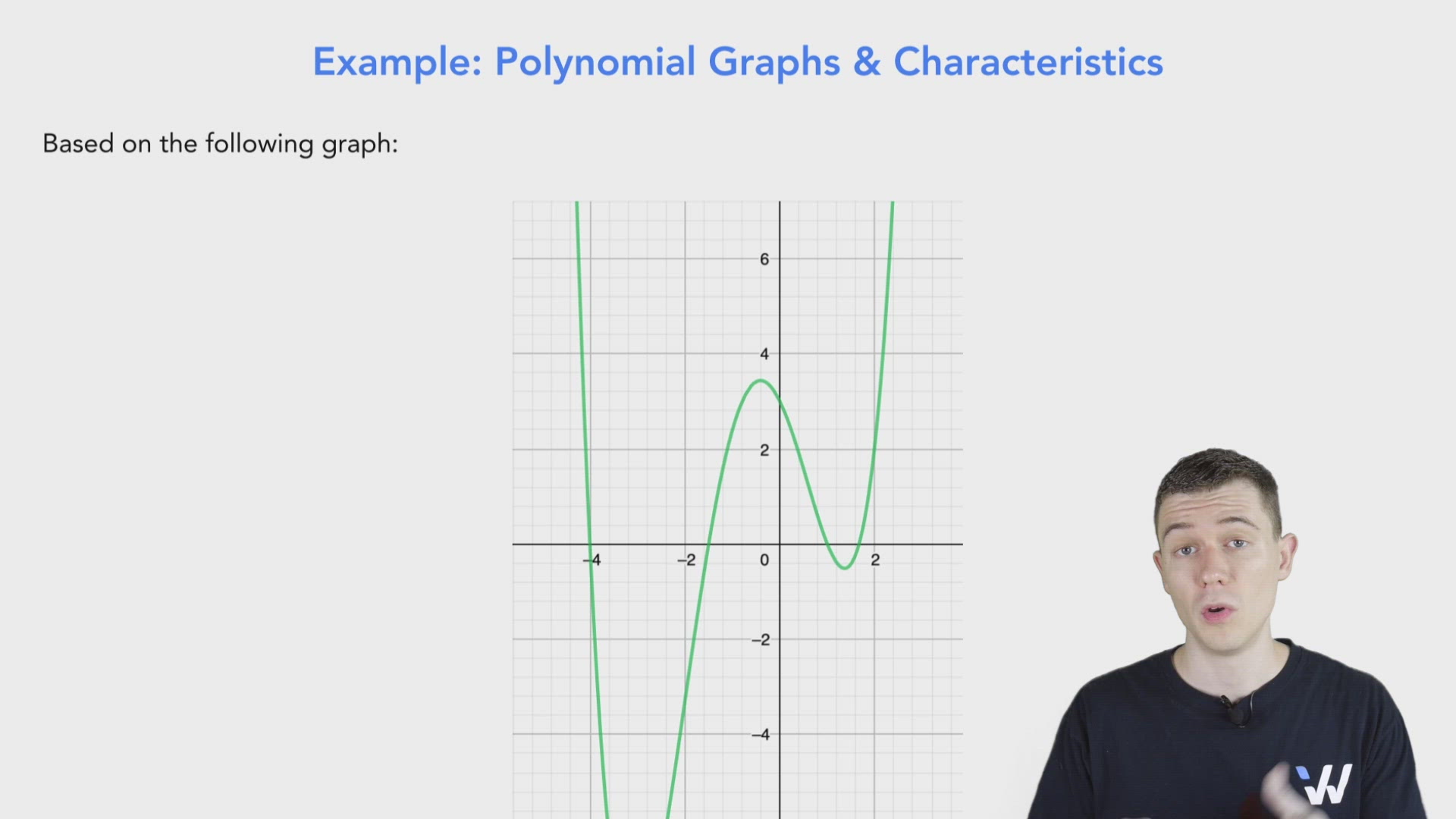
Based on the following graph:
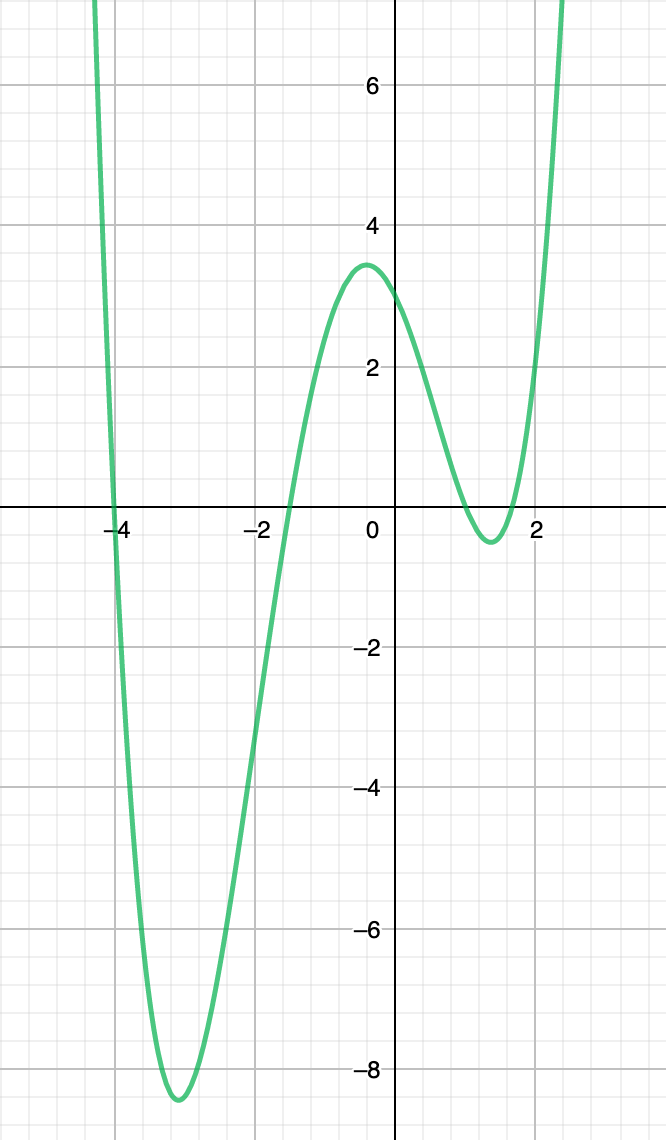
Find the following:
- Number of -intercepts
- End Behaviour
- Odd or Even Degree
- Positive or Negative Leading Coefficient
- Degree of Polynomial
Number of -intercepts: 4
End Behaviour:
Odd or Even Degree: Even
Positive or Negative Leading Coefficient: Positive
Degree of Polynomial: 4