Wize University Calculus 1 Textbook > Integration Techniques
The Trapezoid Rule
Popular Courses
Calculus 1
University Study Guides
Calculus 1
General Course
MATH 121
Queen's University
Calculus 1
University Study Guides
MAT 1320
University of Ottawa
MATH 100
University of Alberta
MATH 100
University of Victoria
MTH 131
Toronto Metropolitan University
MATH 1225A/B
Western University
MATH 1500
University of Manitoba
MA103
Wilfrid Laurier University
MATH 146
University of Alberta
MATH 110
University of British Columbia
MATH 140
Pennsylvania State University
MATH 126
Queen's University
MATH 1510
University of Manitoba
MAT 1300
University of Ottawa
MATH 1004
Carleton University
MATA29H3
University of Toronto
MATH 1MM3
McMaster University
0:00 / 0:00
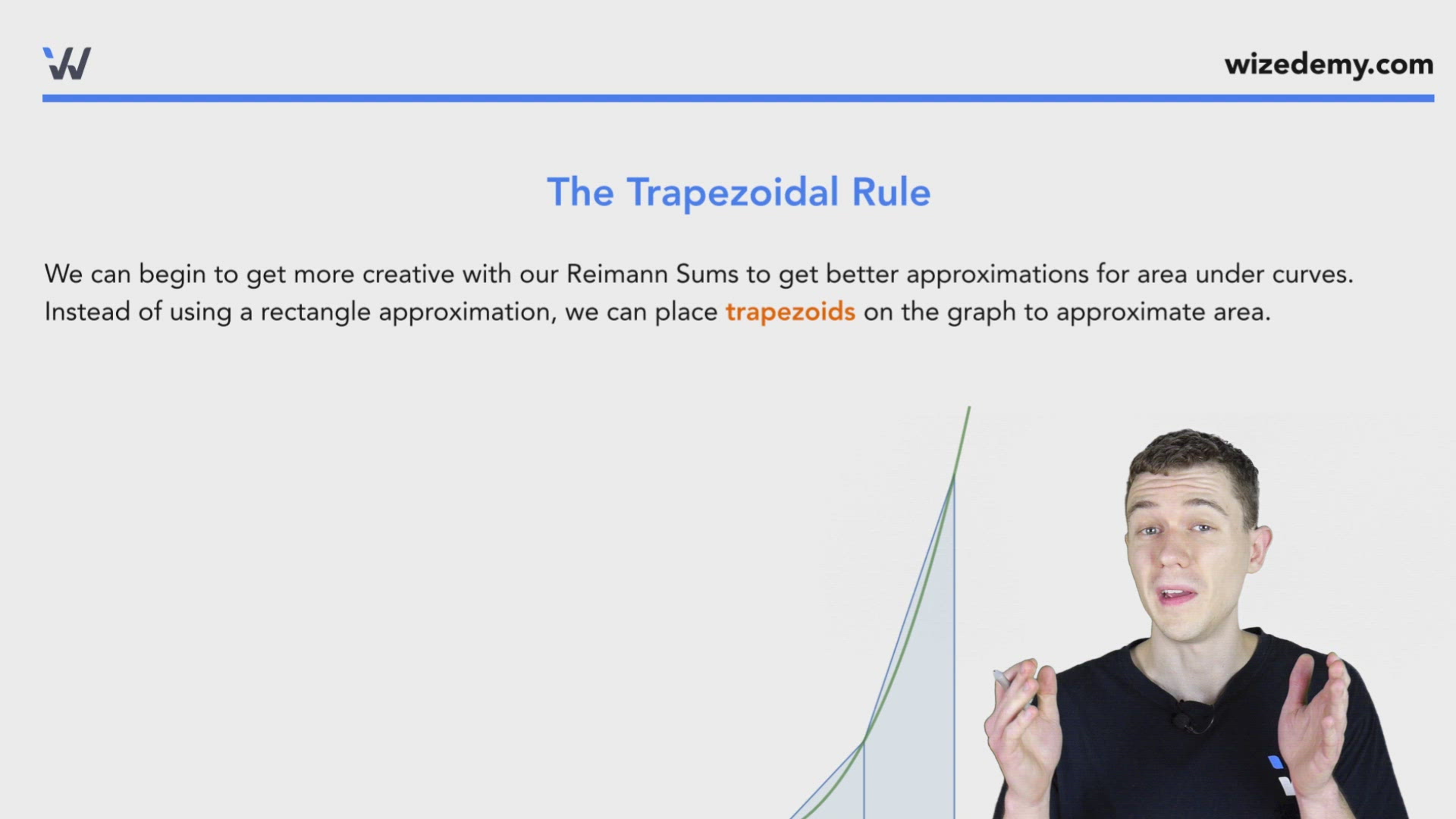
The Trapezoidal Rule
We can begin to get more creative with our Reimann Sums to get better approximations for area under curves. Instead of using a rectangle approximation, we can place trapezoids on the graph to approximate area.
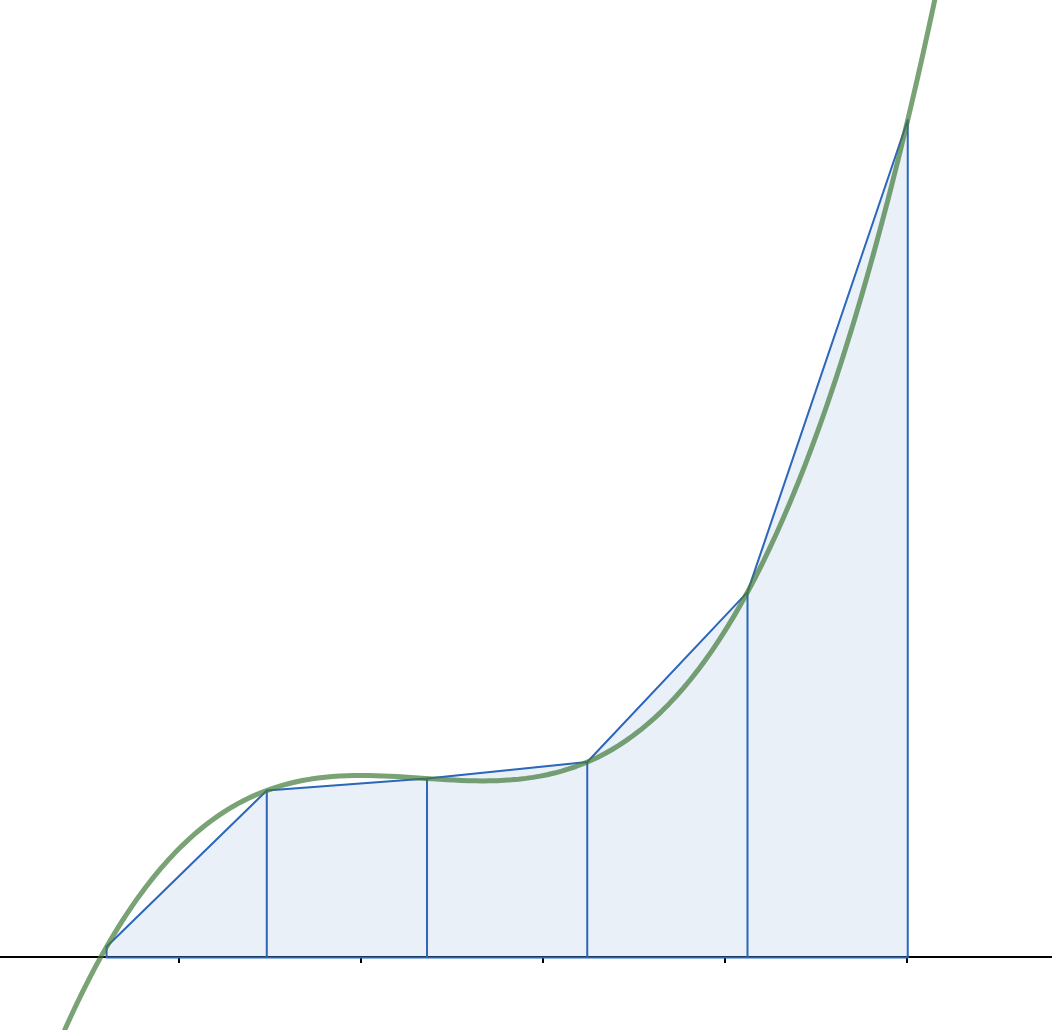
Trapezoid Rule
where , and is the number of subintervals.
0:00 / 0:00
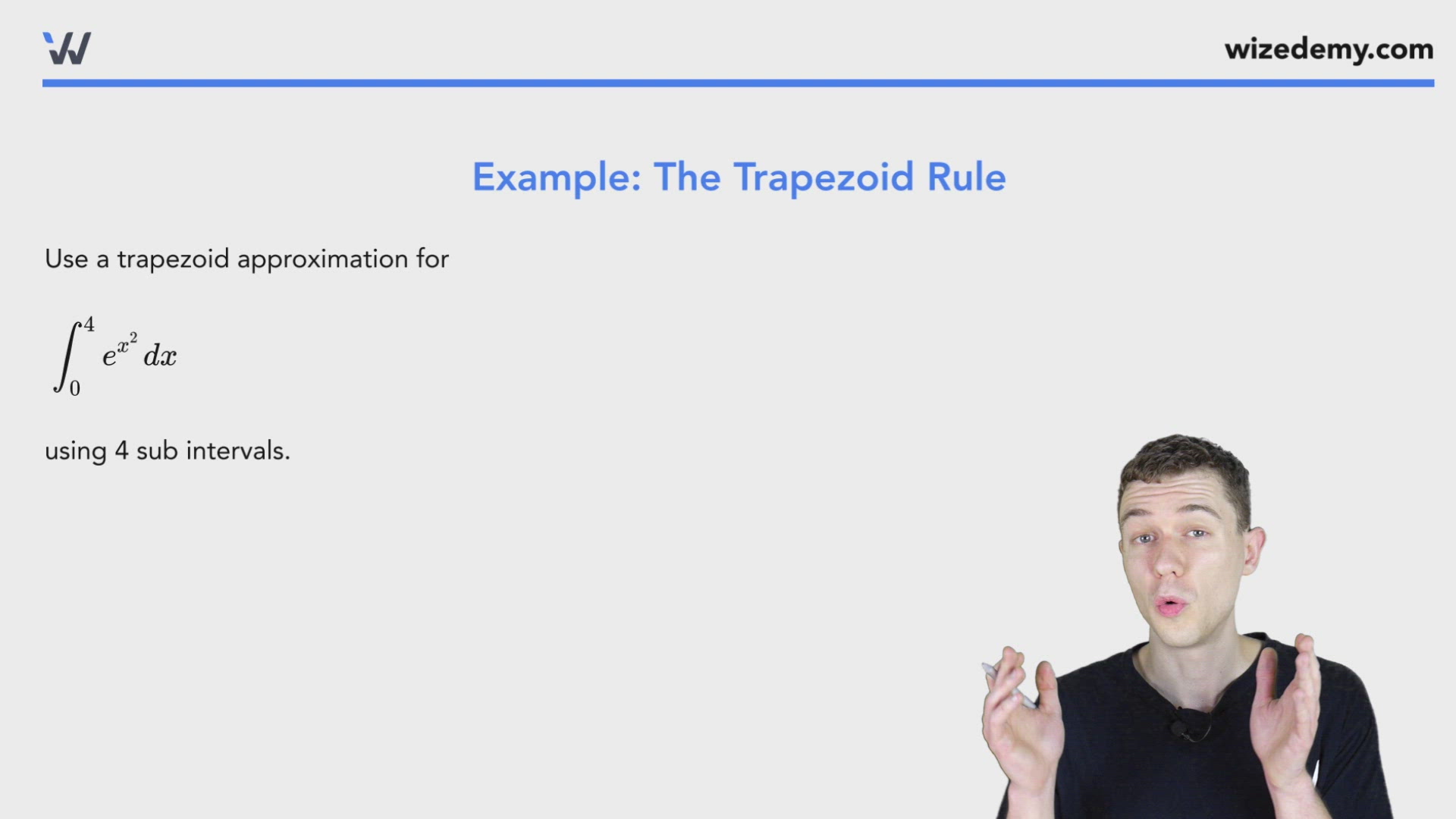
Example: The Trapezoid Rule
Use a trapezoid approximation for
using 4 sub intervals.
Which of the following is the integral approximation of
using the trapezoid rule with ?