
Higher Order Derivatives
To get the second derivative, differentiate the first derivative. Then the third is the derivative of the second and so on.
The second derivative is denoted:
The nth derivative is denoted:

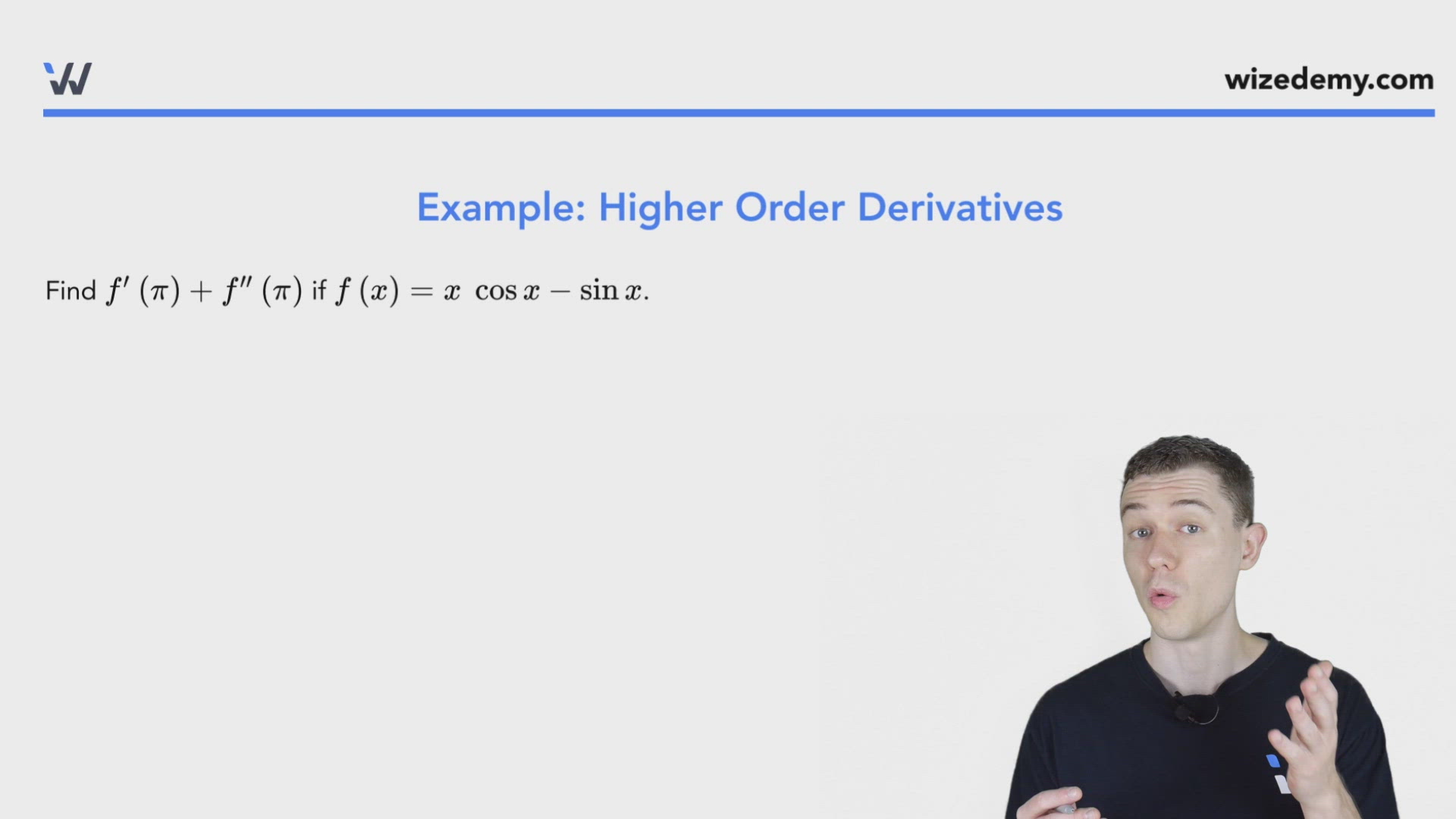
Example: Higher Order Derivatives
Find if .
First Derivative
There's not much we can simplify with this expression, and since we have a product of functions, we need to use product rule.
Second Derivative
Since we have a product of functions, we need the product rule again.
Substituting :