Wize University Organic Chemistry Textbook > Aromaticity (Arenes)
Considerations for Electrophilic Aromatic Substitutions
Popular Courses
MCAT
General Course
DAT
General Course
CHEM 2213A/B
Western University
Organic Chemistry
University Study Guides
Organic Chemistry
General Course
Organic Chemistry
University Study Guides
CHM 1321
University of Ottawa
CHEM 2223B
Western University
CHEM 263
University of Alberta
CHEM 282
Queen's University
CHY 142
Toronto Metropolitan University
CHEM 222
McGill University
CHEM 353
University of Calgary
CHEM 2OB3
McMaster University
CHEM 250
University of Saskatchewan
CHEM 260
University of British Columbia
CHM247H1
University of Toronto
CHEM 213
University of British Columbia
CHEM 2100
University of Manitoba
CHEM*2700
University of Guelph
0:00 / 0:00
Considerations for Electrophilic Aromatic Substitutions
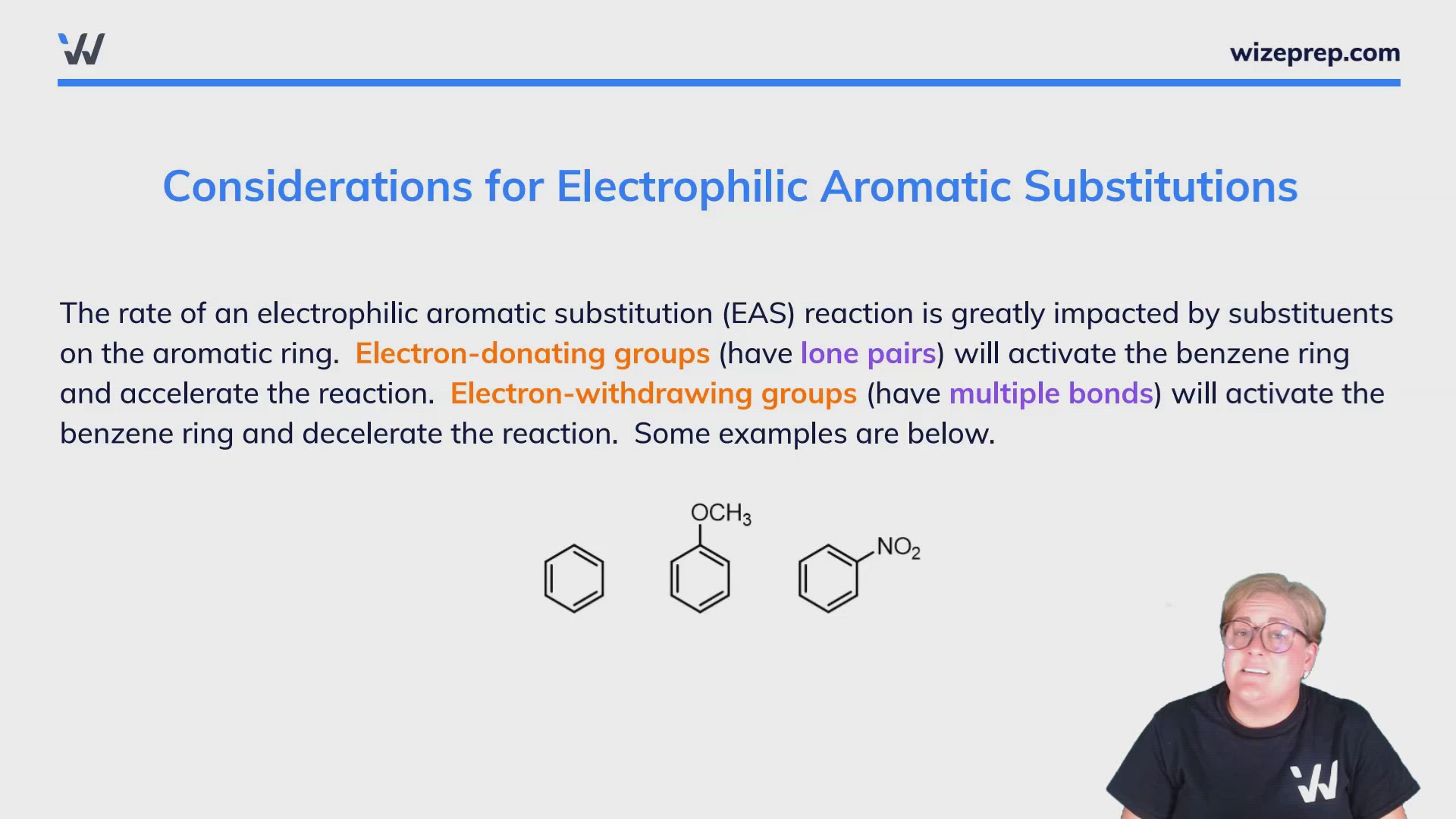
The rate of an electrophilic aromatic substitution (EAS) reaction is greatly impacted by substituents on the aromatic ring. Electron-donating groups (have lone pairs) will activate the benzene ring and accelerate the reaction. Electron-withdrawing groups (have multiple bonds) will activate the benzene ring and decelerate the reaction. Some examples are below.
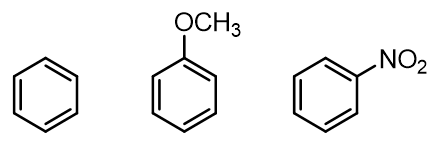
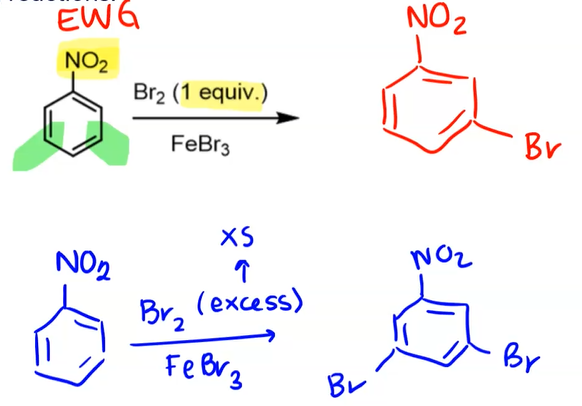
The substituents play a role in the regioselectivity of an EAS reaction. Electron-donating groups (EDG) will favour EAS reactions in the ortho and para positions. Stronger directors (amines, alcohols, ethers) will have the strongest directing effect. Electron-withdrawing groups (EWG) will favour EAS reactions in the meta position.

0:00 / 0:00
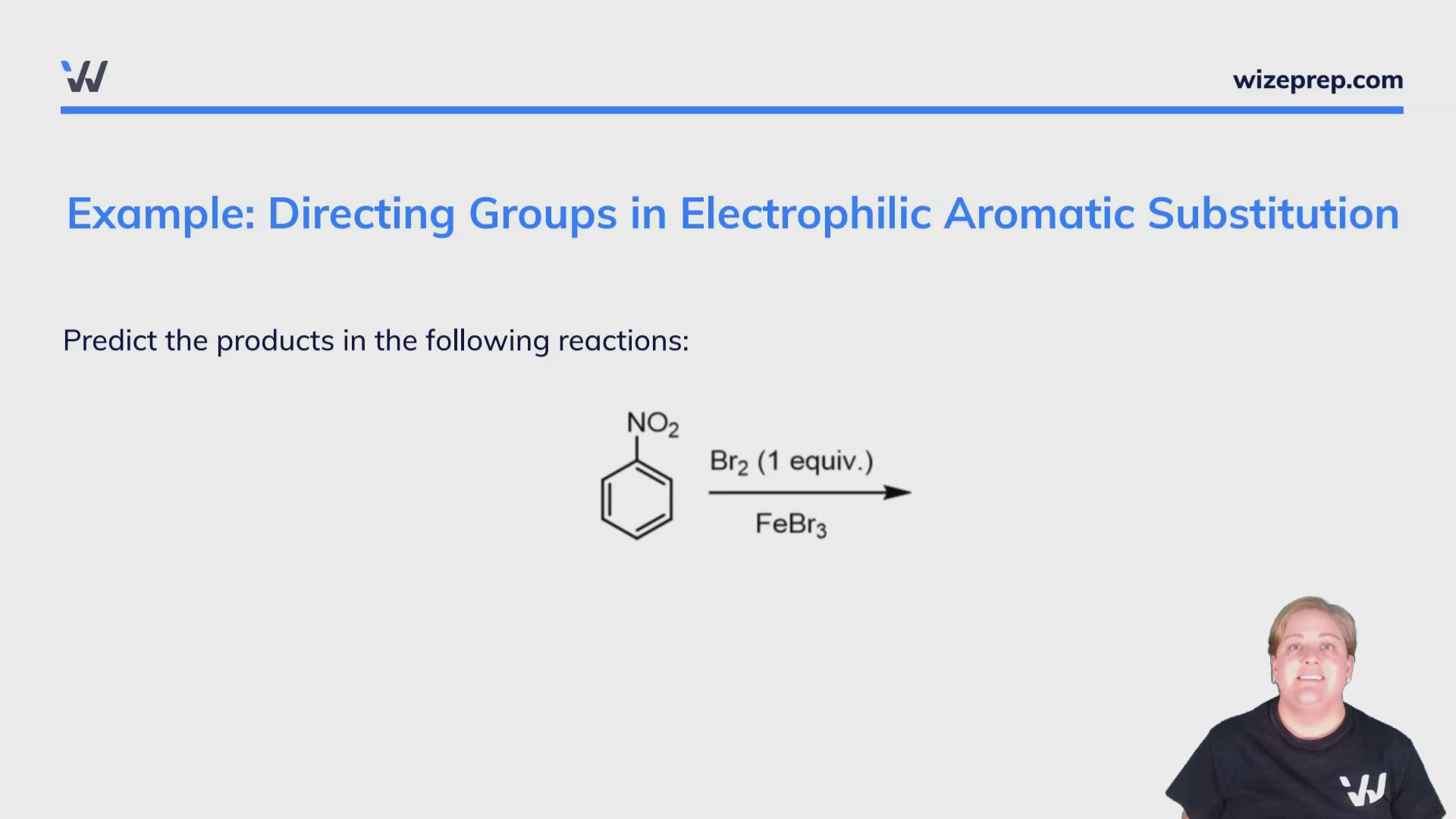
Example: Directing Groups in Electrophilic Aromatic Substitution
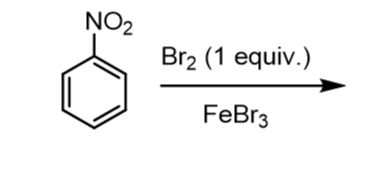
Predict the products in the following reactions:
0:00 / 0:00
Example: Directing Groups in Electrophilic Aromatic Substitution
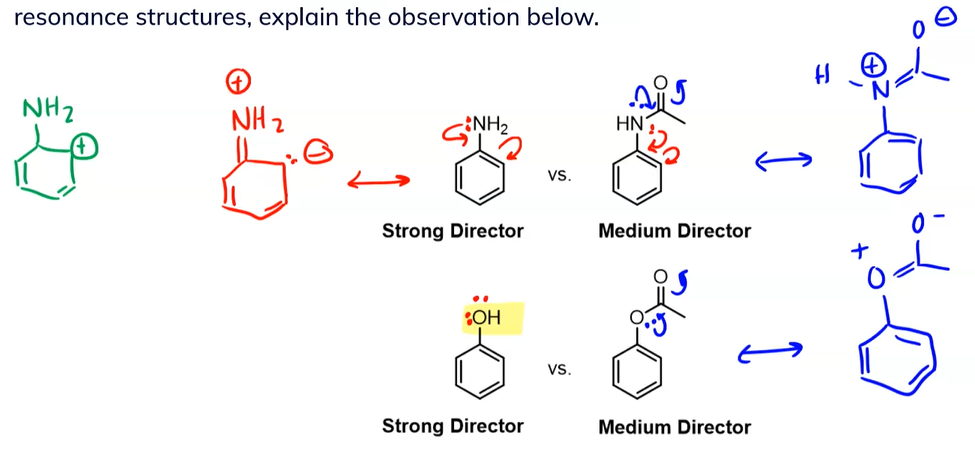
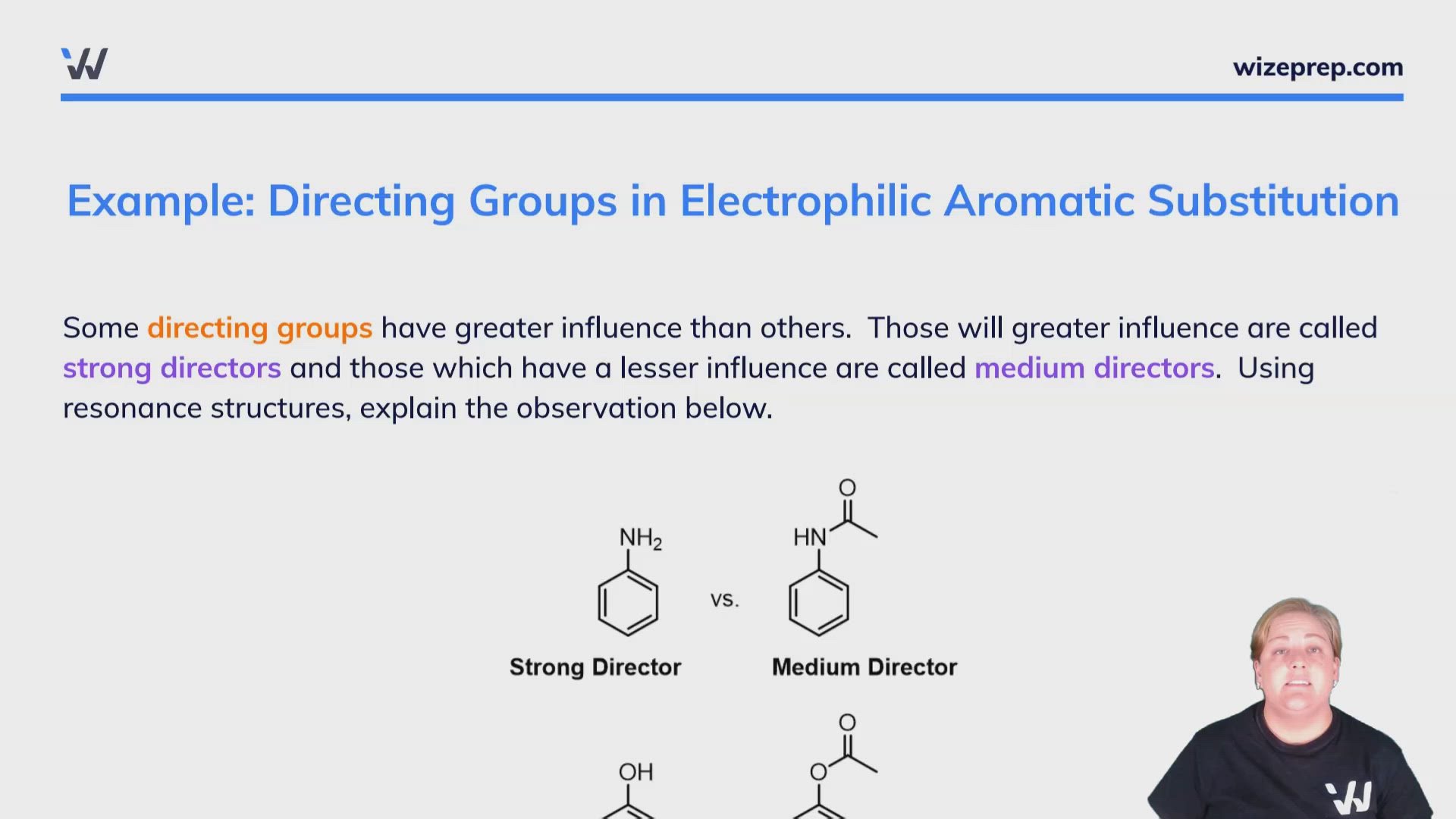
Some directing groups have greater influence than others. Those will greater influence are called strong directors and those which have a lesser influence are called medium directors. Using resonance structures, explain the observation below.