Popular Courses
MCAT
General Course
DAT
General Course
CHEM 2213A/B
Western University
Organic Chemistry
University Study Guides
Organic Chemistry
General Course
CHEM 233
University of British Columbia
CHEM 261
University of Alberta
Organic Chemistry
University Study Guides
CHEM 351
University of Calgary
CHEM 281
Queen's University
CHM 1321
University of Ottawa
CHM136H1
University of Toronto
CHEM 212
McGill University
CHEM 231
University of Victoria
CHEM 2OA3
McMaster University
CHEM 2223B
Western University
CHEM 263
University of Alberta
CHEM 282
Queen's University
SC/CHEM 2020 3.00
York University
CHY 142
Toronto Metropolitan University
0:00 / 0:00
Hydrohalogenation
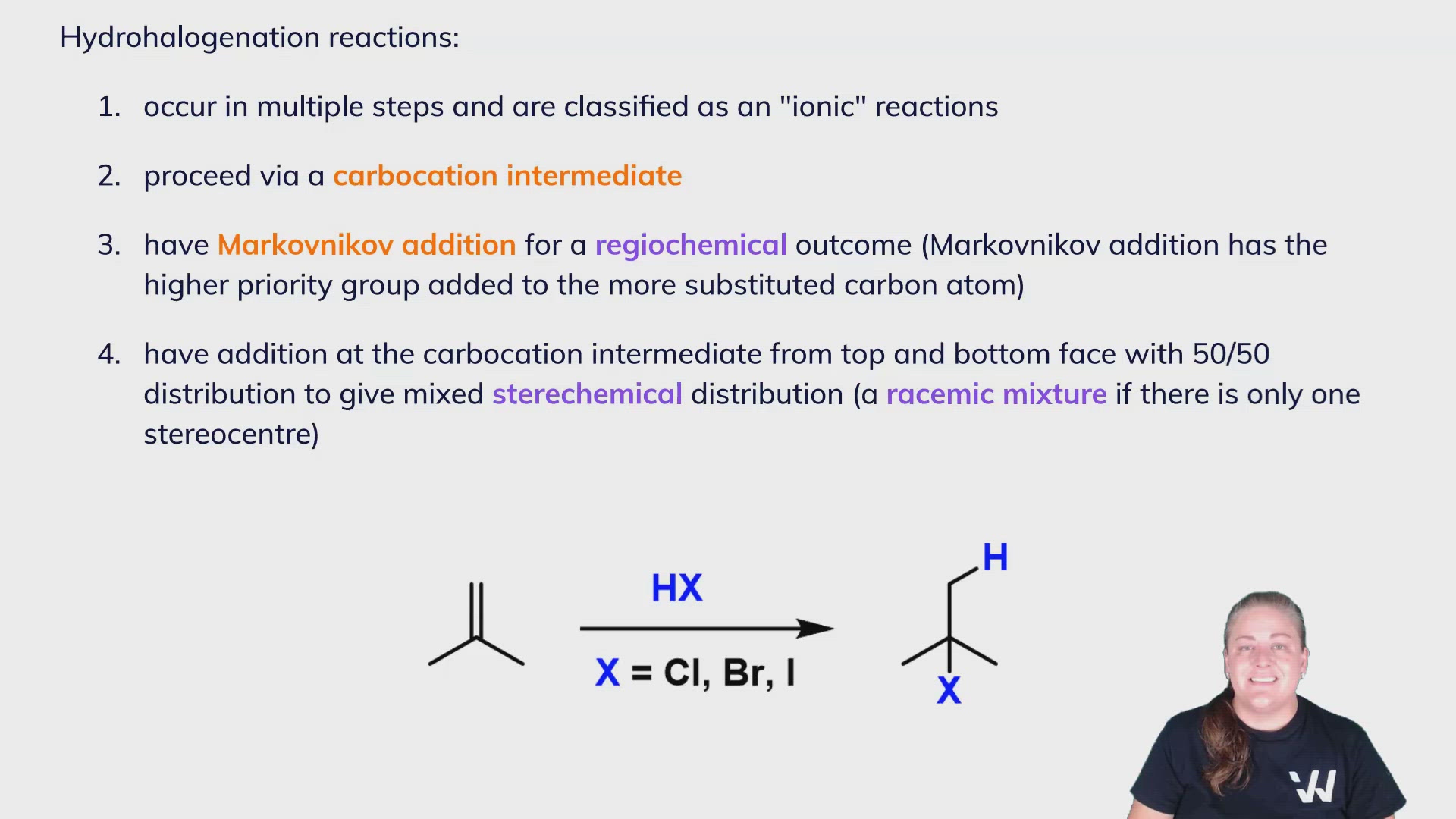
Hydrohalogenation reactions:
- occur in multiple steps and are classified as an "ionic" reactions
- proceed via a carbocation intermediate
- have Markovnikov addition for a regiochemical outcome (Markovnikov addition has the higher priority group added to the more substituted carbon atom)
- have addition at the carbocation intermediate from top and bottom face with 50/50 distribution to give mixed sterechemical distribution (a racemic mixture if there is only one stereocentre)

Steps of a hydrohalogenation:
- addition of the hydrogen atom to the alkene to generate a carbocation
- there may be carbocation rearrangement
- nucleophilic attack of the halogen anion onto the carbocation
Mechanism:

Watch Out!
Beware the carbocation rearragement! Remember that the more substituted the carbon atom, the more stable the carbocation!
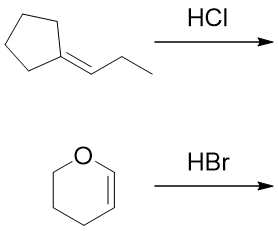
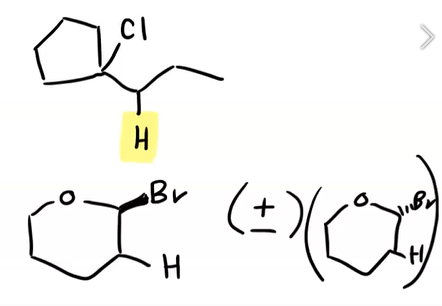
Example: predict the product of the following hydrohalogenation reactions below.
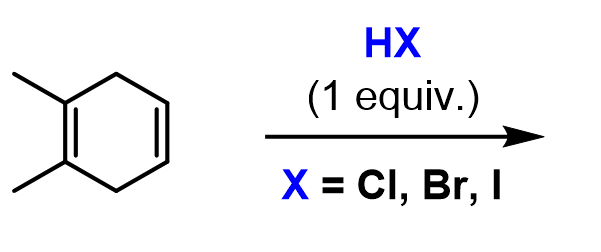

0:00 / 0:00
Example: Hydrohalogenation
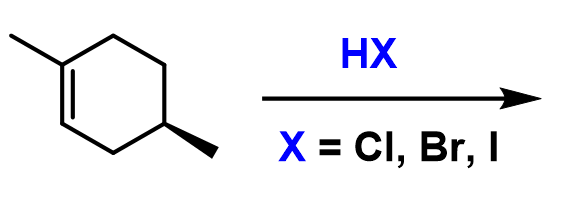
Draw a mechanism for the hydrohalogenation reaction below.

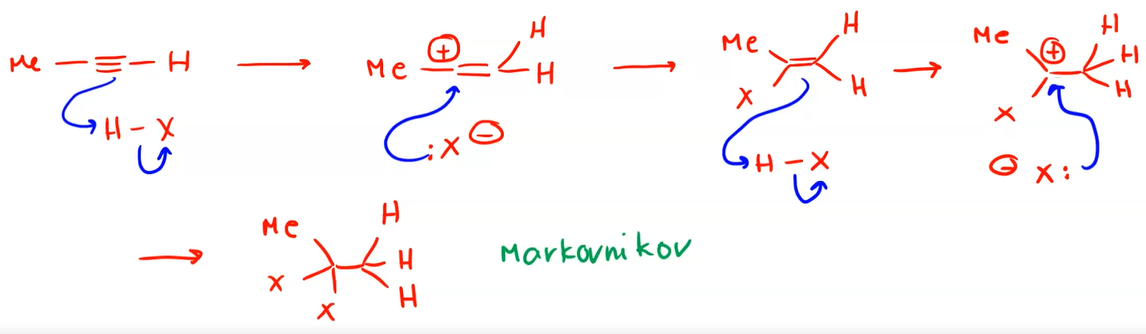
0:00 / 0:00
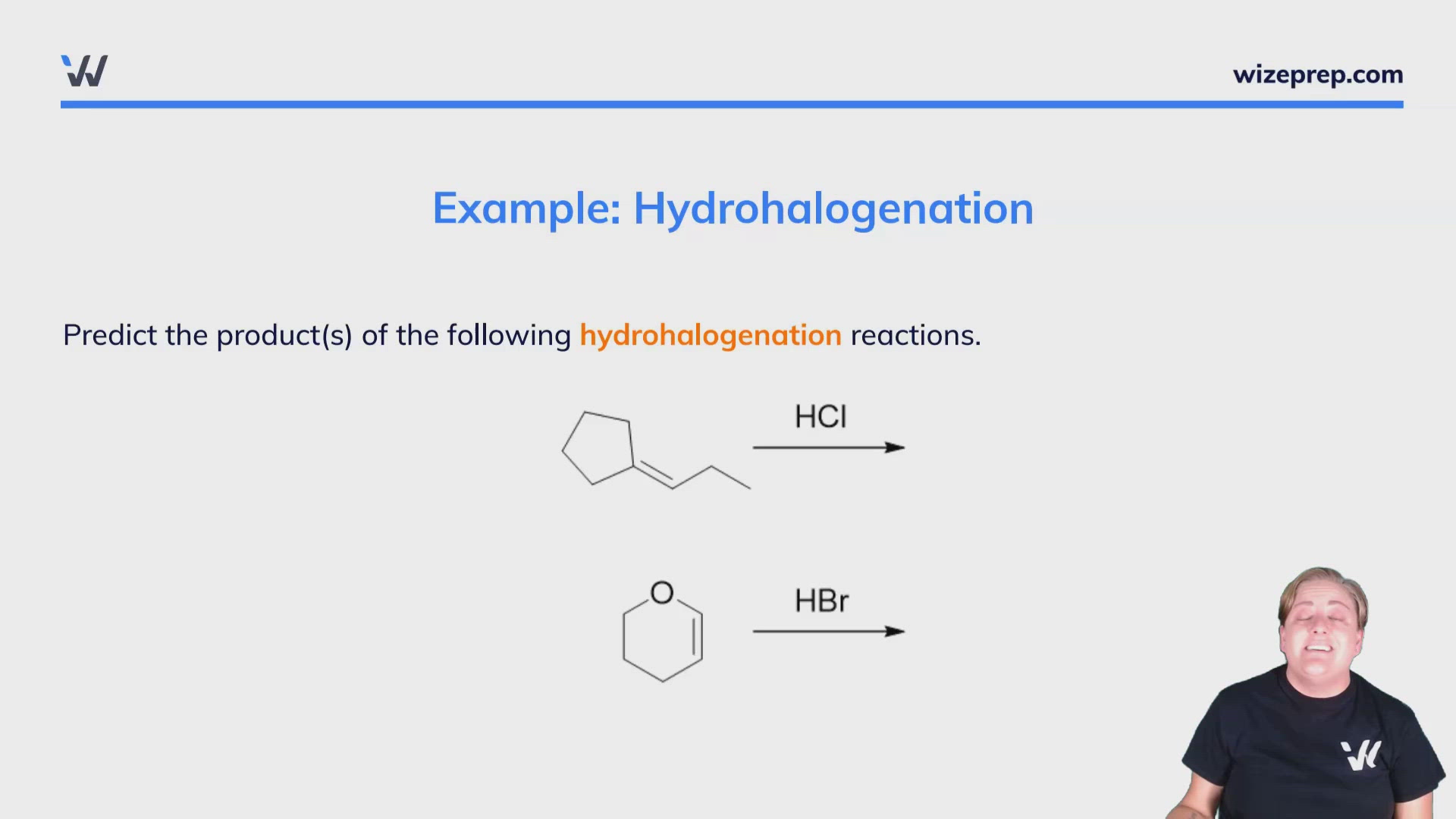
Example: Hydrohalogenation
Predict the product(s) of the following hydrohalogenation reactions.