Wize University Physics Textbook (Master) > Thermodynamics
Second Law of Thermodynamics
Popular Courses
MCAT
General Course
Intro to Physics
University Study Guides
Physics
General Course
PHYS 157
University of British Columbia
Intro to Physics
University Study Guides
PHY 1321
University of Ottawa
PHY 1331
University of Ottawa
PHY 1122
University of Ottawa
PHYS 142
McGill University
ENGG 212
University of Calgary
ENGG 212
University of Calgary
PHYS 1050
University of Manitoba
PHYS 101
Simon Fraser University
PHYS-1300
University of Windsor
PHYS 121
University of Waterloo
PHYS 227
University of Calgary
SC/PHYS 1411 3.00
York University
PCS 110
Toronto Metropolitan University
PHY 9B
University of California - Davis
PHYS 144
University of Alberta

0:00 / 0:00
2nd Law of Thermodynamics
Entropy (S) is a measure of disorder or randomness in a system.
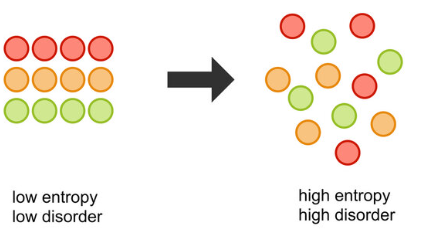
The 2nd Law of Thermodynamics states that disorder of the universe increases in a spontaneous process.
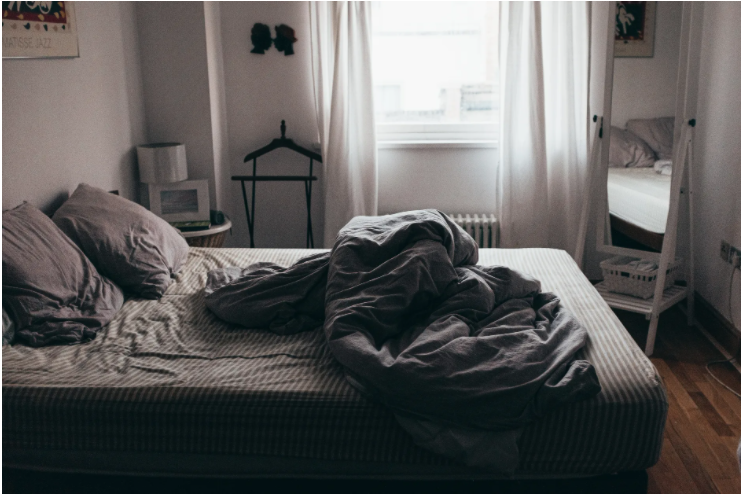
In other words, things naturally tend to go towards disorder and the universe is constantly getting more and more disordered!
Entropy Equations
Entropy is defined as:
ΔSsurr=entropy of the surroundings (in J/molK)
qsurr=heat in the surroundings (in J)
T=Temperature (in K)
Recall:
At constant pressure and temperature:
The 2nd law of thermodynamics states that whenever a spontaneous event takes place in the universe, the total entropy of the universe increases:
Chemical Reactions
In the same way we can use standard heats of formation to calculate a reaction enthalpy at room temperature and
pressure, we can use So (values will be provided to you in a table)
A gas absorbs 10 J of heat at a constant temperature of 300 K. Determine the change in entropy.
entropy change is:
ΔS = Qsurr / T
= 10 J/300 K = 0.033 J/K

Mark Yourself Question
- Grab a piece of paper and try this problem yourself.
- When you're done, check the "I have answered this question" box below.
- View the solution and report whether you got it right or wrong.
An ice tray contains 500 g of water and it freezes slowly at 0°C. What is the change in entropy of the water?