Wize University Physiology Textbook > Endocrine Physiology
Hormone Production Glands
Popular Courses
MCAT
General Course
DAT
General Course
Intro to Physiology
University Study Guides
PHYSIOL 1021
Western University
PHYSIOL 2130
Western University
Intro to Physiology
University Study Guides
PSL300H1
University of Toronto
PHYSL 210
University of Alberta
PHGY 210
McGill University
PHGY 215
Queen's University
BIOLOGY 2601A/B
Western University
KNES 259
University of Calgary
PHGY 216
Queen's University
BIOL 273
University of Waterloo
BIOL 260
University of British Columbia
PHYSIOL 3120
Western University
KNES 260
University of Calgary
BIOL 116
Case Western Reserve University
PPT 301
University of North Dakota
ANAT 212
McGill University
0:00 / 0:00
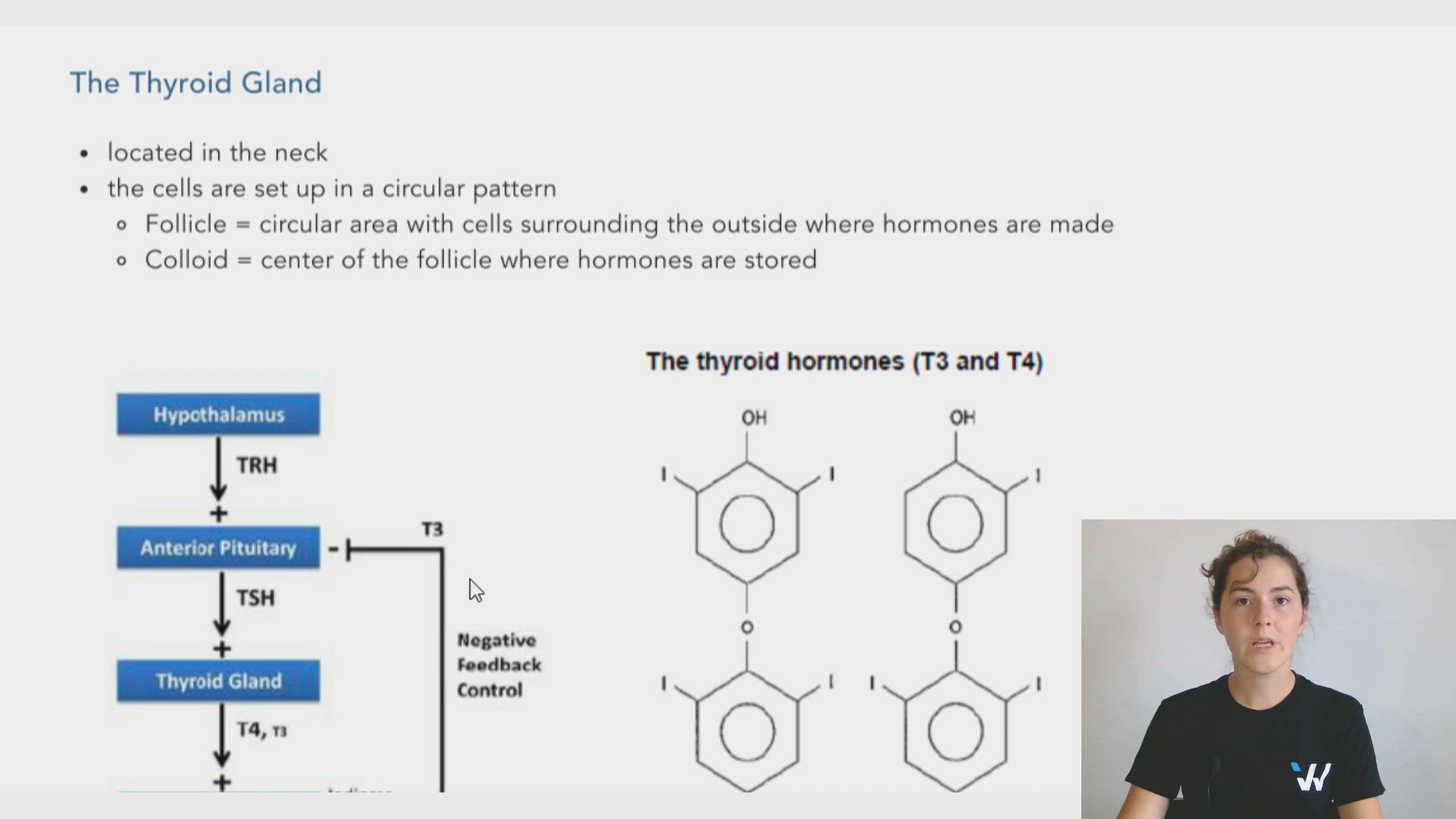
The Thyroid Gland
- located in the neck
- the cells are set up in a circular pattern
- Follicle = circular area with cells surrounding the outside. This is where hormones are made
- Colloid = center of the follicle. This is where hormones are stored

Hormone Production
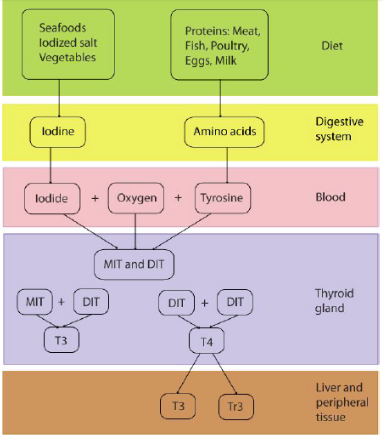
- made of tyrosine (amino acid) chains called thyroglobulin + iodine
- once in the follicles, tyrosine is built into thyroglobulin
- iodine is added to thyroglobulin in the colloid
- MIT = iodine + tyrosine
- DIT = iodines + tyrosine
- T3 = MIT + DIT
- T4 = DIT + DIT
3. T3 and T4 taken back into follicle cell
4. T3a nd T4 separated from large thyroglobulin chain by protein degradation
Hormone Functions
- in general = alter gene transcription
- metabolism
- nervous system effects
- cardiovascular effects
- muscular effects
- negative feedback for its own synthesis by effecting TRH and TSH production
Thyroid Disorders
- Hyperthyroidism - too much thyroid stimulation = too much T3 and T4 = high metabolism, high heart rate, anxiety
- Hypothyroidism - not enough T3 and T4 made = low metabolism, weight gain, tiredness, always cold.
Hope is 20 years old and thinks she has a medical problem. She started having anxiety and menstrual problems and a few months ago. Now, she's noticing that her thoughts are always racing and she can't sleep well at night. She's been trying to study for her physiology exam, but she's extremely tired and has a very hard time focusing.
Answer true or false for the following statements
0:00 / 0:00
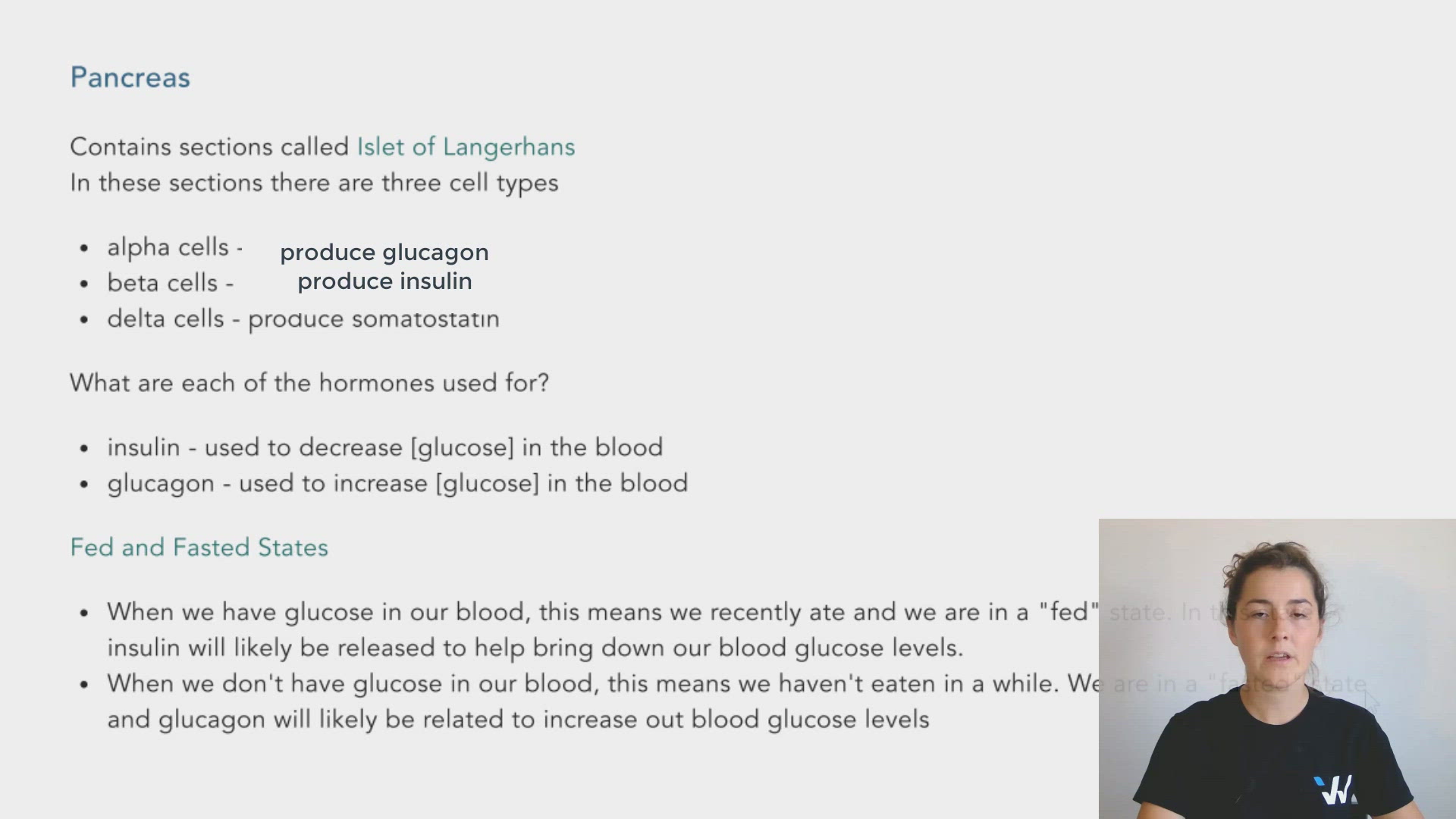
Pancreas
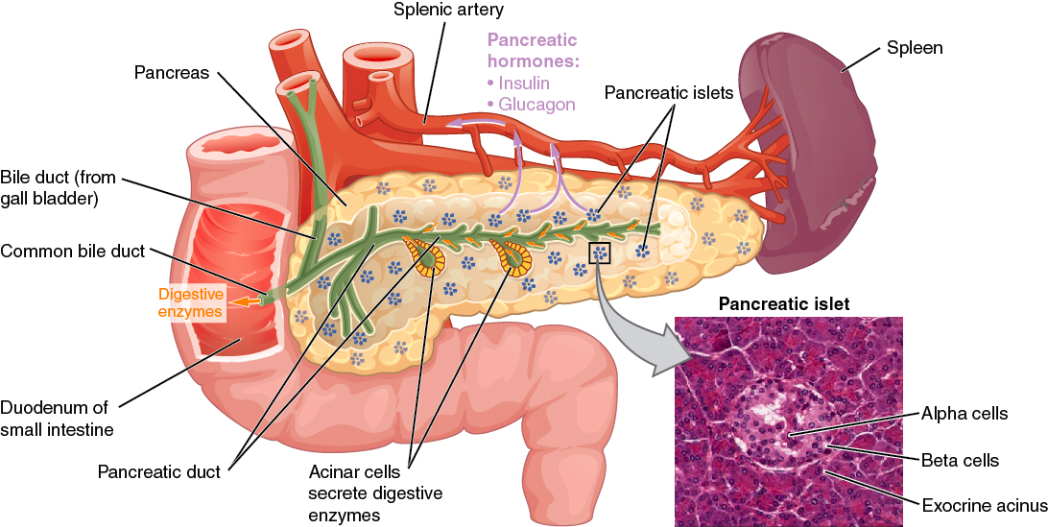
Contains sections called Islet of Langerhans
In these sections there are three cell types
- alpha cells - produce glucagon
- beta cells - produce insulin
- delta cells - produce somatostatin
What are each of the hormones used for?
- insulin - used to decrease [glucose] in the blood
- glucagon - used to increase [glucose] in the blood
Fed and Fasted States
- When we have glucose in our blood, this means we recently ate and we are in a "fed" state. In this state, insulin will likely be released to help bring down our blood glucose levels.
- When we don't have glucose in our blood, this means we haven't eaten in a while. We are in a "fasted" state and glucagon will likely be related to increase out blood glucose levels
commons.wikimedia.org
Insulin - steps of action
- Insulin is released from the pancreas
- Insulin binds to protein receptors on the cell membrane, causing an internal cascade of events
- GLUT4 protein causes protein channels in the membrane to open and glucose is let inside the cell
Glucagon - steps of action
- Glucagon is released from the pancreas
- Glucagon goes to the liver, binds to a receptor and causes an internal cascade resulting in the release of glucose
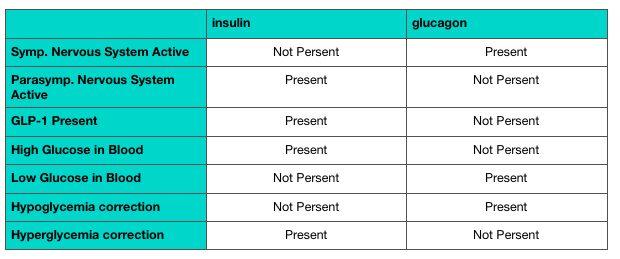
When is insulin present? When is glucagon present?
Diseases
- Diabetes
- Type 1 = insulin shots needed
- Type 2 = diet related. No insulin needed.
Jack has high insulin levels in his blood. How could he possibly cause them to go back down to normal levels?