Wize University Psychology Textbook > Research Methods in Psychology
Distributional Thinking
Popular Courses
Psychology
University Study Guides
PSYCH 104
University of Alberta
Psychology
University Study Guides
PSYC 102
University of British Columbia
PSYC 200
Concordia University
PSYC 1004
Virginia Tech
PSYCH 100
Pennsylvania State University
PSC 001
University of California - Davis
PSY 2012
University of Florida
PSY 101
Michigan State University
PSYCH10
University of California - Los Angeles
PSY 101
San Diego State University
PSC 001Y
University of California - Davis
PSY 101
University of Arizona
PSYC 1001
University of Cincinnati
PSY 101
Arizona State University - Tempe
PSY 200
North Carolina State University
PSY-P 101
Indiana University - Bloomington
PY 101
The University of Alabama
PSYC 1315
University of Texas at Arlington
0:00 / 0:00
Distributional Thinking
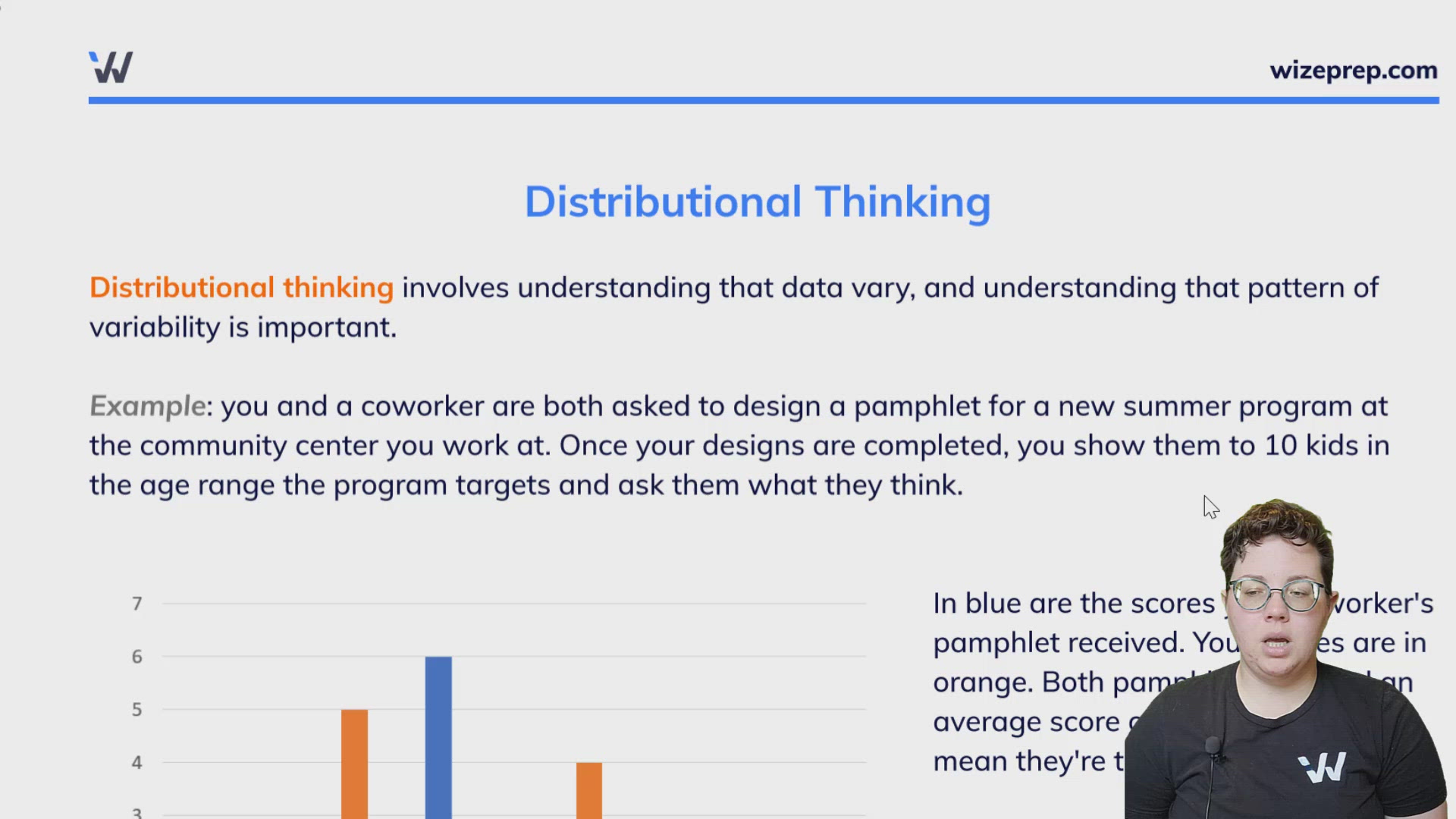
Distributional thinking involves understanding that data vary, and understanding that pattern of variability is important.
Example: you and a coworker are both asked to design a pamphlet for a new summer program at the community center you work at. Once your designs are completed, you show them to 10 kids in the age range the program targets and ask them what they think.
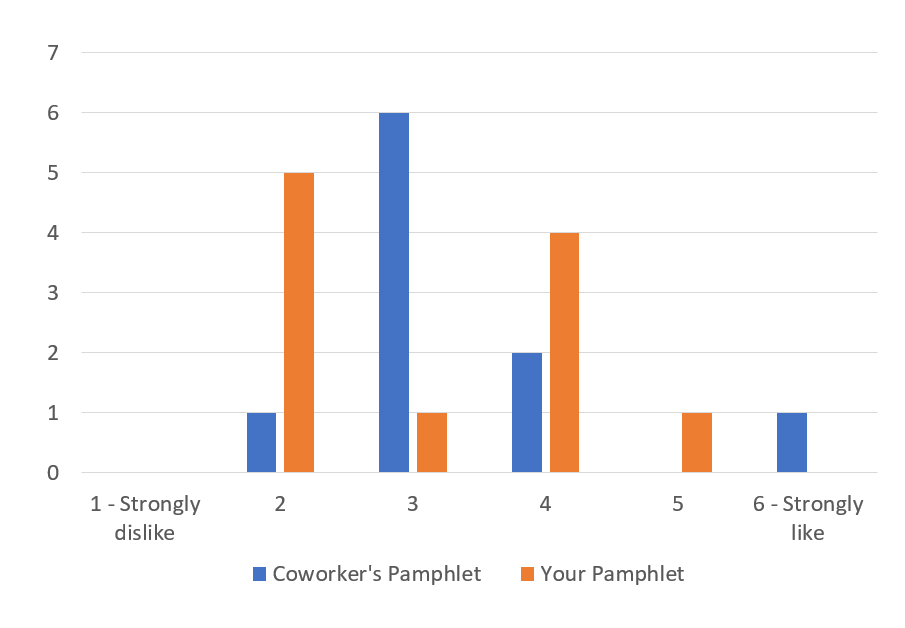
In blue are the scores your coworker's pamphlet received. Your scores are in orange. Both pamphlets received an average score of 2.9/6. Does that mean they're the same?
Looking at the distributions of scores, we can see that they are not.
Practice: Distributional Thinking
A researcher tells you that two groups of participants each have an average of 65%, but that in group 1 there were 10 people who failed and in group 2 there were no people who failed. From just this description, what can you tell is different between the two groups?