Wize University Psychology Textbook > Neuroscience
Neural Communication
Popular Courses
MCAT
General Course
Psychology
University Study Guides
PSYC 100
Queen's University
PSYCH 1000
Western University
PSYCH 104
University of Alberta
PSYCHOL 1002A/B
Western University
Psychology
University Study Guides
PSYC*1000
University of Guelph
PSYCH 1XX3
McMaster University
PSYC 100
McGill University
PSY100H1
University of Toronto
PSYC 101
University of British Columbia
HH/PSYC 1010 6.00
York University
PSYC 200
University of Calgary
PSYC 100B
Queen's University
PSYC 100A
University of Victoria
PSYC 200
Concordia University
PSYC 1004
Virginia Tech
PSYCH 100
Pennsylvania State University
PSC 001
University of California - Davis
0:00 / 0:00
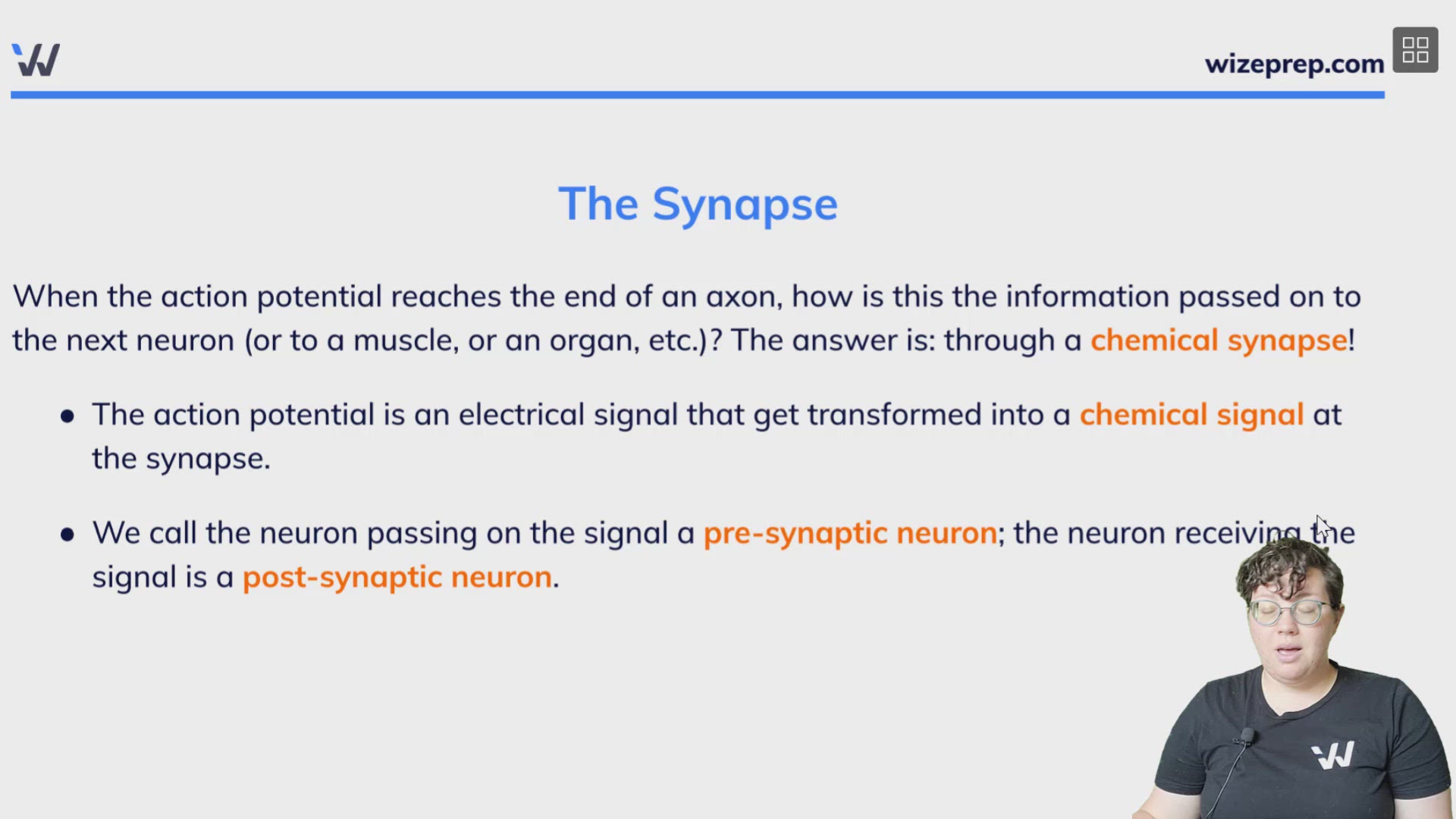
The Synapse
When the action potential reaches the end of an axon, how is this the information passed on to the next neuron (or to a muscle, or an organ, etc.)? The answer is: through a chemical synapse!
- The action potential is an electrical signal that get transformed into a chemical signal at the synapse.
- We call the neuron passing on the signal a pre-synaptic neuron; the neuron receiving the signal is a post-synaptic neuron.
Synaptic Transmission
When the action potential reaches the axon terminal, synaptic vesicles full of neurotransmitters are released from the terminal into the synaptic cleft between the two cells.
The neurotransmitters bind to receptors on the post-synaptic cell. Receptors are lock and key - they specifically fit particular neurotransmitters
Neurotransmitters that don't bind to receptors can diffuse out, be broken down by enzymes or taken up again by the pre-synaptic neuron.

0:00 / 0:00
The Action Potential
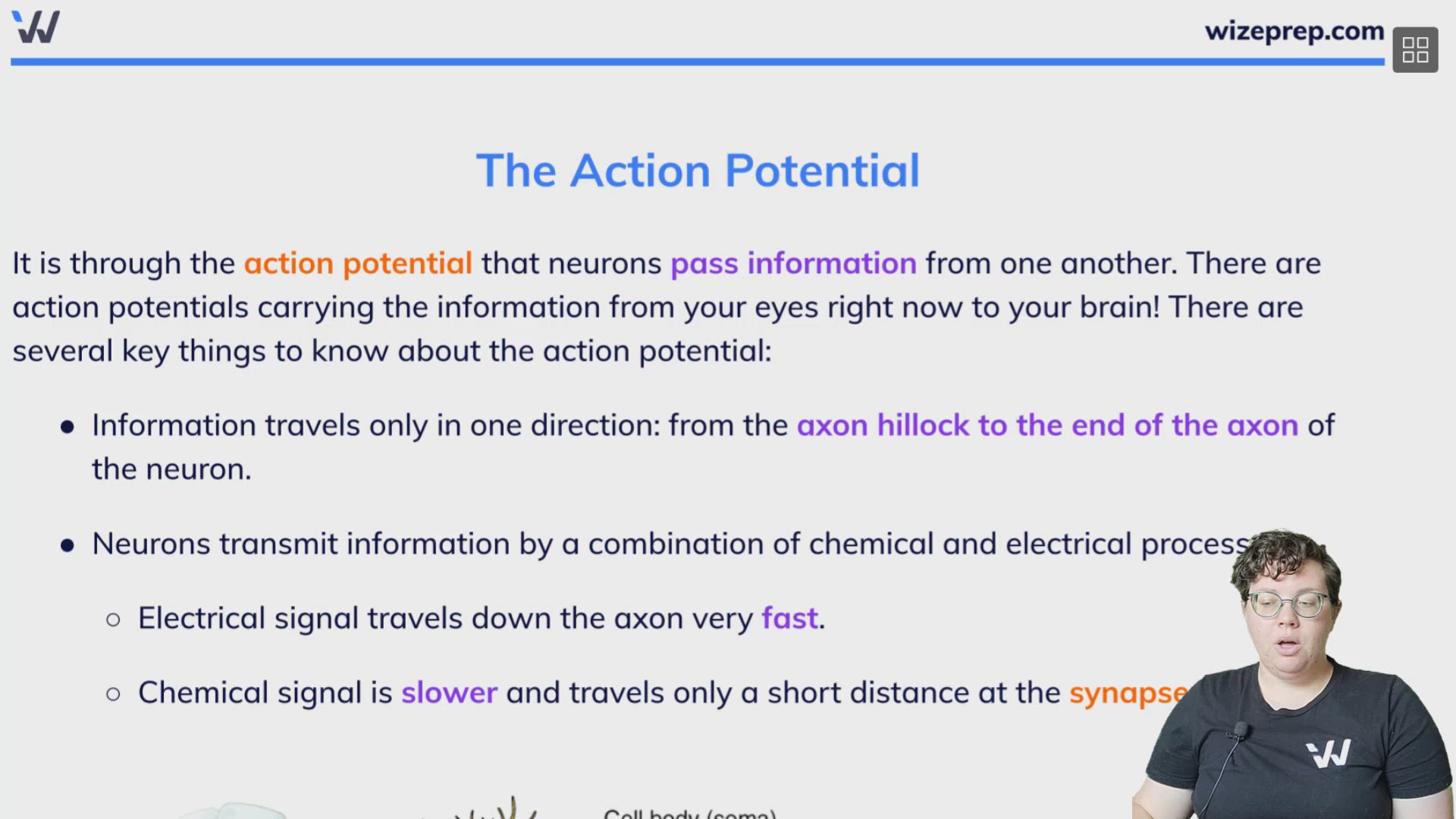
It is through the action potential that neurons pass information from one another. There are action potentials carrying the information from your eyes right now to your brain! There are several key things to know about the action potential:
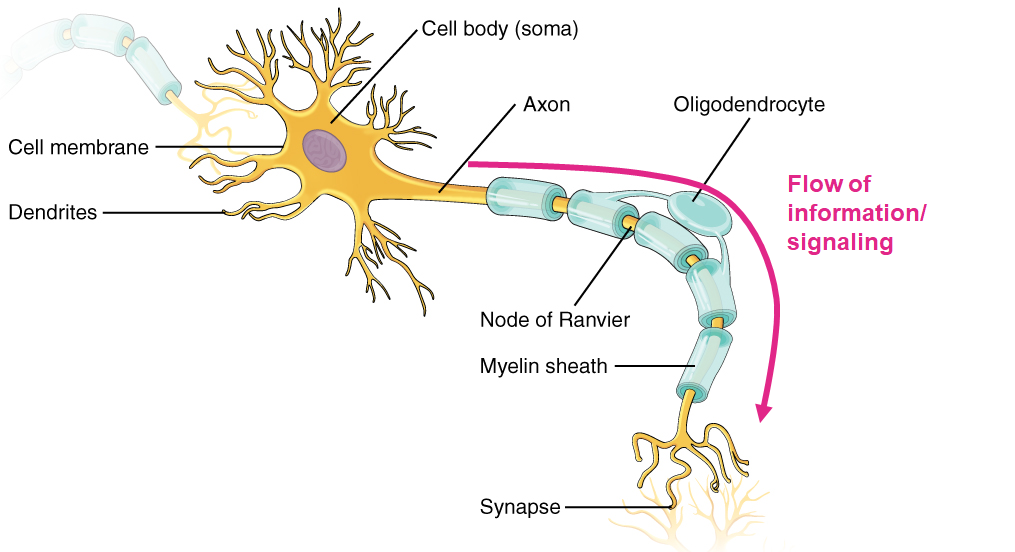
- Information travels only in one direction: from the axon hillock to the end of the axon of the neuron.
- Neurons transmit information by a combination of chemical and electrical processes.
- Electrical signal travels down the axon very fast.
- Chemical signal is slower and travels only a short distance at the synapse.
Wize Tip
Think of the electrical signal like sending a text message: it quickly arrives. The chemical signaling mediated by neurotransmitters is like sending a letter in the mail: it takes much longer to reach its recipient!
Practice: Neural Communication
When a neuron is at rest, its charge is _____________