Wize University Psychology Textbook > Neuroscience
Hormones & The Endocrine System
Popular Courses
MCAT
General Course
Psychology
University Study Guides
PSYC 100
Queen's University
PSYCH 1000
Western University
Psychology
University Study Guides
PSYC*1000
University of Guelph
PSYCH 1XX3
McMaster University
PSYC 100
McGill University
PSY100H1
University of Toronto
PSYC 101
University of British Columbia
HH/PSYC 1010 6.00
York University
PSYC 200
University of Calgary
PSYC 100B
Queen's University
PSYC 100A
University of Victoria
PSYC 200
Concordia University
PSYC 1004
Virginia Tech
PSYCH 100
Pennsylvania State University
PSC 001
University of California - Davis
PSY 2012
University of Florida
PSY 101
Michigan State University
0:00 / 0:00
Hormones
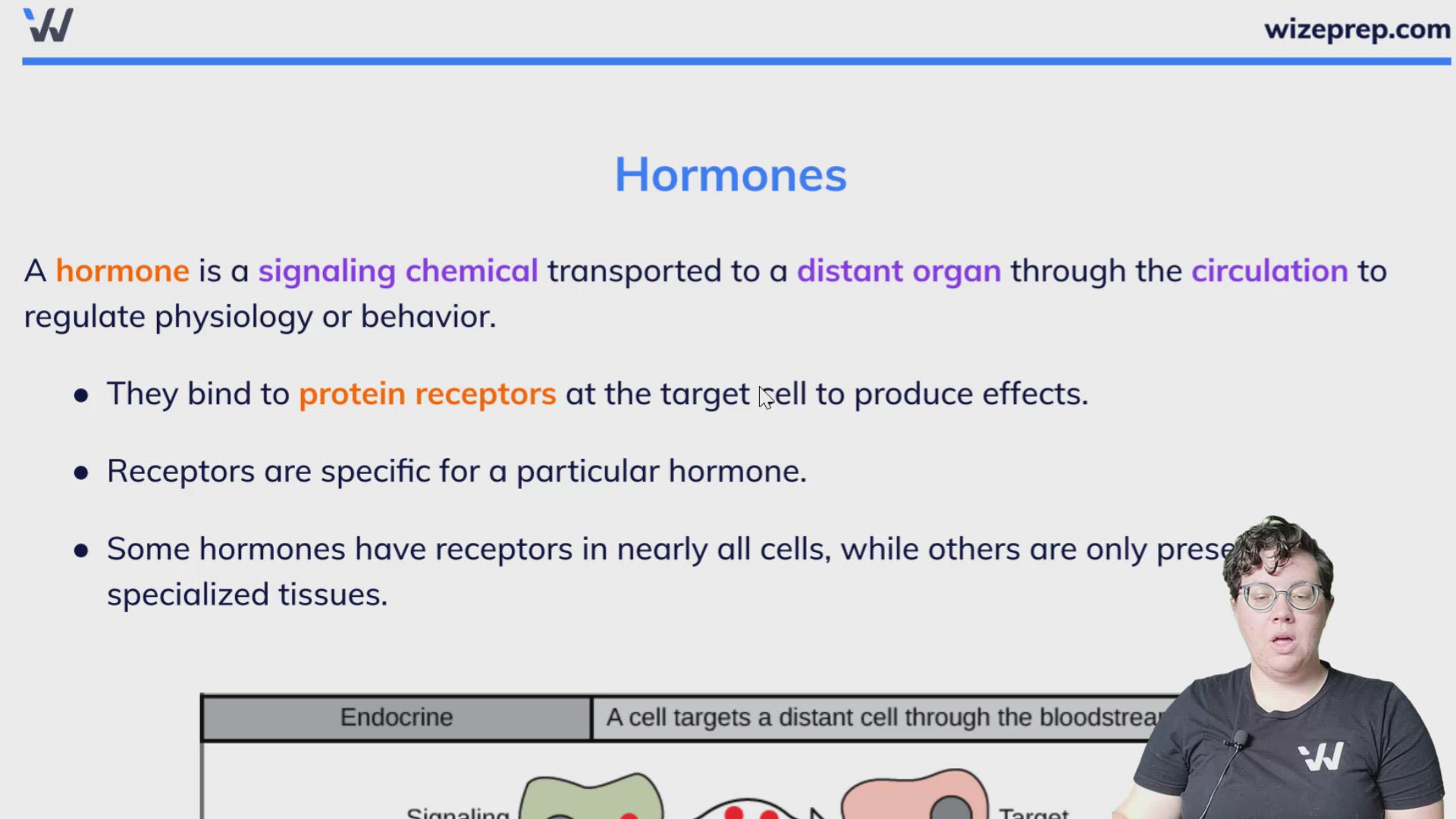
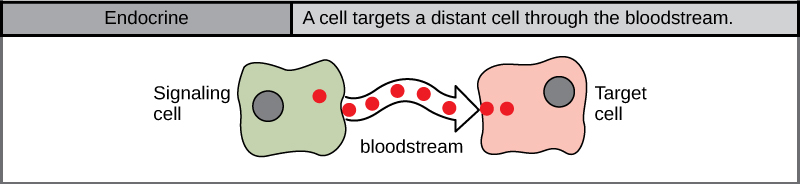
A hormone is a signaling chemical transported to a distant organ through the circulation to regulate physiology or behavior.
- They bind to protein receptors at the target cell to produce effects.
- Receptors are specific for a particular hormone.
- Some hormones have receptors in nearly all cells, while others are only present in specialized tissues.
Wize Tip
The difference between a hormone and a neurotransmitter is where they are concentrated and how they are delivered. Neurotransmitters are concentrated in the synapse; hormones are diffused throughout the body. Neurotransmitters are delivered through the synaptic cleft; hormones are found primarily in the bloodstream.
Some neurotransmitters also function as hormones, but they are given different names depending on their release and function:
- The neurotransmitter epinephrine is the hormone adrenaline
- The neurotransmitter norepinephrine is the hormone noradrenaline

Mark Yourself Question
- Grab a piece of paper and try this problem yourself.
- When you're done, check the "I have answered this question" box below.
- View the solution and report whether you got it right or wrong.
Practice: Hormones & The Endocrine System
What is the difference between a hormone and a neurotransmitter?