Wize University Psychology Textbook > Personality
Psychodynamic Approach
Popular Courses
Psychology
University Study Guides
PSYC 100
Queen's University
Psychology
University Study Guides
PSYC*1000
University of Guelph
PSYCH 1XX3
McMaster University
PSYC 100
McGill University
PSY100H1
University of Toronto
PSYCHOL 1003A/B
Western University
HH/PSYC 1010 6.00
York University
PSYC 102
University of British Columbia
PSYC 100B
Queen's University
PSYC 201
University of Calgary
PSYC 200
Concordia University
PSYCH 100
Pennsylvania State University
PSC 001
University of California - Davis
PSY 2012
University of Florida
PSY 101
Michigan State University
PSYCH10
University of California - Los Angeles
PSY 101
San Diego State University
PSC 001Y
University of California - Davis

0:00 / 0:00
Psychodynamic Approach

According to this approach, personality is formed by needs and desires that are largely unconscious/subconscious
Three components to the mind. Personality is determined by the interactions between the three components
- Id
- Bodily needs, wants, desires
- Sexual and aggressive drives
- Pleasure principle - seeking immediate gratification of wants/desires
- Unconscious
- Present at birth
- Ego
- Reality principle - regulating principle that delays gratification to function in the real world
- Mediator between id and superego
- Superego
- Internalized rules, guidelines, standards, codes of conduct
- Learned through exposure to rules and parents' authority
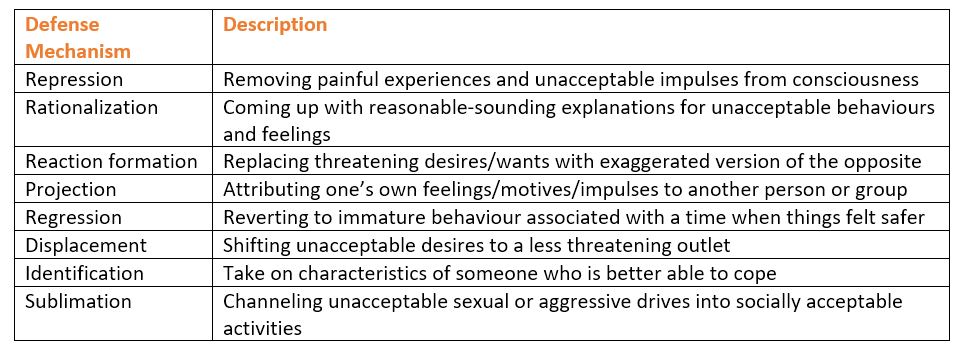
Defense mechanisms - unconscious coping mechanisms that reduce anxiety generated by unacceptable impulses
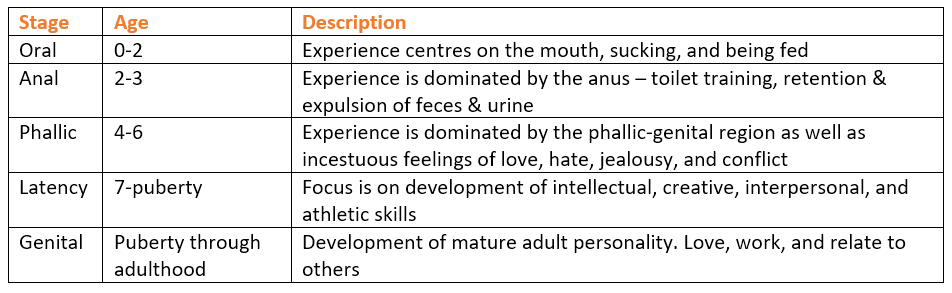
Freud believed that development proceeds in stages, and interruption at any level results in a fixation on that stage. This fixation shapes personality
Psychodynamic approaches to personality are not well-supported by evidence and are very difficult to test