Popular Courses
Psychology
University Study Guides
PSYCH 1X03
McMaster University
Psychology
University Study Guides
PSY100H1
University of Toronto
PSYCHOL 1003A/B
Western University
HH/PSYC 1010 6.00
York University
PSYC 201
University of Calgary
PSYC 200
Concordia University
PSYC 1004
Virginia Tech
PSYCH 100
Pennsylvania State University
PSC 001
University of California - Davis
PSY 2012
University of Florida
PSY 101
Michigan State University
PSYCH10
University of California - Los Angeles
PSY 101
San Diego State University
PSC 001Y
University of California - Davis
PSY 101
University of Arizona
PSYC 1001
University of Cincinnati
PSY 200
North Carolina State University
PSY-P 101
Indiana University - Bloomington
0:00 / 0:00
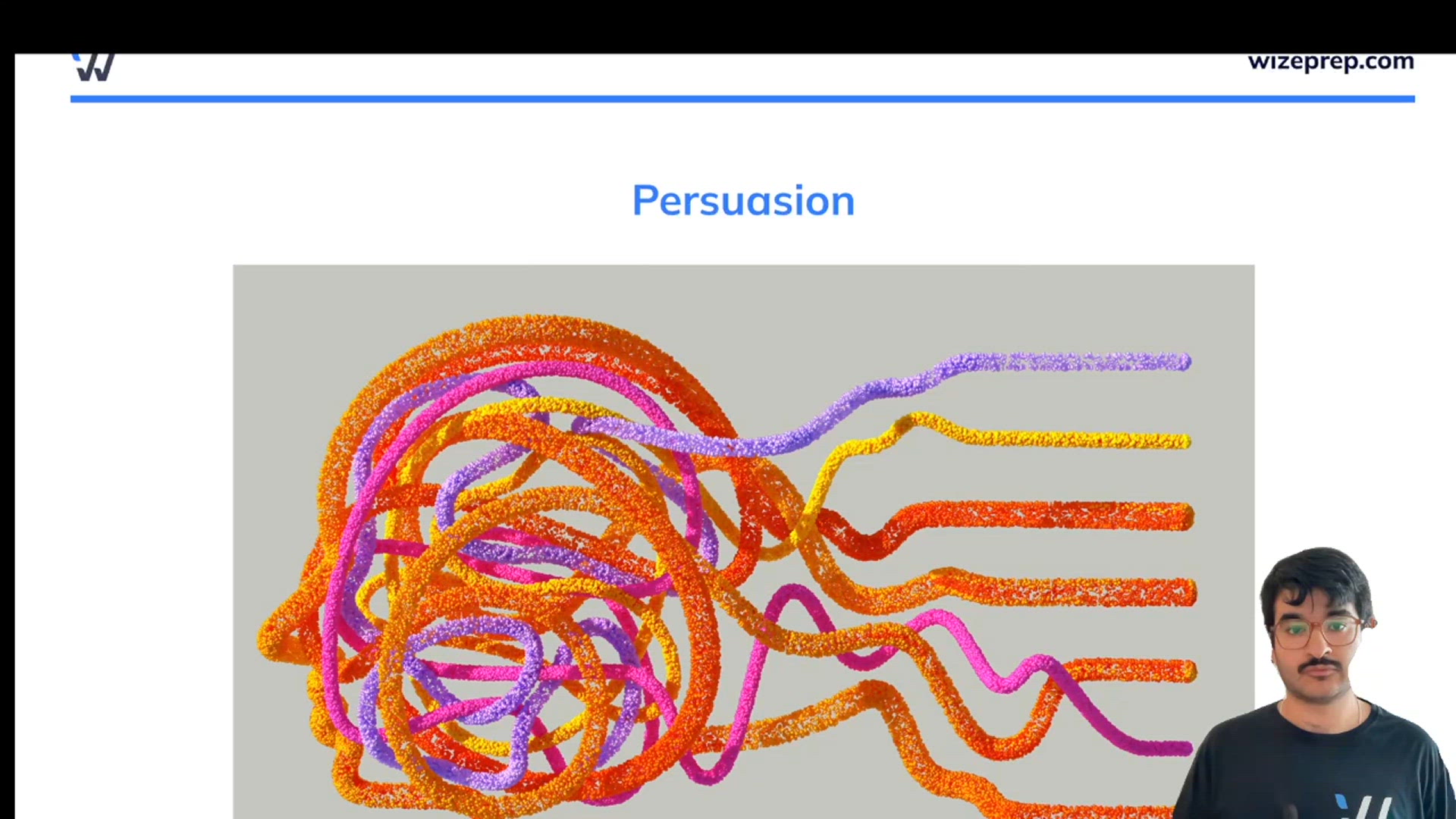
Persuasion

Persuasion is the changing or influencing of someone's thoughts or behaviour through the use of messaging that aligns with the audience and context
The effectiveness of persuasion depends on:
1) The messenger - who is doing the communicating?
- Do they have knowledge or expertise about the subject?
- Are they trustworthy or unbiased?
- Are they attractive or likeable?
Example: "9/10 dentists recommend Toothpaste Brand X"
2) The message - what is being communicated?
- Is the content clear and rational?
- Does it present multiple sides of an issue?
- Does it appeal to emotions (i.e. fear or uncertainty)
Example: a prescription medication commercial that shows its users living happy, fulfilling lives
3) The audience - who is being communicated to?
- What are their pre-existing beliefs about the subject?
- How receptive are they to changing their beliefs or actions?
- How aware or skeptical are they of attempts to persuade them?
Example: younger audiences may be more skeptical of email advertisements than older audiences
Methods of persuasion:
1) Elaboration Likelihood Model:
- Central route of persuasion:
- Good for an invested, analytical audience
- Requires greater effort by the audience to process the message, however results in longer-lasting change
- Peripheral route of persuasion:
- Good for more casual, less analytical audience
- Requires low effort to process, often involves signals that are not directly related to the message (i.e. celebrity endorsements, visually-appealing images)
- Results in a temporary change in belief or behaviour
2) Foot-in-the-door technique:
- Start with a small request to "get your foot in the door", then follow-up with larger ones
- Example: a charity may ask for a one-time $10 donation, then follow up with emails about larger monthly donations
3) Door-in-the-face technique:
- Start with an outrageously-large request, then follow-up with smaller ones
- Example: a teenager asking their parents for a new car for their 18th birthday, but then asking for a new phone