Wize University Psychology Textbook > Stress & Health
The Patient-Practitioner Relationship
Popular Courses
Psychology
University Study Guides
Psychology
University Study Guides
PSYC 100
McGill University
PSY100H1
University of Toronto
PSYCHOL 1003A/B
Western University
PSYC 201
University of Calgary
PSYC 200
Concordia University
PSYC 1004
Virginia Tech
PSYCH 100
Pennsylvania State University
PSC 001
University of California - Davis
PSY 2012
University of Florida
PSY 101
Michigan State University
PSYCH10
University of California - Los Angeles
PSC 001Y
University of California - Davis
PSY 101
San Diego State University
PSY 101
University of Arizona
PSYC 1001
University of Cincinnati
PSY 200
North Carolina State University
PSY 101
Arizona State University - Tempe
PSY-P 101
Indiana University - Bloomington
0:00 / 0:00
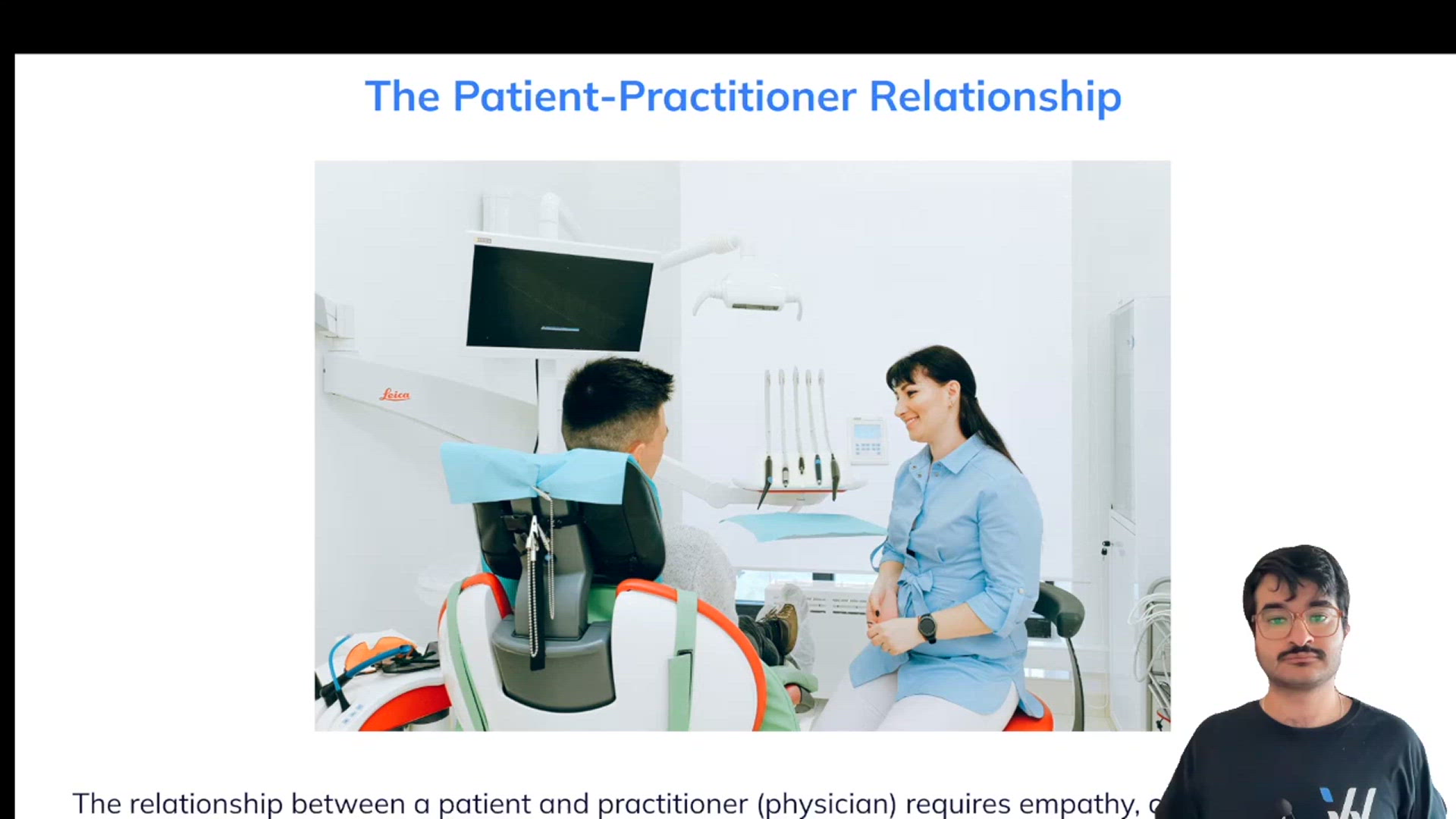
The Patient-Practitioner Relationship

The relationship between a patient and practitioner (physician) requires empathy, communication, trust, sensitivity, and professional boundaries
There are 4 main models for this relationship:
1) Paternalistic model - due to their authority and knowledge, the physician understands what is best for the patient and identifies the best medical option(s), which the patient is expected to comply with.
2) Informative/Consumer model - the physician provides as much relevant information as possible, and the patient then selects the intervention or approach they want to pursue.
3) The Interpretive model - the physician advises the patient about relevant treatments and interventions, understands what they want, then obtains the patient's consent to proceed
4) The Deliberative model - through dialogue, the patient and physician discuss symptoms, conditions, and treatments. The physician will try to convince the patient of the best path forward, while acting as a friendly figure. Consent is obtained before treatment begins.