Interest Expense
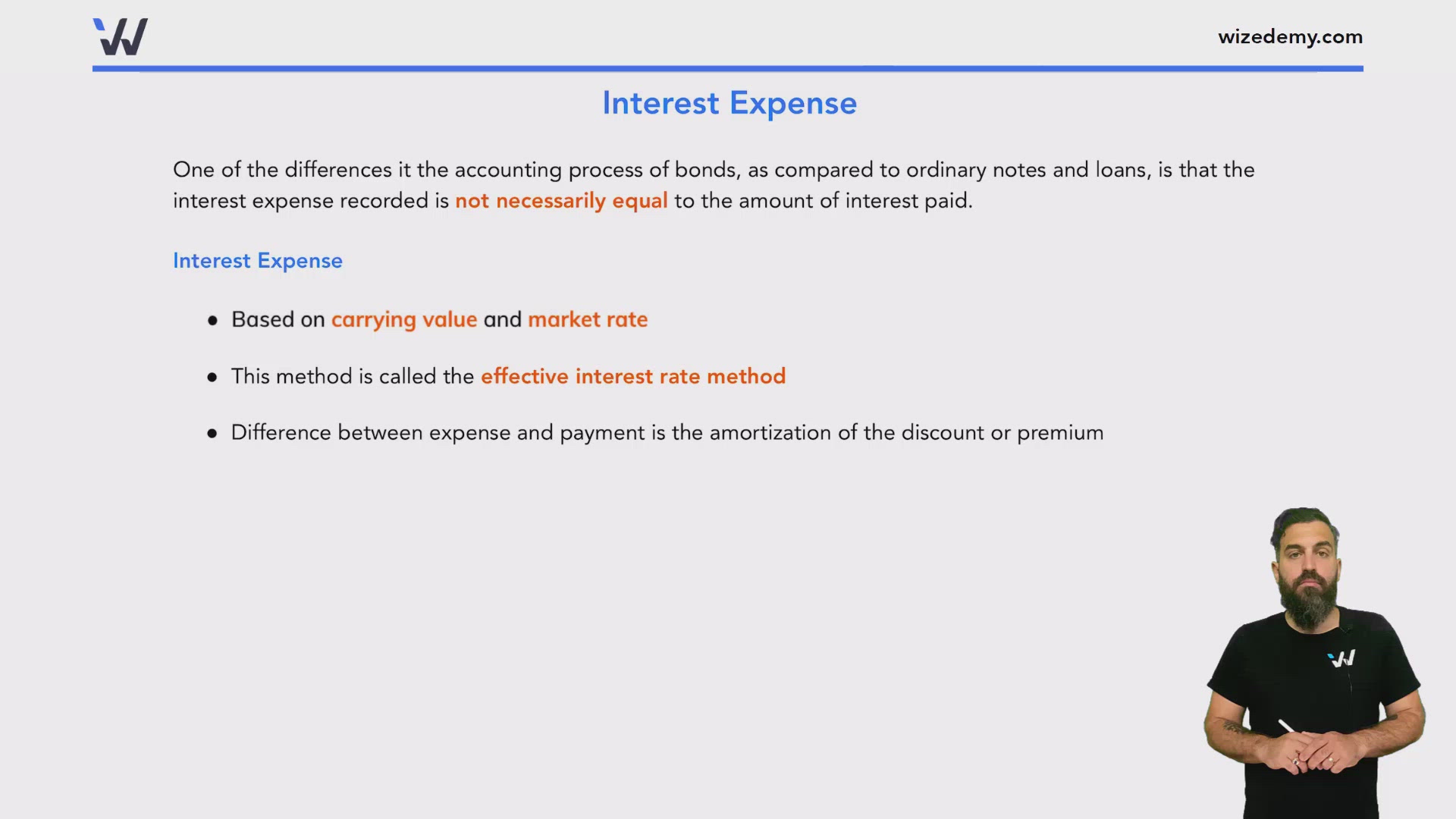
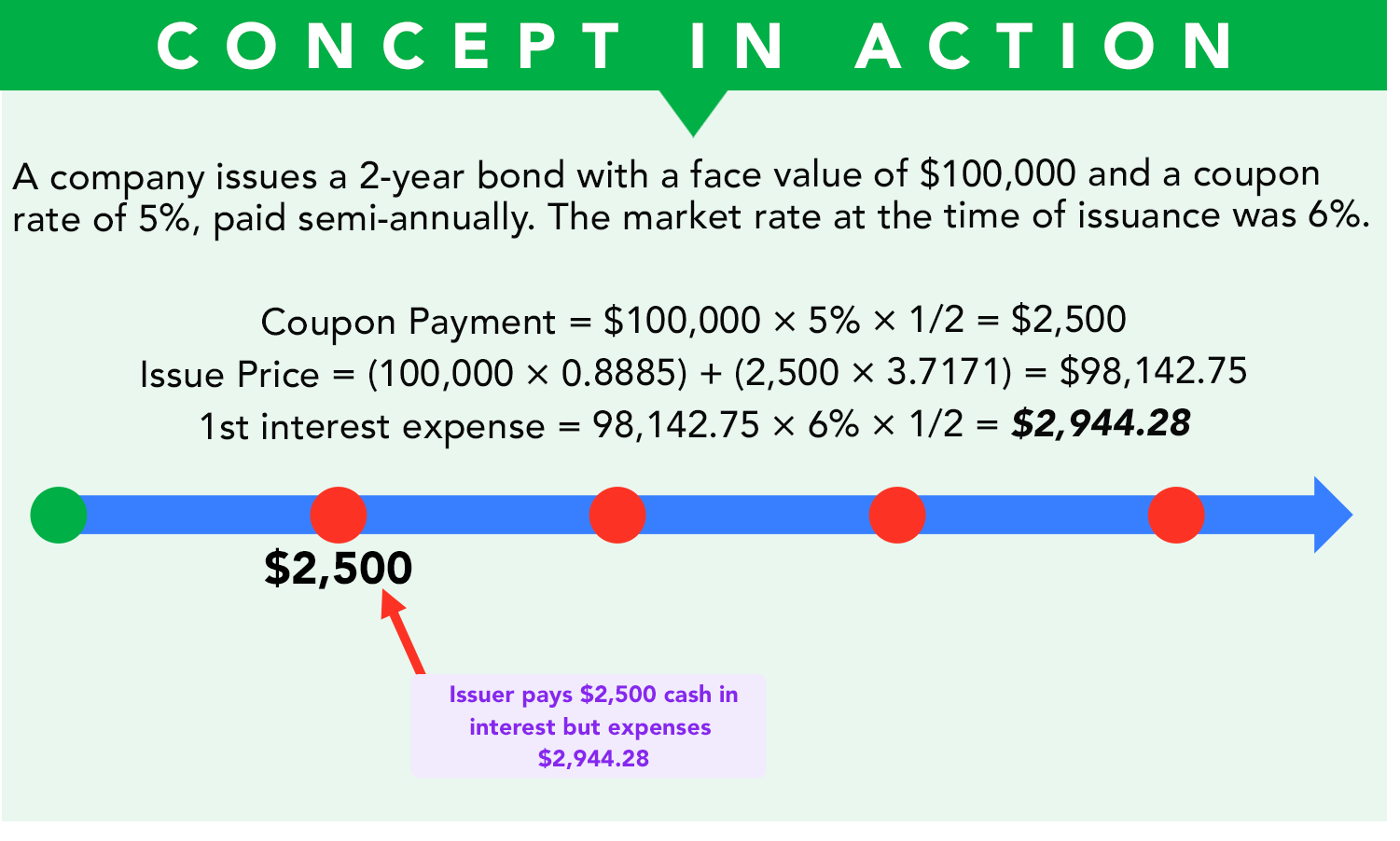
One of the differences it the accounting process of bonds, as compared to ordinary notes and loans, is that the interest expense recorded is not necessarily equal to the amount of interest paid.
Interest Expense
- Based on carrying value and market rate
- This method is called the effective interest rate method
- Difference between expense and payment is the amortization of the discount or premium

Bond Amortization Table
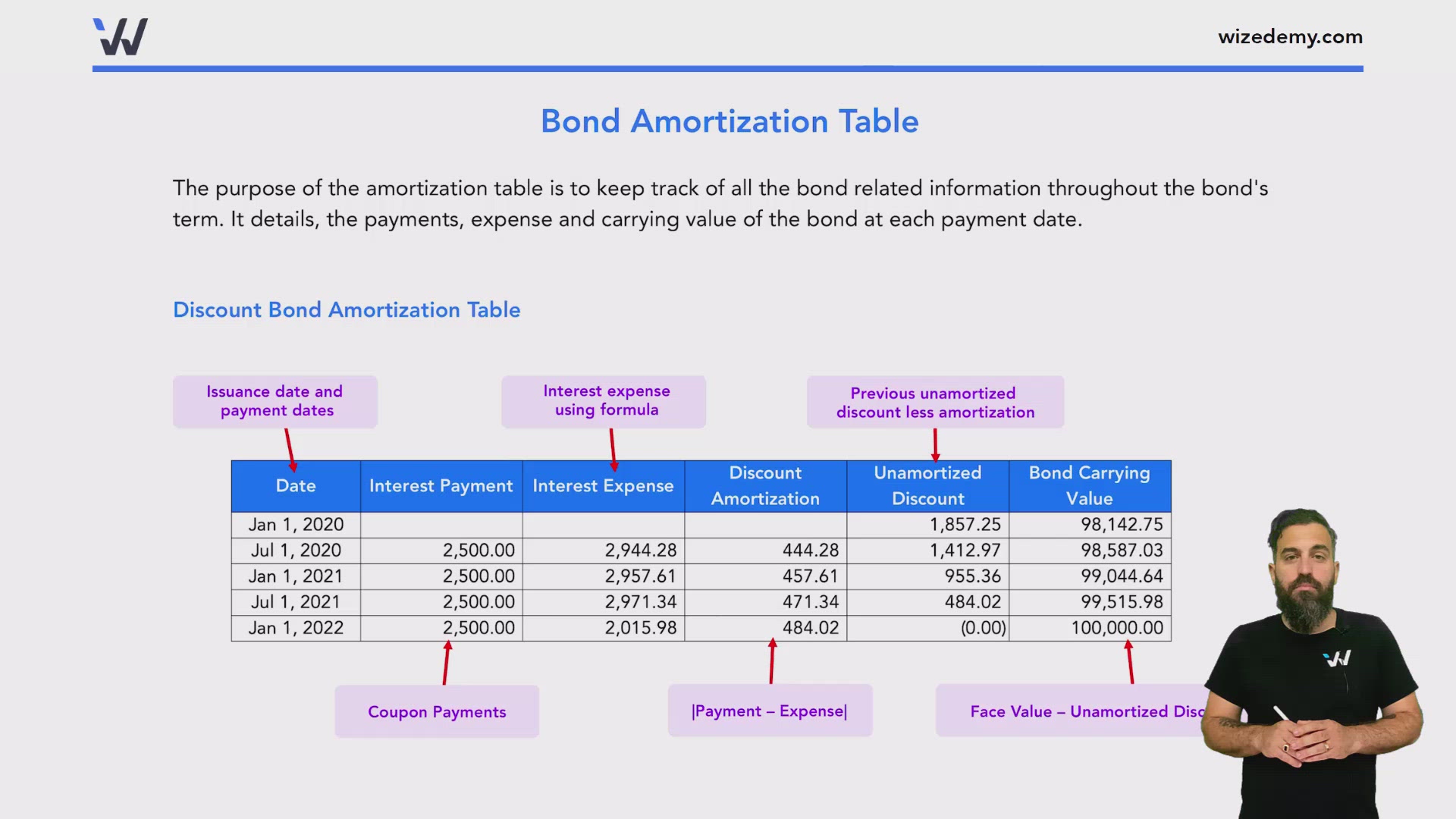
The purpose of the amortization table is to keep track of all the bond related information throughout the bond's term. It details, the payments, expense and carrying value of the bond at each payment date.
Discount Bond Amortization Table

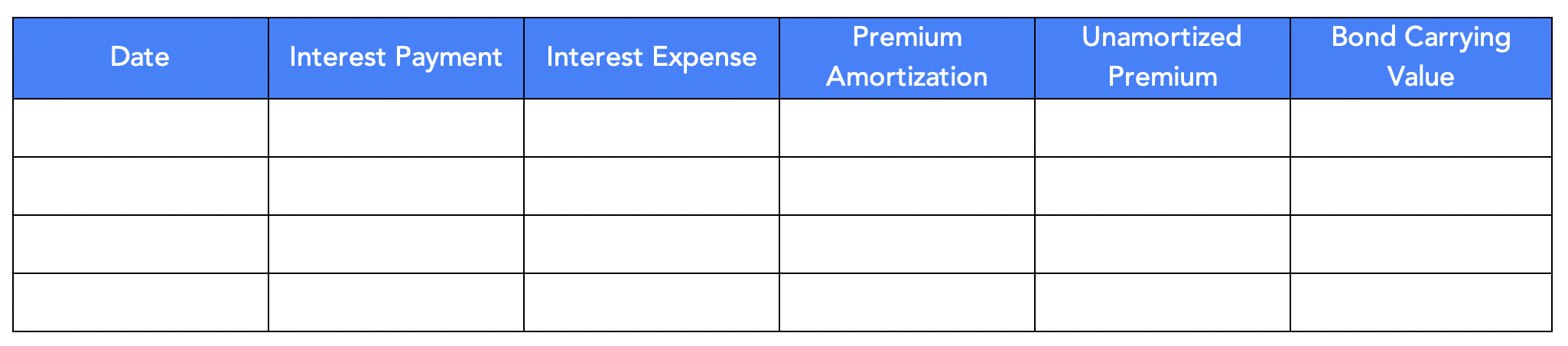
Premium Bond Amortization Table

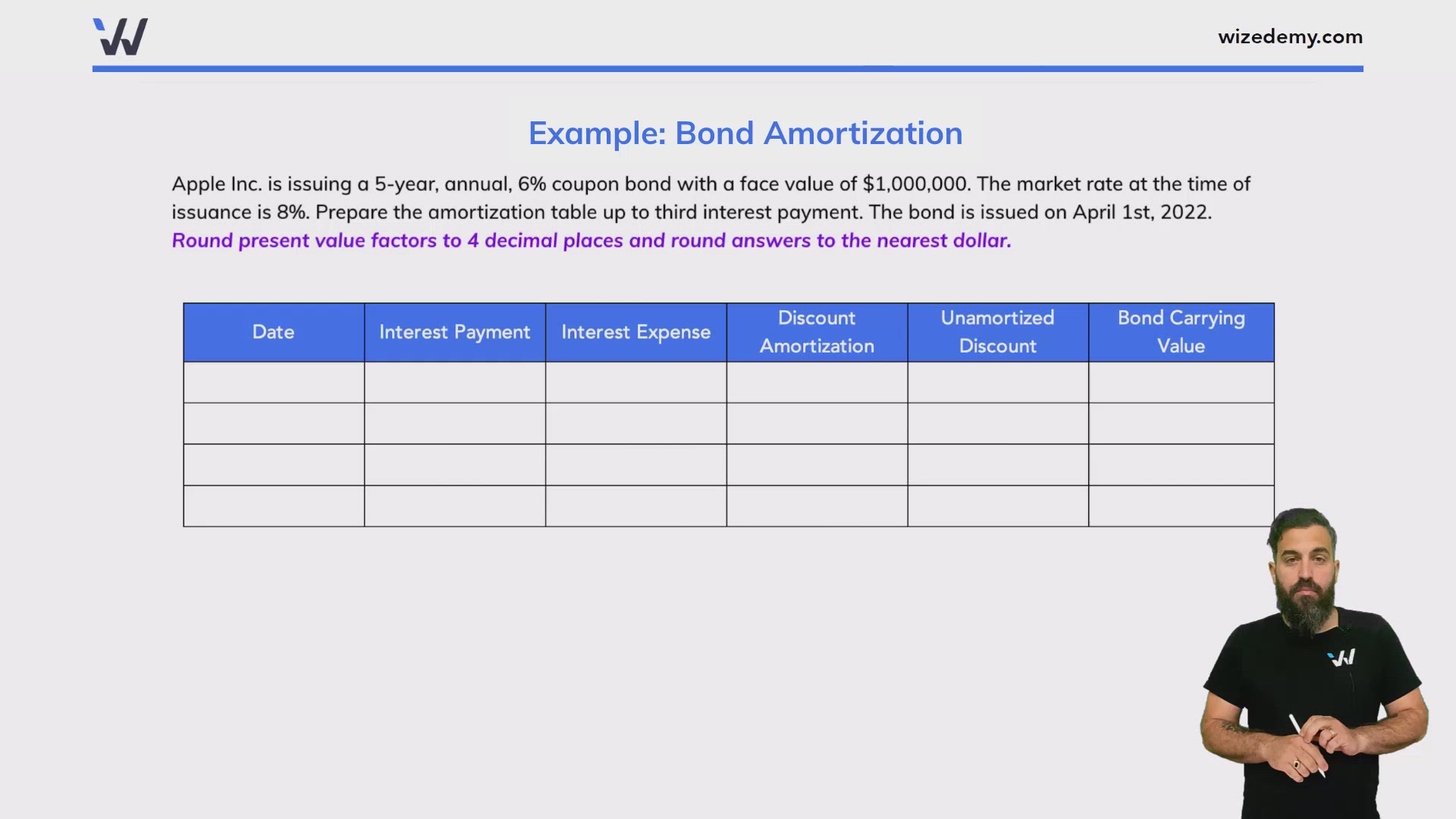
Example: Bond Amortization
Apple Inc. is issuing a 5-year, annual, 6% coupon bond with a face value of $1,000,000. The market rate at the time of issuance is 8%. Prepare the amortization table up to third interest payment. The bond is issued on April 1st, 2022.
Round present value factors to 4 decimal places and round answers to the nearest dollar.
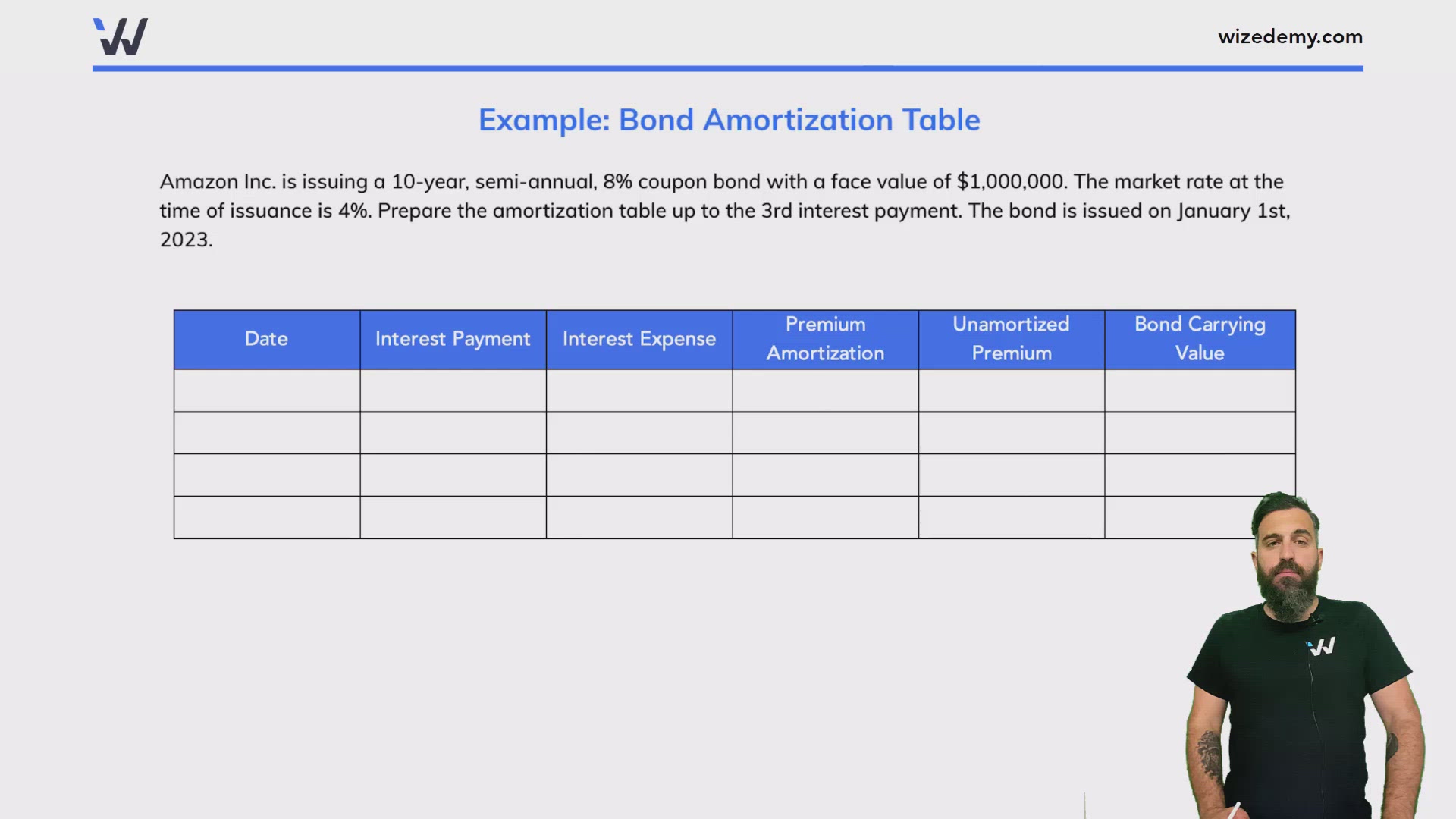
Example: Bond Amortization Table
Amazon Inc. is issuing a 10-year, semi-annual, 8% coupon bond with a face value of $1,000,000. The market rate at the time of issuance is 4%. Prepare the amortization table up to the 3rd interest payment. The bond is issued on January 1st, 2023.
Bond Present Value: 1,000,000 x 0.6730 + 40,000 x 16.3514 = 1,327,056
Round present value factors to 4 decimal places and round answers to the nearest dollar.