
Percentage of Receivables Method
Estimating the amount of uncollectible receivables can be done by taking a percentage of the total receivables.
Characteristics of the Percentage of Receivables Method
- Uses probabilities to determine uncollectible receivables.
- Can be calculated using a single percentage for all receivables
- Can be calculated using an increasing percentage for older receivables
- This is called the aging method
- Assumes that the older an account receivable is, the less likely it is to be collected.
- Bad debt expense is the difference between the unadjusted AFDA and the ending balance of AFDA according to the percentage method.
AFDA Formula


Example: Percentage of Receivables
Wize Corp.'s unadjusted trial balance at the end of 2020 indicates that accounts receivables total $500,000. Historically, 5% of receivables are uncollectible, and the company uses this rate to estimate its allowance for doubtful accounts. Prepare the journal entry to record bad debt expense.
Additional information:
- Balance of AFDA on January 1st, 2020 was $34,000.
- $14,000 of old accounts were written off during the year.
- $2,000 of written off accounts were collected.


Example: Percentage of Receivables (Aging Method)
On December 31st, 2020, the company's year-end, the following 6 customers still had open account balances, all sales were made under the terms 2/10, n/30:
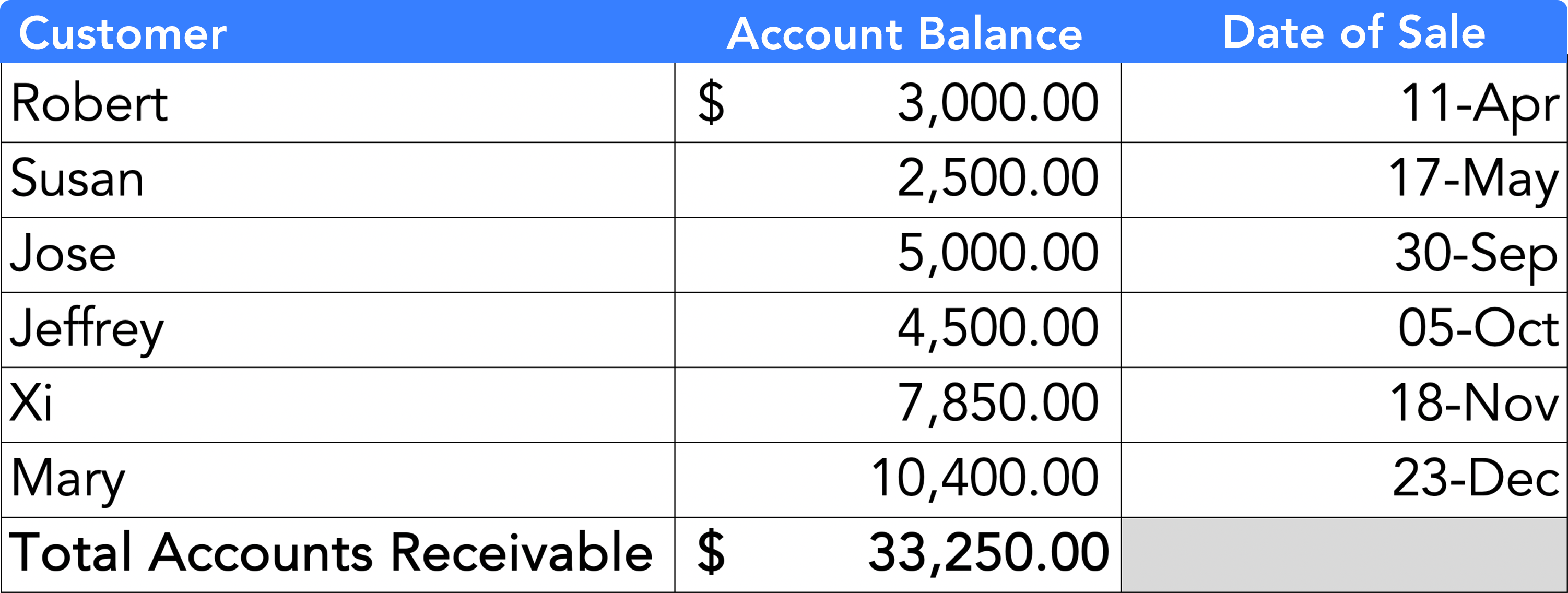
The company's policy on estimating uncollectible accounts is based on the following rates:
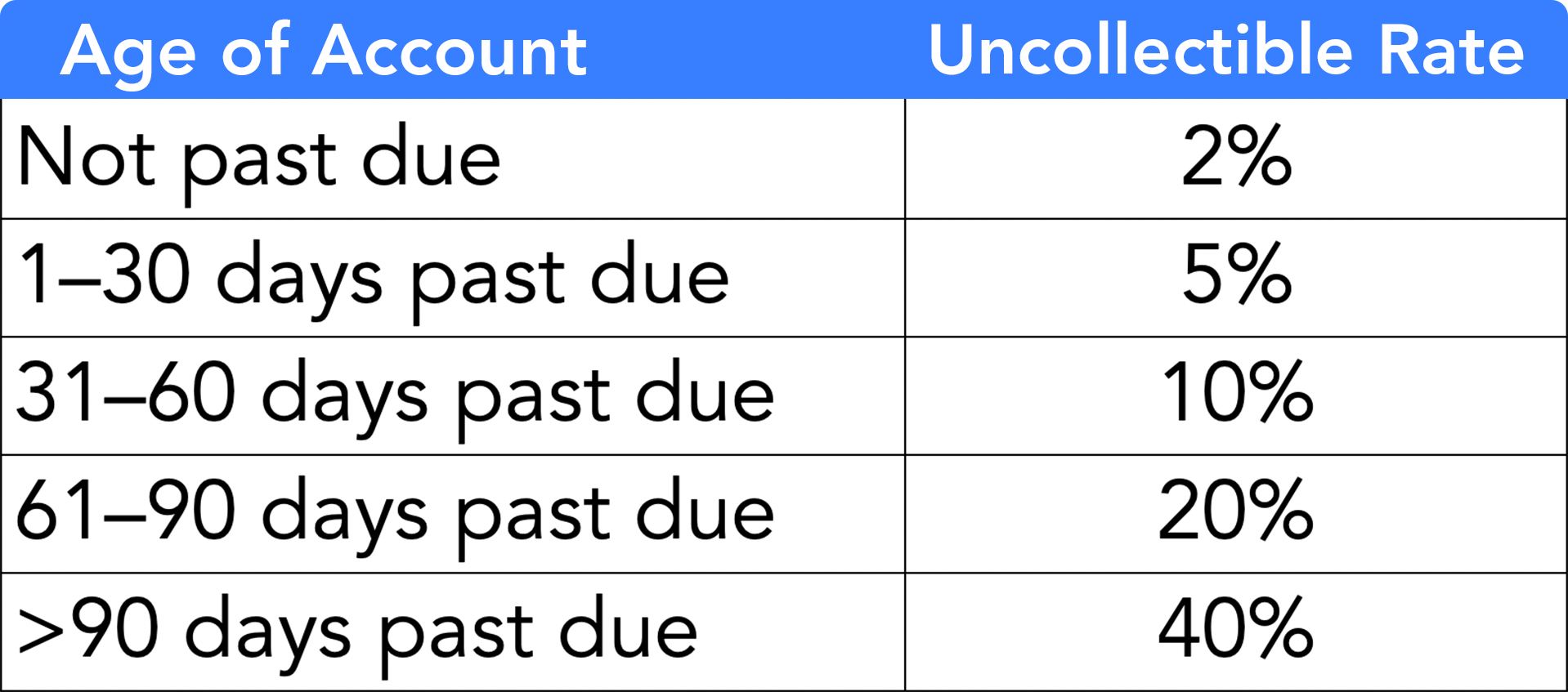
Determine the ending balance of allowance for doubtful accounts at December 31st, 2020.