Reptiles
Overview of Reptiles
- Lizards, snakes, turtles, crocodilians and birds
Traits
- Scales contain keratin
- Protects from desiccation and damage
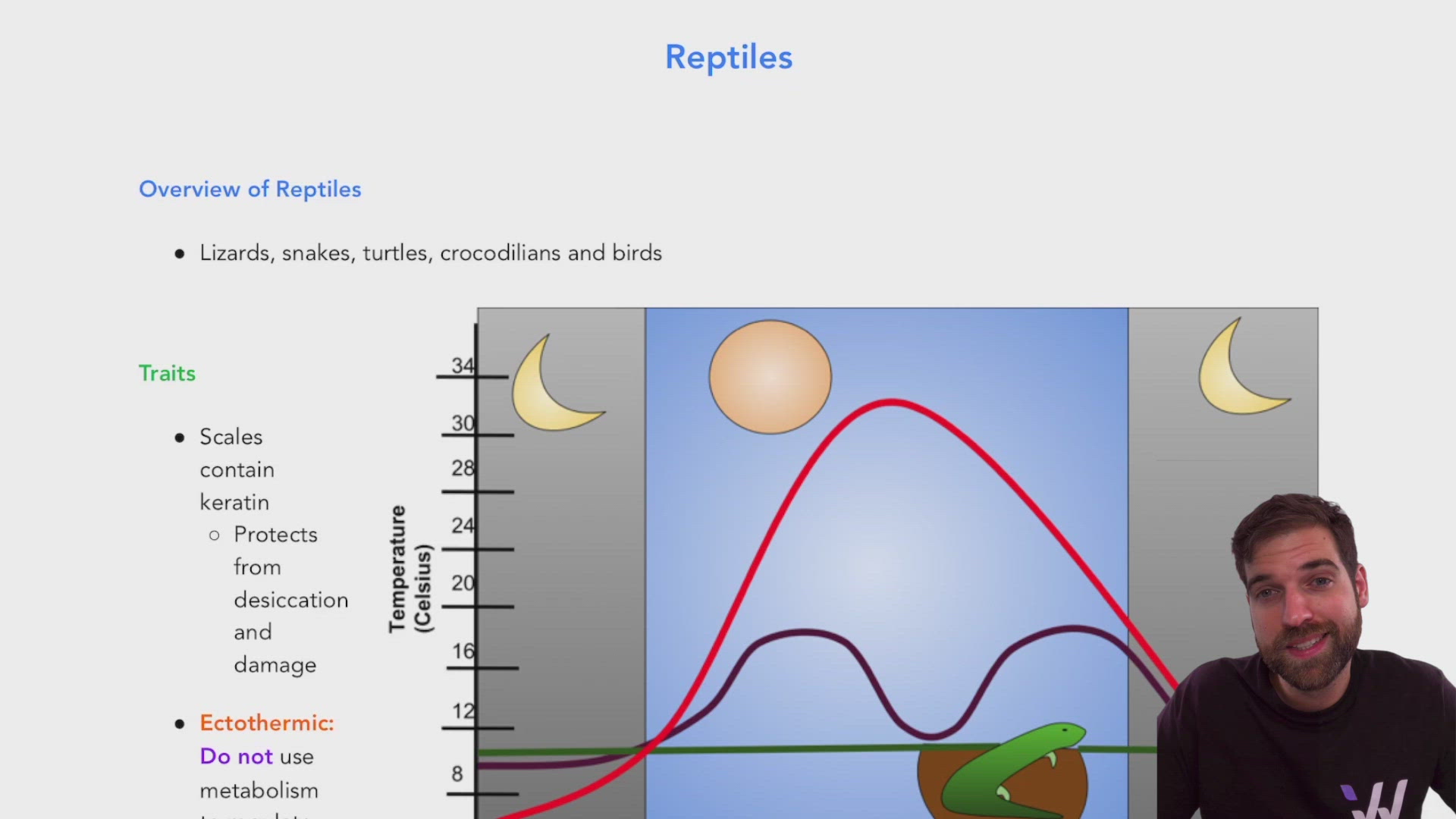
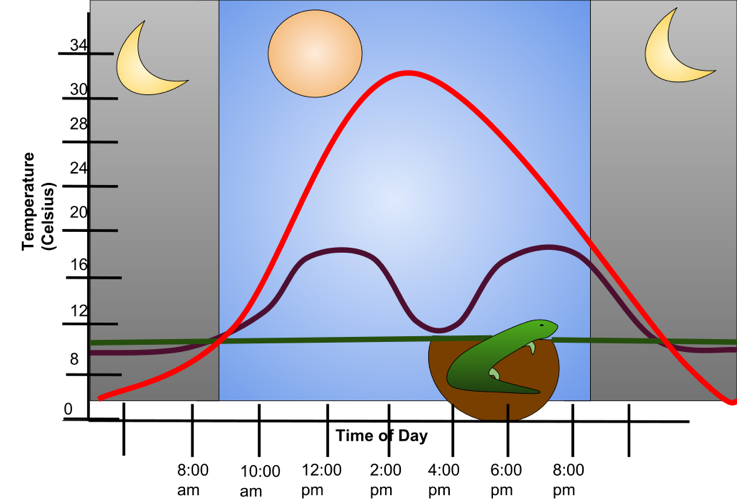
- Ectothermic: Do not use metabolism to regulate body temperature
- Most reptiles
- Behavioral thermoregulation: Move between sun and shade to maintain optimal temp
- Requires far less energy to support ectotherm (10%)
- Endothermic: Do use metabolism to regulate body temperature
- Most birds
Photo by Annalysenichols99 | CC BY
Evolution of Reptiles
- Earliest reptiles 310 MYA
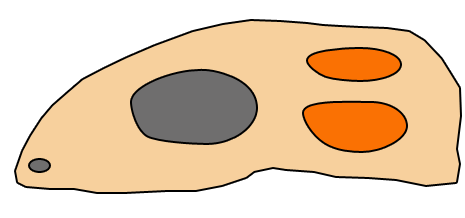
- Were Diapsid: Skulls with a pair of holes on each side of the skull
- Muscles pass through holes to attach to jaw
- Diapsids form two lineages
- Lepidosaurs: Tuataras, Lizards and Snakes
- Archosaurs: Turtles, Crocodilians, Pterosaurs and Dinosaurs
Diversity of Reptiles

Lepidosaurs
Tuataras
- Two species of "ancient" lepidosaur
- Lizard-like
- In New Zealand
Squamates
- Lizards and snakes
- ~7,900 species
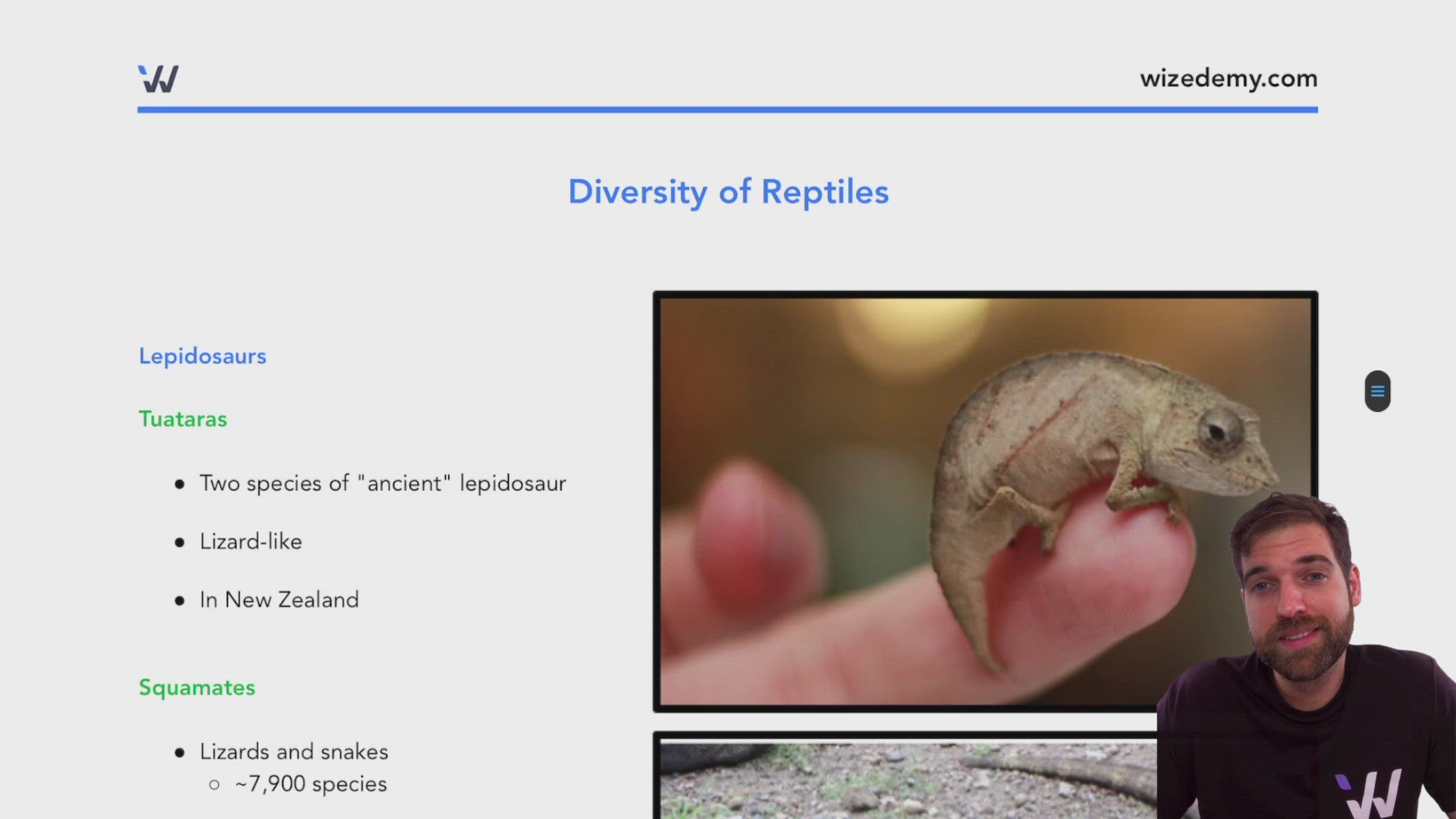
- Range from large to small Examples: Pygmy chameleon vs Komodo Dragon
- Snakes
- Lack legs
- some retain vestigial pelvic bones
- Efficient movement on land
- Waves of lateral bends
- Can grip the ground with ventral scales
- Adaptations to being predators
- Acute chemical sensors
- Sense ground vibrations
- Pit vipers can sense heat
- Enables hunting at night
Photo by Robbie Nisbet | CC BY
Photo by David Stanley | CC BY
Archosaurs
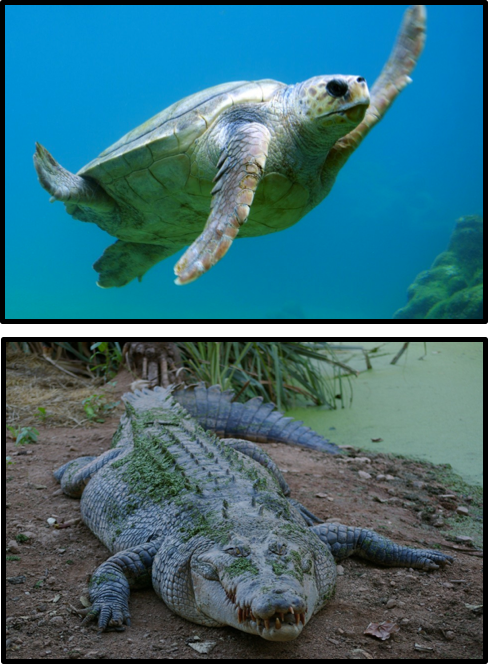
Turtles
- Have lost the two holes in skull
- But still diapsids
- Box like shell
- Upper and lower shields fused to vertebrae, clavicle and ribs
- Fossil evidence shows the shell developed in stages
- Early turtles could not retract head into shell
- 2 methods evolved: sideways and straight in
- Adaptations to Deserts (tortoise) and Sea (Sea turtles)
Crocodilians
- Alligators and Crocodiles
- Old lineage dates back to the triassic
- Adapted to aquatic habitats
- Nostrils turned up to breath while mostly submerged
Birds
- ~ 10,000 species
- Extensive adaptation to flight
- Reduced weight
- Hollow bones
- No urinary bladder
- One ovary
- Toothless
- Wings and feathers
- Feathers: made of B-keratin
- Wings: form airfoils like airplane wings
- Large pectoral muscles power wings
- Increased respiratory and circulatory systems
- Excellent vision
- Endothermic
- Flight enables
- New food sources Example: Flying insects
- Long distance migration
- Display complex behaviors Example: Breeding season courtship and display
- Fertilization is internal (due to shell)
- Evolution of birds
- Evolved from theropods Example: Archaeopteryx
- Some birds have lost flight Example: Ratites: Ostrich, kiwis, emu
- Penguins "fly" in the water
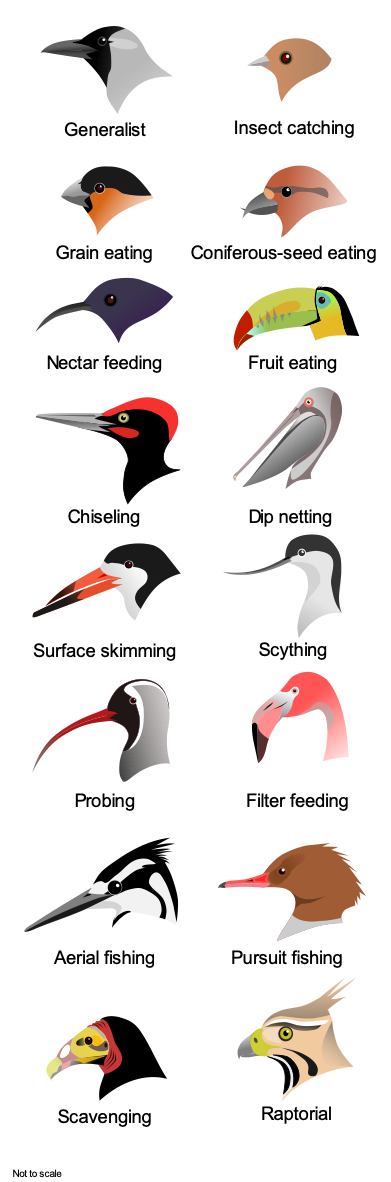
- Beaks and feet show a great deal of variation