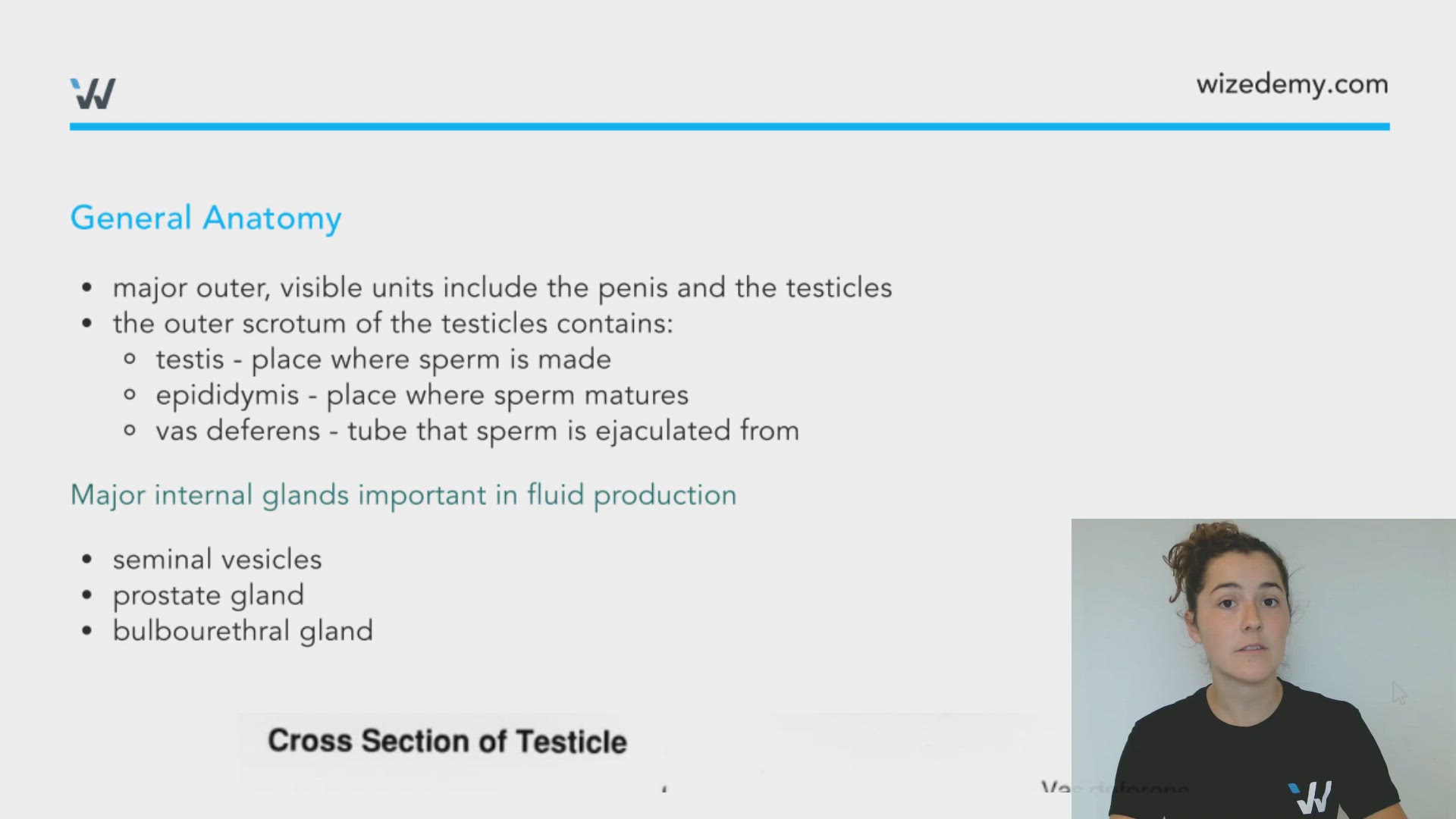
General Anatomy
- major outer, visible units include the penis and the testicles
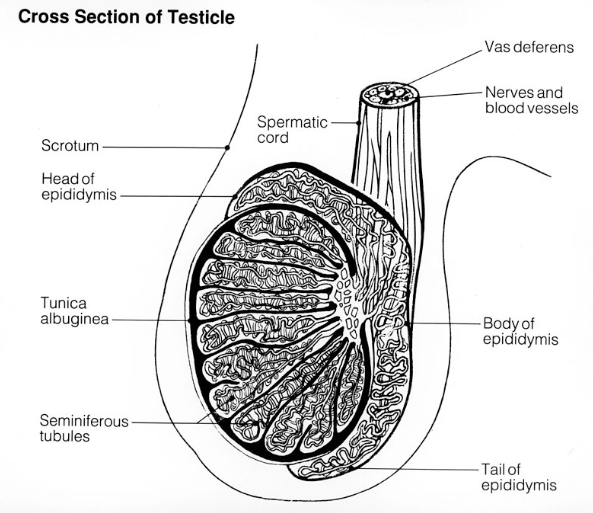
- the outer scrotum of the testicles contains:
- testis - place where sperm is made
- epididymis - place where sperm matures
- vas deferens - tube that sperm is ejaculated from
Major internal glands important in fluid production
- seminal vesicles
- prostate gland
- bulbourethral gland
commons.wikimedia.org
Spermatogenesis
- The production of sperm
- main production happens in the testes (specifically the seminiferous tubules)
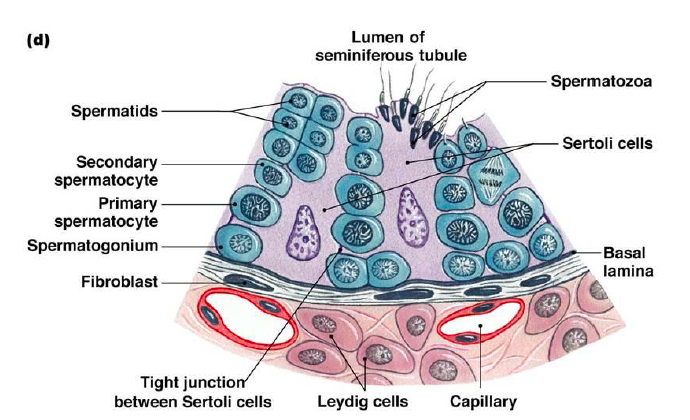
- Looking at a cross-section view of the seminiferous tubules, we can see different cell types involved in sperm production
Leydig cells
- make testosterone
- Stimulated by LH
Sertoli cells
- support the regulation of sperm production
- ANALOGY: the cheerleaders or the emotional support workers ... "you got this, spermatocytes!"
- I suppose this would make the Leydig cells the practical, "all business" cells - "hey body, let me give you something materialistic and useful. Here's some testosterone."
- back to the sertoli cells... they create the blood-testes barrier
- uses tight junctions between two sertoli cells to make this barrier
- its role is to seperate later stages of sperm production from contact with the blood
- Stimulated by FSH
Steps of Spermatogenesis
- Spermatogonia cells divide by mitosis (just like all other cells of the body). One cell from each division will go on to become a sperm, the other will remain as spermatogonia so it can continue the production of more spermatogonia.
- Primary spermatocyte goes through first meiosis and becomes a secondary spermatocyte
- Secondary spermatocyte goes through second meiosis and becomes a spermatid
- Spermatid becomes spermatozoa
Spermatozoa
- the typical circular cell structure we are used to seeing is now gone.
- the spermatozoa is agile and highly motile
- it has a shield on its head full of enzymes that will be released when the sperm reaches the egg.
- The entire structure is light weight and based more on speed and ability than it is on longevity
- ANALOGY: Sperm are like race cars, not a suburban... yes I just compared sperm to a race car.
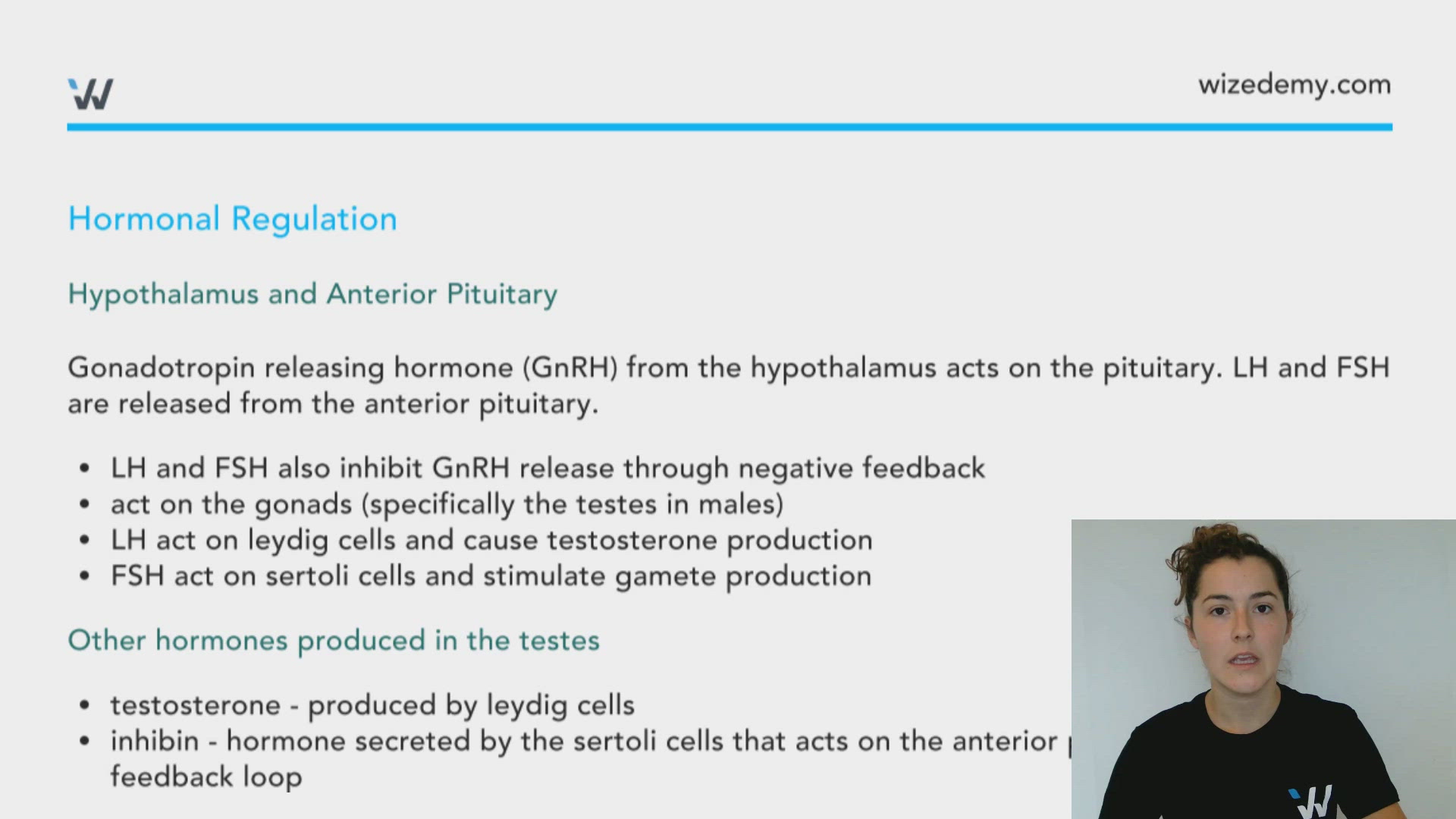
Hormonal Regulation
Hypothalamus and Anterior Pituitary
Gonadotropin releasing hormone (GnRH) from the hypothalamus acts on the pituitary. LH and FSH are released from the anterior pituitary.
- LH and FSH also inhibit GnRH release through negative feedback
- act on the gonads (specifically the testes in males)
- LH act on leydig cells and cause testosterone production
- FSH act on sertoli cells and stimulate gamete production
Other hormones produced in the testes
- testosterone - produced by leydig cells
- inhibin - hormone secreted by the sertoli cells that acts on the anterior pituitary in a negative feedback loop

commons.wikimedia.org