Wize University Physiology Textbook > Reproductive Physiology
Female Reproduction
Popular Courses
MCAT
General Course
DAT
General Course
Intro to Physiology
University Study Guides
PHYSIOL 1021
Western University
PHYSIOL 2130
Western University
Intro to Physiology
University Study Guides
PSL300H1
University of Toronto
PHYSL 210
University of Alberta
PHGY 210
McGill University
PHGY 215
Queen's University
KNES 259
University of Calgary
PHGY 216
Queen's University
BIOL 273
University of Waterloo
BIOL 260
University of British Columbia
PHYSIOL 3120
Western University
KNES 260
University of Calgary
BIOL 116
Case Western Reserve University
PPT 301
University of North Dakota
ANAT 212
McGill University
HTHSCI 2FF3
McMaster University
0:00 / 0:00
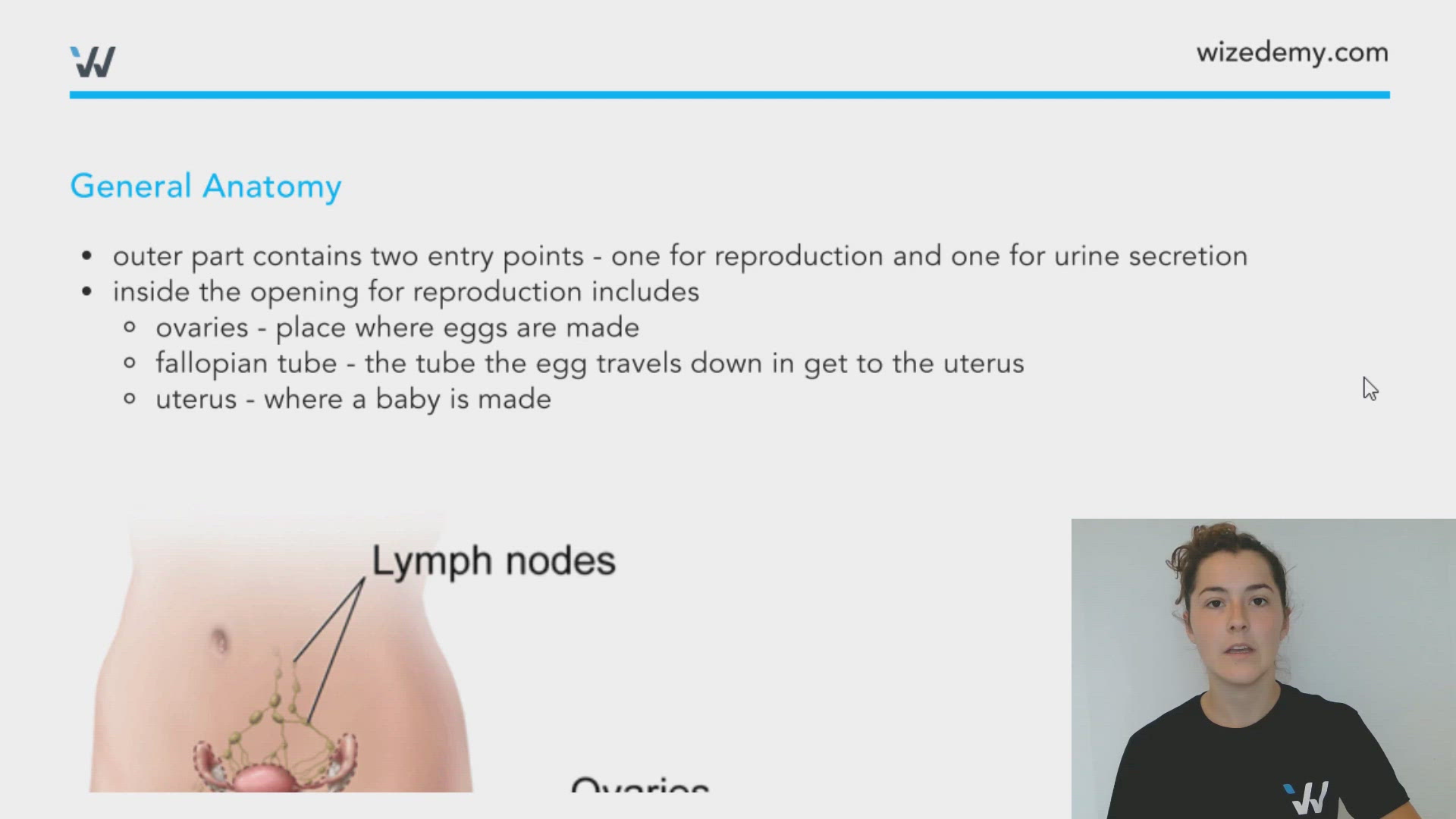
General Anatomy
- outer part contains two entry points - one for reproduction and one for urine secretion
- inside the opening for reproduction includes
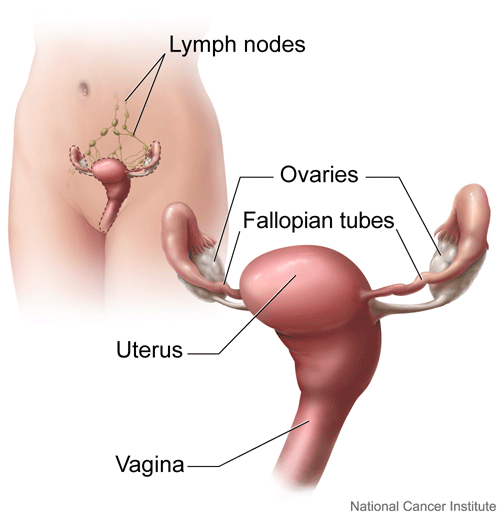
- ovaries - place where eggs are made
- fallopian tube - the tube the egg travels down in get to the uterus
- uterus - where a baby is made
Alan Hoofring/Don Bliss with visualsonline.cancer.gov
Oogenesis
- the beginning only happens in the womb - once the baby is born, she has all the oogonia she will ever have in her life time!
- note - the oocytes are surrounded by a follicle right up until the point they break out of the ovary and head down the fallopian tube.
Steps of oogenesis
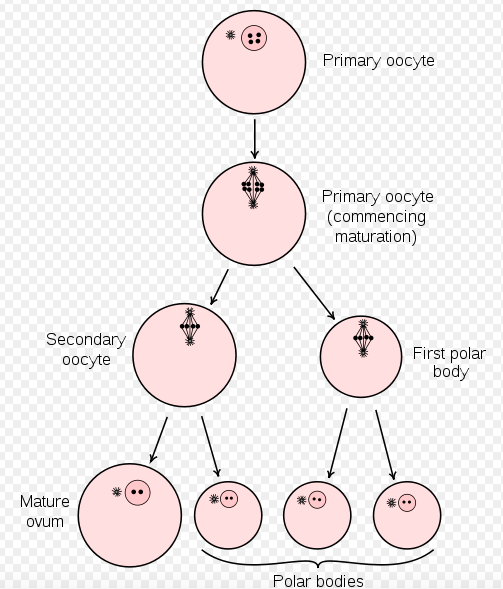
- Oogonia cells divide by mitosis (just like all other cells of the body). This happens in the womb, and then stops once the baby is born.
- each cycle, one oogonia will enter meiosis and become a primary oocyte
- Primary oocyte goes through first meiosis. One cell becomes a secondary oocyte, the other received less cytoplasm and cannot survive.
- Secondary oocyte goes through second meiosis. One becomes an egg, the other is too small and is called a "polar body"
commons.wikimedia.org
Differences between Oogenesis and Spermatogenesis
- oogenesis produces 1 egg ––> spermatogenesis produces 4 sperm.
- set number of oogonia available. Sperm will be produced after birth until death of the organism
ANALOGY: sperm and eggs are like two different types of packers. Lets say a sperm and an egg are going on vacation together. The sperm is the person who packs half of what they need and don't put all that much thought into the future and what they might need. They pack the essentials. The egg is the overpacker - 5 day trip? lets bring 10 pairs of pants, an extra bottle of hairspray, a lint roller, at least 7 granola bars, etc... Its better to be prepared for the long haul!
What is one of the main differences between spermatogenesis and oogenesis?
0:00 / 0:00
Menstrual Cycle
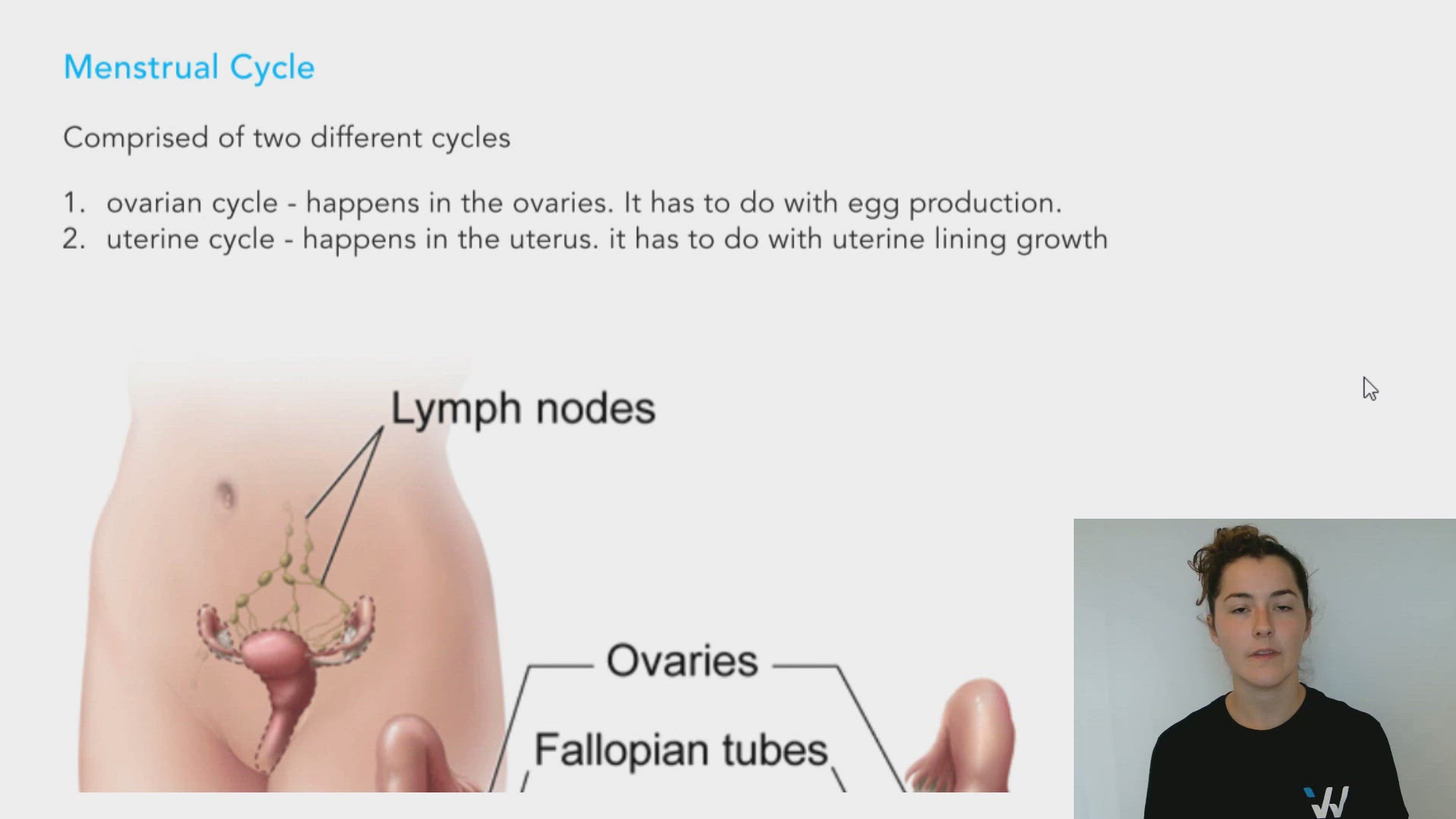
Comprised of two different cycles
- ovarian cycle - happens in the ovaries. It has to do with egg production.
- uterine cycle - happens in the uterus. it has to do with uterine lining growth
Alan Hoofring/Don Bliss with visualsonline.cancer.gov
- The menstrual cycle is controlled by hormones
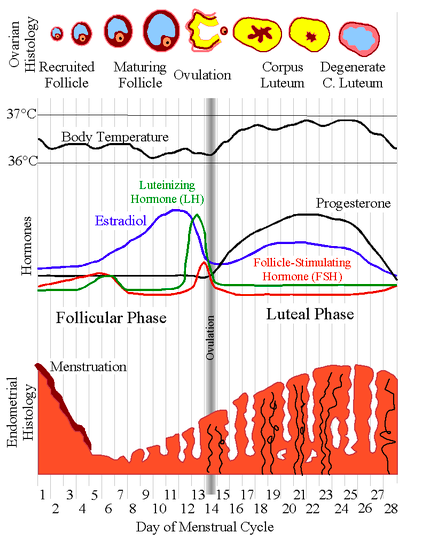
- the cycle is around 28 days long. This time is split into two different phases
- First 14 days are the follicular phase
- Second 14 days are the luteal phase
What happens in the follicular phase?
- in the ovaries, oogenesis occurs
- follicle surrounding the egg is also growing.
- At the end, the egg bursts out and leaves the follicle behind (it becomes corpus luteum)
- in the uterus, two things happen
- the first 5 days are a woman's period (menses phase). The uterine lining sheds and becomes thin.
- the last 9 days the uterine lining regenerates (proliferation phase).
What happens in the luteal phase?
- In the ovaries, corpus luteum produces progesterone and slowly dies off
- In the uterus, the uterine lining is stimulated by hormones from the corpus luteum, it gets even thicker, and secretes fluids
Hormones Involved In The Menstrual Cycle
Two major hormones:
Estrogen is released from the follicle during the follicular phase (first 14 days) and has four functions
- REGULATED BY POSITIVE FEEDBACK
- estrogen inhibits LH and FSH at the anterior pituitary
- tells uterus to enter proliferation phase (build lining back up)
- brings about secondary sex characteristics (breasts, higher fat percentage, etc)
Progesterone is released from the follicle during the luteal phase (last 14 days) and has two major functions
- tells uterus to secrete fluids
- as progesterone levels drop, the uterus is pushed into menses stage (period).
Which of the following would happen to a female patient if inhibin hormone was not produced?
0:00 / 0:00
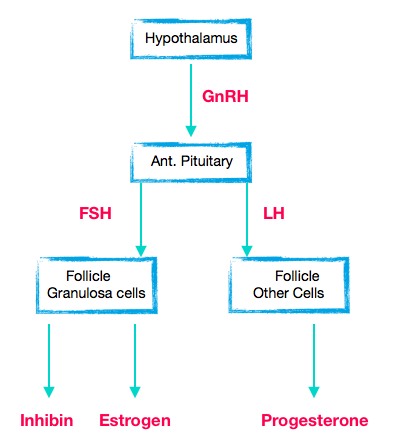
Hormones Involved
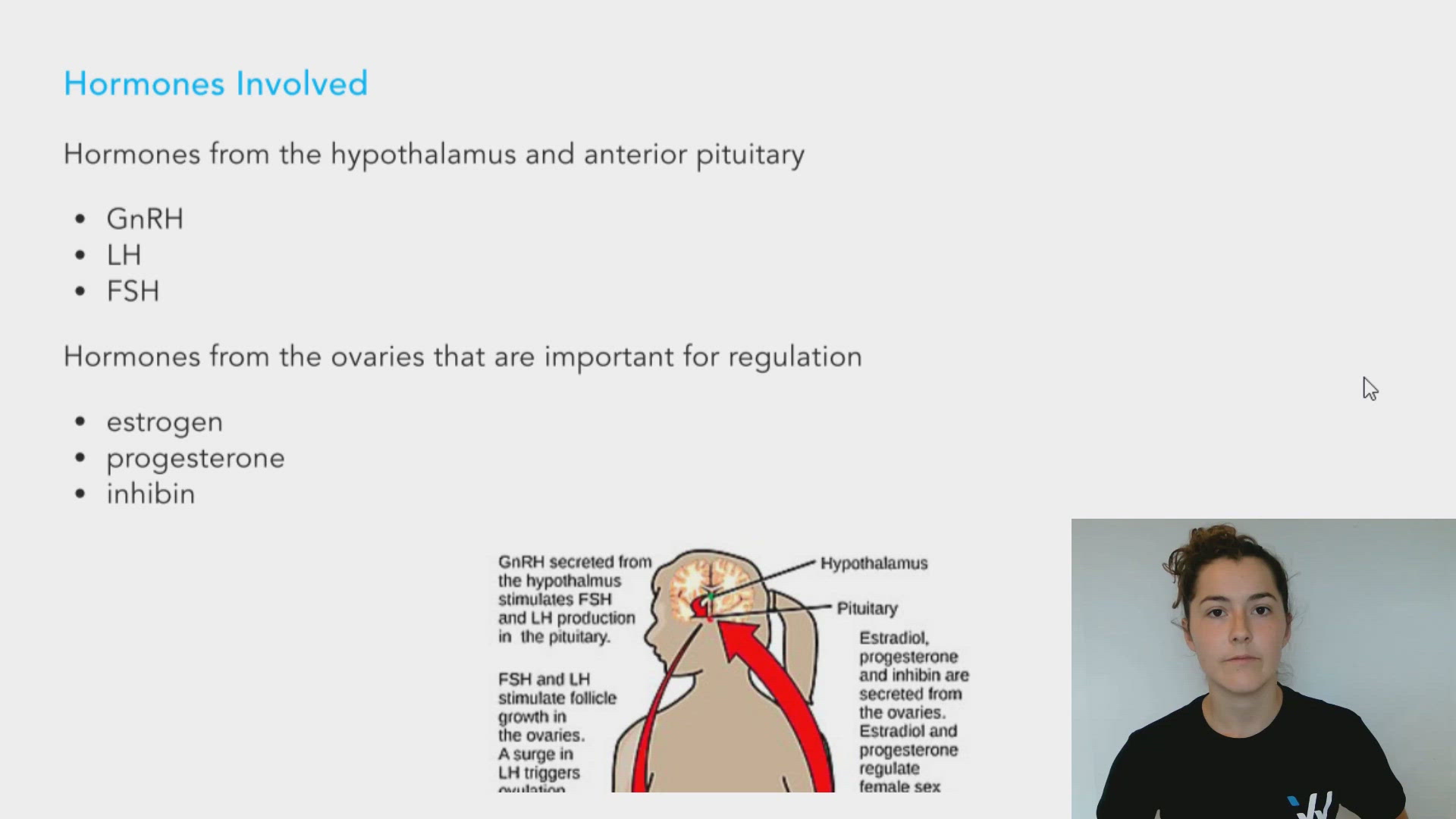
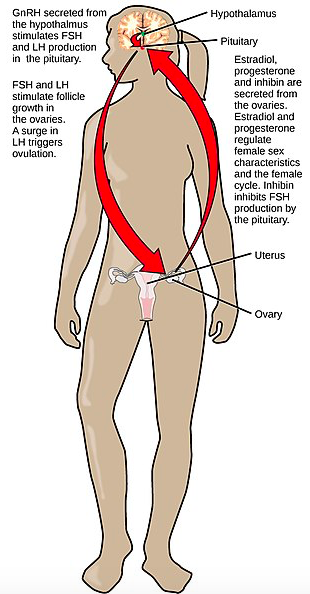
Hormones from the hypothalamus and anterior pituitary
- GnRH
- LH
- FSH
Hormones from the ovaries that are important for regulation
- estrogen
- progesterone
- inhibin
commons.wikimedia.org
Hormone Functions
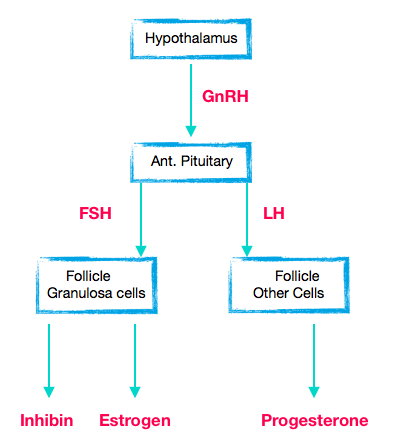
- GnRH acts to stimulate anterior pituitary
- LH acts on the ovaries
- stimulates granulosa cells in the follicle to produce estrogen
- FSH acts on the ovaries
- stimulates follicle cells to produce progesterone
The estrogen and progesterone have many functions including:
- producing secondary sex characteristics (breasts)
- regulated the menstrual cycle
- control the release of LH and FSH from the anterior pituitary by negative feedback
During the menstrual cycle, the ovarian hormones do the following tasks:
- estrogen PRODUCTION in follicle only
- inhibition of LH, FSH and GnRH
- positive feedback to granulosa cells ––> more estrogen made
- estrogen OUTPUT (estrogen release) = stimulation of GnRH ––> this happens to increase LH production
- inhibin is secreted by granulosa cells in the follicle and inhibit FSH
- low progesterone output = stimulate GnRH and LH
- high progesterone output = inhibition of LH and FSH
0:00 / 0:00
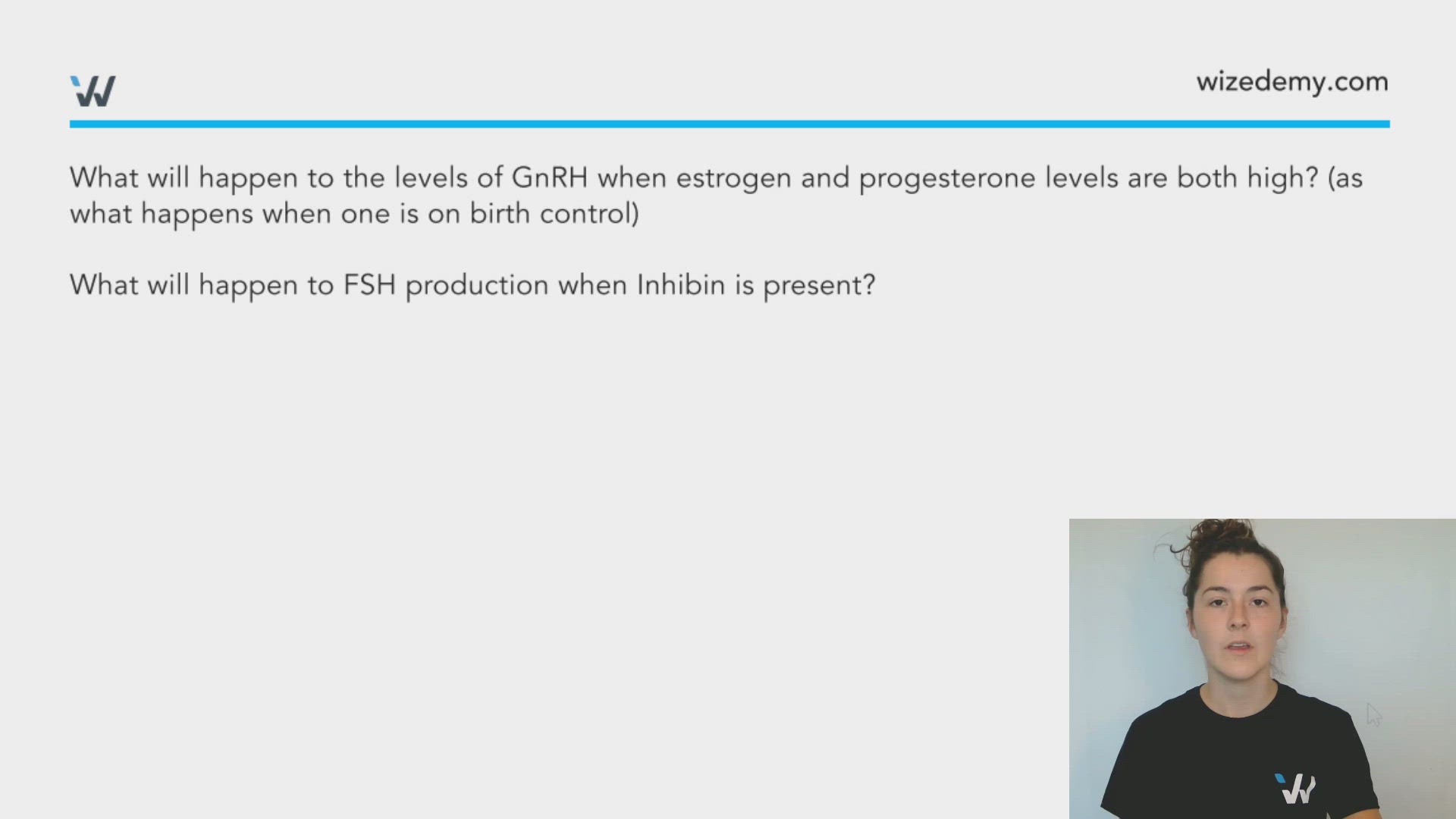
What will happen to the levels of GnRH when estrogen and progesterone levels are both high? (as what happens when one is on birth control)
What will happen to FSH production when Inhibin is present?
1. GnRH will drop - high estrogen and progesterone output will inhibit GnRH by negative feedback.
2. FSH will drop - FSH is inhibited by Inhibin. With high levels of inhibin, there will be low levels of FSH.
Reproductive conditions
- Endometriosis
- a condition where the endometrium begins growing outside the uterus in females
- may result in infertility, but not necessarily (maximum 50% of cases present with infertility)
- Menopause
- the end of menses. After this, a female can no longer reproduce.
- hormone levels drop