Popular Courses
MCAT
General Course
DAT
General Course
Intro to Physiology
University Study Guides
PHYSIOL 1021
Western University
PHYSIOL 2130
Western University
Intro to Physiology
University Study Guides
PSL300H1
University of Toronto
PHYSL 210
University of Alberta
PHGY 210
McGill University
PHGY 215
Queen's University
KNES 259
University of Calgary
PHGY 216
Queen's University
BIOL 273
University of Waterloo
BIOL 260
University of British Columbia
PHYSIOL 3120
Western University
KNES 260
University of Calgary
BIOL 116
Case Western Reserve University
PPT 301
University of North Dakota
ANAT 212
McGill University
HTHSCI 2FF3
McMaster University
0:00 / 0:00
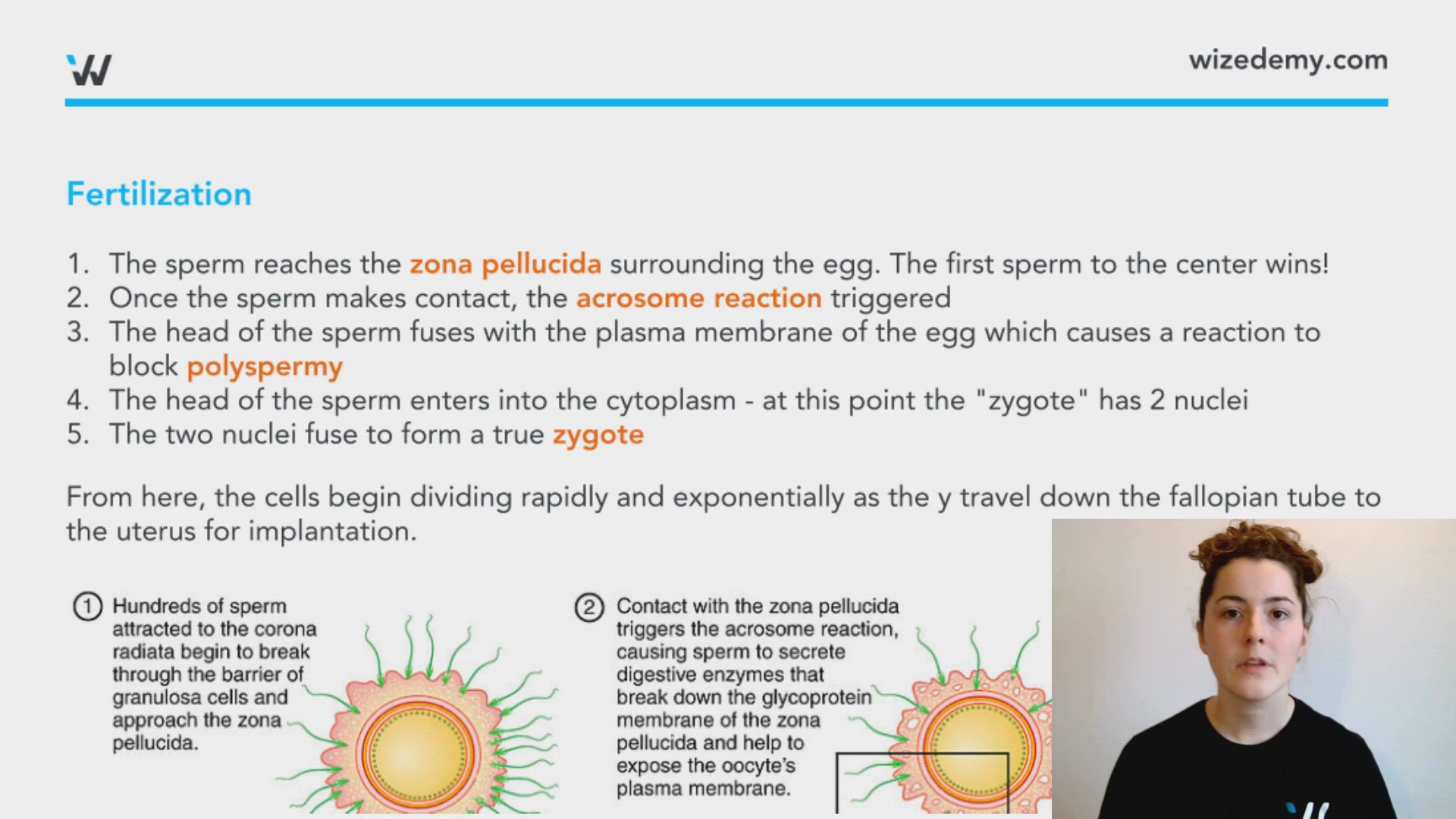
Fertilization
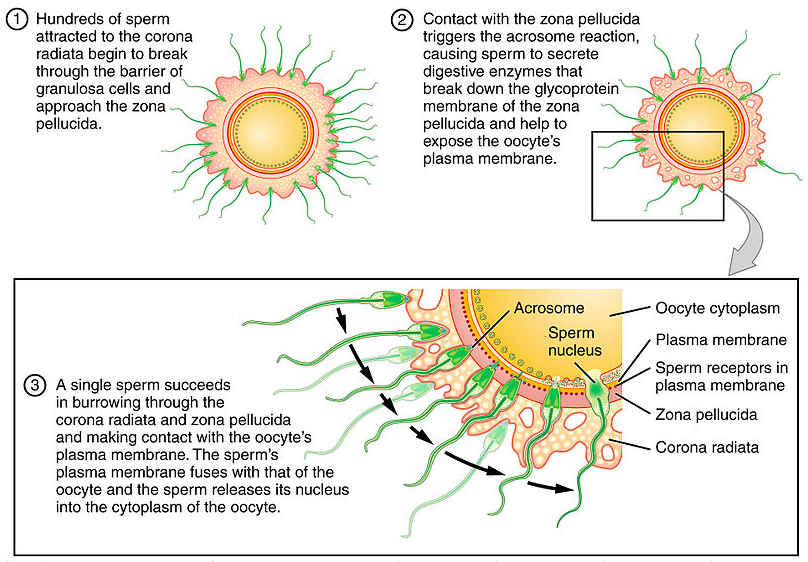
- The sperm reaches the zona pellucida surrounding the egg. The first sperm to the center wins!
- Once the sperm makes contact, the acrosome reaction triggered
- The head of the sperm fuses with the plasma membrane of the egg which causes a reaction to block polyspermy
- The head of the sperm enters into the cytoplasm - at this point the "zygote" has 2 nuclei
- The two nuclei fuse to form a true zygote
From here, the cells begin dividing rapidly and exponentially as the y travel down the fallopian tube to the uterus for implantation.
commons.wikimedia.org
From here, the cells begin dividing rapidly and exponentially as the y travel down the fallopian tube to the uterus for implantation.
0:00 / 0:00
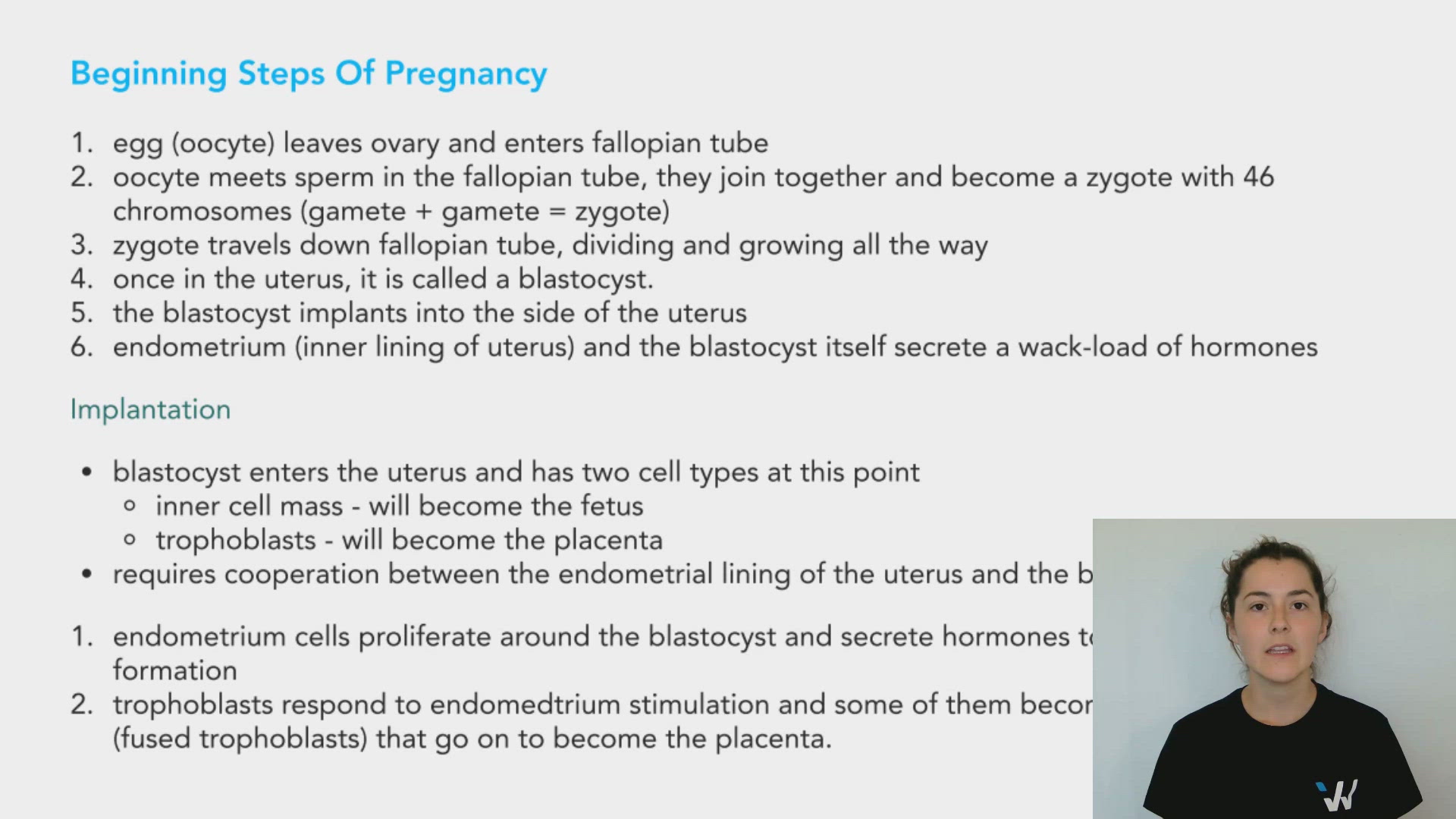
Beginning Steps Of Pregnancy
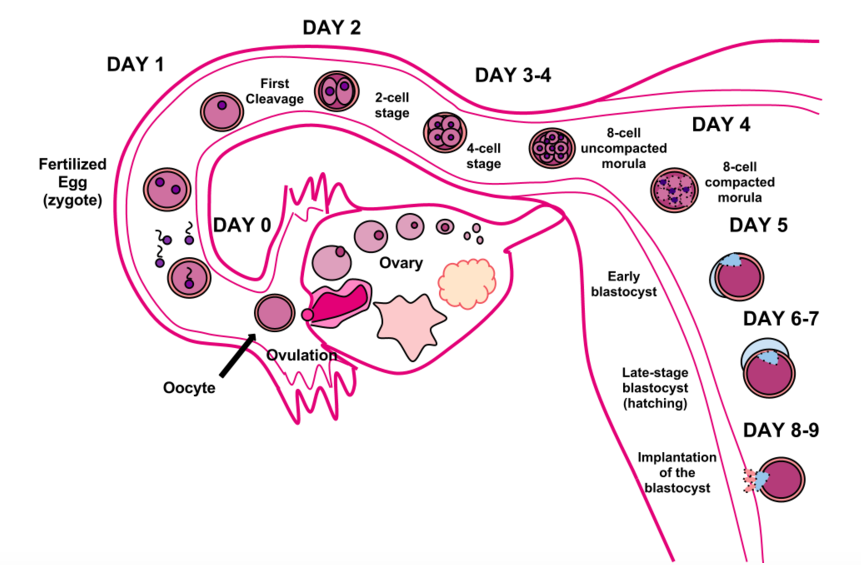
- egg (oocyte) leaves ovary and enters fallopian tube
- oocyte meets sperm in the fallopian tube, they join together and become a zygote with 46 chromosomes (gamete + gamete = zygote)
- zygote travels down fallopian tube, dividing and growing all the way
- once in the uterus, it is called a blastocyst.
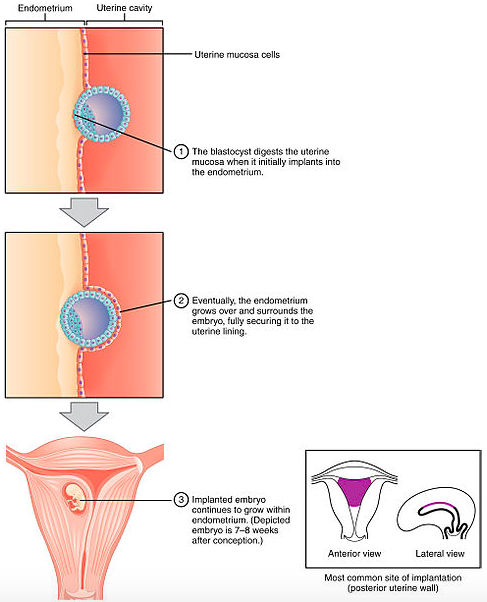
- the blastocyst implants into the side of the uterus
- endometrium (inner lining of uterus) and the blastocyst itself secrete a wack-load of hormones
cs.m.wikipedia.org
Implantation
- blastocyst enters the uterus and has two cell types at this point
- inner cell mass - will become the fetus
- trophoblasts - will become the placenta
- requires cooperation between the endometrial lining of the uterus and the blastocyst
- endometrium cells proliferate around the blastocyst and secrete hormones to stimulate placenta formation
- trophoblasts respond to endomedtrium stimulation and some of them become syncitiotrophobasts (fused trophoblasts) that go on to become the placenta.
commons.wikimedia.org
Important Hormones
- Estrogen
- Progesterone
- human chorionic gonadotropin (hCG)
- human placental lactogen
Hormone functions
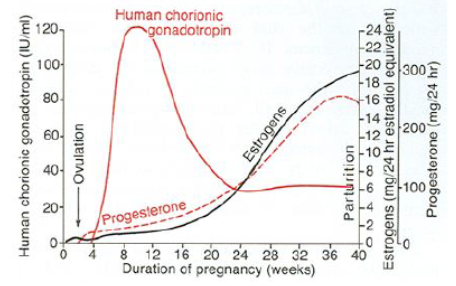
- hCG is made by the placenta and is released for the first 3 months of pregnancy. Its main role is to maintain the corpus luteum
- through maintaining corpus luteum, it indirectly increases estrogen and progesterone levels
- through maintaining corpus luteum, it indirectly maintains uterine wall thickness
- Estrogen has higher and higher levels as pregnancy goes on
- Progesterone has higher and higher levels as pregnancy goes on
- human placental lactogen is made by the placenta
- decreases a mothers glucose intake into her cells so there is more available for fetal development.
End Of Pregnancy
- regulated by a positive feedback system
- stretching of the cervix starts the process
- progesterone levels go down ––> induce contractions
- estrogen and oxytocin (from posterior pituitary) also induce contractions
Hormones needed to make breast milk
- oxytocin
- prolactin
- INHIBITORS
- estrogen
- progesterone
What is the name of the structure responsible for implantation of the zygote into the uterine wall?