BIOL 103
Queen's
Course Overview
Lessons & Practice
I. Welcome
1. Module 1: Evolution
1.8hr2. Module 2: Building Physiological Systems
4hr2.2.1. Types of Cell Communication 2.2.2. Signal Transduction2.2.3. Intracellular vs. Cell Membrane Receptors2.2.4. Receptors2.2.5. Response to Signaling 2.2.6. Example: Cell Signaling2.2.7. Hormone Types and Functions2.2.8. Hormones Cheatsheet2.2.9. Overview of the Endocrine System2.2.10. Examples of Endocrine Control - Blood Volume & Insect Molting2.2.11. Pituitary Gland2.2.12. Example: Pituitary Gland2.2.13. Adrenal Gland2.2.14. Thyroid Gland2.2.15. Example: Negative Feedback Loop2.2.16. New Practice Question2.2.17. Practice2.2.18. Practice Question: Glucose Regulation2.2.19. Practice Question: Hyperthyroidism2.2.20. New Practice Question2.2.21. New Practice Question2.2.22. New Practice Question2.2.23. Practice 22.2.24. Practice 12.2.25. Practice 2
2.5.1. The Nervous System2.5.2. Central Nervous System: Brain and Spinal Cord2.5.3. The Peripheral Nervous System2.5.4. Sympathetic & Parasympathetic Nervous Systems2.5.5. Nervous Systems in Other Animals2.5.6. Flatworms2.5.7. Reflexes2.5.8. Reflex Arcs2.5.9. Practice: Nervous System2.5.10. Practice: The Peripheral Nervous System
2.6.1. Sensory Receptors2.6.2. The Skin And Its Sensory Receptors2.6.3. The Olfactory System2.6.4. The Gustatory System2.6.5. Anatomy of the Eye2.6.6. Eye Function2.6.7. Example: Binocular vs. Monocular Vision2.6.8. Hearing2.6.9. Other Sense Types2.6.10. Auditory sensory transduction2.6.11. New Practice Question2.6.12. New Practice Question2.6.13. New Practice Question2.6.14. New Practice Question
3. Module 3: Homeostasis
2.5hr3.1.1. Different Types of Metabolism3.1.2. Mouth3.1.3. Stomach3.1.4. Small Intestine3.1.5. Large Intestine3.1.6. Digestion3.1.7. Digestion in other organisms3.1.8. Digestion in Birds3.1.9. Digestion in Ruminants3.1.10. Insulin & Glucagon3.1.11. Functions of Insulin and Glucagon3.1.12. New Practice Question3.1.13. New Practice Question3.1.14. New Practice Question3.1.15. Digestion3.1.16. New Practice Question
3.6.1. Overview of the immune system3.6.2. Innate immunity3.6.3. Adaptive immunity3.6.4. Innate vs. adaptive immunity3.6.5. Other Immune Systems3.6.6. Plant Immunity3.6.7. Immune System - Summary & Key Points3.6.8. Practice: Innate Immune System 13.6.9. Practice: Innate Immune System 33.6.10. Practice: Introduction to the Immune System 23.6.11. Practice3.6.12. Practice: Adaptive Immune System 13.6.13. An adaptive immune response to a virus3.6.14. Practice: Lymph & the Immune System3.6.15. Practice problem 2
3.7.1. Asexual Reproduction3.7.2. Types of Asexual Reproduction3.7.3. Binary Fission3.7.4. Practice: Prokaryotes3.7.5. New Practice Question3.7.6. New Practice Question3.7.7. Sex & Sexual Reproduction3.7.8. Cost of Sexual Reproduction3.7.9. Example: Advantages & Disadvantages of Sexual Reproduction3.7.10. Practice Question: Difference Between Sexual and Asexual Reproduction3.7.11. Practice: Sexual Reproduction3.7.12. sexual vs asexual3.7.13. Reproductive Hormones3.7.14. New Practice Question3.7.15. Embryonic Development3.7.16. Embryonic Membranes in Birds3.7.17. Prenatal Development3.7.18. Eukaryotic Gene Expression and Development3.7.19. Lactation3.7.20. Animal Development3.7.21. Animal Embryo Development3.7.22. Example: Protostomes vs Deuterostomes3.7.23. New Practice Question3.7.24. New Practice Question3.7.25. New Practice Question
4. Module 4: Ecology
2.8hr4.10.1. Ecosystems4.10.2. New Practice Question4.10.3. Practice4.10.4. New Practice Question4.10.5. New Practice Question4.10.6. Disturbances4.10.7. Theory: Biomes4.10.8. Biomes: Tundra4.10.9. Biomes: Forest4.10.10. Biomes: Freshwater4.10.11. Biomes: Grassland4.10.12. Biomes: Marine4.10.13. Biomes: Desert4.10.14. New Practice Question
I Welcome
Free Activity
0:00 / 2:27
Answered
Aseel Y
Hi there, I just want to ask why Homeostasis section is not available!
D
Danielle S
InstructorThank you for bringing this to our attention and your patience in allowing us to solve the issue!
The chapter now has the content ready for you to explore and review.
Answered
Anonymous
Is glycolysis not covered in this course?
Lila H
InstructorIt is currently included in Section 5 "Energy and Metabolism"
Answered
Anonymous
What is the difference between gene flow and genetic drift
I
Isaura F
InstructorGene flow is the transfer of genetic information from one population to another. Genetic drift is the variation of the relative frequency of a particular allele (version of a gene) within a population. Hope this helps!
Answered
Shannon W
What's neurons?
M
Marlon B
A nerve cell
Answered
A
Alexis E
whats a hydrogen bond?
E
Elizabeth P
InstructorHydrogen bonds involve a H atom that is covalently bonded to a highly electronegative atom (F, O, N) causing it to be partially stripped of its electrons by that atom.
This causes a transient attractive interaction to form between the partially positive H with another partially negative (electronegative) atom. Example: water (two Hs bound to one O) loves to interact with other water molecules in that way.
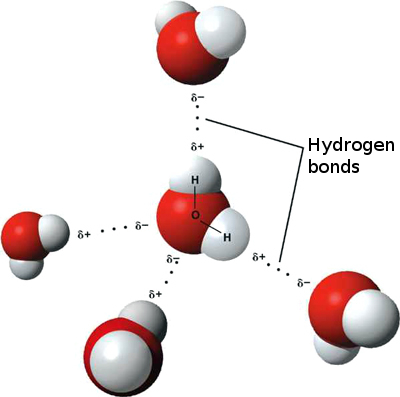
Hydrogen bonds are not covalent bonds, they are much weaker.
Answered
Anonymous
Are there any parts of the human body that get oxygen directly from the air and not from the blood?
I
Isaura F
InstructorSeems like the outer layers of skin and outer cornea (of your eyes) are able to get oxygen directly from air.
Answered
Laura P
How does climate change affect wildlife in ontario?
I
Isaura F
Instructor"In Ontario, [one] can expect average temperatures to rise by as much as 3 to 8 degrees Celsius over the next century. Warmer temperatures will result in milder winters, longer growing seasons and a higher frequency of severe weather events such as record-breaking storms, floods, droughts and heat waves." For more info, check out: http://www.health.gov.on.ca/en/common/ministry/publications/reports/climate_change_toolkit/climate_change_health_modelling_study.pdf
Welcome to First Year Bio!
Feel free to go through this resource at your own pace.
- Use the table of contents 📃 on the left to skip to parts you need help with
- Watch the video ▶ or read the written lessons 📖
- Speed up ⏩ or slow down ⏪ the videos
- Use the "Ask a question"❓ feature below each lesson/question any time!
This resource includes the following activities:
 Theory lessons: I will explain and summarize new concepts
 Examples: I will walk you through how to solve problems involving these new concepts
 Practice questions: These are for you to try out on your own. Don't worry, if you get stuck, you can watch the video solutions or read the suggested written answers
Let's get started! 🚀