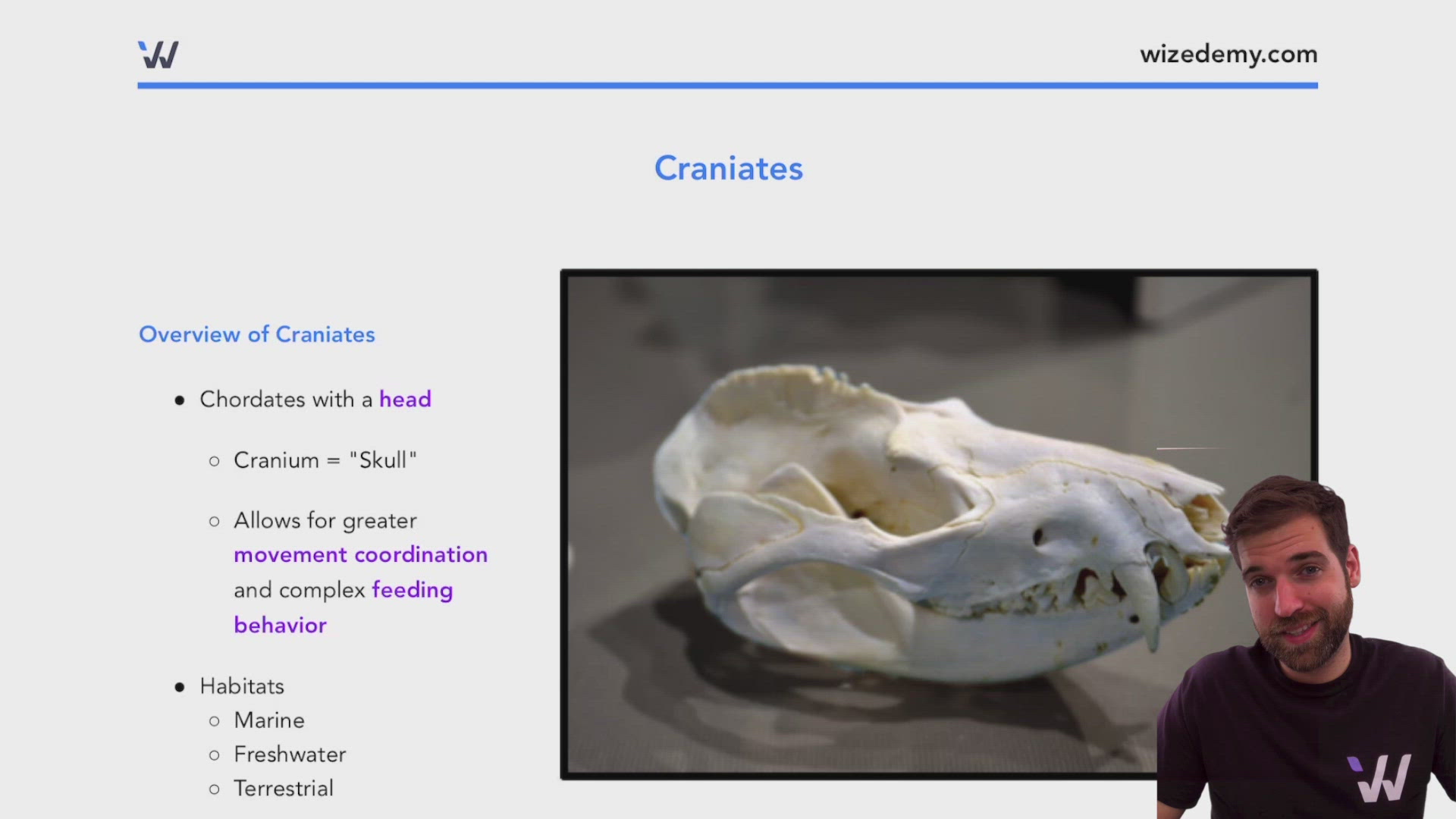
Craniates
Overview of Craniates
- Chordates with a head
- Cranium = "Skull"
- Allows for greater movement coordination and complex feeding behavior
- Habitats
- Marine
- Freshwater
- Terrestrial
- Includes the largest animals that ever existed Examples: Sauropods, blue whales
- Most are vertebrates
- Craniate Derived Character State
- 2+ clusters of Hox genes
- Neural crest
- Temporary embryonic cells
- Endoskeleton and cephalization
- Modified circulatory system
- Pharyngeal clefts

Jawless Craniates
- Two classes lack jaws
- Lack teeth and paired limbs
- Mouth like an open tube
- Long, flexible tubular bodies
Class Myxini
- Only living vertebrate that lack vertebrae
- But does have developed notochord
- Cartilaginous cranium
- Tiny eyes, lack lenses
- Mouth surrounded by tentacles
- Feeds on soft bodied worms / corpses
- Corpses
- Grip on flesh using Keratinous plates in the mouth
- Ties body into knot
- Slides knot forward until it braces against flesh
- Pulls off chunk
- Protective slime for defense
- Myxo = "slime"