Hydrogenation
Hydrogenation reactions add hydrogen atoms across multiple bonds (both alkenes and alkynes) to reduce them (i.e. make more bonds to hydrogen).
- alkenes can be hydrogenated to make alkanes
- alkynes can be hydrogenated to make both alkanes or alkenes (both cis and trans!)
There are three kinds of hydrogenation reactions you should know:
- reduction of alkenes and alkynes to make alkanes with H2 and Pd/C
- reduction of alkynes to make cis alkenes with H2 and Lindlar's catalyst
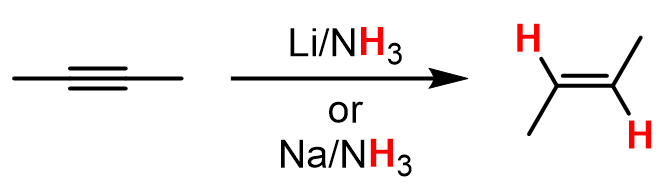
- reduction of alkynes to make trans alkenes with metal/liquid ammonia (NH3)
Full Hydrogenation Reactions
The reactions with hydrogen gas (H2) and a metal catalyst (usually Pd/C or Pt or Ni) leads to syn (i.e. the same side) addition of the hydrogen atoms for the stereochemical outcome.
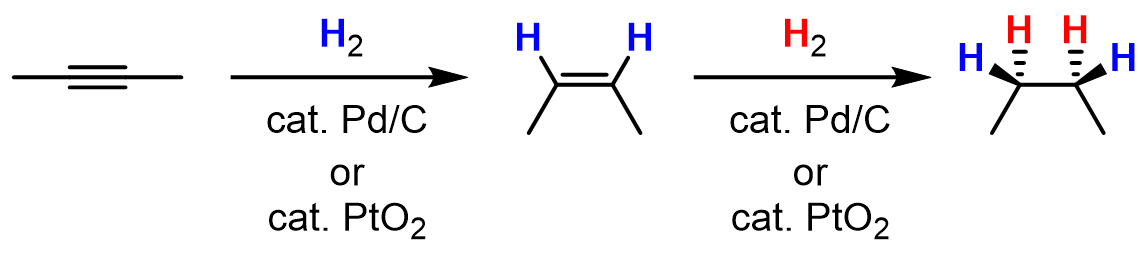
Partial Hydrogenation Reactions
In order to pause at the alkene there are reactions you should know:
- reduction of alkynes to make cis alkenes with H2 and Lindlar's catalyst
- reduction of alkynes to make trans alkenes with metal/liquid ammonia (NH3)
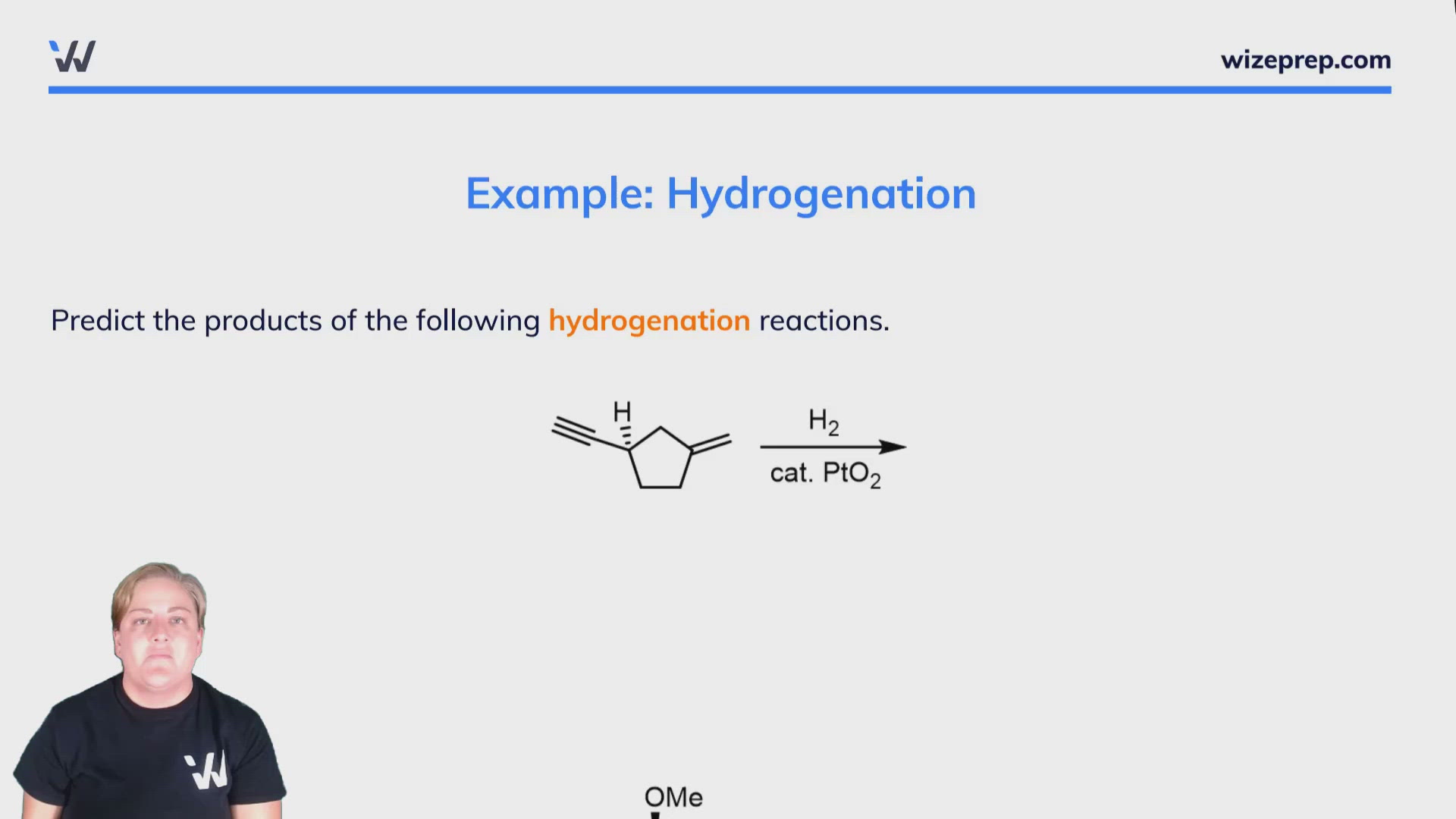
Example: Hydrogenation
Predict the products of the following hydrogenation reactions.

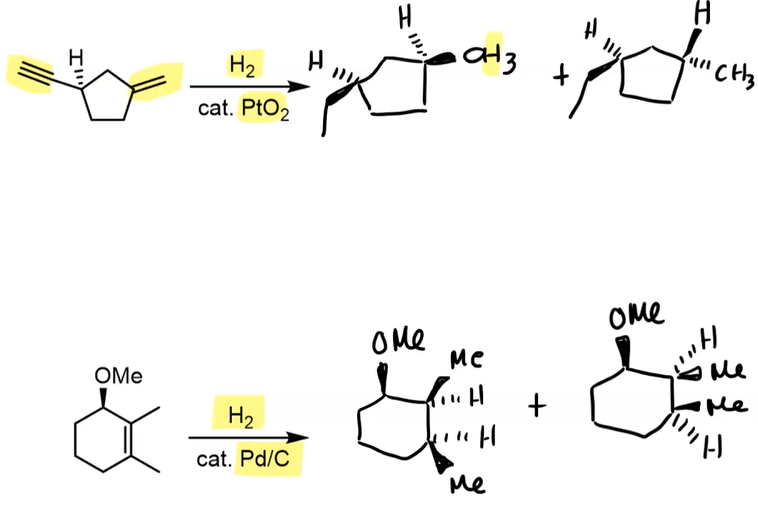
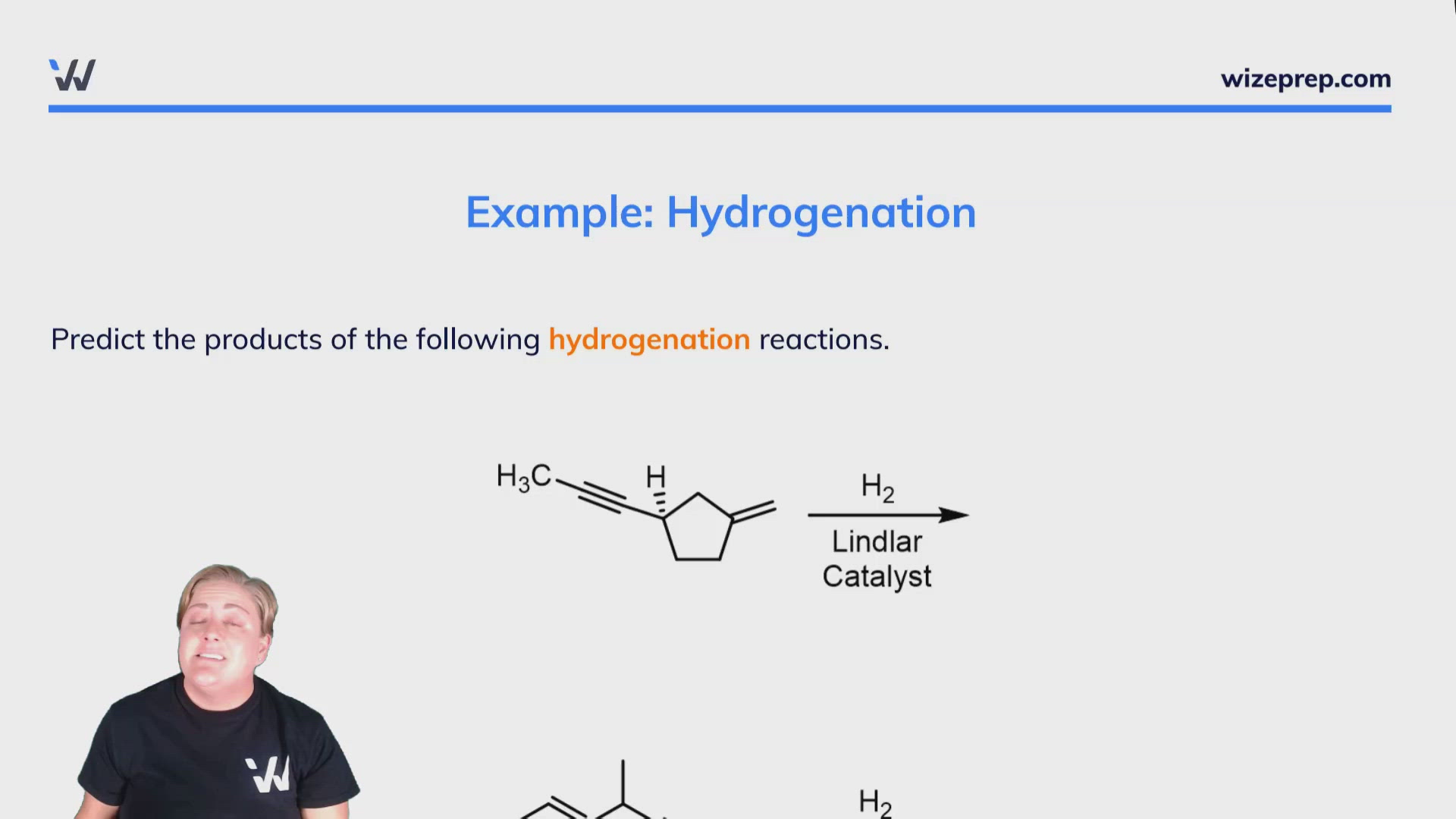
Example: Hydrogenation
Predict the products of the following hydrogenation reactions.

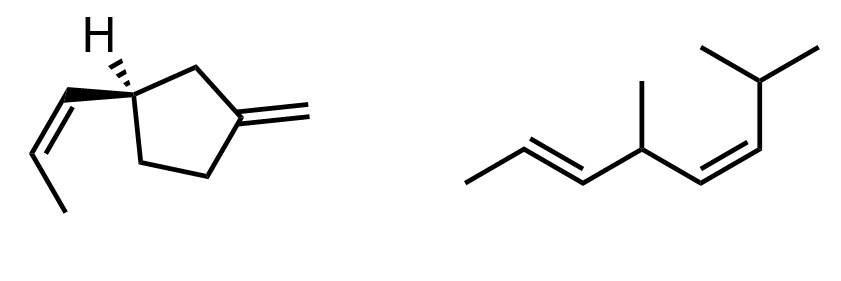
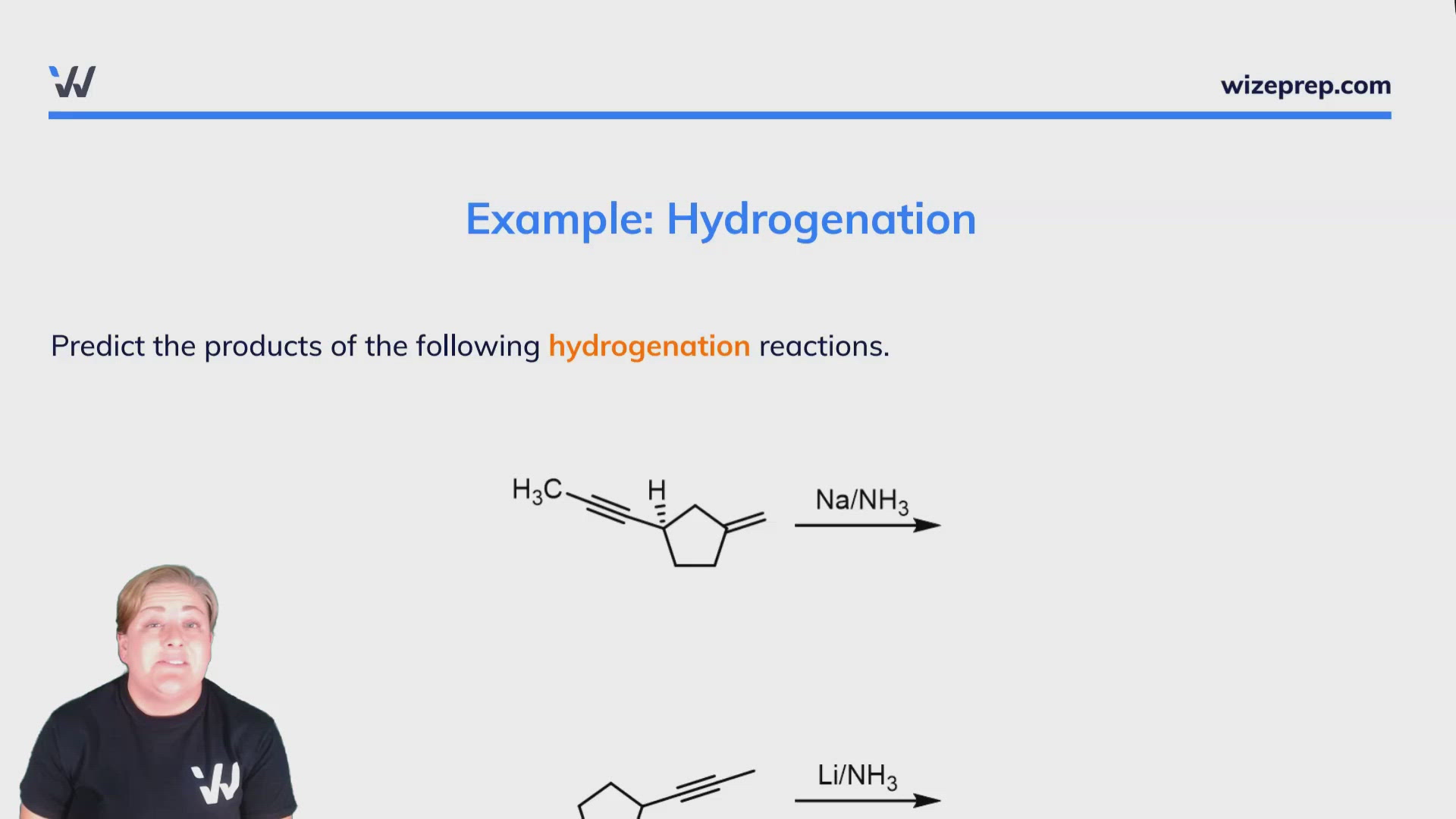
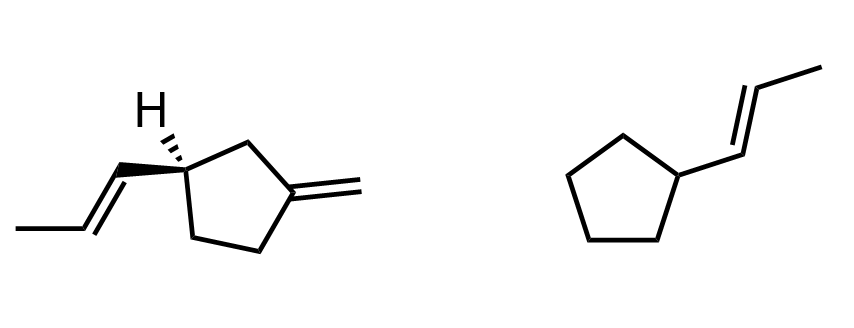
Example: Hydrogenation
Predict the products of the following hydrogenation reactions.

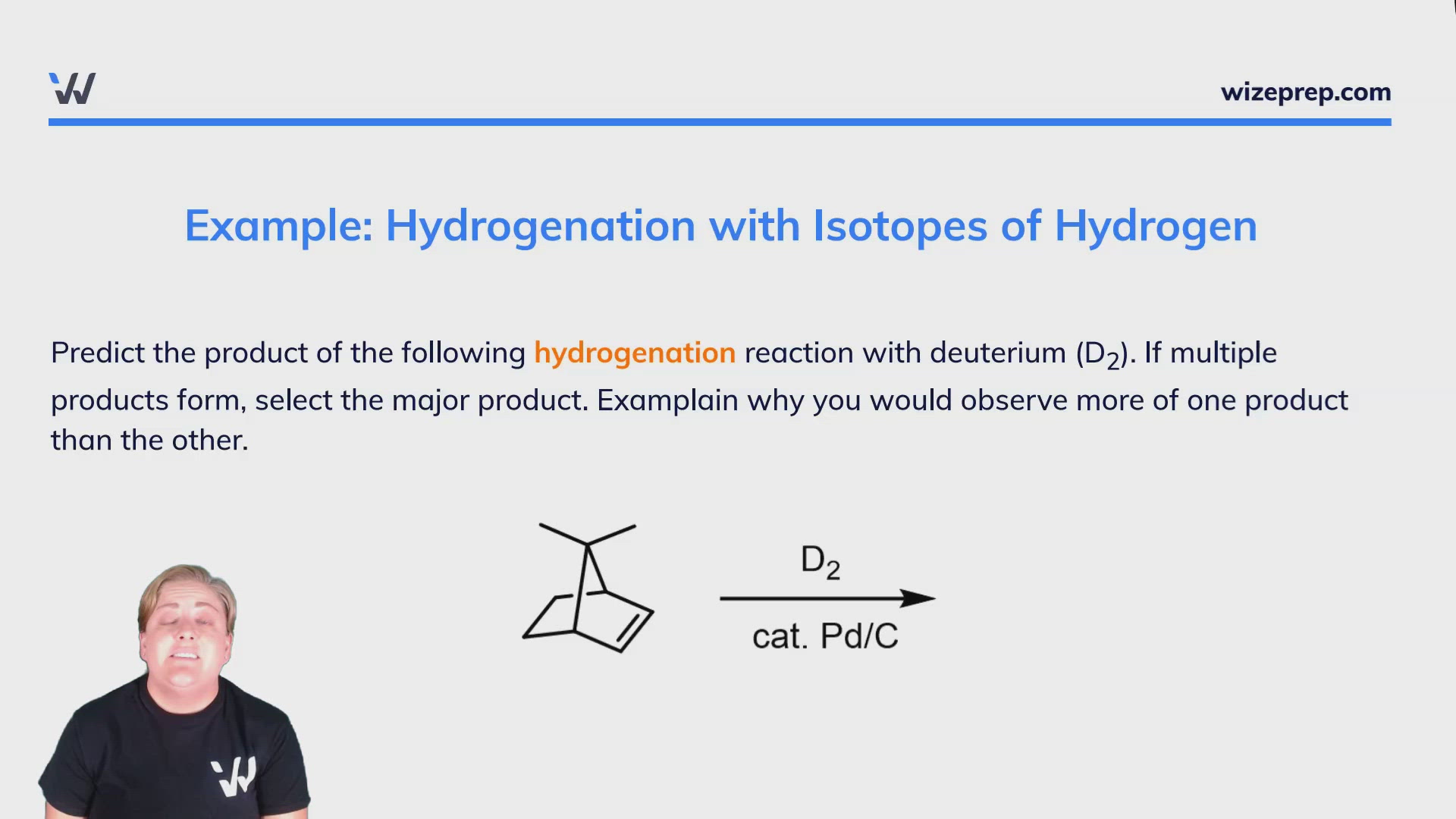
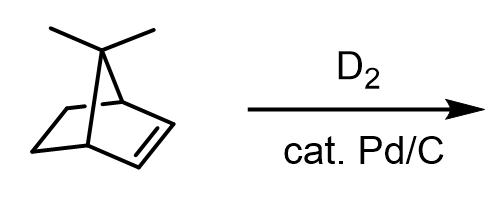
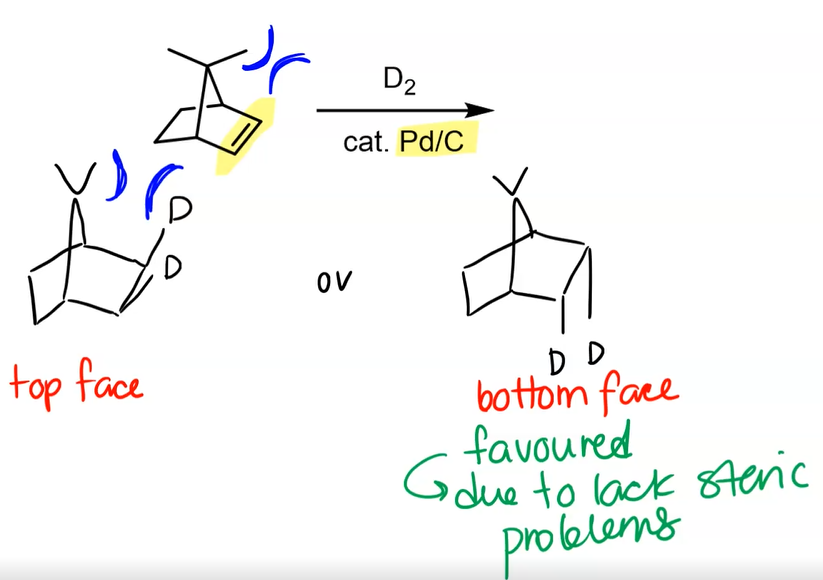
Example: Hydrogenation with Isotopes of Hydrogen
Predict the product of the following hydrogenation reaction with deuterium (D2). If multiple products form, select the major product. Examplain why you would observe more of one product than the other.