Radical Reactions: Radical Halogenation
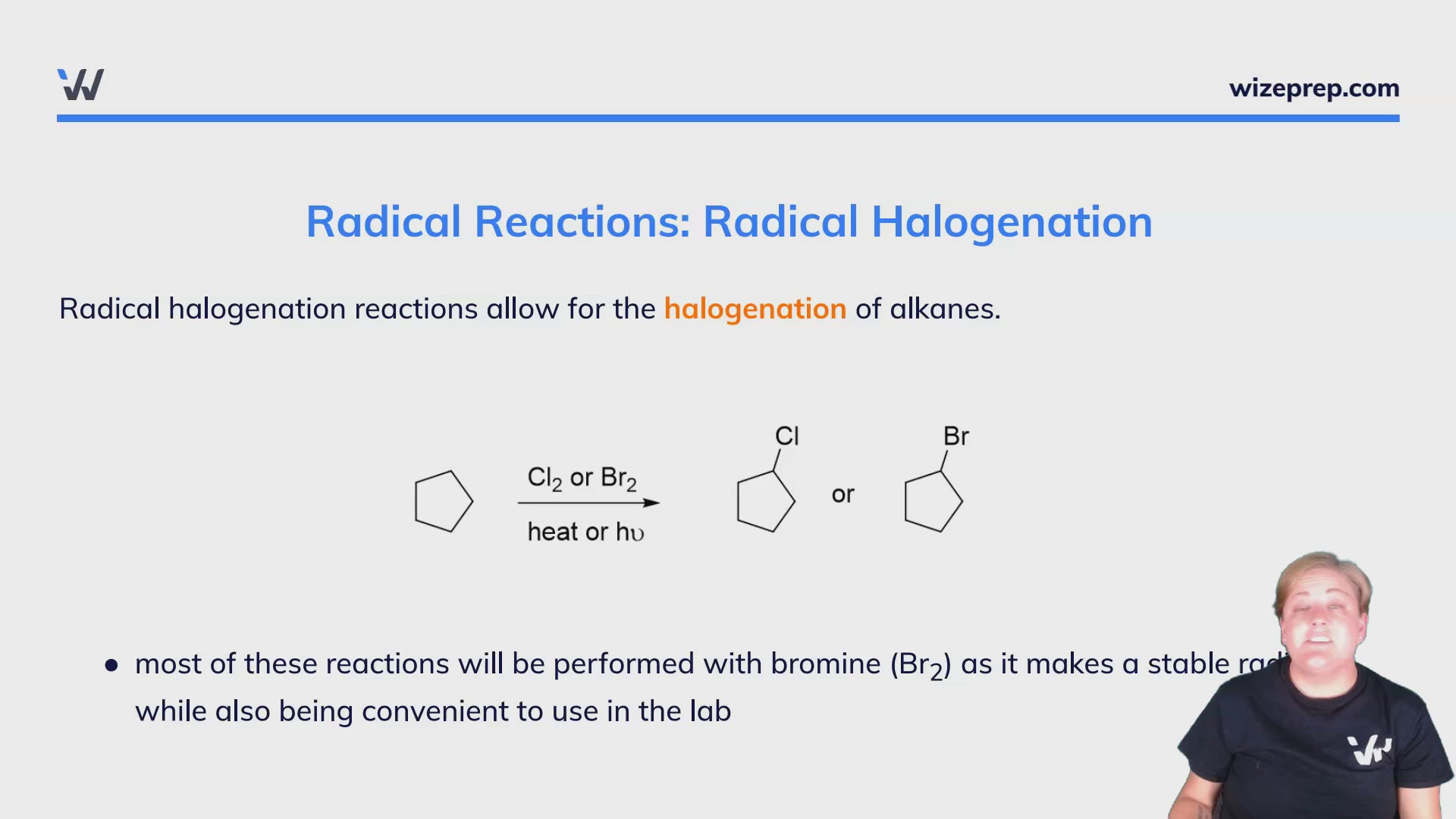
Radical halogenation reactions allow for the halogenation of alkanes.
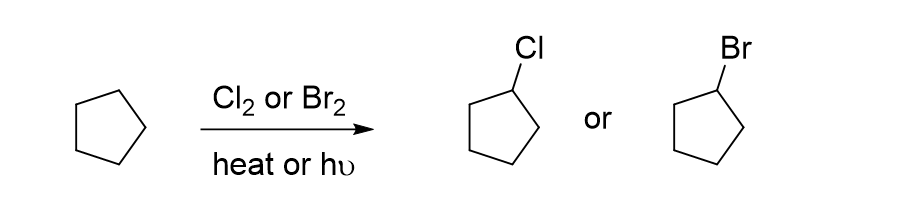
- most of these reactions will be performed with bromine (Br2) as it makes a stable radical while also being convenient to use in the lab
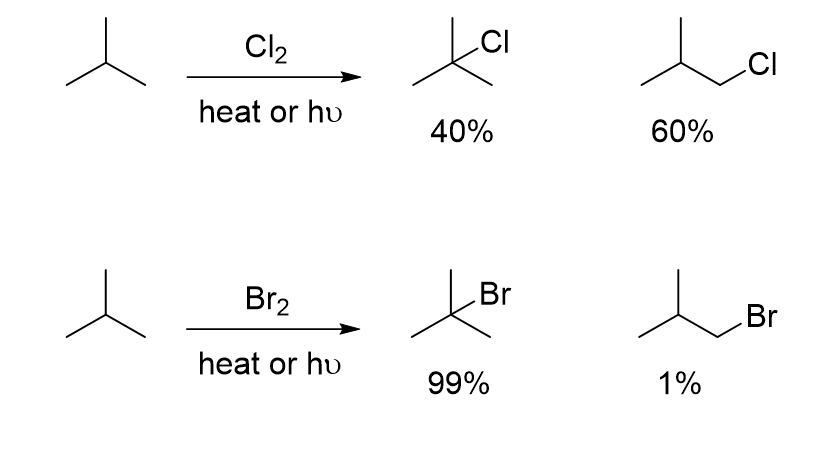
- these reactions are performed at high temperature or in the presence of light to initiate the radical formation
- the reactions all occur in the same three steps:
- initiation: making the radical
- propagation: the radical reaction proceeds
- termination: getting rid of the radicals
Steps of a radical halogenation:
- formation of the halogen radical with heat or light
- hydrogen atom abstraction from the alkane with the halogen radical
- formation of the C-X bond between the carbon radical and X2 to generate another halogen radical
- repetition of the steps above
Mechanism:
Hydrohalogenation with a Peroxide
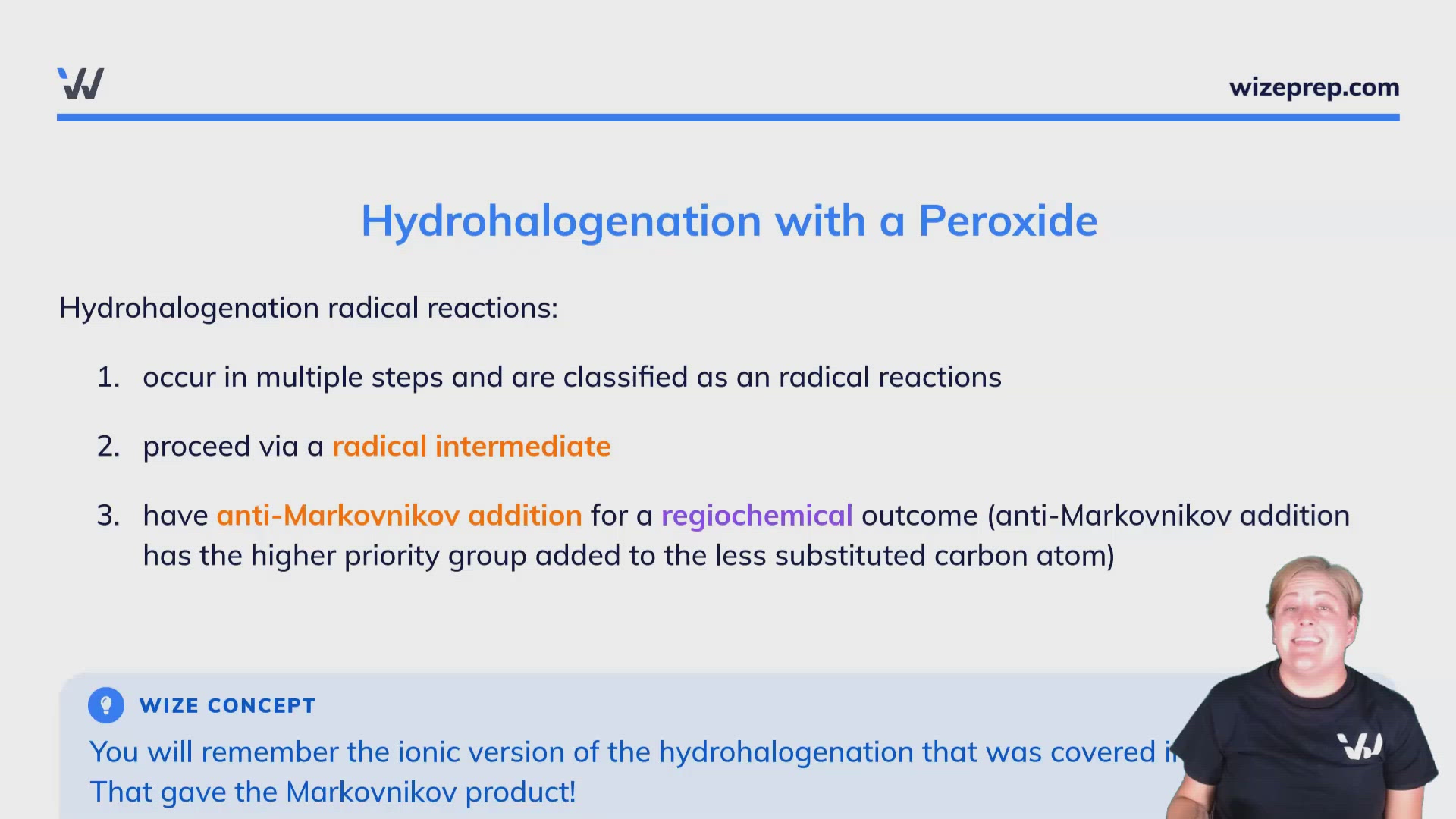
Hydrohalogenation radical reactions:
- occur in multiple steps and are classified as an radical reactions
- proceed via a radical intermediate
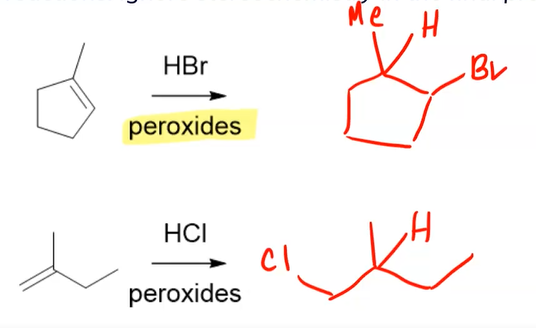
- have anti-Markovnikov addition for a regiochemical outcome (anti-Markovnikov addition has the higher priority group added to the less substituted carbon atom)
Steps of a hydrohalogenation with peroxides:
- the peroxide will initiate making an oxygen radical
- this abstracts the hydrogen atom from H-X forming a halogen radical
- this halogen radical reacts with the alkene to make the new C-X bond and makes a carbon radical
- this carbon radical abstracts a hydrogen atom from H-X making the product and a new halogen radical
- steps 3-4 repeats until termination
Mechanism:
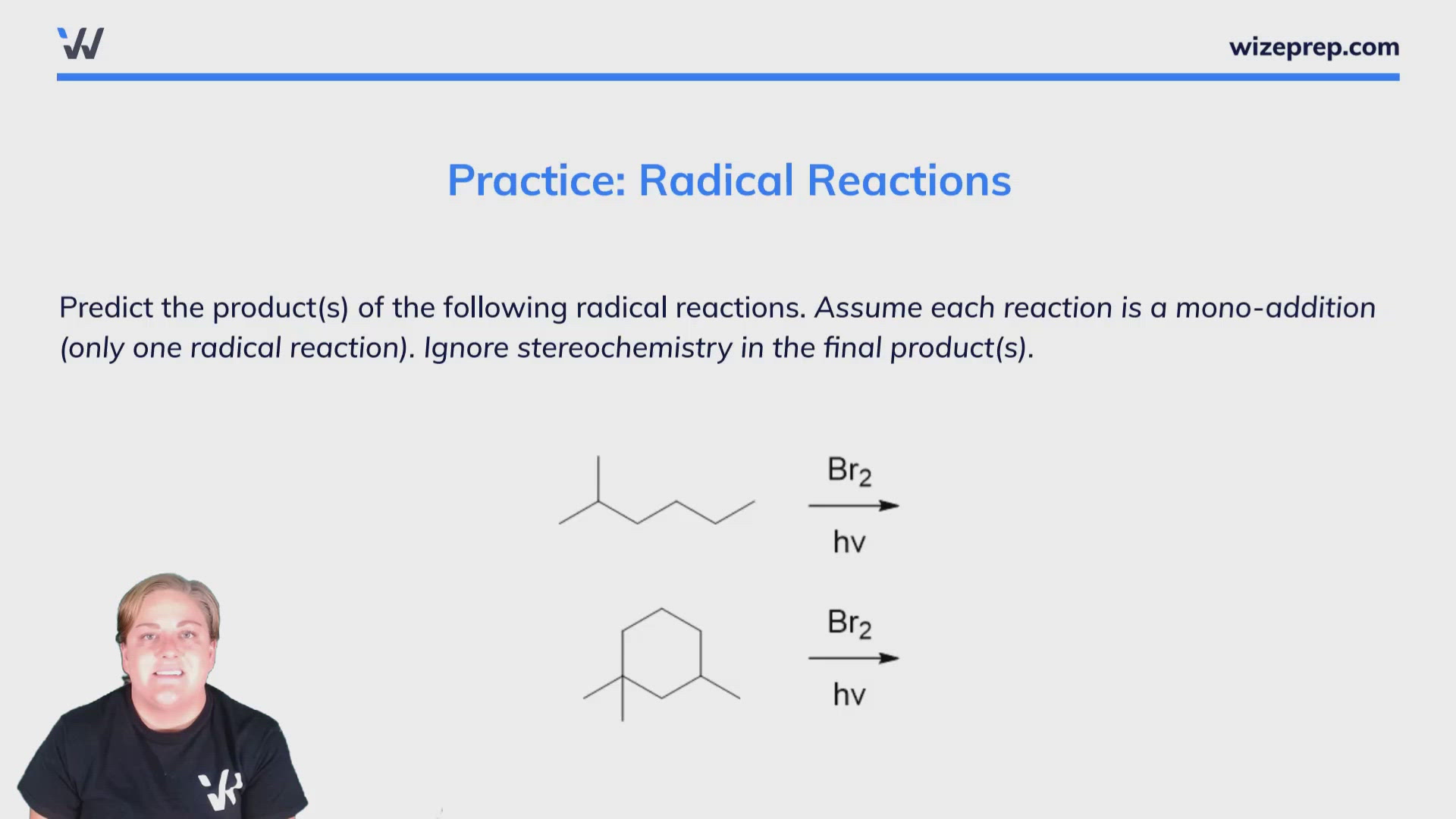
Practice: Radical Reactions
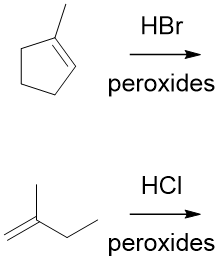
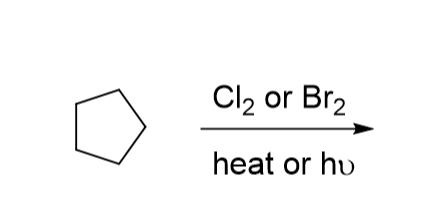
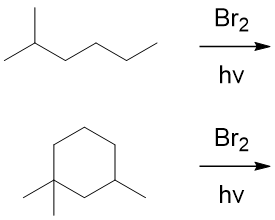
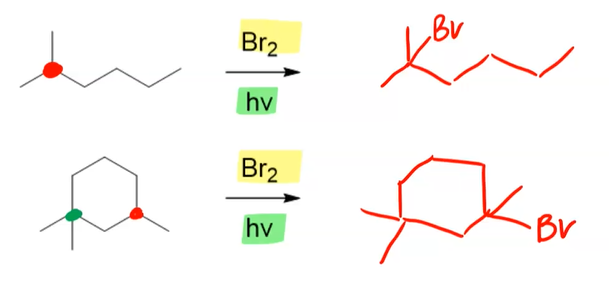
Predict the product(s) of the following radical reactions. Assume each reaction is a mono-addition (only one radical reaction). Ignore stereochemistry in the final product(s).
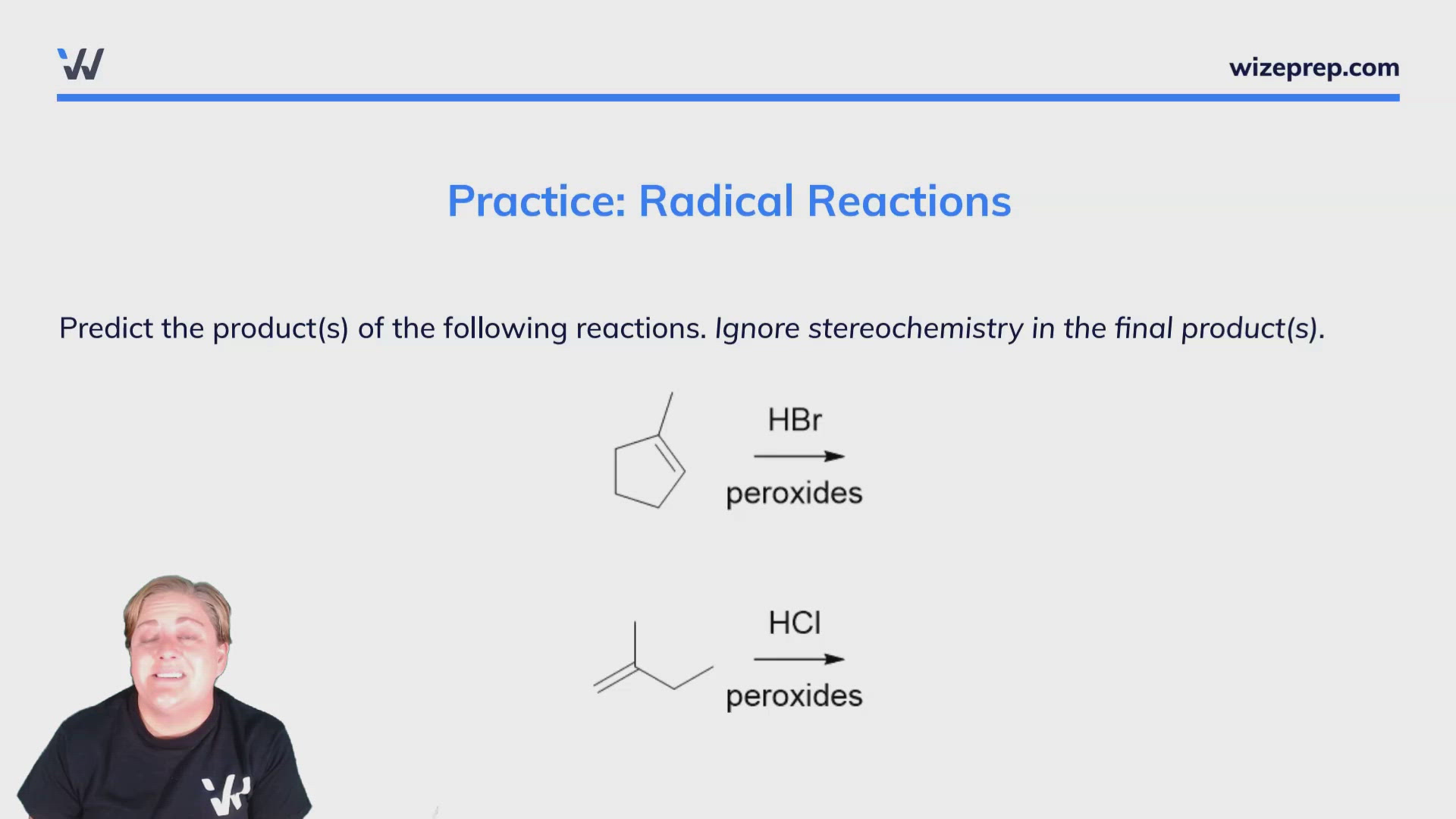
Practice: Radical Reactions
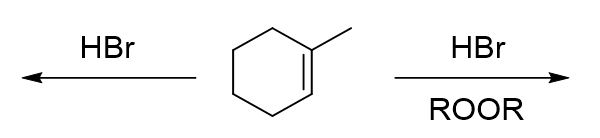
Predict the product(s) of the following reactions. Ignore stereochemistry in the final product(s).