Create a free account to get started

Unlock full course notes by signing up

  • Video lessons taught by top educators
  • Practice questions with guided solutions
  • Written review notes for reference
  • Expert answers anytime from course tutors

Naming Alkanes

  • For alkanes the suffix (ending) is -ane
  • The root of the name indicates the number of carbon atoms in the longest straight chain in the molecule
  • IUPAC naming will always follow the general form: prefix + root + suffix
  • prefix=identifies side chains
  • root=identifies the number of carbon atoms in the main/parent chain
  • suffix=indicates the family of compounds to which it belongs
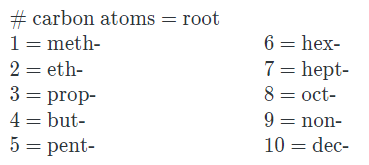
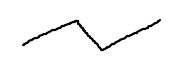
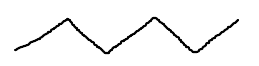
Image illustrating Naming Alkanes


Ex. Image illustrating Naming Alkanes Image illustrating Naming Alkanes

butane hexane


We can also see branches in the chain:

  • An alkyl group is a hydrocarbon group derived from an alkane but has a hydrogen atom removed
  • These are often branches on organic molecules
  • ex. Methane is CH4, but when it is attached to the main chain of a molecule, we call this branch a methyl group -CH3
  • ex. Ethane is CH3CH3 , but when it is attached to the main chain of a molecule, we call this branch an ethyl group -CH2-CH3

Alkanes and Related Alkyl Groups
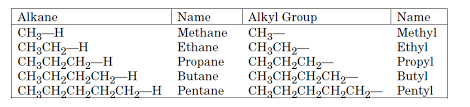
Image illustrating Naming Alkanes

Rules for Naming Branched Alkanes


Ex. Name the following molecule:
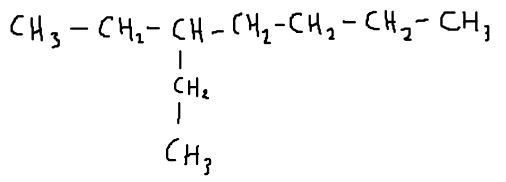

Image illustrating Naming Alkanes

3-ethylheptane


Ex. Name the following molecule:
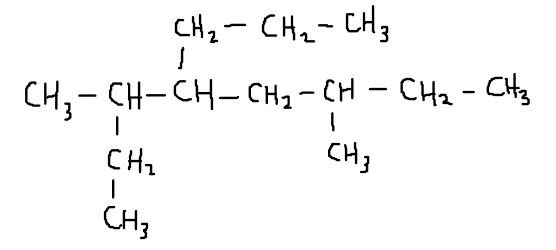

Image illustrating Naming Alkanes


3,6-dimethyl-4-propyloctane


Ex. Name the following molecule:
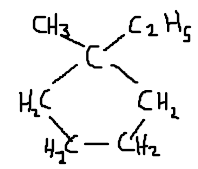

Image illustrating Naming Alkanes


1-ethyl-1-methylcyclopentane

Name the following molecule:

Illustration for practice question: Name the following molecule:


Create a free account to get started

Unlock full course notes by signing up

  • Video lessons taught by top educators
  • Practice questions with guided solutions
  • Written review notes for reference
  • Expert answers anytime from course tutors

Name the following molecule:


Illustration for practice question: Name the following molecule:


Create a free account to get started

Unlock full course notes by signing up

  • Video lessons taught by top educators
  • Practice questions with guided solutions
  • Written review notes for reference
  • Expert answers anytime from course tutors

Mark Yourself Question

  1. Grab a piece of paper and try this problem yourself.
  2. When you're done, check the "I have answered this question" box below.
  3. View the solution and report whether you got it right or wrong.

Draw the following molecules:


1. 3, 3, 5-trimethyloctane


2. 1, 1-diethylcyclohexane


Create a free account to get started

Unlock full course notes by signing up

  • Video lessons taught by top educators
  • Practice questions with guided solutions
  • Written review notes for reference
  • Expert answers anytime from course tutors