
0:00 / 0:00
Introduction to Functional Groups

Functional groups determine whether:
- the molecules are soluble in polar or non-polar solvents
- the molecules have high or low melting and boiling points
- molecules readily react with other molecules
3 Main Components of Functional Groups
- There are many different functional groups but they essentially consist of only 3 main components:
- Carbon-Carbon multiple bonds (-C=C- or -C≡C-)
- Single bonds between a Carbon atom and a more electronegative atom (eg. C-O, C-N, or C-Cl)
- Carbon atom double bonded to an oxygen atom (-C=O)

0:00 / 0:00
Introduction to Hydrocarbons
- A hydrocarbon is an organic compound that only contains carbon and hydrogen atoms

Unsaturated vs Saturated Hydrocarbons
- A saturated hydrocarbon is one that has the maximum number of hydrogens added (no double or triple bonds)
- Alkanes are saturated hydrocarbons
- While alkenes and alkynes are unsaturated hydrocarbons
General Formulas for Hydrocarbons
- Alkanes are hydrocarbons that only have single bonds between carbon atoms ... CnH2n+2
- Alkenes are hydrocarbons that have at least 1 C=C double bond ...CnH2n
- Alkynes are hydrocarbons that contain at least 1 C≡C triple bond ... CnH2n-2
Aliphatic vs Aromatic Hydrocarbons
- Aliphatic hydrocarbons: compounds that have a structure based on straight or branched chains or rings of carbon atoms (does not include aromatic compounds like benzene)
- Includes: alkanes, alkenes, alkynes, and cyclic hydrocarbons
- Aromatic hydrocarbons: a compound with a structure based on benzene (C6H6).
- benzene has all 6 Cs in intermediate length between a single and double bond because of resonance

0:00 / 0:00
Cyclic Hydrocarbons


0:00 / 0:00
5 Ways to Represent Alkane Structures


0:00 / 0:00
Properties of Alkanes, Alkenes, & Alkynes

- Are non-polar
- Soluble in non-polar solvents (Like dissolves like)
- Don't dissolve in water (polar)
- Boiling point increases as the chain gets longer due to increased intermolecular forces (London dispersion forces)
- Highly branched alkanes have lower boiling points
- *Think: tree trunk vs small branches
- Alkenes have lower boiling points than alkanes with the same number of carbon atoms
- Alkynes have higher boiling points than alkanes with the same number of carbon atoms (it has to do with the triple bond and how it creates a linear structure, which causes the atoms to attract each other more strongly, so it takes more energy to break them apart)
- Aromatic hydrocarbons have similar boiling points as aliphatic hydrocarbons with the same # of carbons
- Benzene is a liquid at room temperature
- Aromatic compounds were named this because they are "aromatic" and often have strong odours
Boiling Points of the First 10 Straight Alkanes

0:00 / 0:00
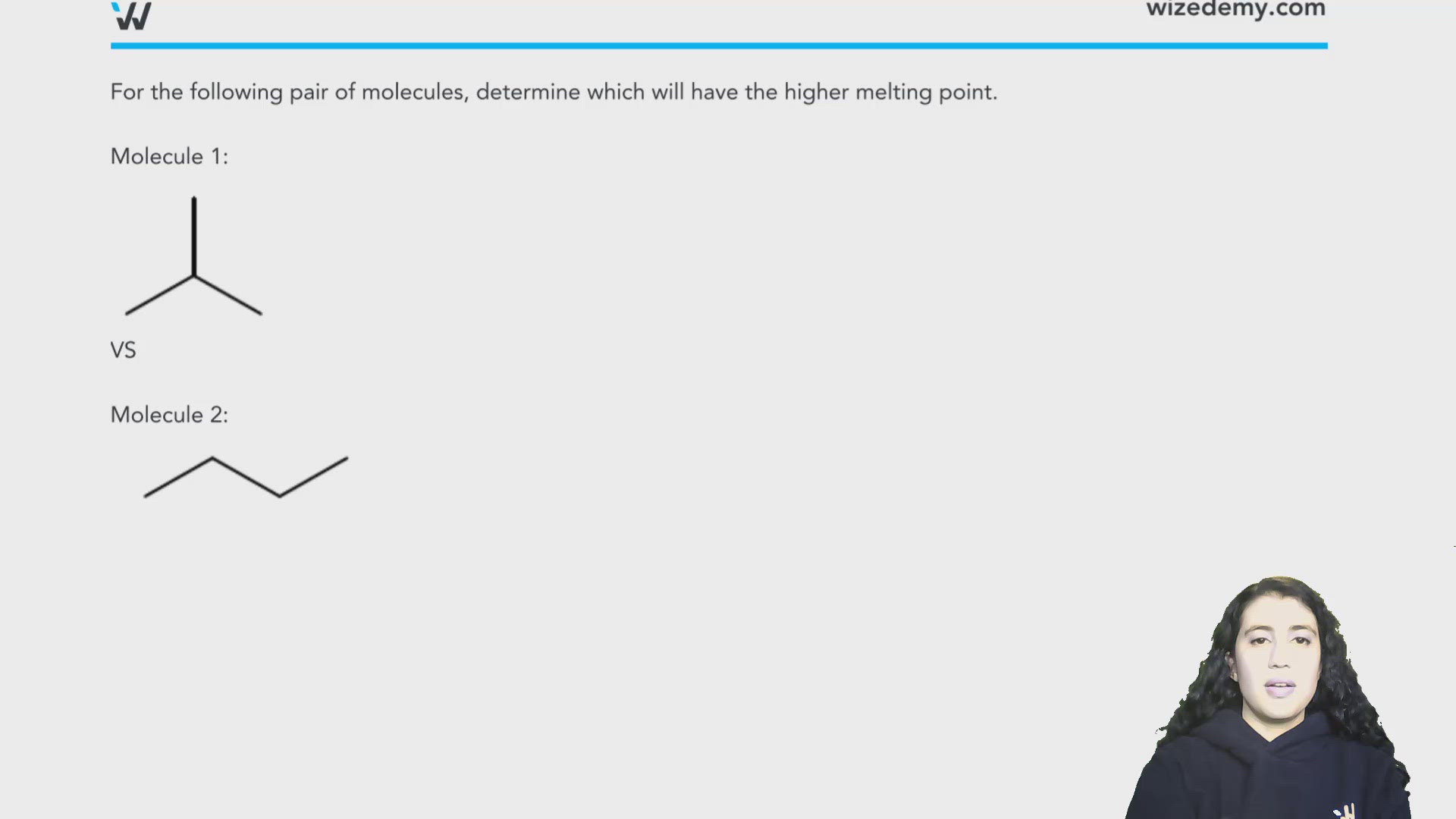
For the following pair of molecules, determine which will have the higher melting point.
Molecule 1:
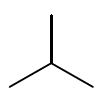
VS
Molecule 2:
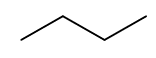
Highest melting point is very similar to high boiling point trends because the molecule with the strongest intermolecular forces will be the one that requires the most energy to melt.
Molecule 1 here has branching whereas molecule 2 does not and they both have the same # of carbons. Both these molecules only have london dispersion forces and have the same molecular weight so we just need to consider branching.
Since molecule 1 has branching it is easier to break apart and therefore will require less energy to melt.
Answer: molecule 2 will have the higher melting point