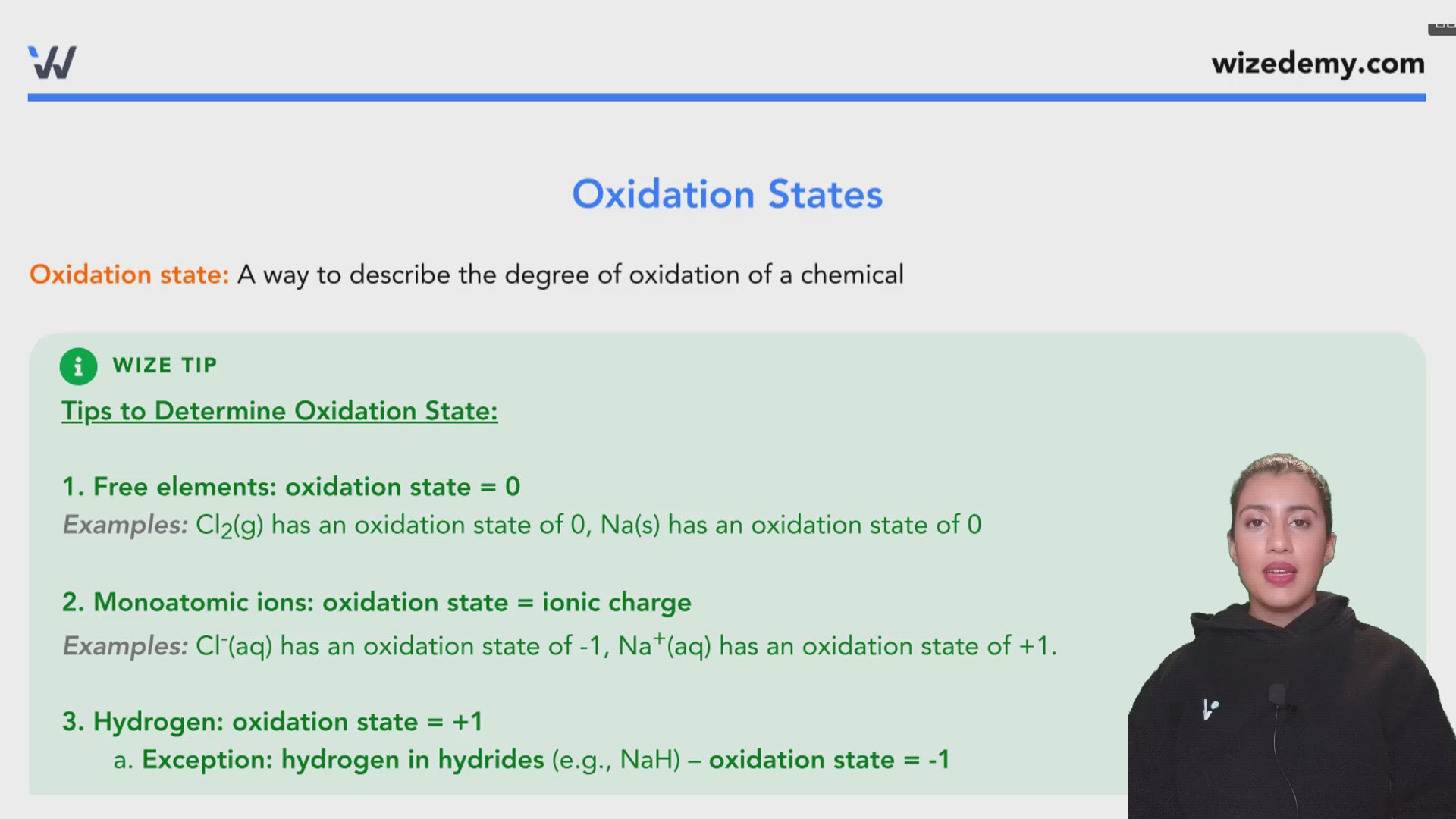
Oxidation States
Oxidation state: A way to describe the degree of oxidation of a chemical
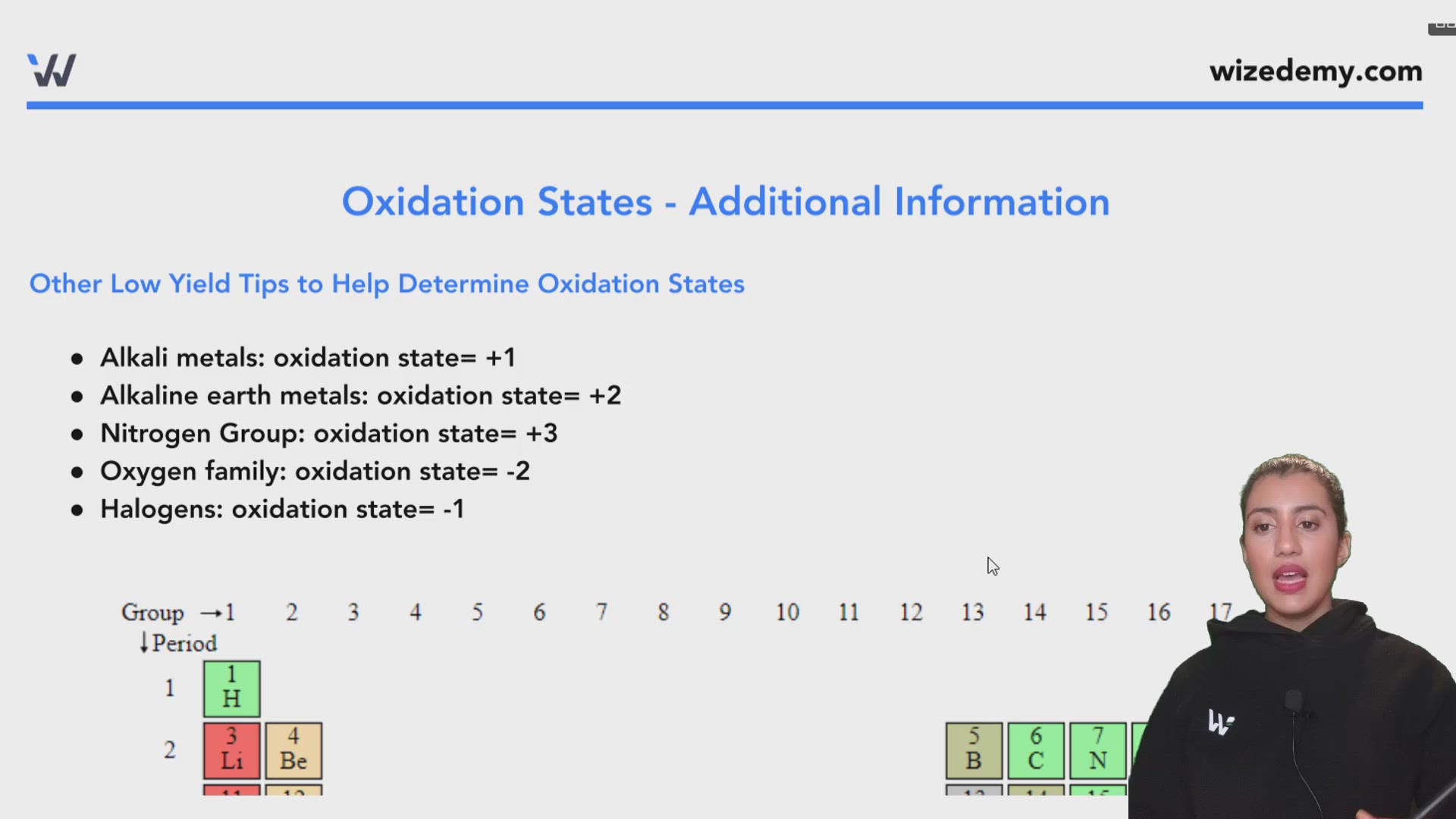
Oxidation States - Additional Information
Other Low Yield Tips to Help Determine Oxidation States
- Alkali metals: oxidation state = +1
- Alkaline earth metals: oxidation state = +2
- Nitrogen Group: oxidation state = –3
- Oxygen family: oxidation state = –2
- Halogens: oxidation state = –1
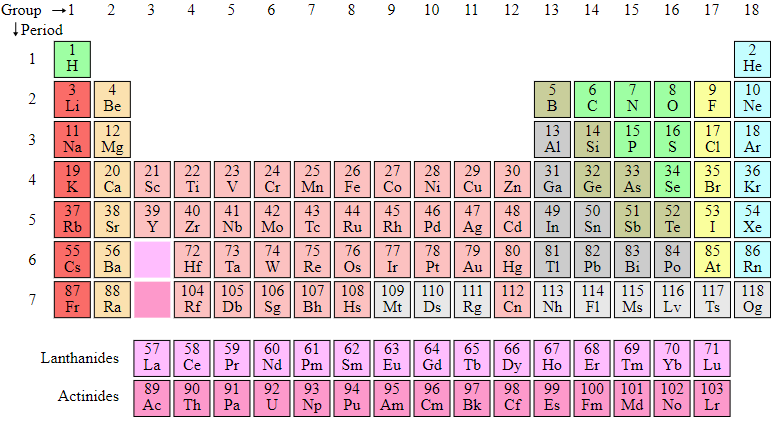
Note on Transition Metals
Transition metals can have different charges (ex. Pb2+ and Pb4+)
As a result, transition metals can also have different oxidation states!
Example:
What is the oxidation state of Cu in CuCl? ________
What is the oxidation state of copper in Cu(NO3)2? ________
When naming compounds involving transition metals, the oxidation state of the transition metal is written in Roman numerals and put in brackets:
- copper(I) chloride: CuCl
- copper(II) nitrate: Cu(NO3)2
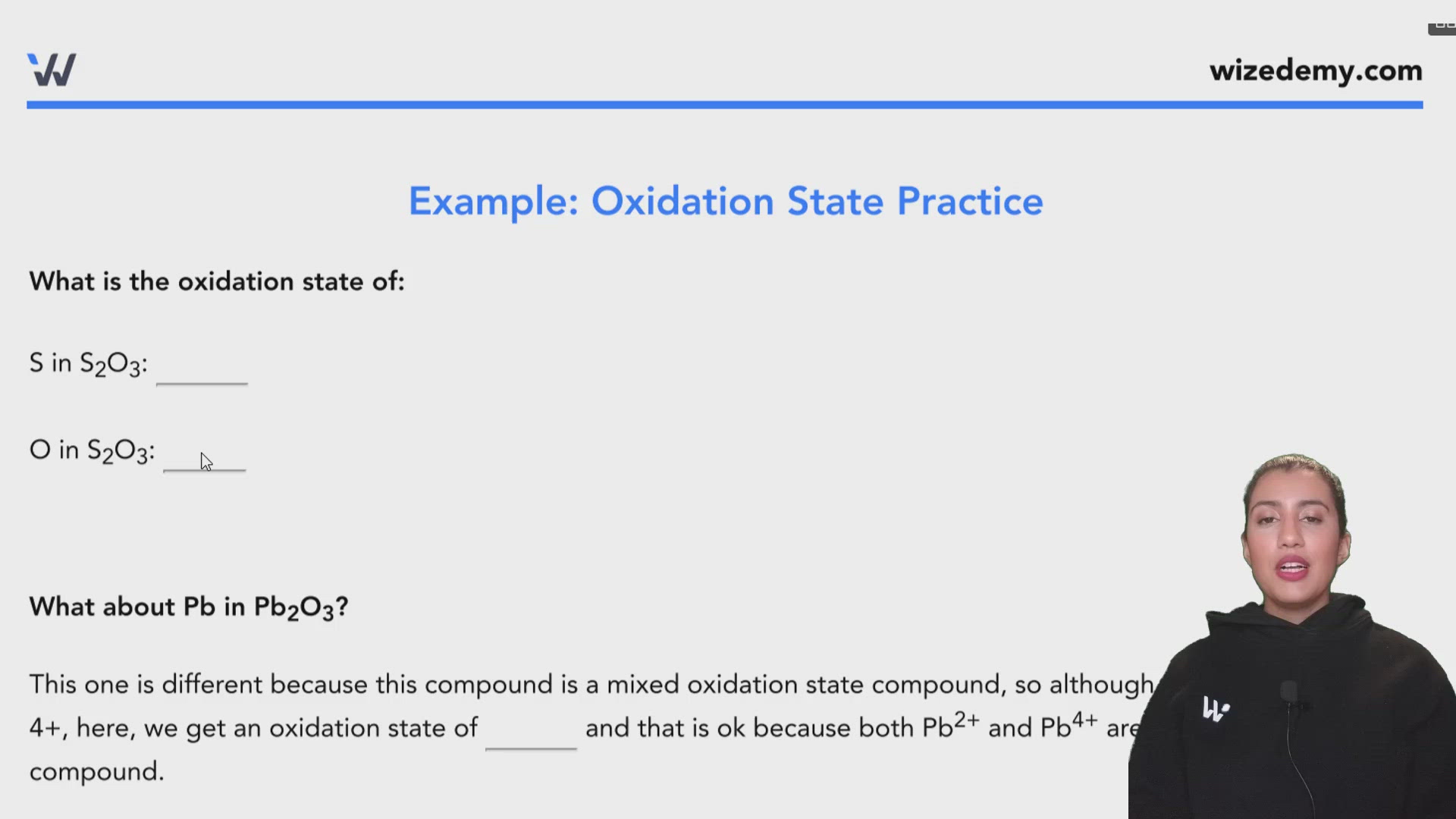
Example: Oxidation State Practice
What is the oxidation state of:
S in S2O3: ________
O in S2O3: ________
What about Pb in Pb2O3?
This one is different because this compound is a mixed oxidation state compound, so although Pb should have 2+ or 4+, here, we get an oxidation state of ________ and that is ok because both Pb2+ and Pb4+ are present in the compound.