
Types of Intermolecular Forces
Ion - Ion
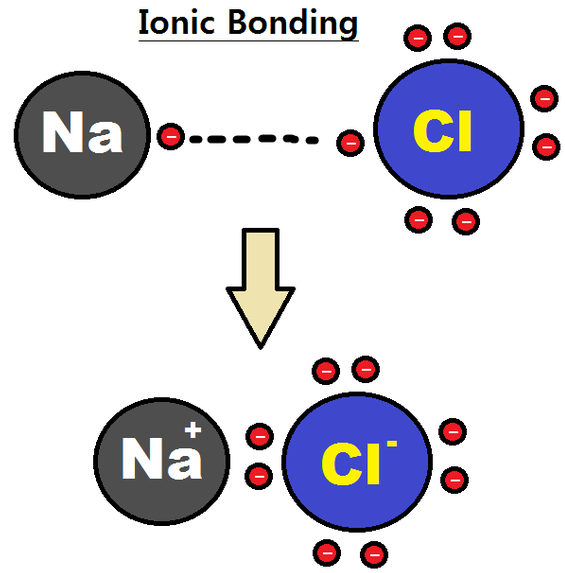
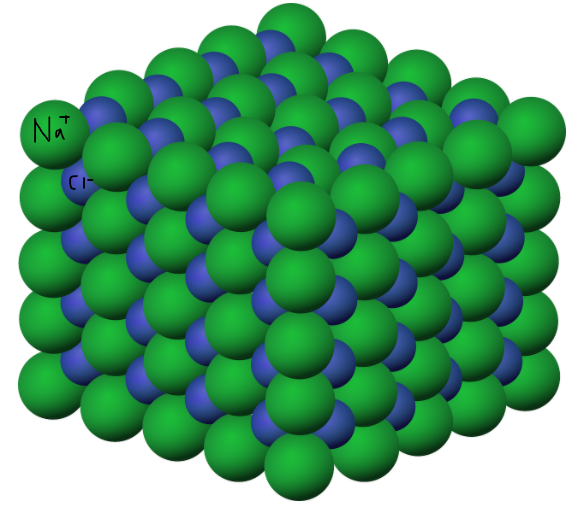
- Oppositely charged ions held together by electrostatic attraction
- aka Ionic bonding (Ionic bonding is an intramolecular bond between a non-metal and a metal)
- Strongest intermolecular force

Ion - Dipole
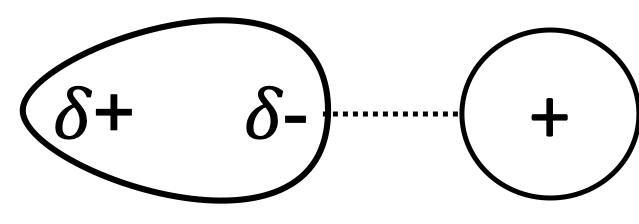
- Involves an ion interacting with a polar molecule (molecule with a net dipole)
- A positively charged ion will interact with the δ– side of the polar molecule
- A negatively charged ion will interact with the δ+ side of the polar molecule
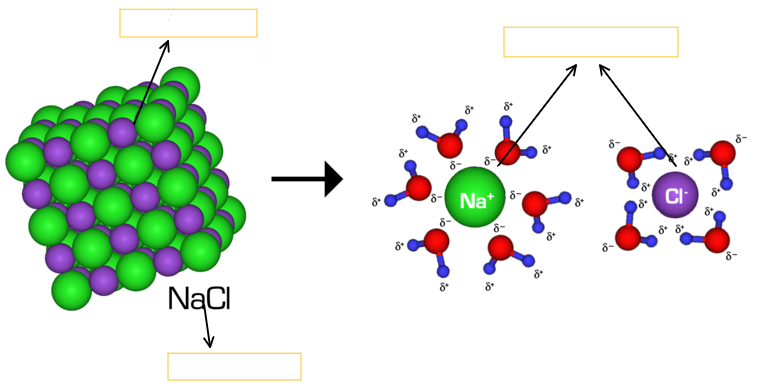
Blank on top left: ion-ion interactions
Blank on bottom left: ionic bond
Black on top right: ion-dipole
Hydrogen Bonding
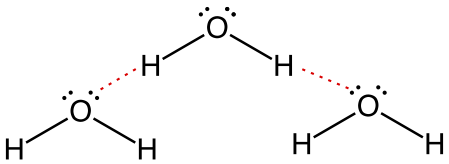
- Hydrogen bonded to N, O, or F is attracted to lone pairs of electrons on other N, O or F
Dipole - Dipole
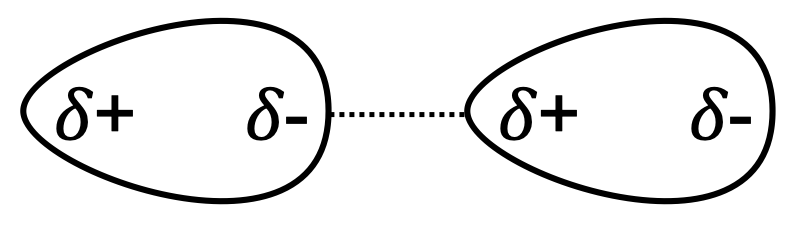
- Interaction between two polar molecules
- Opposite dipoles attract (δ– and δ+)
Ion - Induced Dipole:
- Ion causes a temporary dipole in non-polar species
- In the example below, the positively charged ion makes the non-polar species shift its electrons towards the positive charge, creating an uneven charge distribution in the non-polar species

Dipole - Induced Dipole
- Polar molecule causes a temporary dipole in non-polar species
- Similar to ion-induced dipole, except that in dipole-induced dipole it is a polar molecule instead of an ion that induces a temporary dipole in the non-polar species
- Weaker than ion-induced dipole forces

Induced Dipole - Induced Dipole
- Molecules interact randomly and distort each other's electron clouds, causing temporary dipoles
- Electrons randomly move around and at one point, more electrons may be on one side than the other in a non-polar molecule, creating a temporary dipole. That can happen with another non-polar molecule as well and the two can interact
- We call this random movement of electrons polarizability
- aka London dispersion forces (all molecules have this)

Intermolecular Forces
Intermolecular forces = forces between molecules

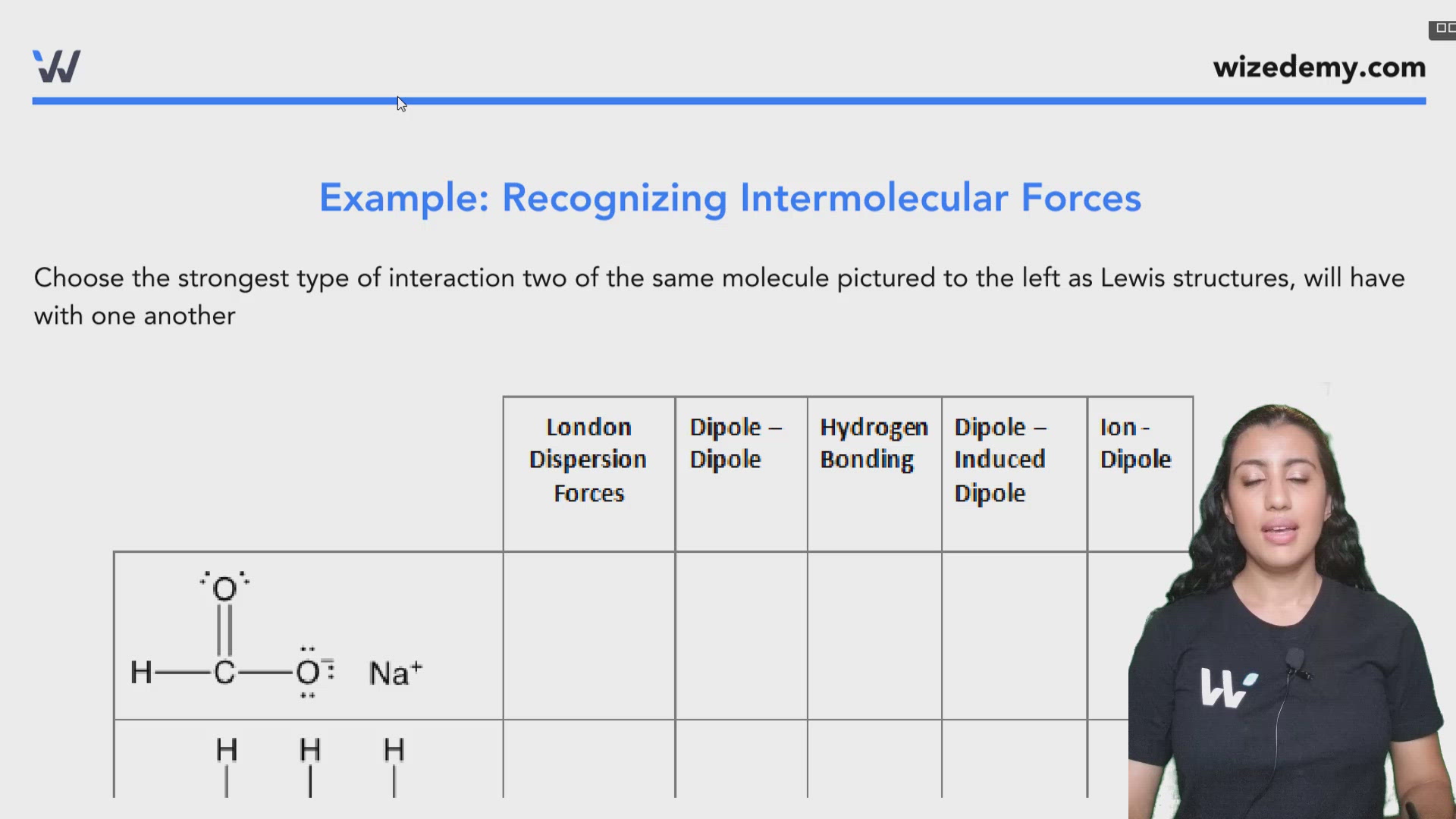
Example: Recognizing Intermolecular Forces
Choose the strongest type of interaction two of the same molecule pictured to the left as Lewis structures, will have with one another
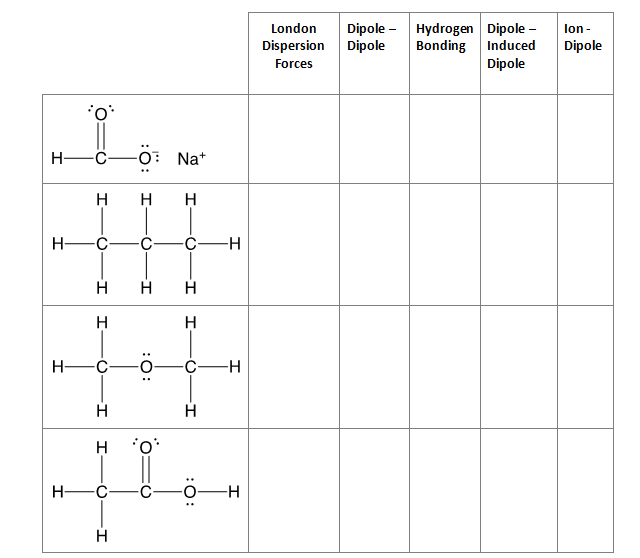
a) Ion-ion is not a choice here so the best option is ion-dipole (Na+ is the ion and HCOO- is the polar molecule)
b) London dispersion forces. This molecule is non-polar (no dipoles, no ions, no hydrogen bonding)
c) In the line diagram, 2 lone pairs are drawn on top of the oxygen atom, creating a polar molecule. The O is not bound to a H so hydrogen bonding is not possible. Dipole-dipole interactions are present in polar molecules.
d) Hydrogen bonding. This molecule is polar and has dipole-dipole forces but it also has hydrogen bonding, which is stronger. We can tell it has hydrogen bonding because the O is bound to a H.
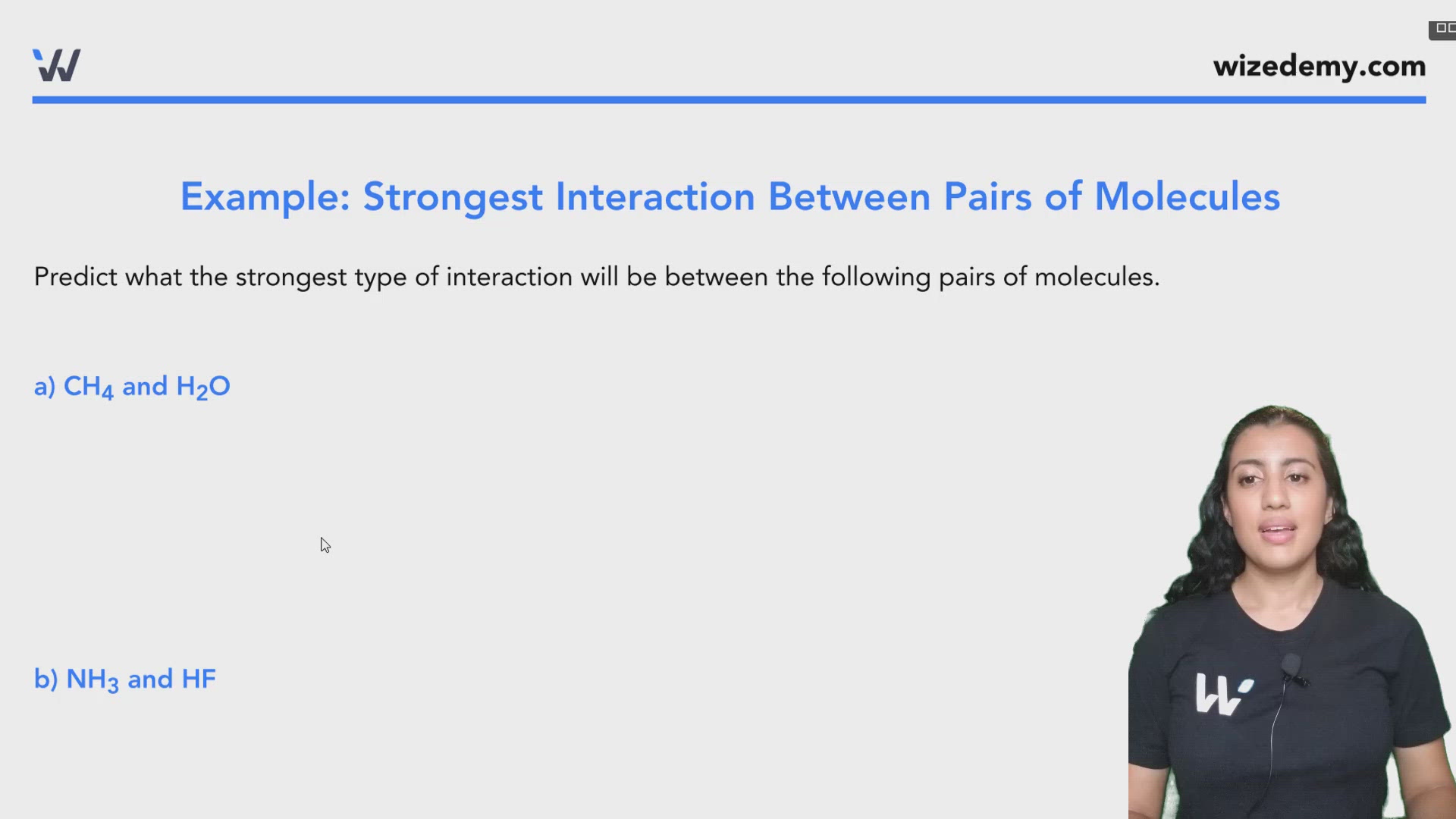
Example: Strongest Interaction Between Pairs of Molecules
Predict what the strongest type of interaction will be between the following pairs of molecules.
a) CH4 and H2O
Dipole-Induced dipole
b) NH3 and HF
This is a special case of dipole-dipole interactions called hydrogen bonding.
c) NaCl and H2O
Ion-Dipole (I-D).
d) H2 and Cl2
Induced Dipole-Induced Dipole (ID-ID) aka London dispersion forces