Claisen Reaction
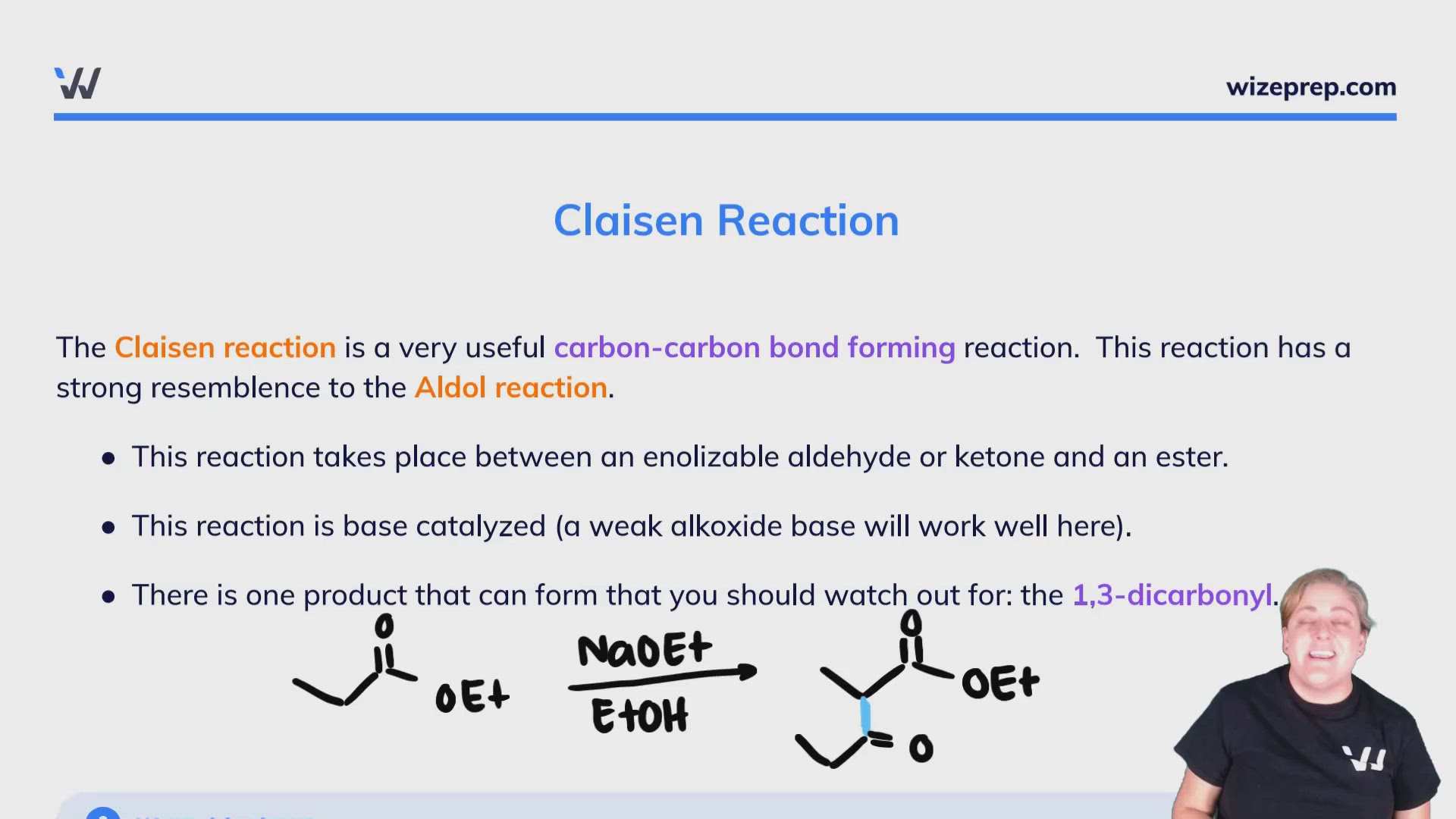
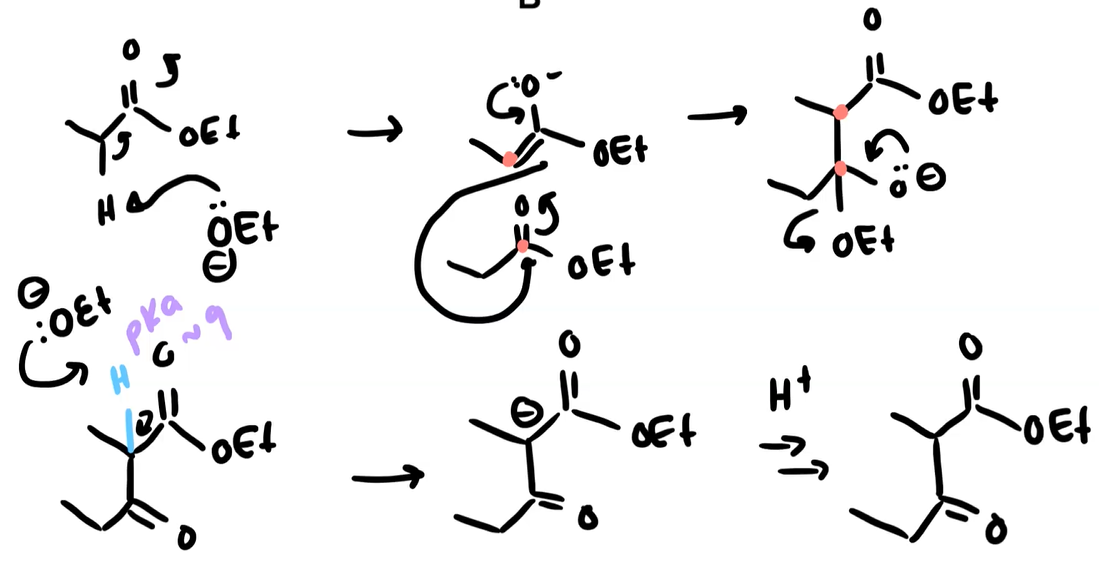
The Claisen reaction is a very useful carbon-carbon bond forming reaction. This reaction has a strong resemblence to the Aldol reaction.
- This reaction takes place between an enolizable aldehyde or ketone and an ester.
- This reaction is base catalyzed (a weak alkoxide base will work well here).
- There is one product that can form that you should watch out for: the 1,3-dicarbonyl.
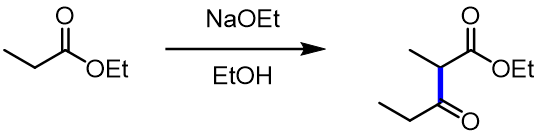

Example: Claisen Reactions
An important consideration for Claisen reactions is that we need two alpha-protons on the ester reactant! For example, the reaction A will proceed as written, but reaction B will not proceed. Why?
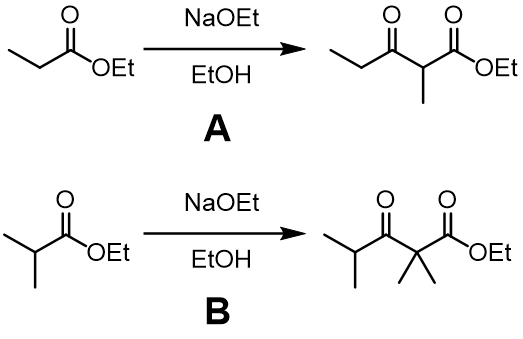
Example: Claisen Reactions
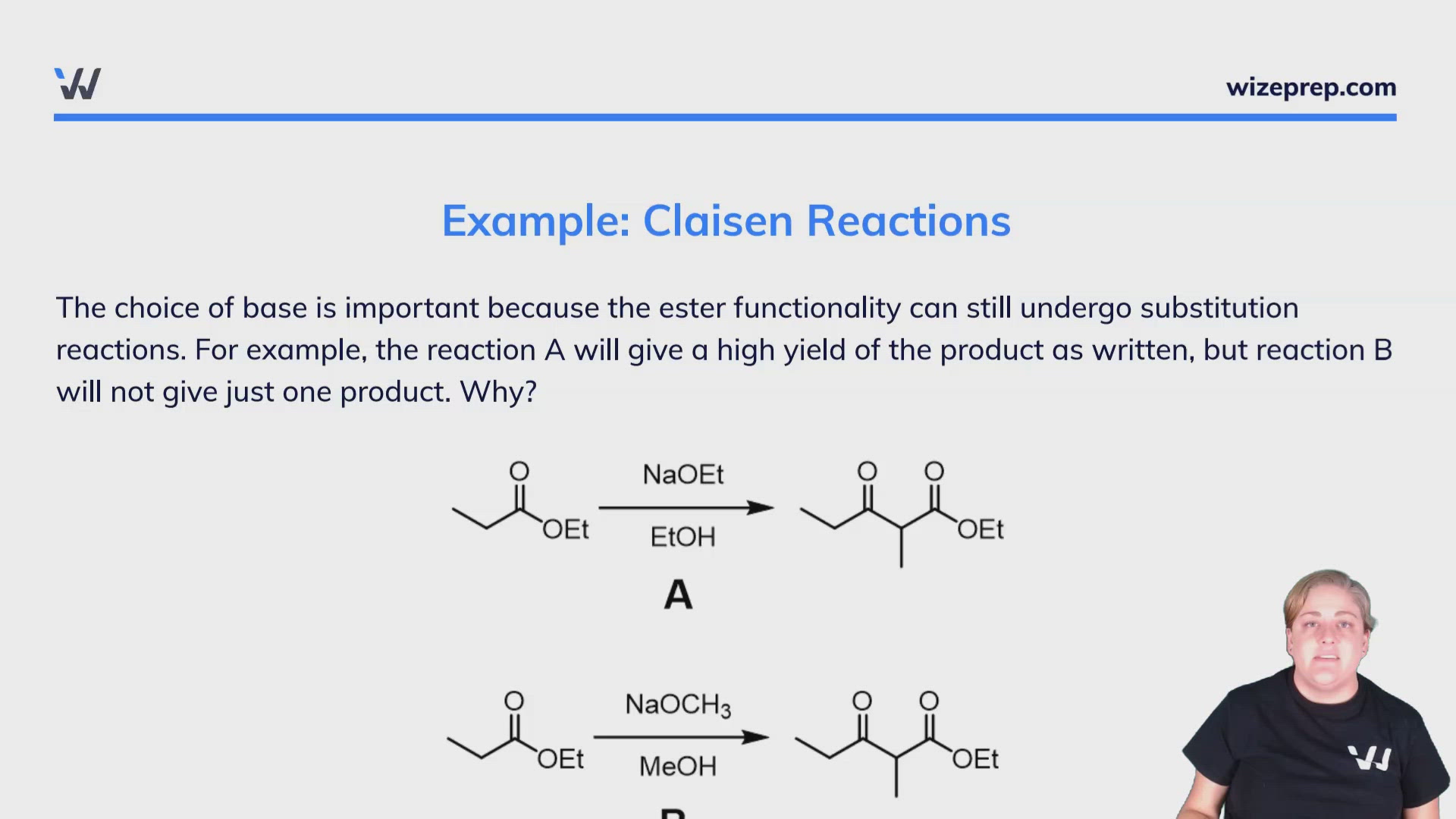
The choice of base is important because the ester functionality can still undergo substitution reactions. For example, the reaction A will give a high yield of the product as written, but reaction B will not give just one product. Why?
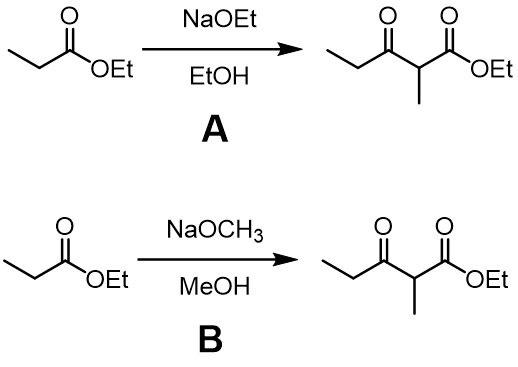
If you are to use a base/alcoholic solvent that is different than the ester (i.e., MeONa vs. RCO(OEt)), then you get a major competing reaction (the transesterification) instead of the desired Claisen pathway leading to a reduced yield.

Dieckmann Condensation
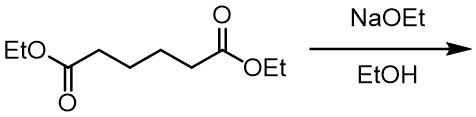
A special named reaction is the Dieckmann condensation, which is just an intramolecular Claisen reaction. Predict the product of the following Dieckmann condensation reaction. Draw the mechanism in full.