The SN2 Mechanism
- SN2 gets its name because it is a nucleophilic substitution SN and it's kinetics display an overall 2nd order reaction.
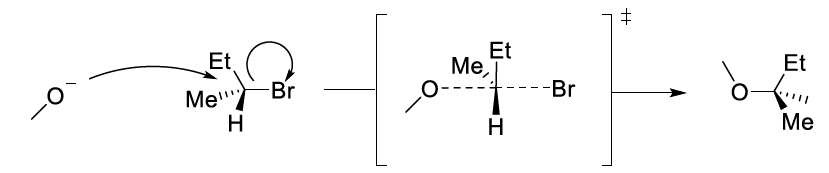
SN2 Mechanism
- Arrow 1: Nucleophile attacks electrophilic carbon
- Arrow 2: Leaving group leaves with electron from the bond to the electrophile
- The transition state is shown in square brackets. When you are asked to draw a mechanism you DO NOT have to draw the transition state
- Involves an inversion of the stereochemistry at the carbon being attacked. This means that if the reaction is proceeding by an SN2 mechanism any stereochemistry present at the electrophile will be inverted.
Draw the product of the following nucleophilic substitution.


Factors which Favour an SN2 Mechanism
Nucleophile
- For SN2 reactions we are attacking a neutral carbon center with our nucleophile so the nucleophile must be strong. When comparing nucleophiles three factors must be considered, In Order!
1. Charge
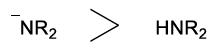
2. Basicity
Stronger base is faster, remember ARIO
3. Sterics

Electrophile
- In an SN2 reaction the electrophile must be sterically free (not much stuff around) so that the nucleophile can fit in to attach from the back side.

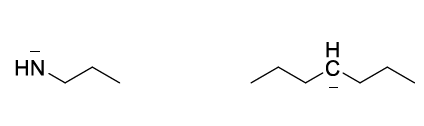
Choose the nucleophile or electrophile which will react fastest in an SN2 reaction. Rationalize your choice.
a)
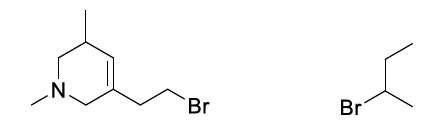
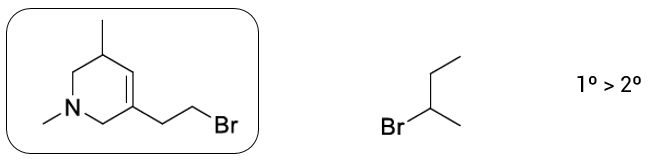
b)
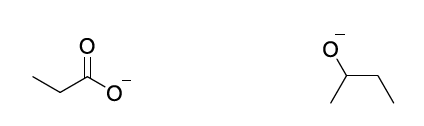

c)
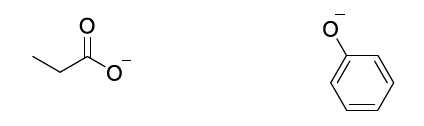

d)