Wize University Chemistry Textbook > Organic Chemistry Reactions
Introduction to Substitution Reactions
Popular Courses
General Chemistry
University Study Guides
CHEM 112
Queen's University
Chemistry
General Course
CHEM 1AA3
McMaster University
General Chemistry
University Study Guides
APSC 132
Queen's University
CHEM 112B
Queen's University
CHEM 130
University of British Columbia
CHEM 1100
University of Manitoba
CHEM 1481
Texas A & M University
CHMA10H3
University of Toronto
SC/CHEM 1100 4.00
York University
CHM 2045
University of Florida
CHEM 1001
Carleton University
CHEM 111
University of British Columbia
CHEM 112
University of Saskatchewan
CHEM 1P91
Brock University
CHEM 1110
University of Manitoba
CHMA11H3
University of Toronto
CHM 1301
University of Ottawa
0:00 / 0:00
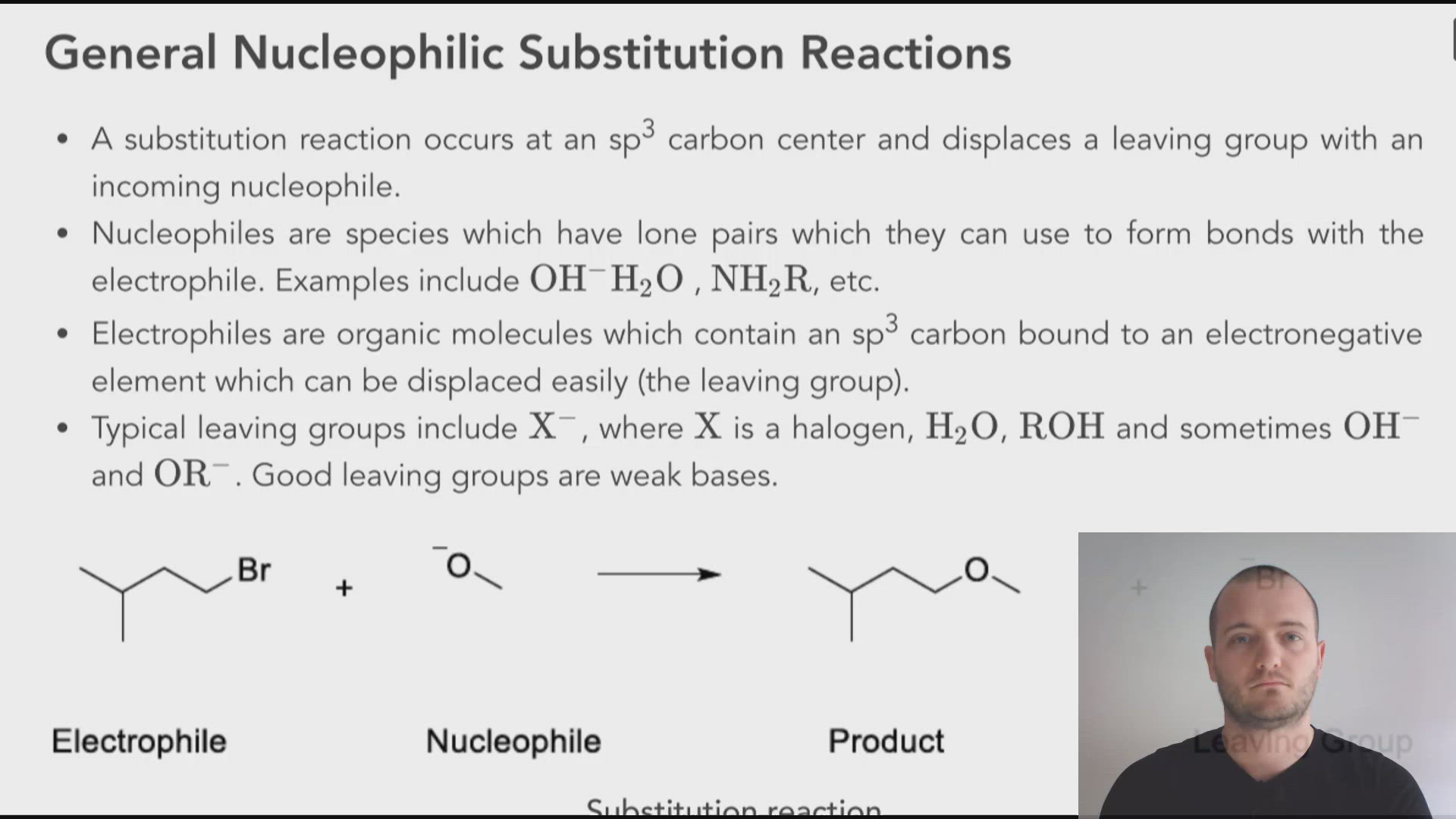
General Nucleophilic Substitution Reactions
- A substitution reaction occurs at an sp3 carbon center and displaces a leaving group with an incoming nucleophile.
- Nucleophiles are species which have lone pairs which they can use to form bonds with the electrophile. Examples include , , etc.
- Electrophiles are organic molecules which contain an sp3 carbon bound to an electronegative element which can be displaced easily (the leaving group).
- Typical leaving groups include , where is a halogen, , and sometimes and . Good leaving groups are weak bases.

Substitution reaction
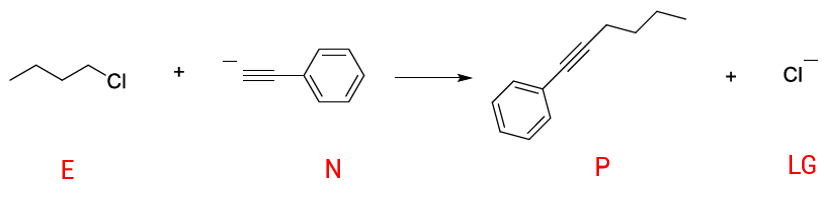
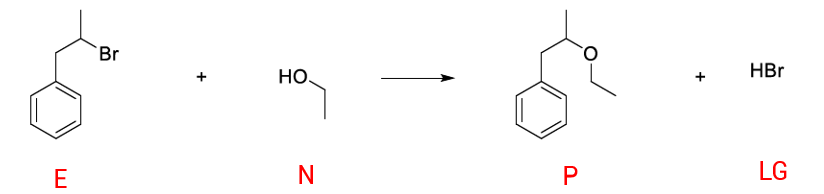
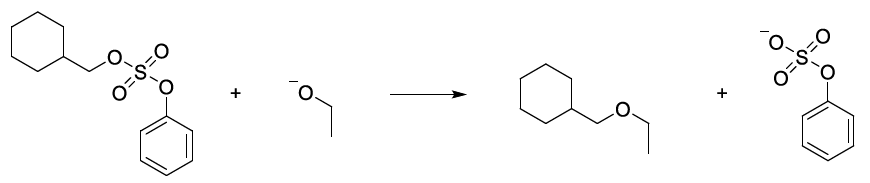
Steps for Identifying Species in a Substitution Reaction
- Identify the leaving group on the products side
- The other group on the products side must be the product
- The species on the reactant side which contains the atoms of the leaving group is the electrophile
- The other molecule on the reactant side must be the nucleophile
Label the electrophile, nucleophile, product and leaving group in the following reactions.
a)

b)

c)
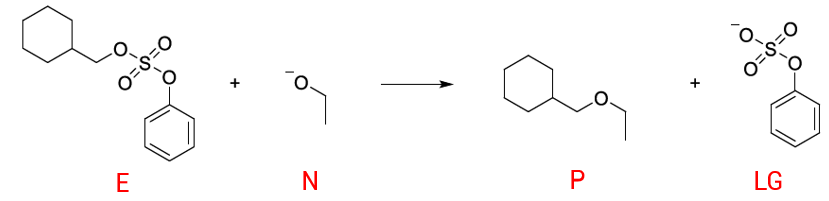
- These reactions can go by one of two mechanisms SN1 and SN2. We will discuss each individually and then see how we can predict which mechanism the reaction will proceed by.