Wize University Chemistry Textbook > Organic Chemistry Reactions
Organic Reactions
Popular Courses
General Chemistry
University Study Guides
CHEM 112
Queen's University
Chemistry
General Course
CHEM 1AA3
McMaster University
General Chemistry
University Study Guides
CHEM 110
McGill University
APSC 132
Queen's University
CHEM 112B
Queen's University
CHEM 130
University of British Columbia
CHEM 1100
University of Manitoba
CHEM 1481
Texas A & M University
CHMA10H3
University of Toronto
SC/CHEM 1100 4.00
York University
CHM 2045
University of Florida
CHEM 1001
Carleton University
CHEM 111
University of British Columbia
CHEM 112
University of Saskatchewan
CHEM 1P91
Brock University
CHMA11H3
University of Toronto
CHM 1301
University of Ottawa

0:00 / 0:00
General Types of Organic Reactions
Substitution
- One group replaces another group. This is common for saturated systems

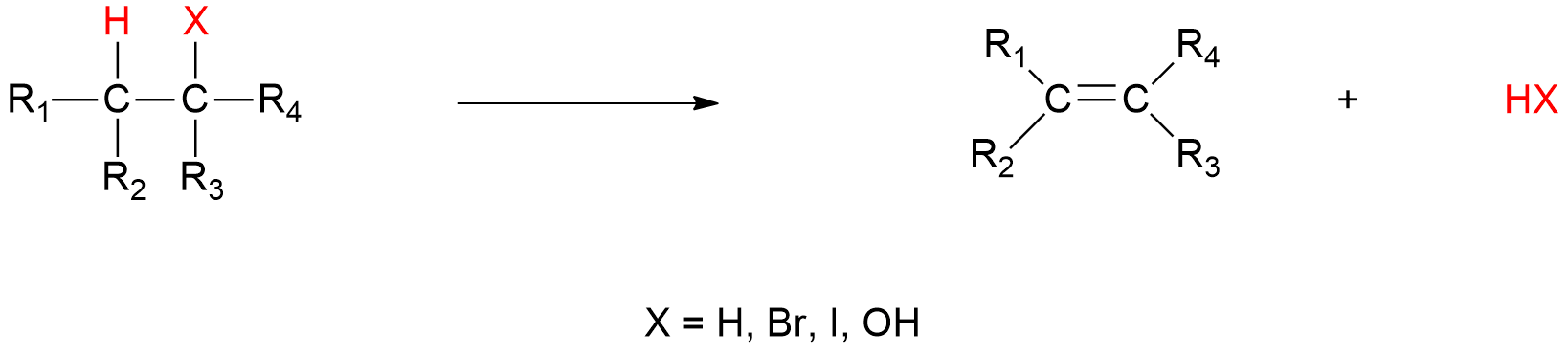
Elimination
- One molecule generates two molecules. We use this to form unsaturated systems
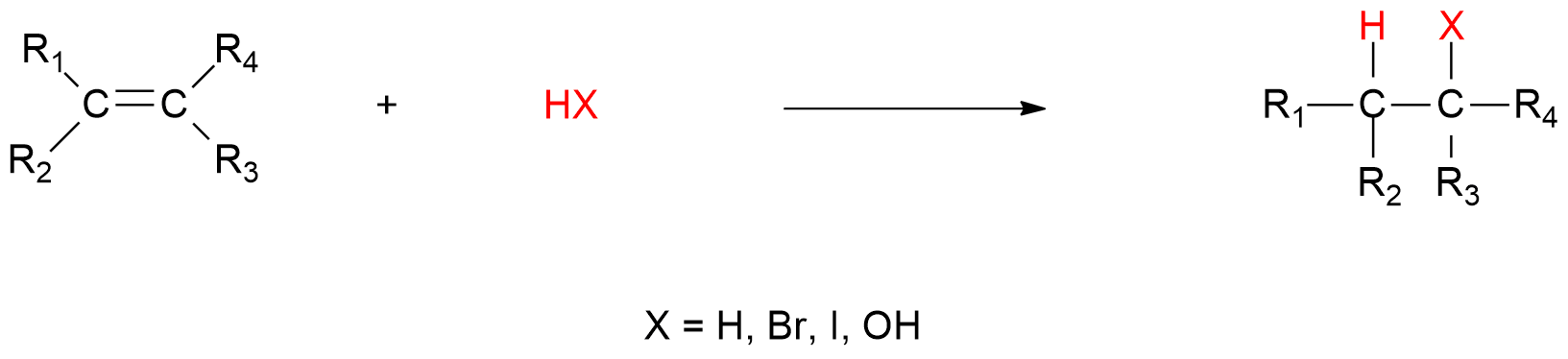
Addition
- Two molecules become one. Typically form a saturated system from an unsaturated system
Rearrangement
- One molecule rearranges itself into a new constitutional isomer

0:00 / 0:00
Nucleophiles and Electrophiles
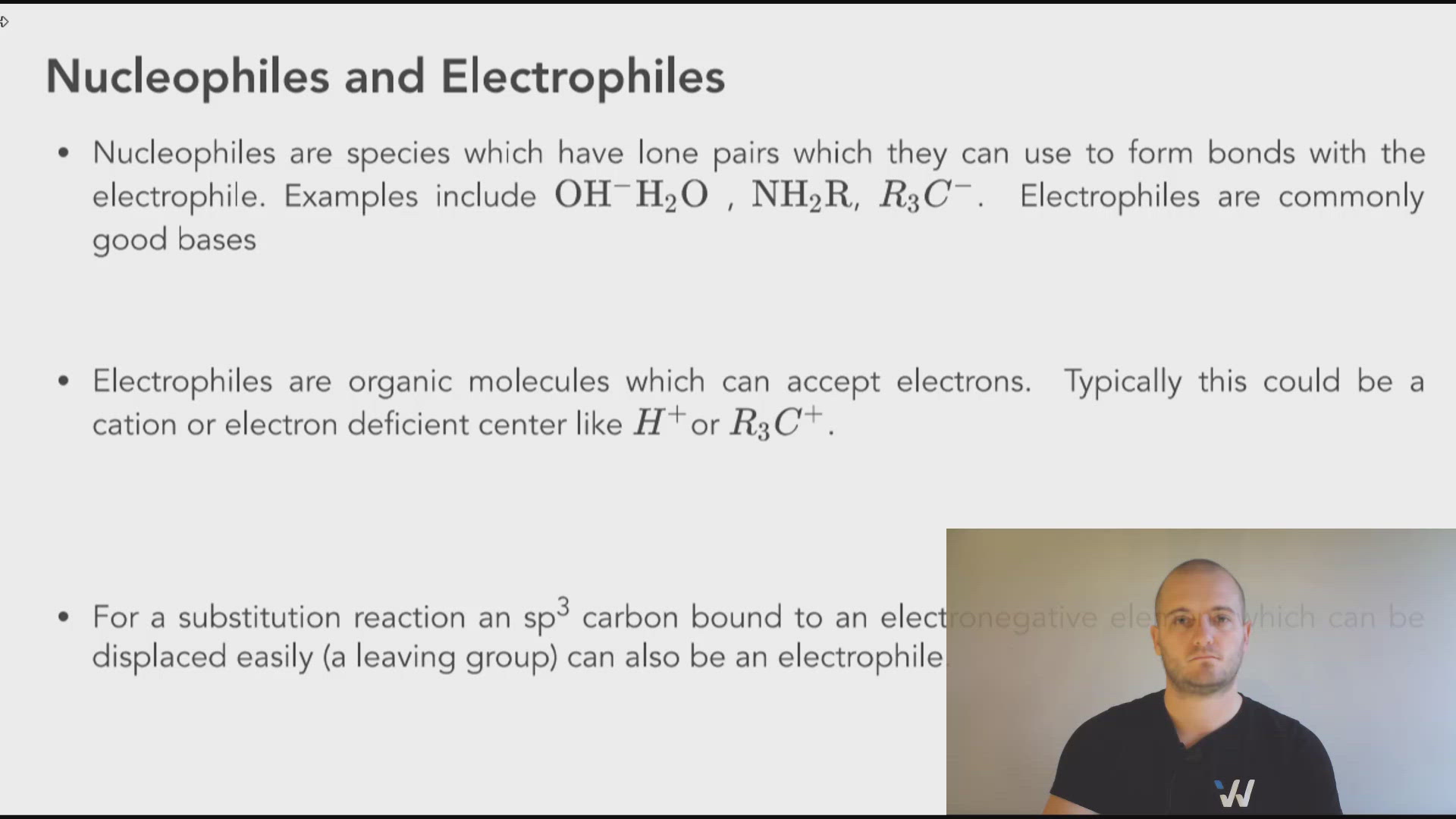
- Nucleophiles are species which have lone pairs which they can use to form bonds with the electrophile. Examples include , , . Electrophiles are commonly good bases
- Electrophiles are organic molecules which can accept electrons. Typically this could be a cation or electron deficient center like or .
- For a substitution reaction an sp3 carbon bound to an electronegative element which can be displaced easily (a leaving group) can also be an electrophile.
- For an addition reaction an alkene acts as the electrophile