Direct Material Variances
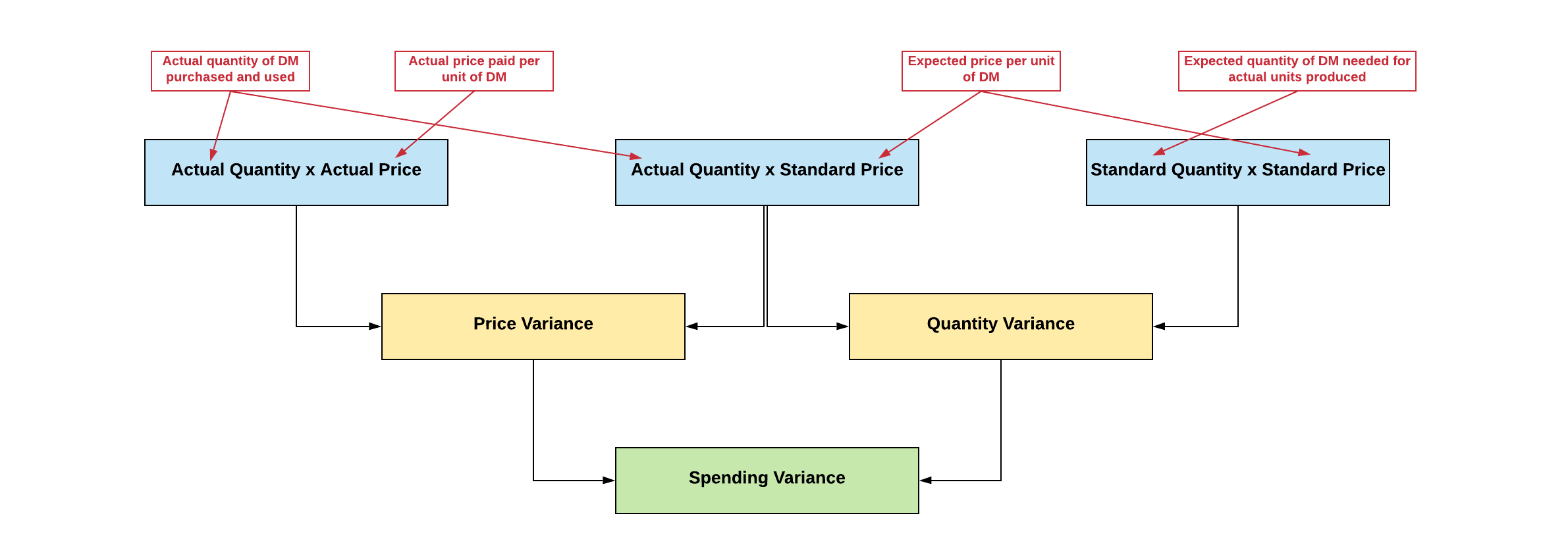
A direct material variance is the difference between the standard cost of direct material (expected) and the actual cost. The variance is made up of two other variances:
- Price Variance: Difference between what was actually paid for materials and what the standard cost for the materials is (what we expected to pay).
- Quantity Variance: Difference between the actual quantity of materials used and what the standard quantity is (what we expected to use).
- Total (Spending) Variance: The sum of the price and quantity variance.
What causes a Direct Material price variance?
- Order size: Sometimes suppliers will give discounts if large quantities are ordered, this reduces the price per unit of materials leading to a favourable price variance.
- Unexpected price change: For a variety of reasons, suppliers may increase their price, this will lead to an unfavourable price variance.
- Quality: Choosing higher quality materials could lead to an unfavourable price variance, and lower quality materials can lead to a favourable price variance.
What causes a Direct Material quantity variance?
- Quality: Using lower quality materials can lead to an unfavourable quantity variance.
- Damage and Waste: If material is damaged or wasted, this will lead to an unfavourable quantity variance.
- Labour skill: Improper employee training or low employee skill can lead to an unfavourable quantity variance.
Special Case for Direct Materials
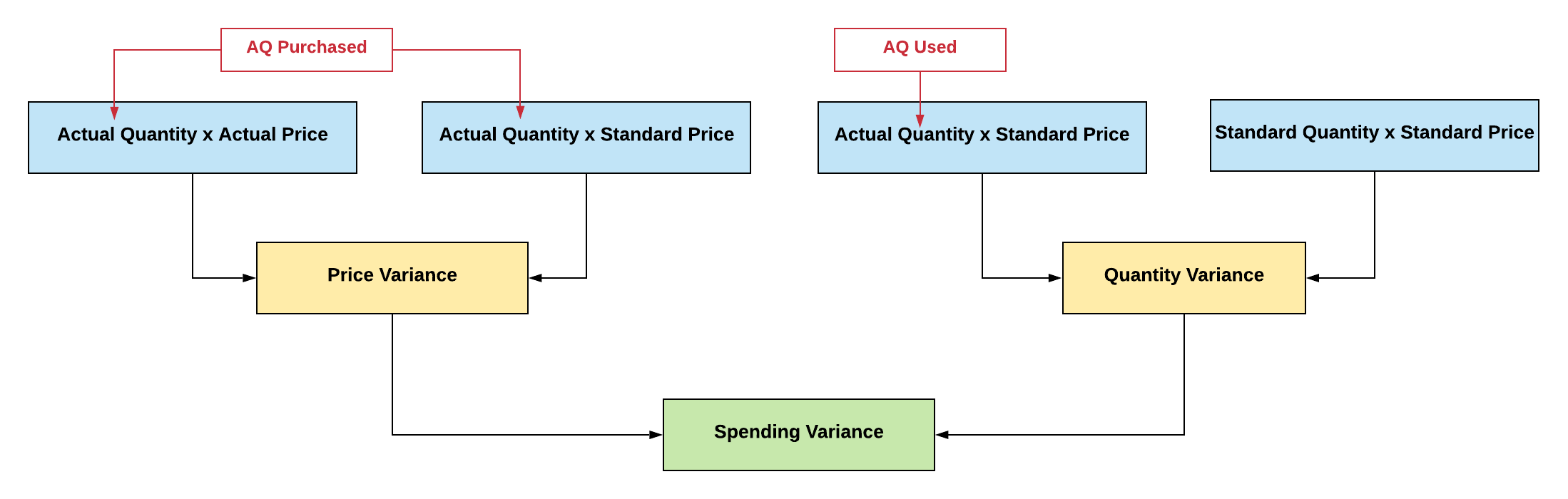
If direct materials purchased and used are different. Then the price and quantity variance will be computed in a slightly different way.
Price variance: based on materials purchased
Quantity variance: based on materials used

Example: Direct Materials Variances
Wize Corporation manufactures a single product and has the following standard costs per unit of finished goods:

The company's master budget indicates that the normal capacity for any given month is 5,000 units, and in the month of August 2025, 4,800 units were actually produced. In producing the 4,800 units, the following costs were incurred:

Compute the Direct Materials price, quantity and total variance.
Example: Direct Materials Variances
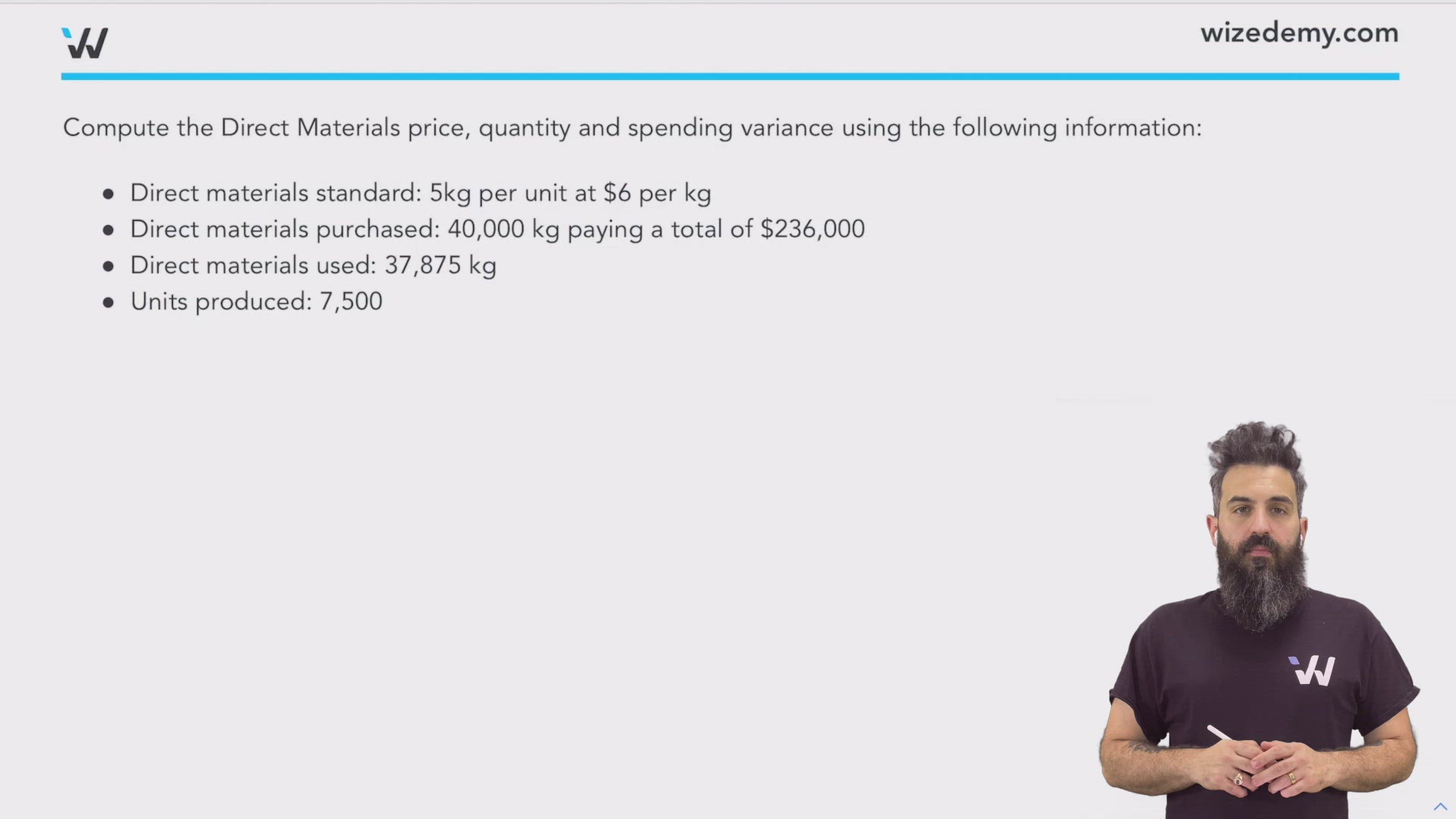
Compute the Direct Materials price, quantity and spending variance using the following information:
- Direct materials standard: 5kg per unit at $6 per kg
- Direct materials purchased: 40,000 kg paying a total of $236,000
- Direct materials used: 37,875 kg
- Units produced: 7,500