Wize University Managerial Accounting Textbook > Standard Costing & Variance Analysis
Standards and Variances
Popular Courses
COMM 305
Concordia University
Managerial Accounting
University Study Guides
Managerial Accounting
University Study Guides
ACC 406
Toronto Metropolitan University
ACCT*2230
University of Guelph
ADM 2341
University of Ottawa
RSM222H1
University of Toronto
COMMERCE 2AB3
McMaster University
SB/ACTG 2020 3.00
York University
COMM 1102
Dalhousie University
ACC 312
The University of Texas at Austin
ACC 242
Arizona State University - Tempe
ACC 202
Michigan State University
ACIS 2116
Virginia Tech
ACG 2071
University of Central Florida
BUS-A 306
Indiana University - Bloomington
BUS1 21
San José State University
ACCT 2102
Temple University
ACCTG-202
San Diego State University
ACCTMIS 2300
Ohio State University
0:00 / 0:00
What are Standard Costs and Variances?
Standards represents what a firm should be using and spending to manufacture it's products.
Standard Quantities
This is how much of an input (materials and labour hours) should be used to produce a product.
Standard Quantity = Standard Quantity per Unit x Actual Units Produced
Standard Prices (Costs)
This is how much should be paid per unit of inputs.
For Overhead, the standard price is the predetermined overhead rate.

For Example
ABC Inc. produced wooden chairs. The standard quantity of materials used to produce one chair is 2 kg and the standard price of materials is $5 per kg.
Variances
A variance is the difference between what was actually used and spent and the standard. A favourable variance occurs when the actual amount used or spent is less than the standard. If the actual amount used or spent is more than the standard we call this an unfavourable variance.
Price/Rate Variance
When the actual amount paid per unit of input differs from the standard price per unit.
For DM we call this a Price Variance
For DL and VMOH we call this a Rate Variance
Quantity/Efficiency Variance
When the actual quantity of inputs differs from the standard quantity. For materials this is measured in units of materials (kg, litres, etc). For labour and overhead this is measured in labour hours.
For DM and DL we call this a Quantity Variance
For VMOH we call this an Efficiency Variance
Measuring Variances
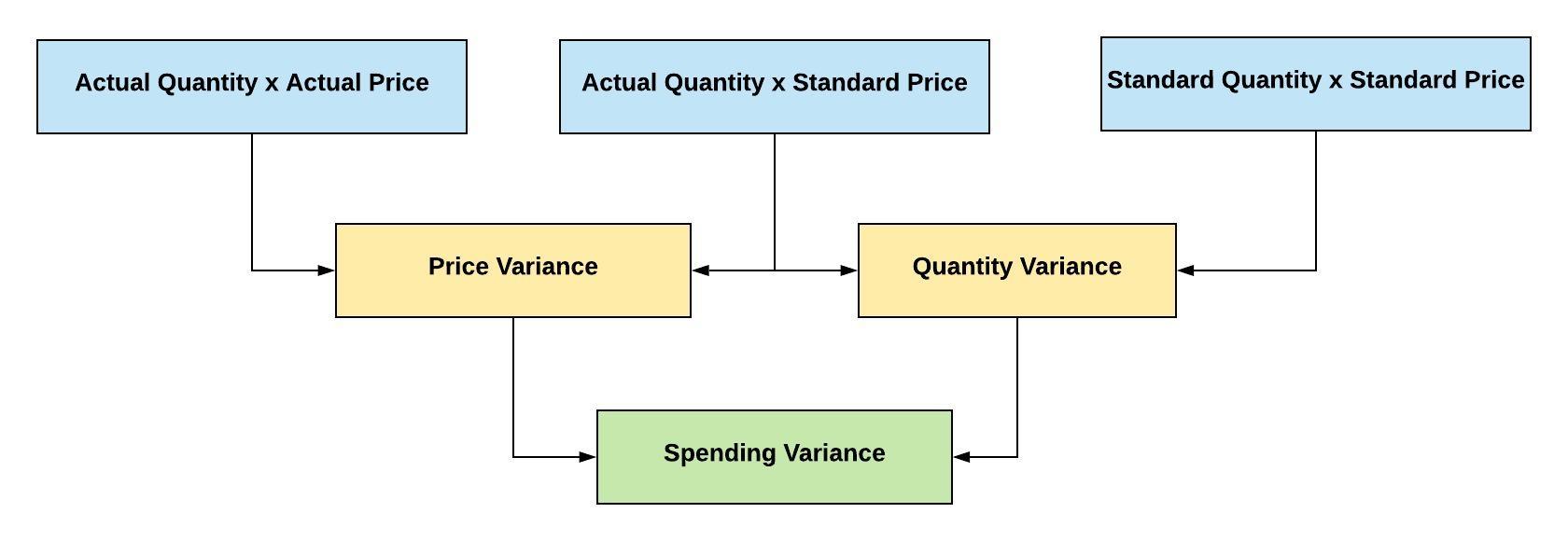
For Example
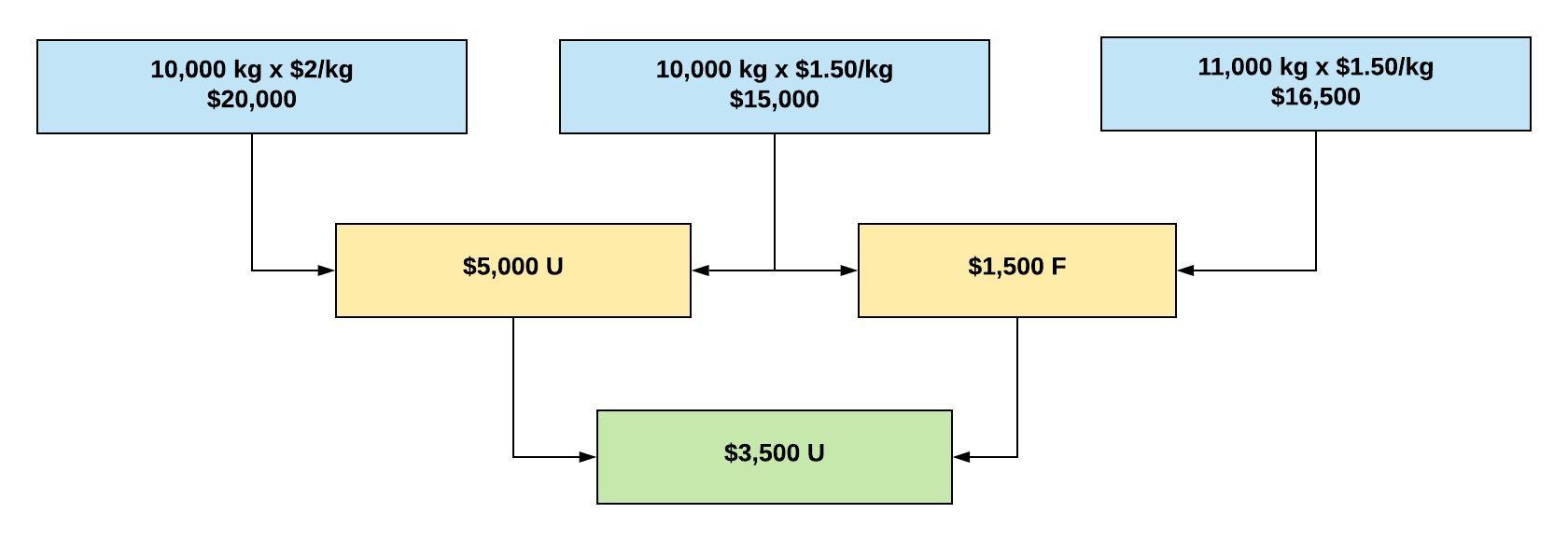
ABC Inc. produced wooden chairs. The standard quantity of materials used to produce one chair is 2.2 kg and the standard price of materials is $1.50 per kg. In producing 5,000 chairs, the actual amount of material used was 10,000 kg costing $20,000.