Wize University Managerial Accounting Textbook > Standard Costing & Variance Analysis
Direct Material Variances
Popular Courses
COMM 305
Concordia University
Managerial Accounting
University Study Guides
Managerial Accounting
University Study Guides
ACC 406
Toronto Metropolitan University
ACCT*2230
University of Guelph
ADM 2341
University of Ottawa
RSM222H1
University of Toronto
COMMERCE 2AB3
McMaster University
SB/ACTG 2020 3.00
York University
COMM 1102
Dalhousie University
ACC 312
The University of Texas at Austin
ACC 242
Arizona State University - Tempe
ACC 202
Michigan State University
ACIS 2116
Virginia Tech
ACG 2071
University of Central Florida
BUS-A 306
Indiana University - Bloomington
BUS1 21
San José State University
ACCT 2102
Temple University
ACCTG-202
San Diego State University
ACCTMIS 2300
Ohio State University
0:00 / 0:00
Direct Material Variances
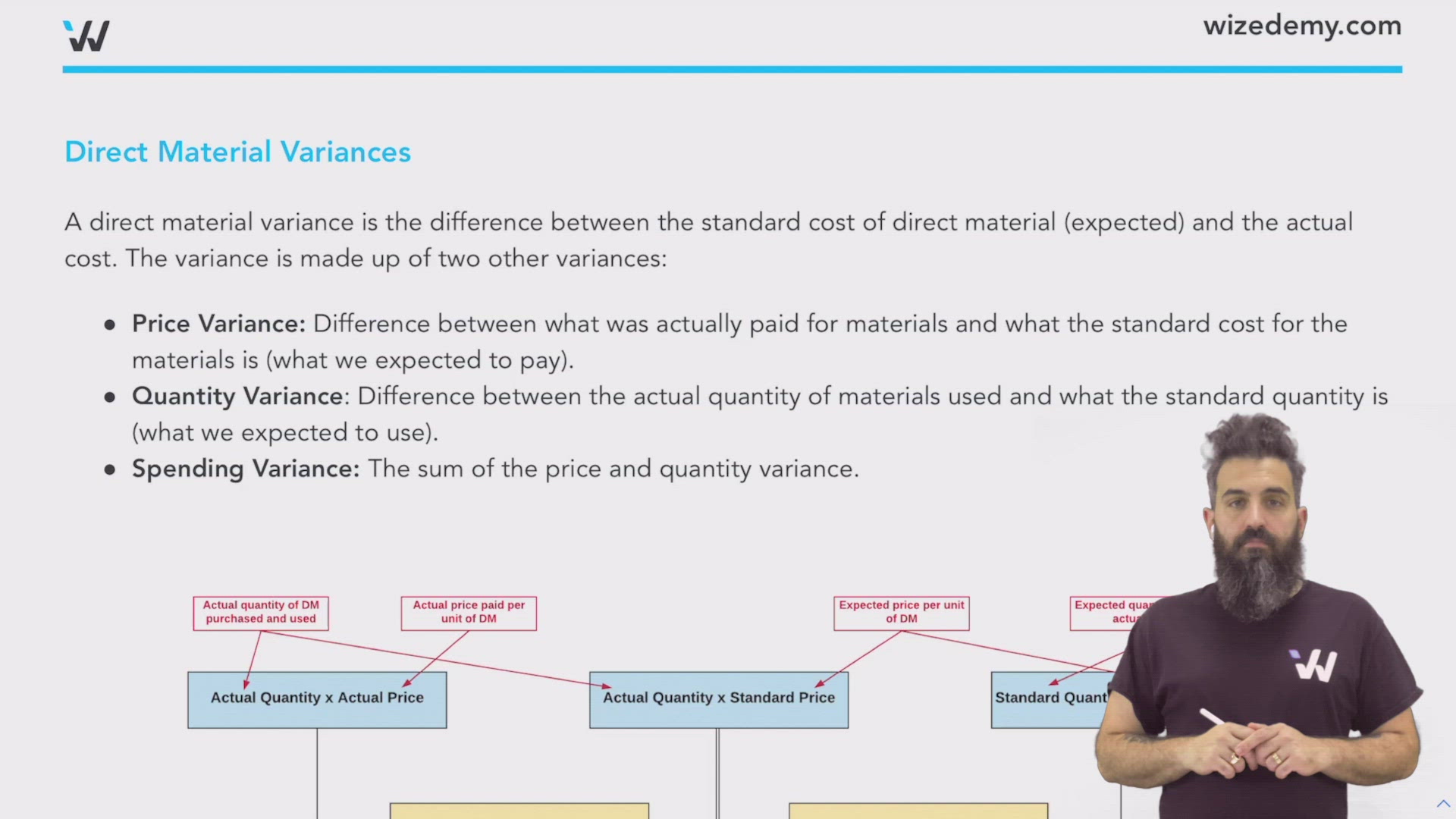
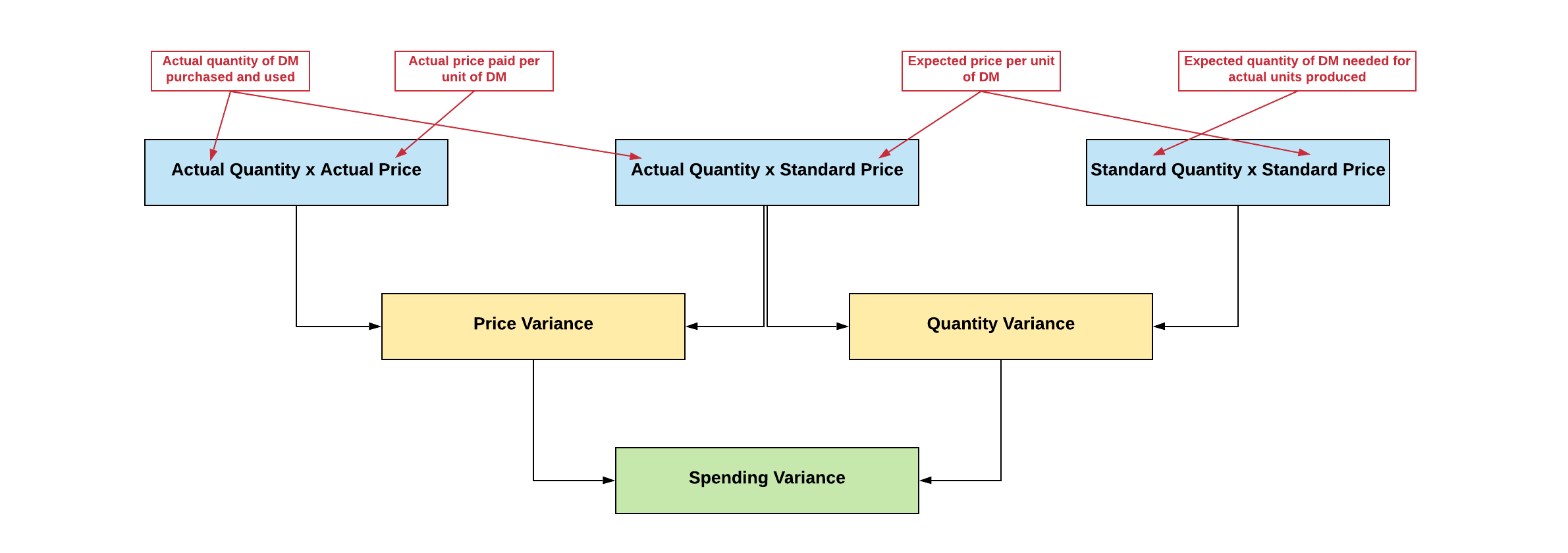
A direct material variance is the difference between the standard cost of direct material (expected) and the actual cost. The variance is made up of two other variances:
- Price Variance: Difference between what was actually paid for materials and what the standard cost for the materials is (what we expected to pay).
- Quantity Variance: Difference between the actual quantity of materials used and what the standard quantity is (what we expected to use).
- Total (Spending) Variance: The sum of the price and quantity variance.
What causes a Direct Material price variance?
- Order size: Sometimes suppliers will give discounts if large quantities are ordered, this reduces the price per unit of materials leading to a favourable price variance.
- Unexpected price change: For a variety of reasons, suppliers may increase their price, this will lead to an unfavourable price variance.
- Quality: Choosing higher quality materials could lead to an unfavourable price variance, and lower quality materials can lead to a favourable price variance.
What causes a Direct Material quantity variance?
- Quality: Using lower quality materials can lead to an unfavourable quantity variance.
- Damage and Waste: If material is damaged or wasted, this will lead to an unfavourable quantity variance.
- Labour skill: Improper employee training or low employee skill can lead to an unfavourable quantity variance.
Special Case for Direct Materials
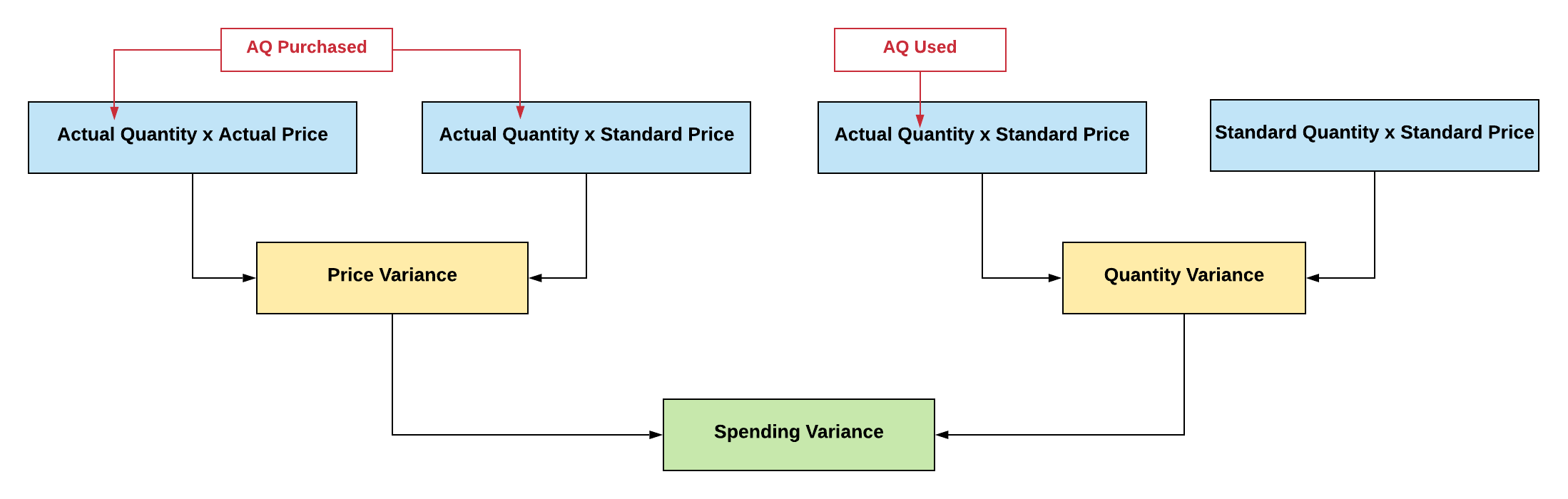
If direct materials purchased and used are different. Then the price and quantity variance will be computed in a slightly different way.
Price variance: based on materials purchased
Quantity variance: based on materials used

0:00 / 0:00
Example: Direct Materials Variances
Wize Corporation manufactures a single product and has the following standard costs per unit of finished goods:

The company's master budget indicates that the normal capacity for any given month is 5,000 units, and in the month of August 2025, 4,800 units were actually produced. In producing the 4,800 units, the following costs were incurred:

Compute the Direct Materials price, quantity and total variance.
0:00 / 0:00
Example: Direct Materials Variances
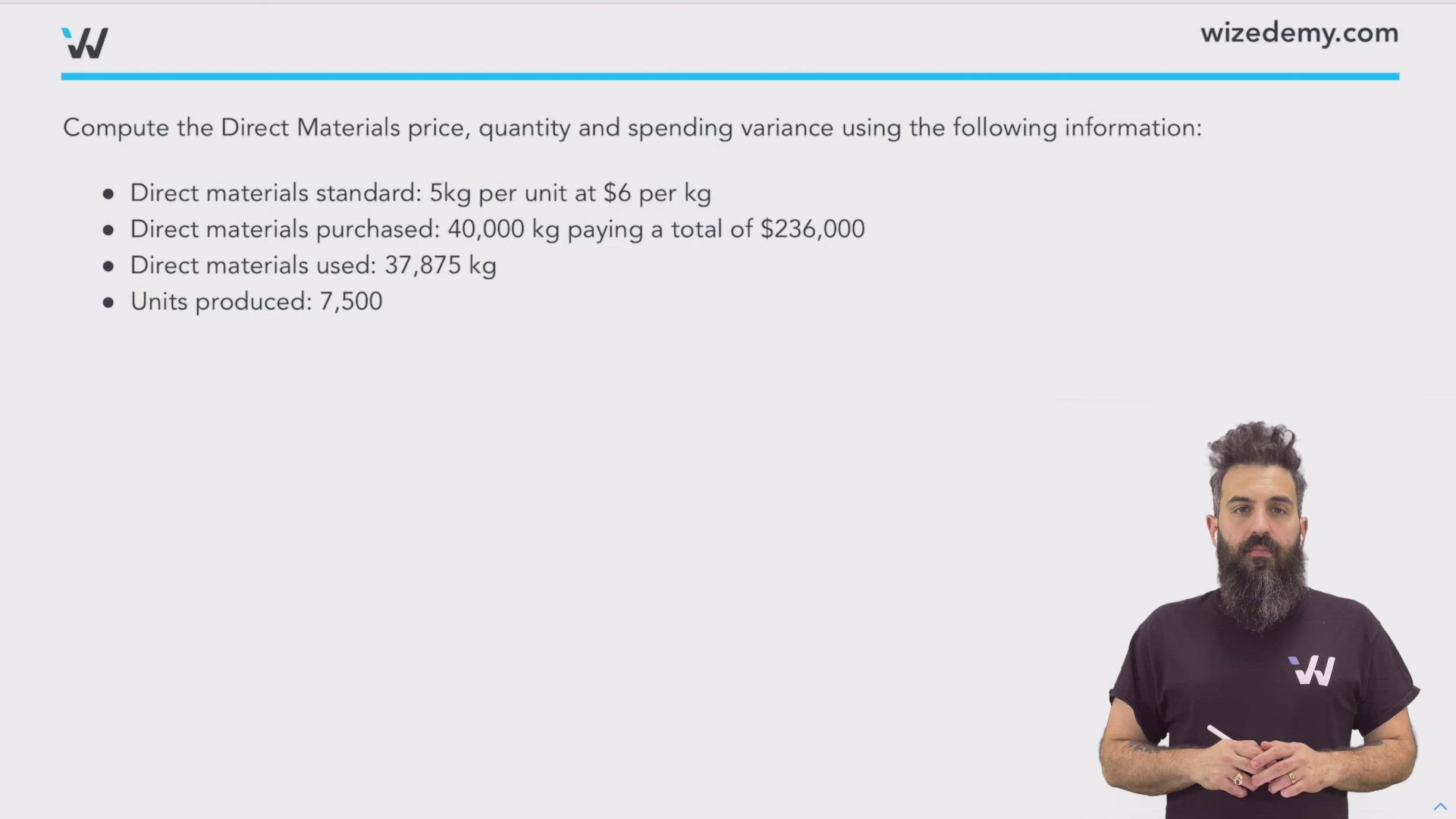
Compute the Direct Materials price, quantity and spending variance using the following information:
- Direct materials standard: 5kg per unit at $6 per kg
- Direct materials purchased: 40,000 kg paying a total of $236,000
- Direct materials used: 37,875 kg
- Units produced: 7,500
Practice: Direct Materials Variances
Buono Corporation manufactures fire extinguishers for residual and commercial use. The standard material cost of producing one unit is $30 (3 lbs of material @ $10/lb). The standard labor rate of workers at the company is $15 per hour, and it is expected that each unit will require 1 hour of labor to be produced.
The budgeted overhead cost is $500,000, of which 30% is variable and the rest is fixed. The company's budget is based on producing 10,000 units this year.
At the end of the year, the company had produced 9,300 units and the following costs were incurred:
- Direct materials (31,000 lbs) $308,450
- Direct labor (9,100 hours) $141,050
- Variable overhead: $180,000
- Fixed overhead: $334,550
Answer the following questions, do not use any symbols ($, %, !);
Use the first blank for the value and in the second blank enter F for favorable and U for unfavorable.
Direct materials price variance
Direct materials quantity variance
Total direct materials budget variance
Practice: Direct Materials Variances
Buono Corporation manufactures fire extinguishers for residual and commercial use. The standard material cost of producing one unit is $30 (3 lbs of material @ $10/lb). The standard labor rate of workers at the company is $15 per hour, and it is expected that each unit will require 1 hour of labor to be produced.
The budgeted overhead cost is $500,000, of which 30% is variable and the rest is fixed. The company's budget is based on producing 10,000 units this year.
At the end of the year, the company had produced 9,300 units and the following costs were incurred:
- Direct materials purchased (31,000 lbs) $308,450
- Direct materials used: 29,400 lbs
- Direct labor (9,100 hours) $141,050
- Variable overhead: $180,000
- Fixed overhead: $334,550
Answer the following questions, do not use any symbols ($, %, !);
Use the first blank for the value and in the second blank enter F for favorable and U for unfavorable.
Direct materials price variance
Direct materials quantity variance
Total direct materials budget variance