Price Ceiling
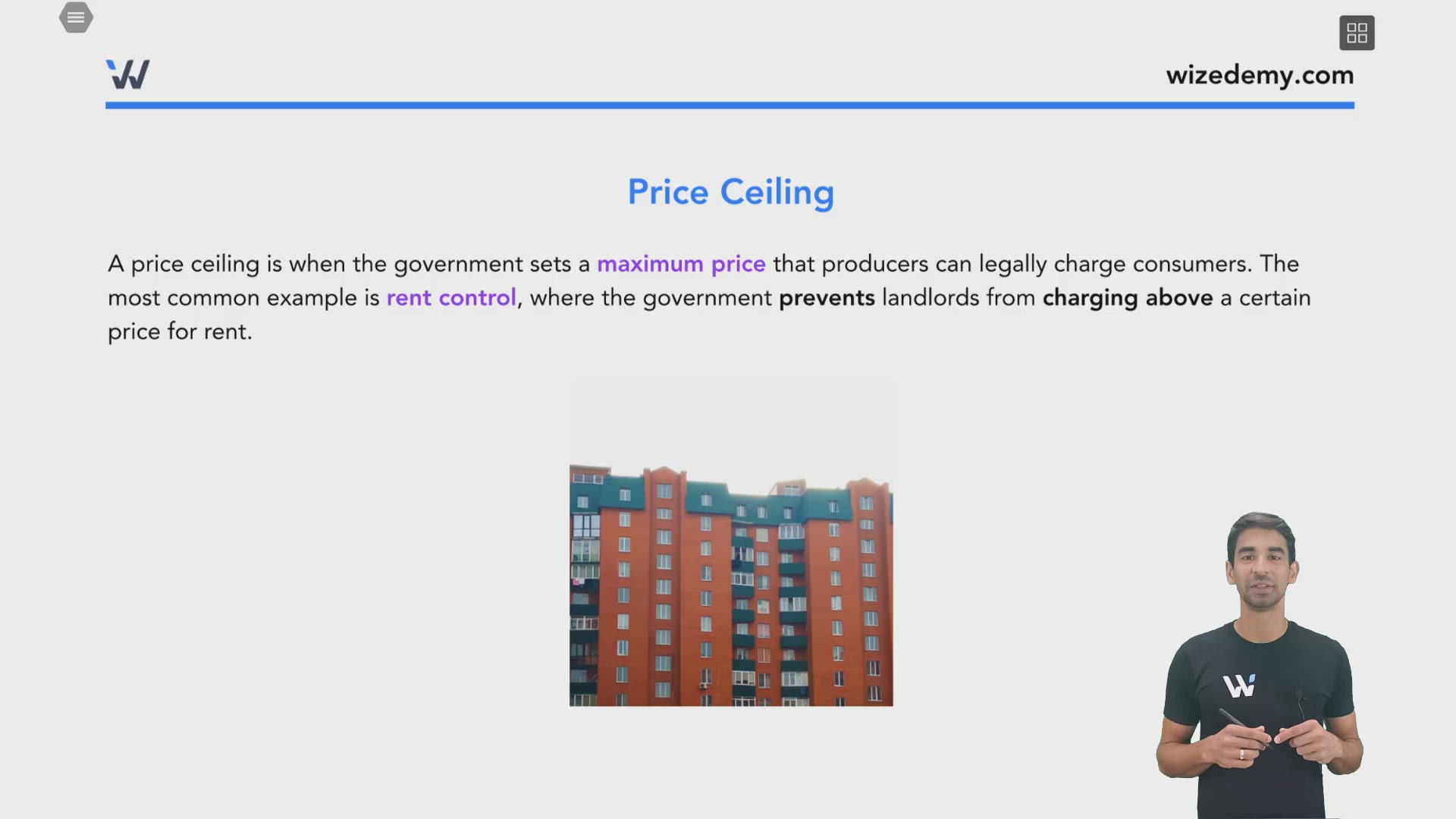
A price ceiling is when the government sets a maximum price that producers can legally charge consumers. The most common example is rent control, where the government prevents landlords from charging above a certain price for rent.
The reason why price ceilings are always below the equilibrium price is because they are designed to protect the consumers.
Example: In the diagram below, the equilibrium rent in a local town is $1000 and the government thinks this is too expensive. So, they put a price ceiling at $800, which means landlords cannot charge more than $800. This protects the tenants (consumers).

Inefficiencies of Price Ceilings
Ceilings lead to:
- ________ for the product in the market place. In the diagram above the shortage would be equal to ________ units. The quantity actually sold would be ________ units.
- Black market activity - since there is excess demand, some people can buy the product at the lower price and sell it at a higher price. Example: Scalpers selling tickets outside a stadium.
Example: Price Ceiling
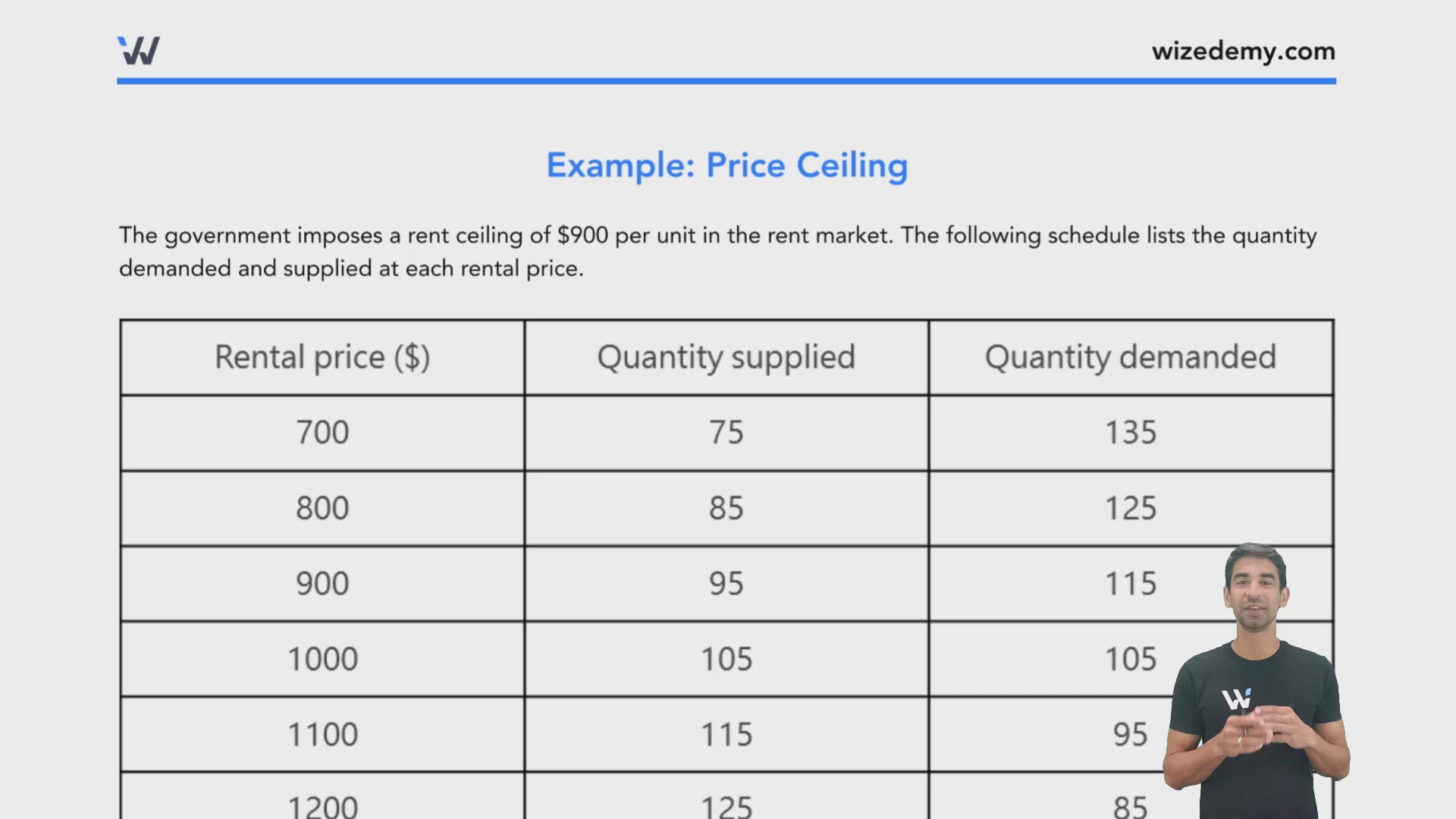
The government imposes a rent ceiling of $900 per unit in the rent market. The following schedule lists the quantity demanded and supplied at each rental price.
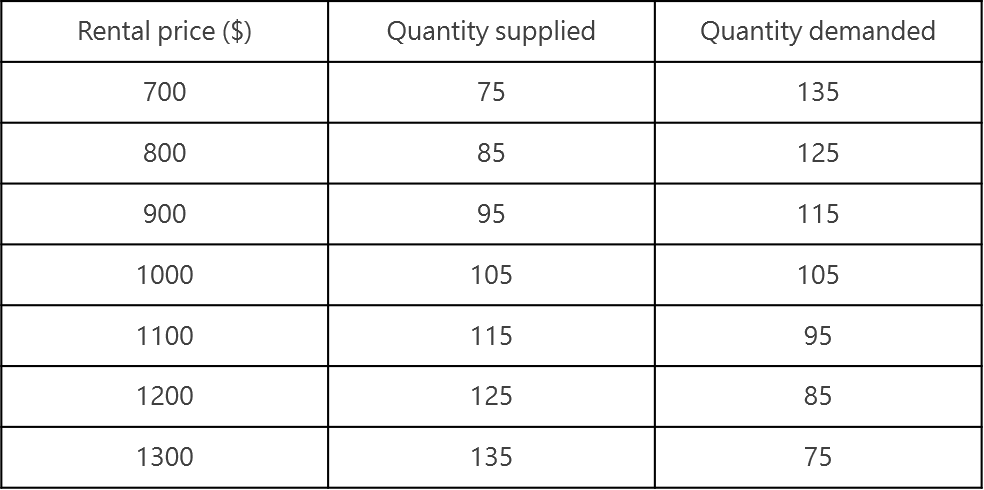
Is the price ceiling binding? What is the resulting surplus or shortage?

Yes, it is binding (or effective) because it is below the equilibrium price. If they had put the ceiling above $1000 then it would not be binding.
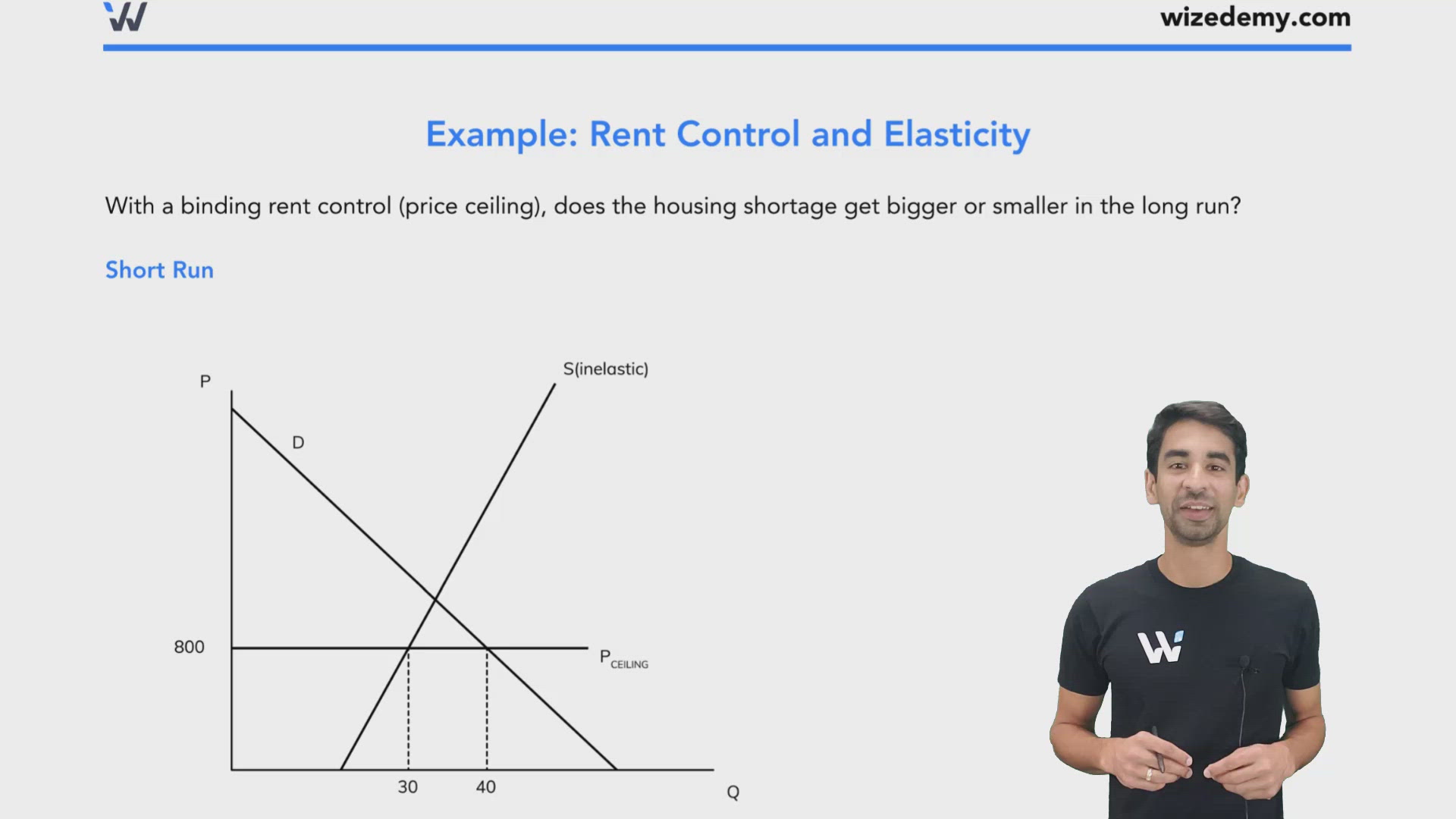
Example: Rent Control and Elasticity
With a binding rent control (price ceiling), does the housing shortage get bigger or smaller in the long run?
Short Run

- The landlords (suppliers of houses) will not be happy with the price ceiling because then they will collect less rent.
- In the short run the supply is inelastic because landlords don't have time to sell off their apartment. In the above example, the shortage in the short run would be ________units (houses).
Long Run

- In the long run the supply is elastic because landlords have time to sell off their apartments. In the above example, the shortage in the long run would be ________ units (houses).
- This means the housing shortage gets ________ in the long run