Work - Leisure Choices
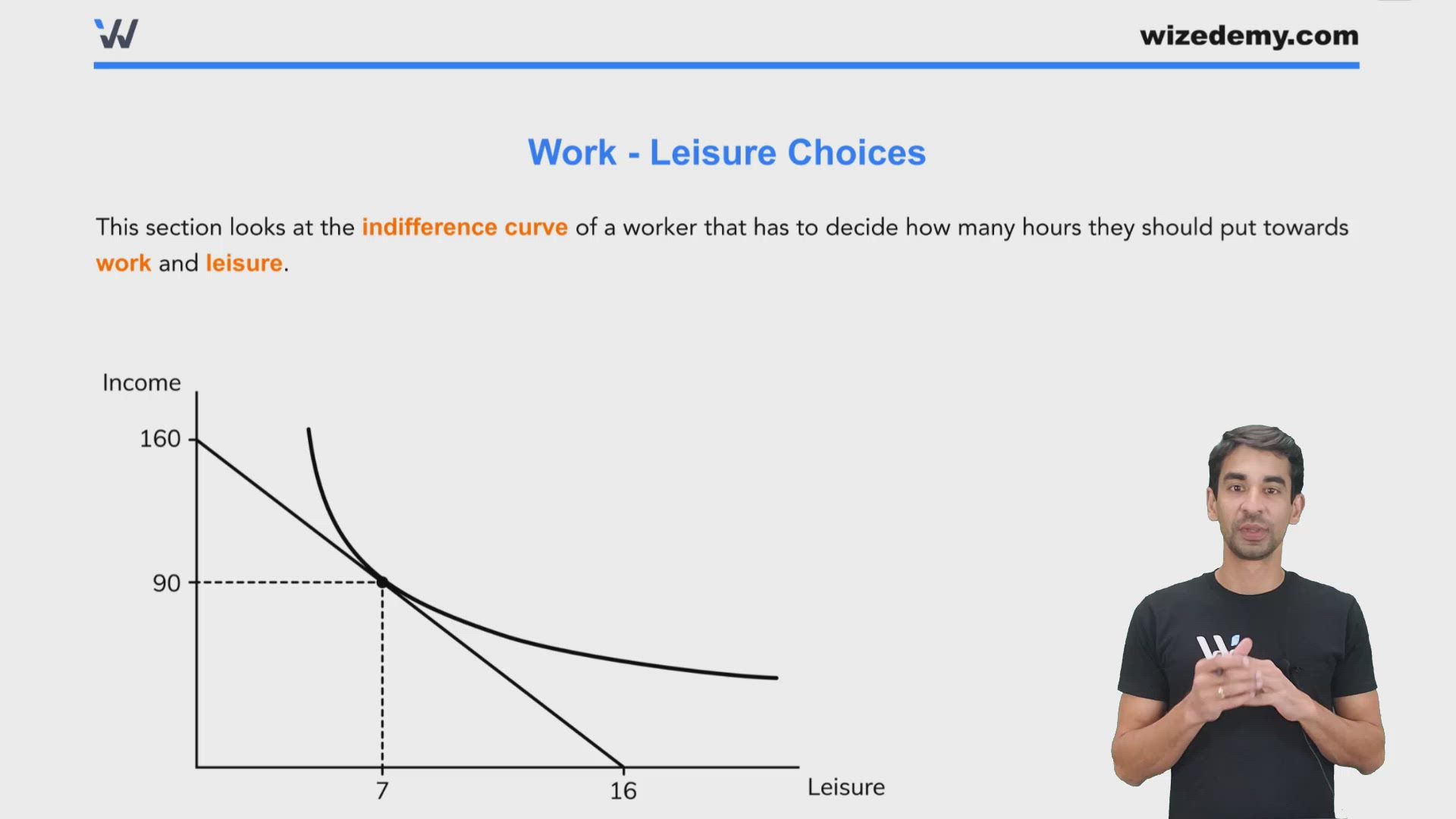
This section looks at the indifference curve of a worker that has to decide how many hours they should put towards work and leisure.

- In the diagram above, as the worker consumes more leisure it means they are working less and therefore earning less income.
- The budget constraint shows the different combinations of leisure and income that the worker can actually afford at their current job. Usually, the horizontal intercept is 16 hours (24 - 8) because the average person spends 8 out of the 24 hours in a day sleeping.
- The wage is ________
- The point where the budget constraint is tangent to the indifference curve is the utility maximization (optimal) point. In the diagram this would be at ________ hours of leisure and an income of ________
- Everyone has their own utility maximization (optimal) point depending on how much they value leisure and money.

Example: Work - Leisure Choices
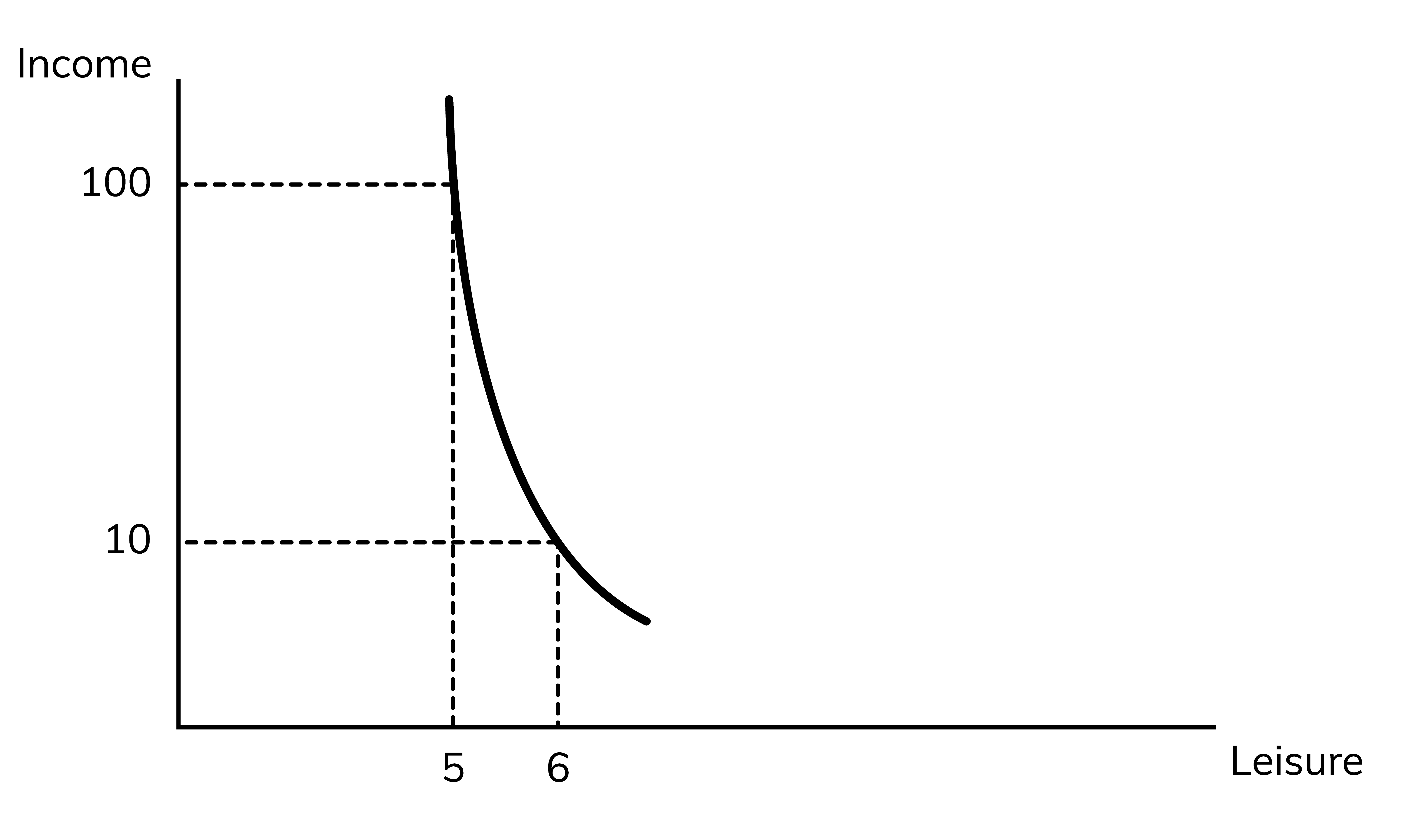
Jamal
Jenny
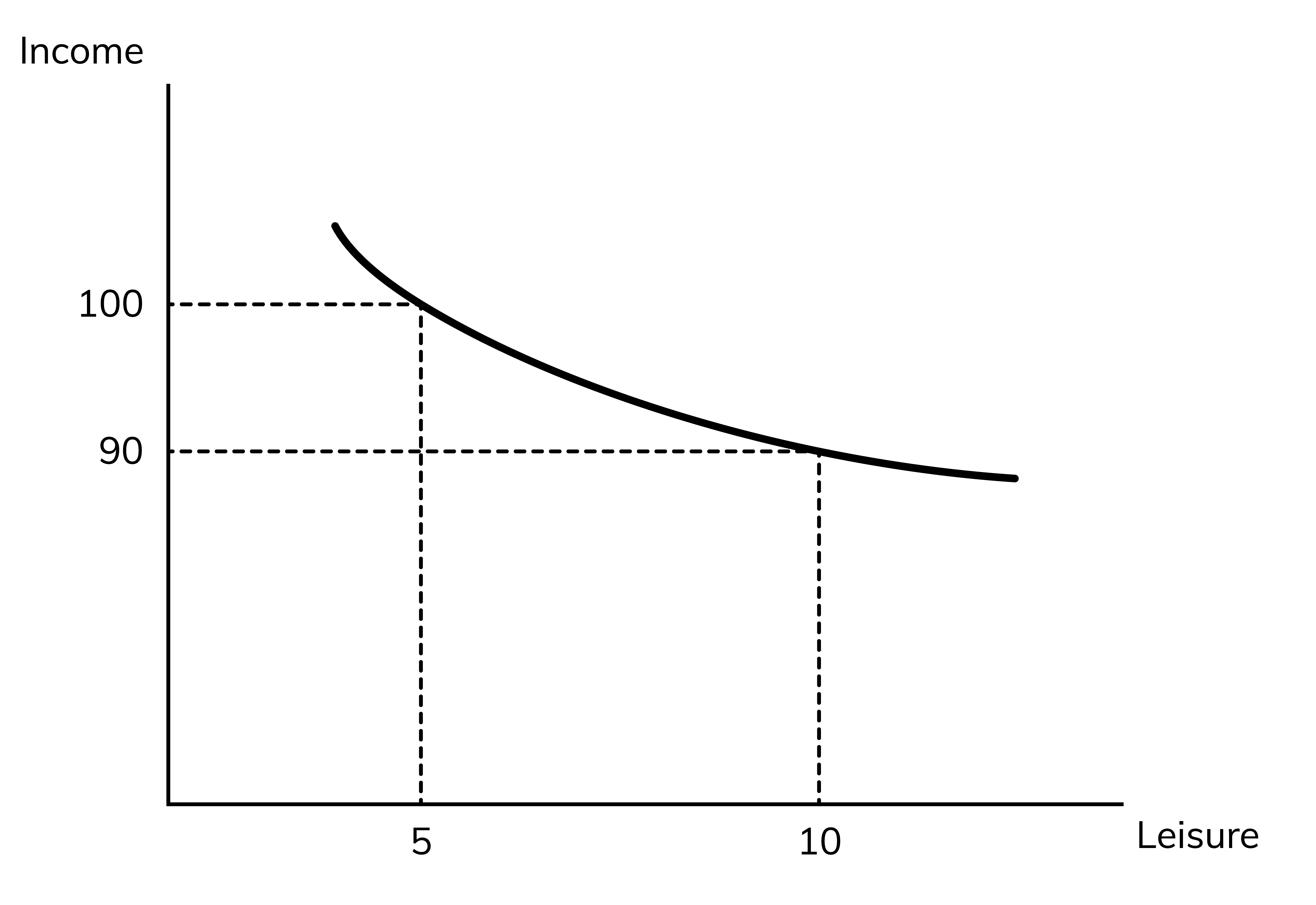
With the indifference curves above, we can say Jamal values leisure:
A) more than Jenny B) less than Jenny C) the same as Jenny D) cannot be determined
A.
Jamal has a steeper indifference curve. This means he is willing to give up a lot of income (100 - 10 = $90) for 1 extra hour of leisure. Jenny is only willing to give up a little bit of income (100 - 90 = $10) for more leisure. This shows that Jamal values leisure more.