Wize University Microeconomics Textbook > Theory of Consumer Choice
Substitution and Income Effect
Popular Courses
ECON 201
Concordia University
ECONOMIC 1021A/B
Western University
Microeconomics
University Study Guides
ECON 1B03
McMaster University
ECON*1050
University of Guelph
ECON 101
University of Alberta
Microeconomics
General Course
ECO101H1
University of Toronto
Microeconomics
University Study Guides
ECON 208
McGill University
ECON 101
University of Waterloo
ECON 110A
Queen's University
ECN 104
Toronto Metropolitan University
AP/ECON 1000 3.00
York University
ECON 1101
Dalhousie University
ECON 111
Queen's University
ECON 103
Simon Fraser University
ECON-1100
University of Windsor
MET EC 101
Boston University
ECON-B 251
Indiana University - Bloomington

0:00 / 0:00
Substitution and Income Effect on Demand
- Substitution Effect - when a product gets cheaper, we substitute and buy more of that product and less of another one.
- Income Effect - when the price of a product falls, it increases your purchasing power, which is like your income is increasing. With that increased purchasing power you can buy more of the same good or some other goods.
Normal Goods

- Let's say the diagram above is for a normal good like books. As the price goes down from $10 to $6, the substitution effect tells us that the quantity demanded will increase from4to7books.
- As the price of books decreases we also have higher purchasing power. The income effect tells us that we will use this higher purchasing power to buy even more books from7to9books.
- The total effect would be from 4 to 9 books.
- Normal goods have apositivesubstitution effect and apositiveincome effect
Inferior Goods
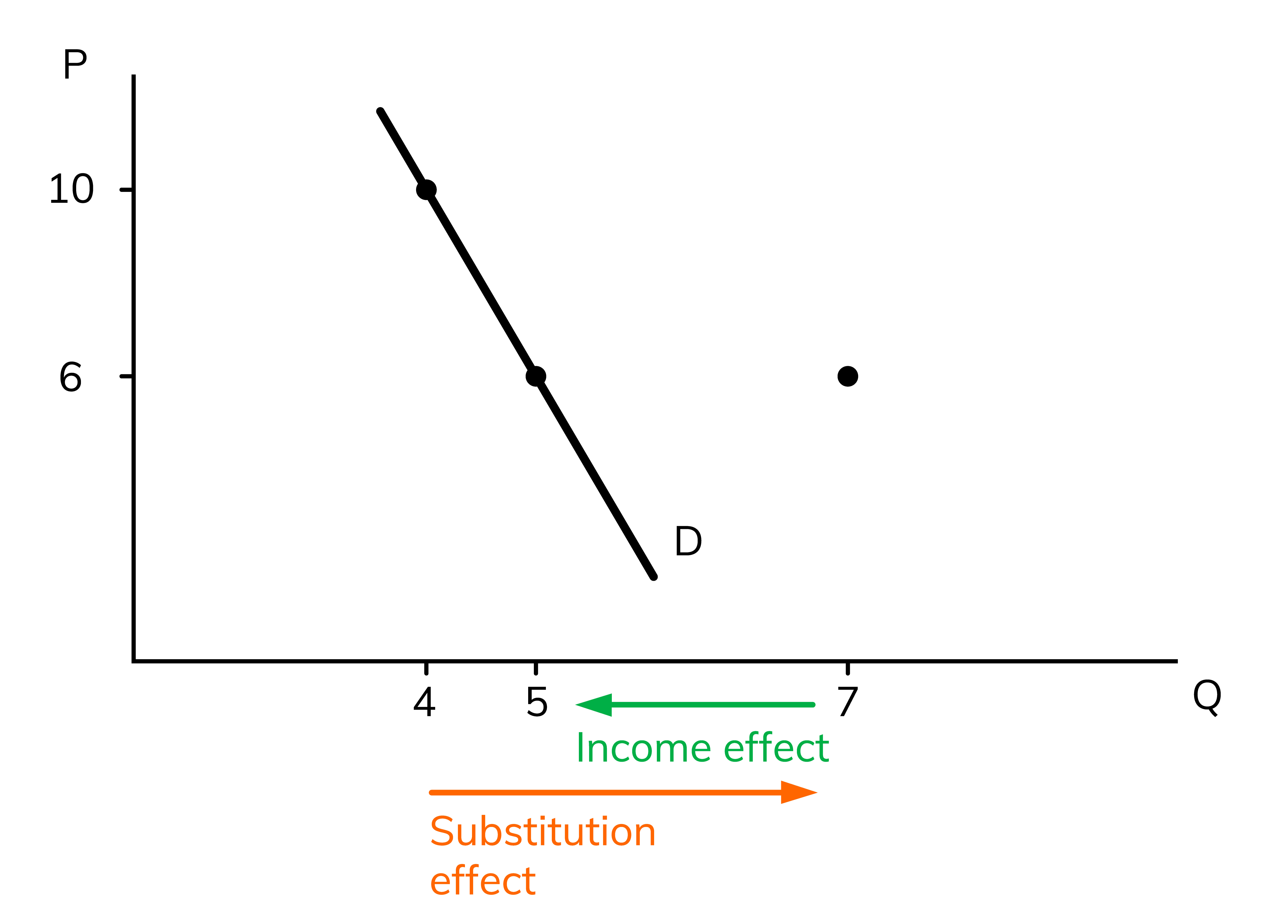
- Let's say the diagram above is for an inferior good like hot dogs. As the price goes down from $10 to $6, the substitution effect tells us that the quantity demanded will increase from4to7hot dogs.
- As the price of hot dogs decrease we also have higher purchasing power. The income effect tells us that we will use this higher purchasing power to buy less hot dogs from7to5and switch to something higher quality like burgers or pizza.
- The total effect would be from 4 to 5 hot dogs.
- Inferior goods have apositivesubstitution effect and anegativeincome effect, but the positive substitution effect is greater than the negative income effect.
Giffen Goods

- Giffen goods are an extreme case where it is a very inferior good (extremely low quality), which makes the demand upward sloping.
- Let's say the diagram above is for a giffen good like sardines. As the price goes down from $10 to $6, the substitution effect tells us that the quantity demanded will increase from4to7sardines.
- As the price of sardines decrease we also have higher purchasing power. The income effect tells us that we will use this higher purchasing power to buy less sardines from7to3and switch to something higher quality like tuna or salmon.
- The total effect would be from 4 to 3 sardines.
- Giffen goods have apositivesubstitution effect and anegativeincome effect, but the positive substitution effect is less than the negative income effect.
0:00 / 0:00
Substitution and Income Effect with Indifference Curves
- Substitution Effect - when a product gets cheaper, you will naturally buy more of it because it is relatively cheaper compared to the other product. This is always represented by a movement along the same indifference curve.
- Income Effect - when a product gets cheaper, your purchasing power increases so it is like your income has increased. With this higher income, you can either buy more of the good or less depending on if it is normal or inferior. This is always represented by a shift to a different indifference curve.
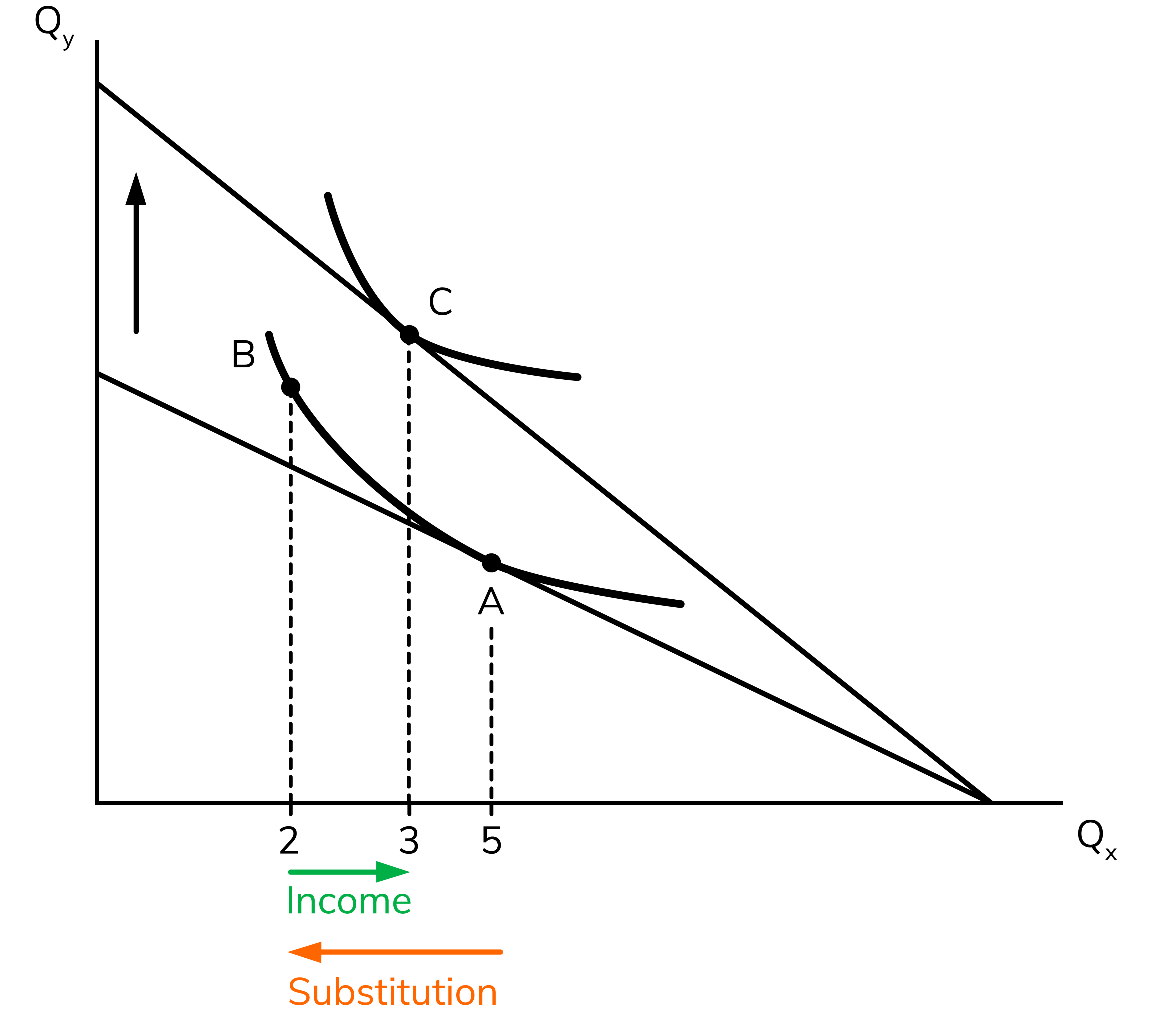
- In the diagram above, as the budget line gets steeper it means the price of Y must have decreased
- The substitution effect is from pointAtoBbecause it's on the same indifference curve. This is a drop in quantity consumed of good X from 5 to 2 units.
- The income effect is from pointBtoCbecause we jump on to a different indifference curve. This is an increase in quantity of good X from 2 to 3 units.
- The total effect is from pointAtoC
- If the substitution effect is stronger than the income effect, then the two goods aresubstitutes. In the diagram above the two products must be substitutes.
- If the income effect is stronger than the substitution effect, then the two goods arecomplements
Normal and Inferior Goods
- If the income effect is positive the product isnormaland if it is negative the product isinferior
- In the diagram above good X and Y are both normal because there is a positive income effect for both goods from point B to C.
0:00 / 0:00
Example: Substitution and Income Effect with Indifference Curves
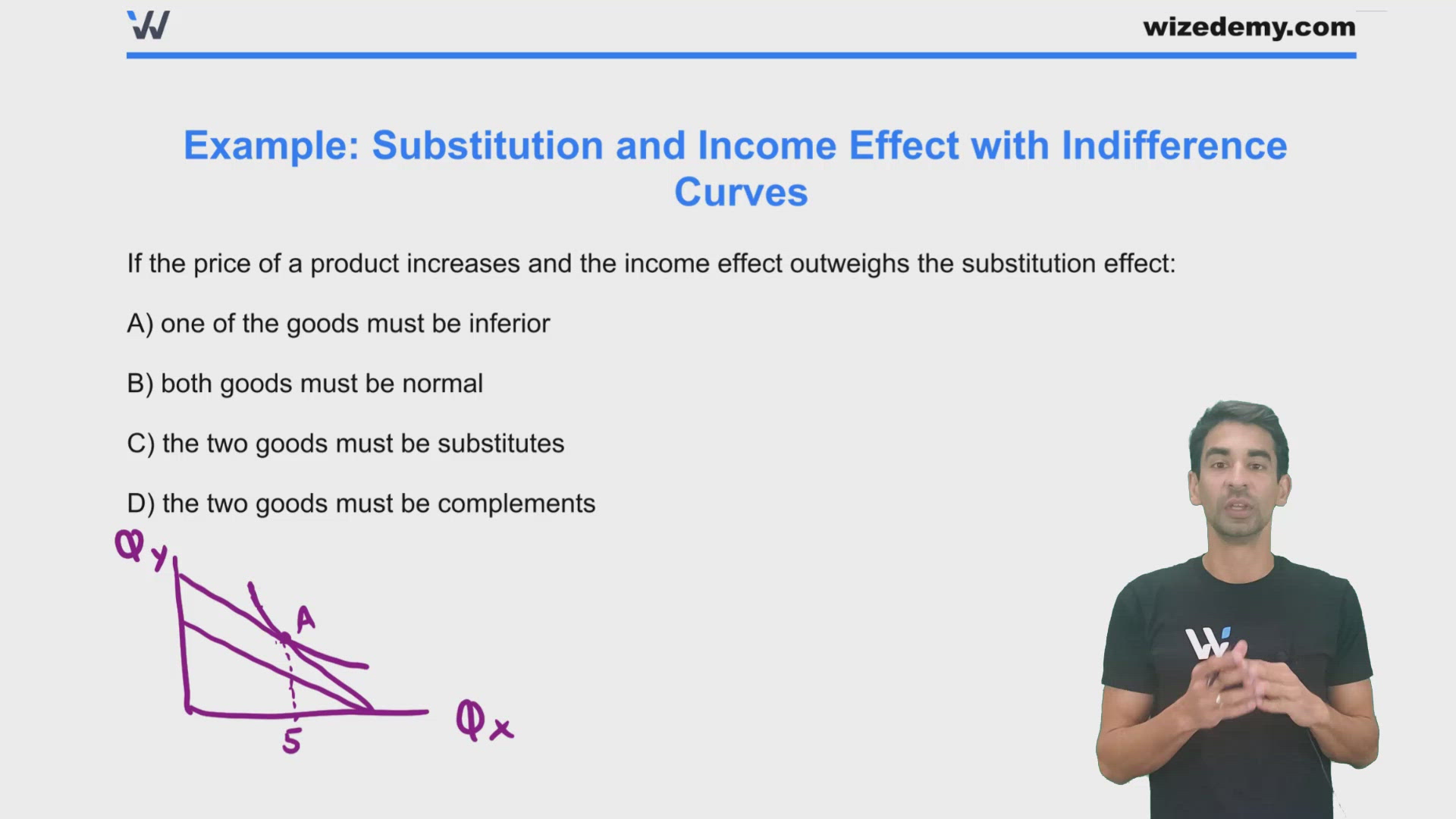
If the price of a product increases and the income effect outweighs the substitution effect:
A) one of the goods must be inferior
B) both goods must be normal
C) the two goods must be substitutes
D) the two goods must be complements
D.
When the income effect is more powerful than the substitution effect that means you will buy less of both goods. this means they are complements. Its easier to remember that when substitution effect is stronger they are substitutes. So that means opposite is also true, if income effect is stronger then they are complements.